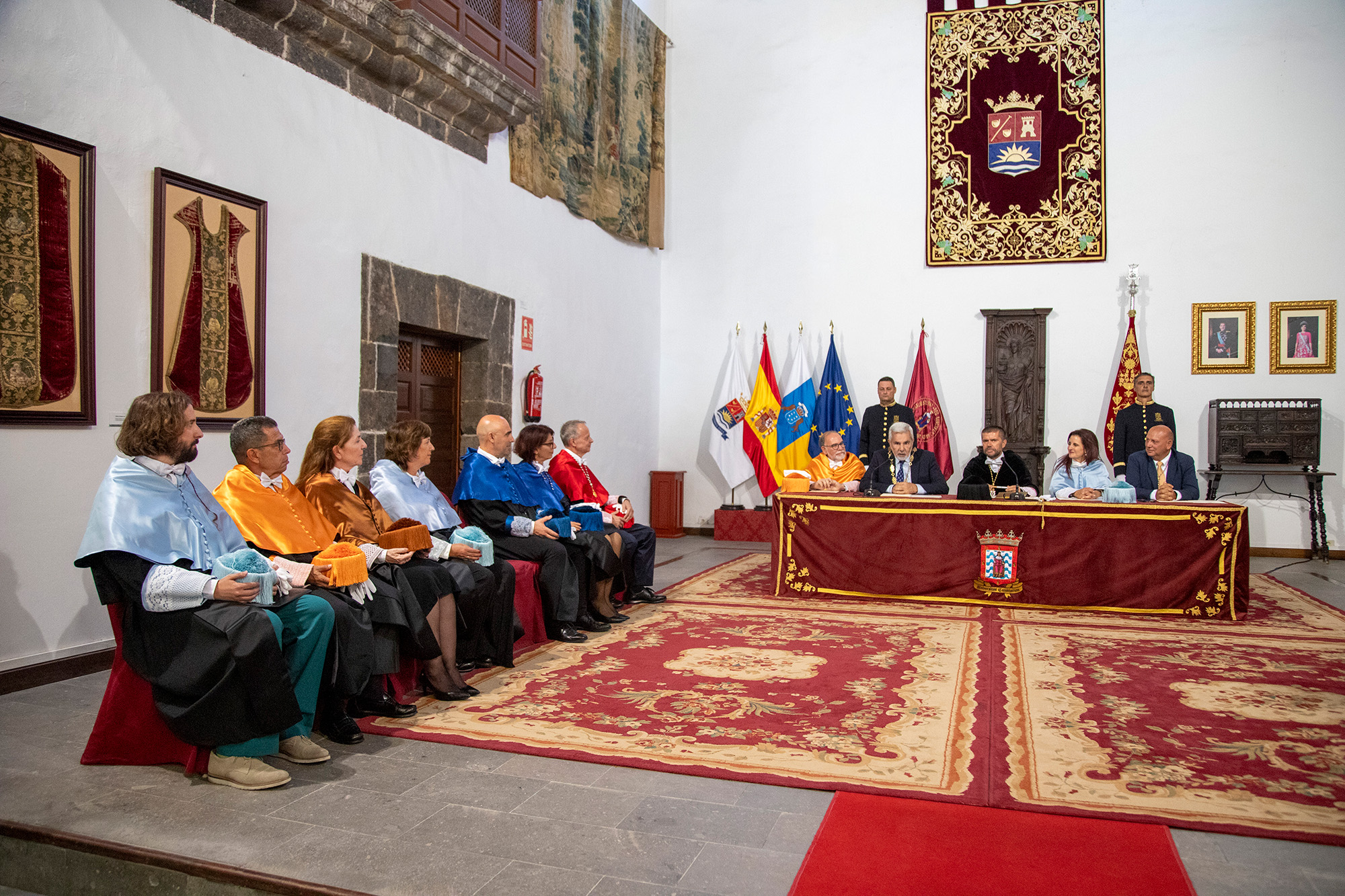
The opening ceremony for the 2024-2025 academic year at the University Campus of Southern Tenerife was held yesterday afternoon, Monday, September 30th. It was presided over by the Rector of the University of La Laguna, Francisco Javier García Rodríguez, and the Mayor of the municipality, José Miguel Rodríguez Fraga, who were accompanied by the Vice-Rector for Culture and University Extension, Isabel León Pérez, and the Councilor for Culture and Education, Adolfo Alonso Ferrera. The Dean of the Faculty of Economics, Business, and Tourism also participated in the ceremony.
The opening ceremony for the new academic year, which already boasts ten graduating classes, was attended by faculty and students of the Tourism Degree program, as well as members of the municipal council and representatives from the Business Circle of Southern Tenerife, the Association of Housekeepers of Tenerife, the Center for Tourism Initiatives of Southern Tenerife, the Canary Islands Foundation for the Race for Life, the Adeje Equality Council, the El Refugio reading group, and the State Security Forces. The event began with a minute of silence in memory of those who died in the recent shipwreck off the coast of El Hierro.
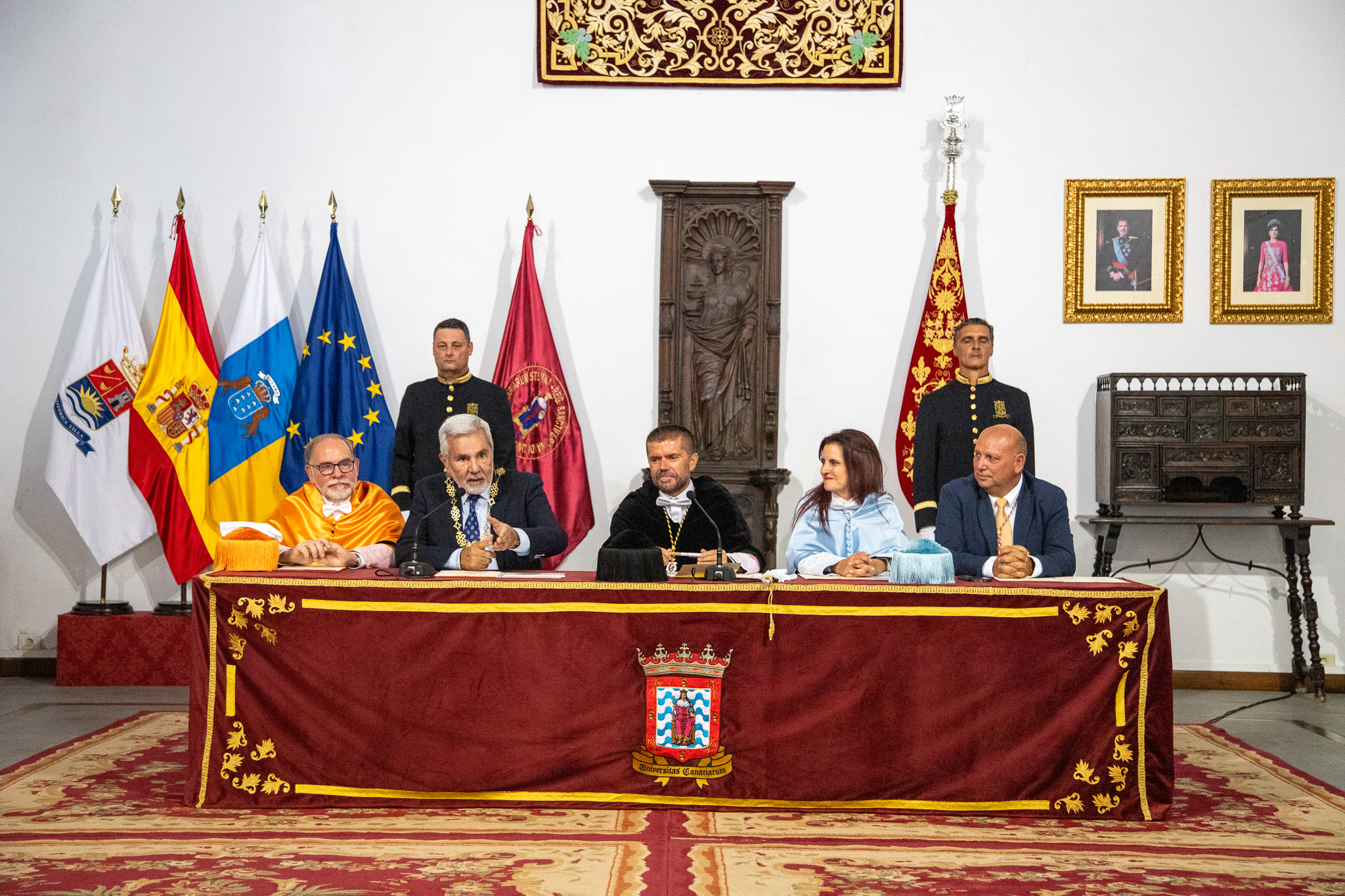
Image of the presidential table at the event.
The Rector of the University of La Laguna, Francisco García Rodríguez, emphasized the importance of the historical relationship between the university and the municipality of Adeje, and highlighted the positive impact of having this educational offering for the professional and social development of students in the south of the island. He stressed the need for university education to go beyond mere training and advocated for the development of individuals capable of critical thinking and independent discernment. In this regard, García commented on the difference between job training and the broader education that the university should provide.
He also praised investment in public education as an engine of economic growth, mentioning that every euro invested in the University of La Laguna generates four euros in economic return. Finally, he congratulated the mayor of Adeje for his support of public education and reaffirmed the University of La Laguna's commitment to continue collaborating to strengthen the educational offerings in the South.
For his part, the mayor of Adeje highlighted the importance of this institutional collaboration. He underscored the role of education and training in the tourism sector, key to the economy of the Canary Islands and Adeje in particular, and emphasized the strengthening of relations with the academic center over the years. He also stressed the need to continue working together, advocating for reflection on tourism, a complex phenomenon with economic, sociological, and cultural implications.
Rodríguez Fraga also highlighted the importance of intelligence and innovation in creating quality tourism that benefits both residents and visitors. He also mentioned the development of educational infrastructure in the municipality, such as the new Comprehensive Vocational Training Center and the upcoming center for people with special needs. Finally, he called for preserving the traditional values of Canarian friendliness and hospitality and reflected on the challenges facing tourism in an increasingly globalized world.
New models of cultural tourism
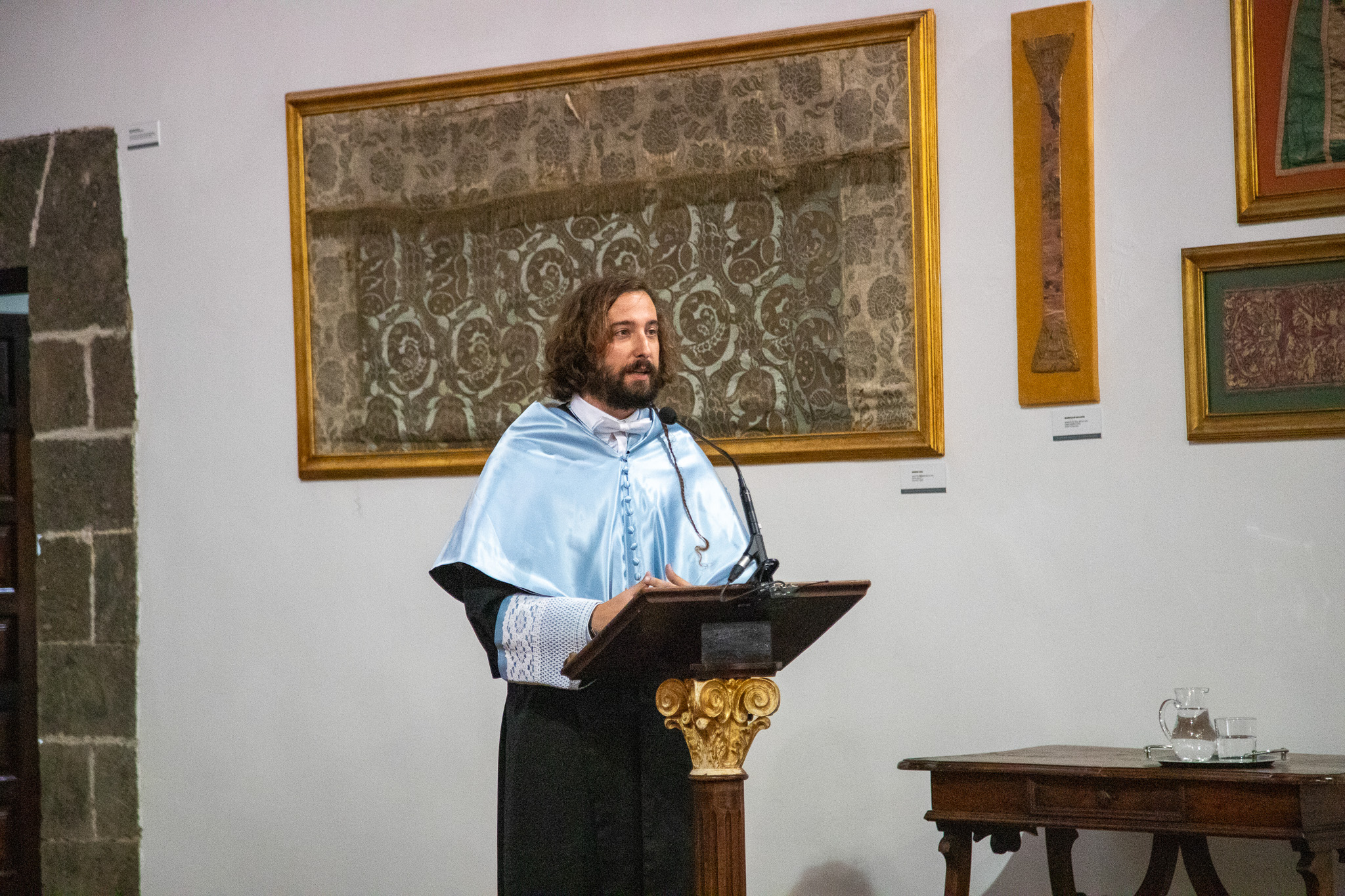
Javier Rivero Grandoso.
The opening speaker, Javier Rivero Grandoso, professor and PhD in Literary Studies, specializing in crime fiction, addressed literary specialization as a form of cultural tourism in his lecture entitled “Walking Through Literature: New Models of Cultural Tourism,» detailing its potential in Tenerife. Although the Humanities do not usually receive the necessary attention in tourism projects, the professor argued that literature is a valuable intangible heritage that can attract tourists by offering cultural alternatives. As evidence, he presented several successful examples, such as the house museums of famous authors in Spain and abroad, including Cervantes, Shakespeare, and Joyce.
In the case of Tenerife, the opening speaker highlighted the scarcity of such literary routes and proposed developing itineraries based on the lives and works of figures who had a significant connection with the island, such as Agatha Christie, André Breton, and Alexander von Humboldt. According to the speaker, these routes would not only add value to the literary and cultural heritage but also offer sustainable alternatives to the current tourism model.
Finally, the professor argued for the need to rethink the tourism sector in the Canary Islands and asserted that the University of La Laguna must play a key role in this process.

 Spanish
 English
 French