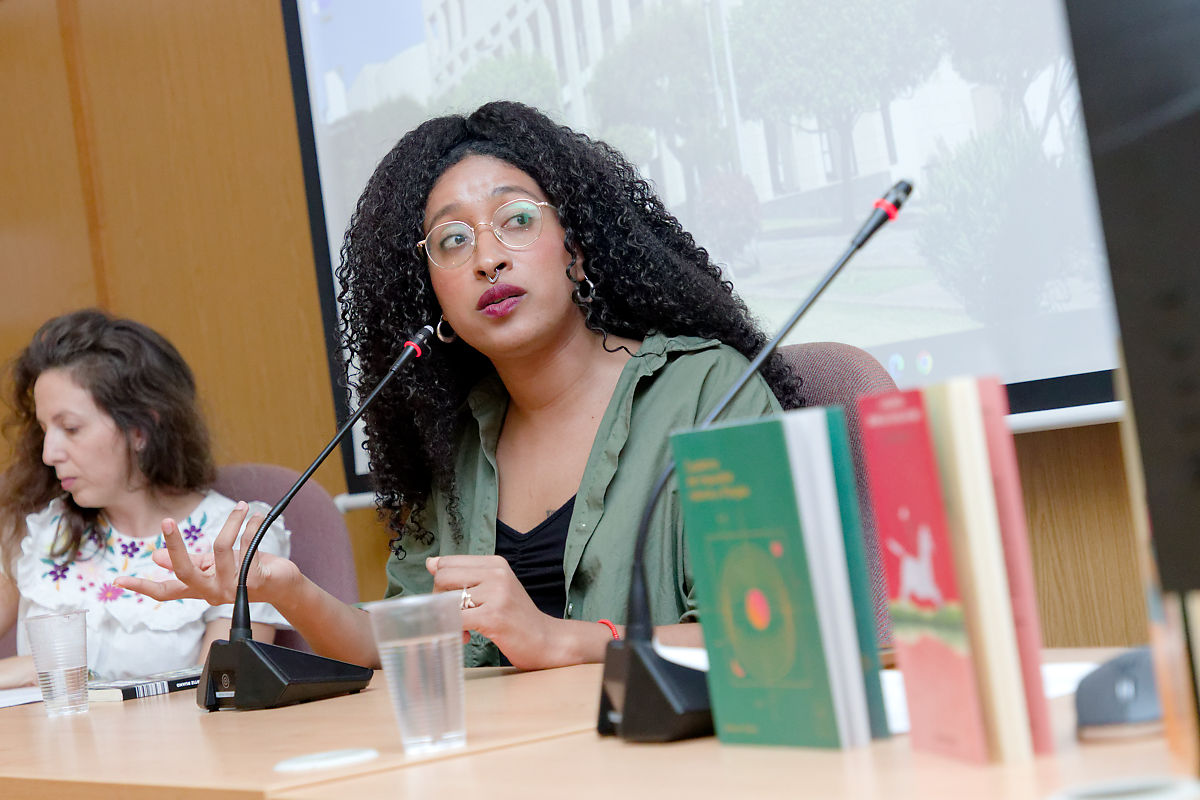
The round table '‘Violence, Blackness, and Carnival: A Conversation with the Poet Yuliana Ortiz Ruano’', within the 4th edition of Campus America At the University of La Laguna, it established itself as one of the most outstanding events of this international academic meeting, which this year has Ecuador as the guest country.
During the session, the renowned Ecuadorian writer Yuliana Ortiz Ruano She shared her perspective with the audience on how literature can be a tool for social transformation, addressing key themes such as precarity, migration, collective memory, desire, carnival, and state neglect in many regions of Ecuador. The talk focused particularly on the situation of Afro-descendant women, exploring how the colonial wound continues to permeate their bodies, territories, and writings.
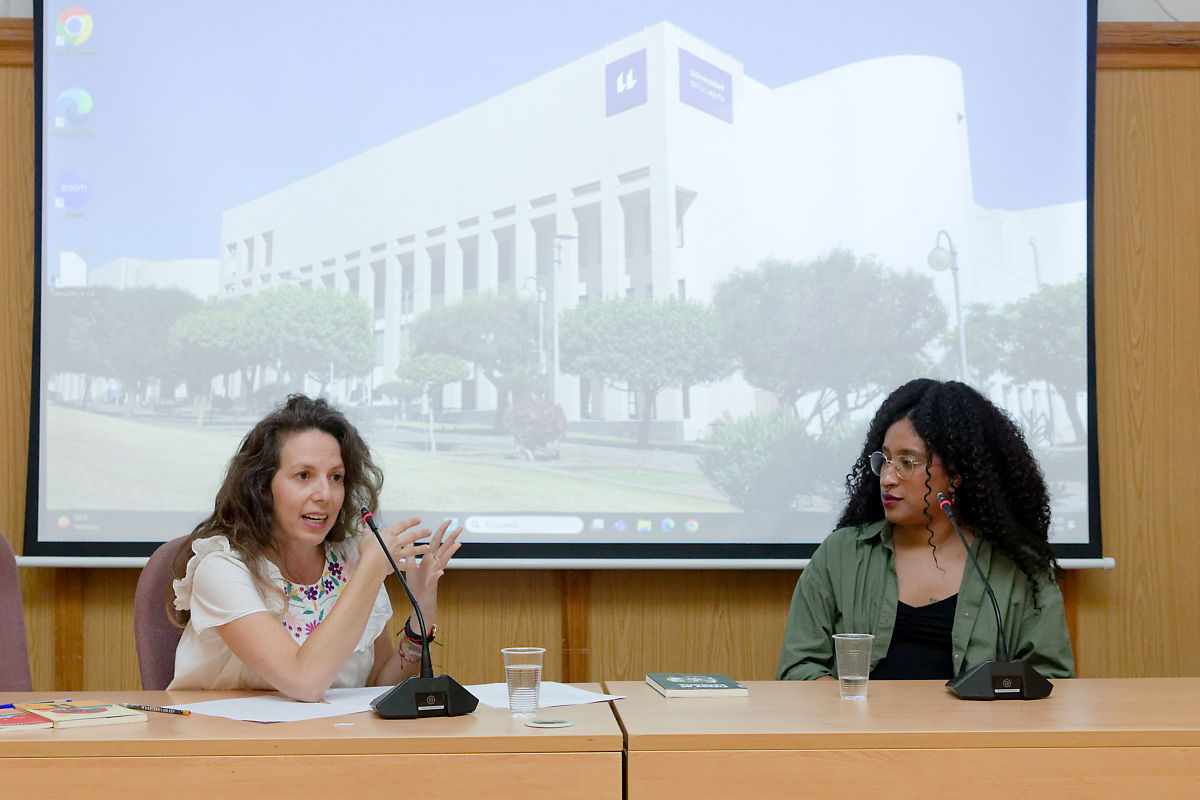
Paula Fernández, co-director of the course.
Accompanied by researchers from the University of La Laguna Paula Fernández Hernández y Katya Vázquez Schröder, The round table, featuring experts in contemporary Latin American literature, offered a profound reflection on the work and critical thinking of Ortiz Ruano.
The speakers highlighted how the narrator has managed to internationalize her voice by making visible the realities and social struggles of her country from a committed perspective: “Within her work, the writer's perspective on Isla Limones, in Ecuador, is known, which is traversed by drug trafficking and violence, which at the same time coexist with the celebration of carnival, joy, and music,” notes the session coordinator, Vázquez Schröder.
Furthermore, Ortiz Ruano emphasized the importance of discussing writing as a political act and how literature can denounce inequalities and structural violence, themes she addresses with great intensity in her work. “Blackness attempts to reclaim ancestral traditions and the space of resistance that, like carnival, allows us to contemplate both the tragic and the joyful. The violence unleashed in the lyrics of salsa and reggaeton, as well as other rhythms that come directly from Africa, names a violence that is not invisible, but rather a reality that exists in broad daylight,” she asserted.
The panel also highlighted the influence of music and orality as cultural elements that unite countries, bringing together voices and shared experiences through art. Education in the
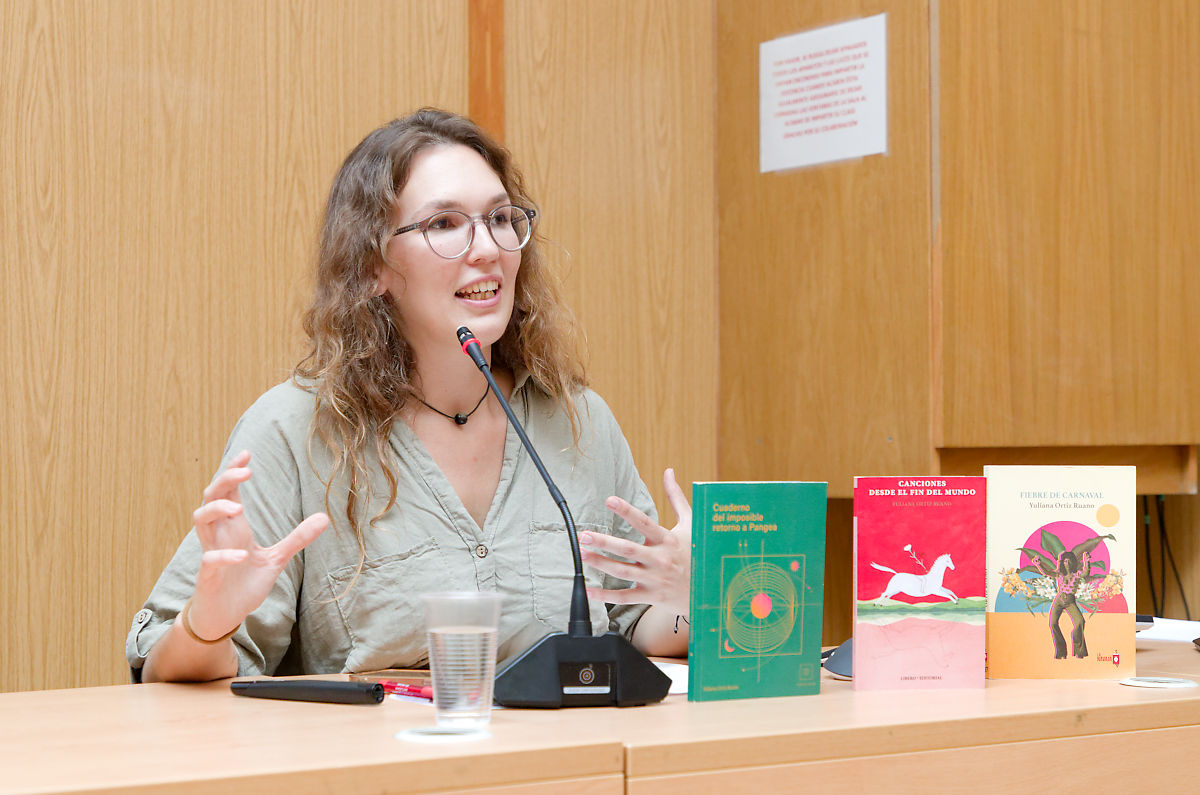
Katya Vázquez, co-director.
Childhood was also a central theme in Ortiz Ruano's discussion, with particular emphasis on how his novels reflect the differences in upbringing depending on where people are born. “Roles within the family institution ruin lives. A woman who can't study because she has to cook for her siblings has a ruined life. These are lives that could have been, but due to the systematic way families are structured, they ended up ruined,” he reflected.
The audience, comprised of students, professors, and the general public, actively participated at the end of the presentation with questions and reflections that further enriched the discussion. This exchange of opinions also transformed the academic analysis into a moment of cultural exchange, where the role of art in the fight against social injustice was explored.

 Spanish
 English
 French