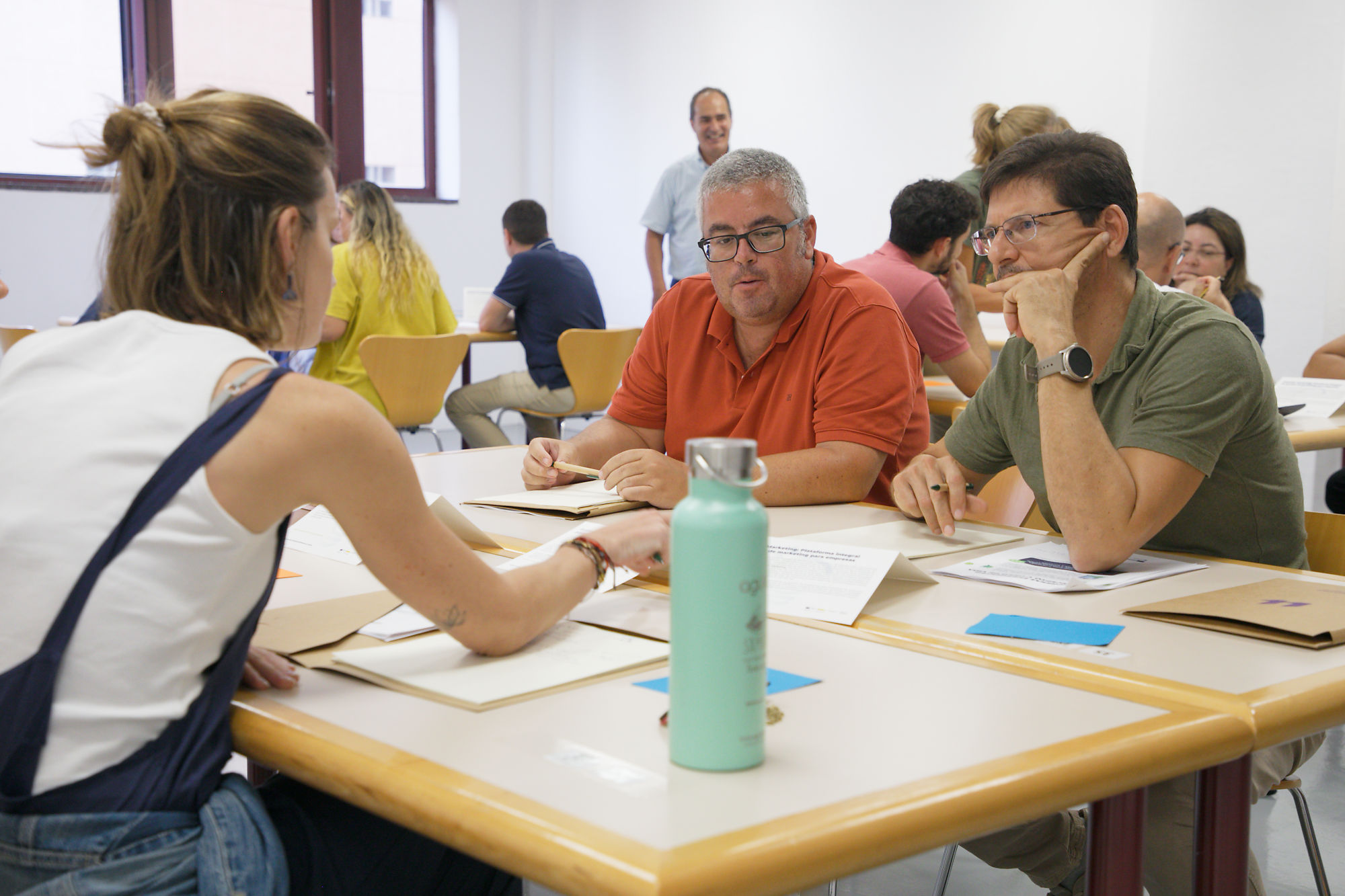
The course Design and creation of emerging companies in the Canary Islands, a training proposal managed by the General Foundation of the University of La Laguna with the collaboration of DISA Foundation Chair for Young Entrepreneurs at the University of La Laguna, and funded by the European Union – NextGenerationEU, has just been held recently.
This training, promoted from the Center for Guidance, Entrepreneurship, Support and Innovation for Employment in the Canary Islands (COE) Attached to the Canary Islands Employment Service, this program aims to promote the development and launch of startups in the Canary Islands. Primarily aimed at teachers at all educational levels and entrepreneurship advisors, this training focused on analyzing the circumstances and advantages of creating startups in the Canary Islands.
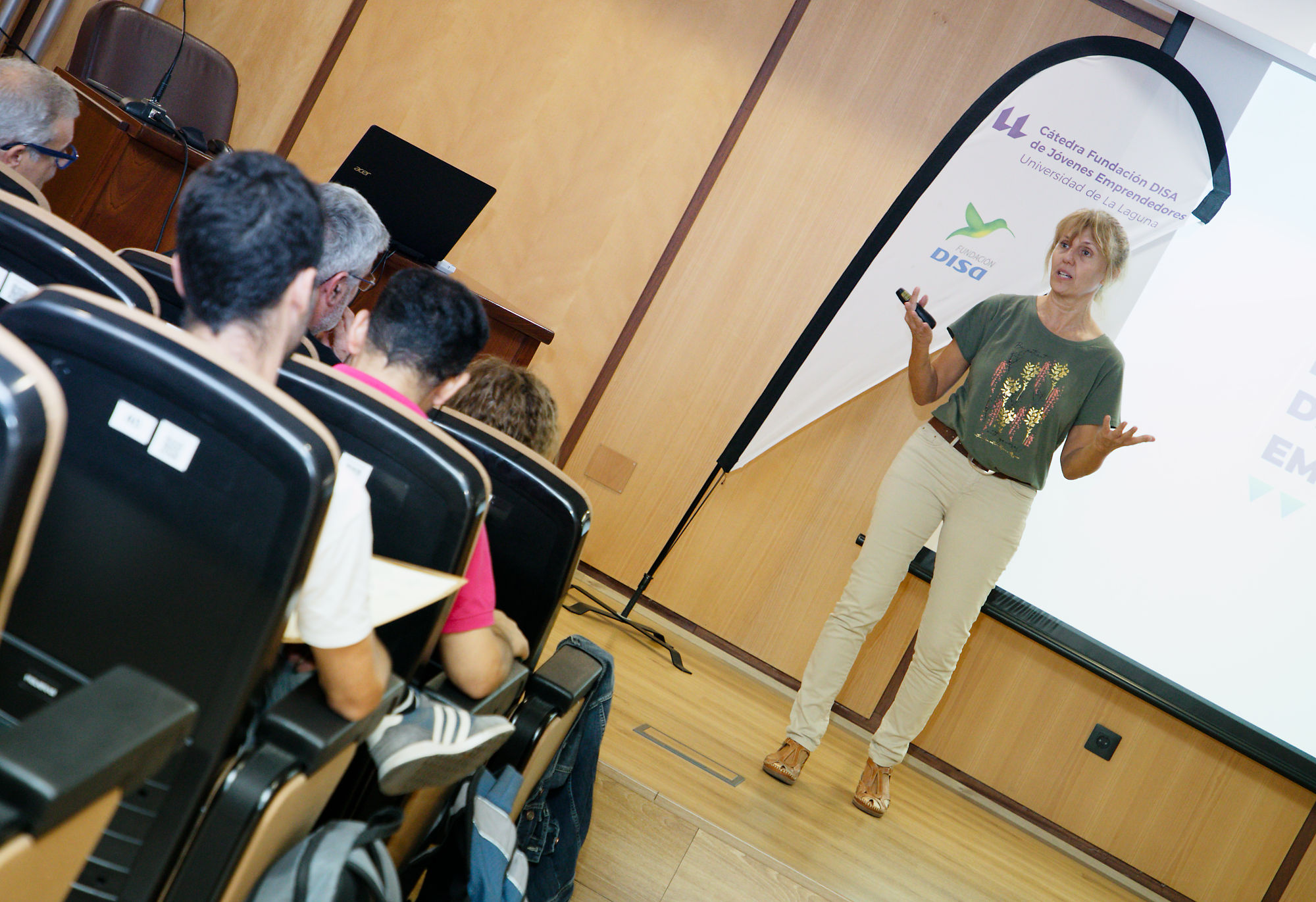
Inés Ruiz de la Rosa, director of the university chair.
The course director, Inés Ruiz, director of the DISA Foundation Chair for Young Entrepreneurs at the University of La Laguna, noted that startups, defined by Steve Blank as “temporary organizations designed to find or create a repeatable and scalable business model,” are a type of “opportunity-driven” entrepreneurship that generates a greater economic and social impact than those that arise “out of necessity.” Ruiz argued that the creation of startups should be a strategic priority to boost the economic and social development of the Canary Islands. “This is why it is essential to train those who, in some way, participate in the ideation and development process of entrepreneurial projects.”.
This training program consisted of both individual work and in-person sessions held on the islands of Tenerife, La Palma, El Hierro, Gran Canaria, and Lanzarote. A total of 113 people, including teachers, entrepreneurship technical staff, and entrepreneurship project promoters, enrolled in this training program held in October.
The attendees agreed on the importance of developing entrepreneurial skills in education, the urgency of designing legal and administrative tools that allow entrepreneurs to test their business models, and the need to create networks that promote the exchange of knowledge and experiences among the different agents that make up the Canary Islands entrepreneurial ecosystem.

 Spanish
 English
 French