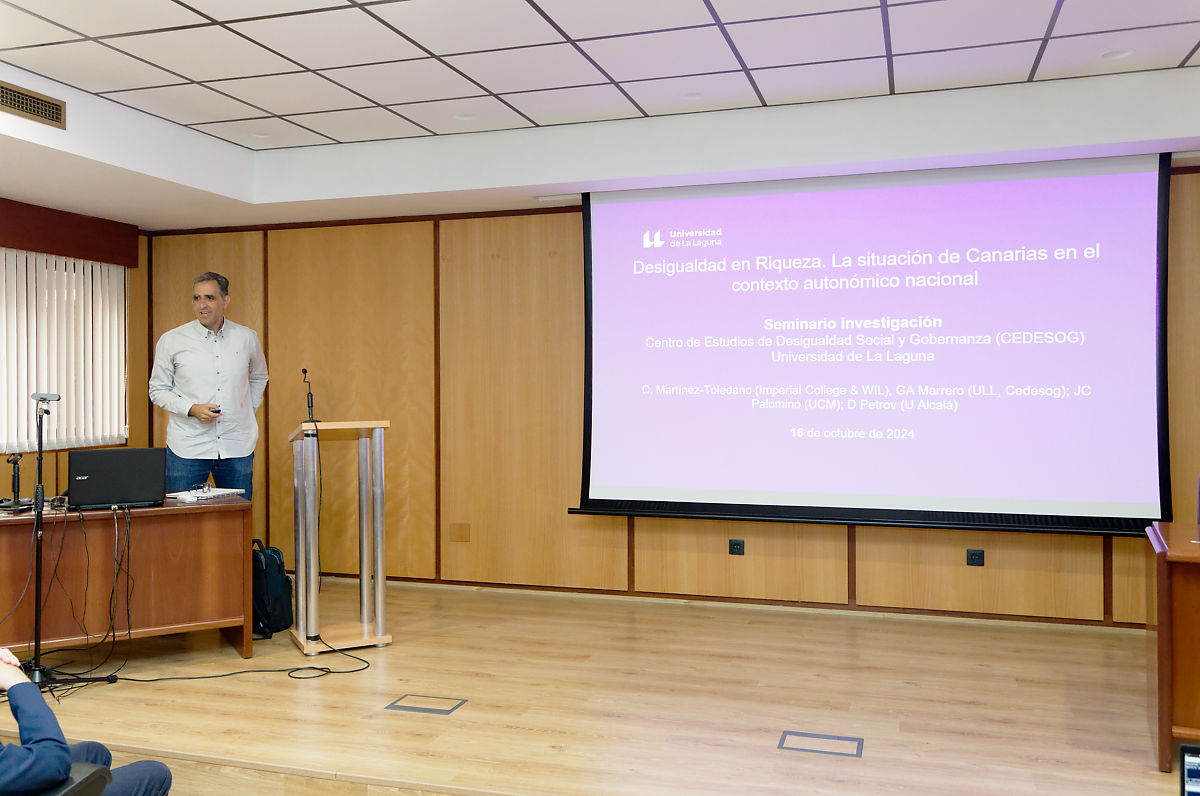
The research seminar “Wealth Inequality: The Situation of the Canary Islands within the National Autonomous Context,” held today, Wednesday, October 16, as part of Poverty Week at the Faculty of Economics, Business, and Tourism of the University of La Laguna, presented the preliminary findings of a report commissioned by the Government of the Canary Islands in 2023 on wealth inequality in the autonomous community. Among other findings, the report indicates that the Canary Islands has some of the highest levels of inequality not only in Spain but also in Western Europe.
Produced by the Center for Inequality and Governance Studies at the academic institution, which also organized this meeting, the report analyzes the period 2016-2019 using a new methodology: until now, income inequality has been the focus of discussion due to the high difficulty in obtaining wealth measures. Now, using a new source of information, the Household Panel, which combines administrative records of Personal Income Tax and Wealth Tax, along with innovative techniques applied at the World Inequality Lab, the report has succeeded in characterizing wealth distribution in the Canary Islands.
The results, still under review, awaiting the incorporation of new assumptions from the 2021 and 2022 data, are comparable between Spanish regions and with the national aggregate over time and allow analysis of the composition of the asset portfolio (financial and non-financial) for different strata of the Canary Islands population.
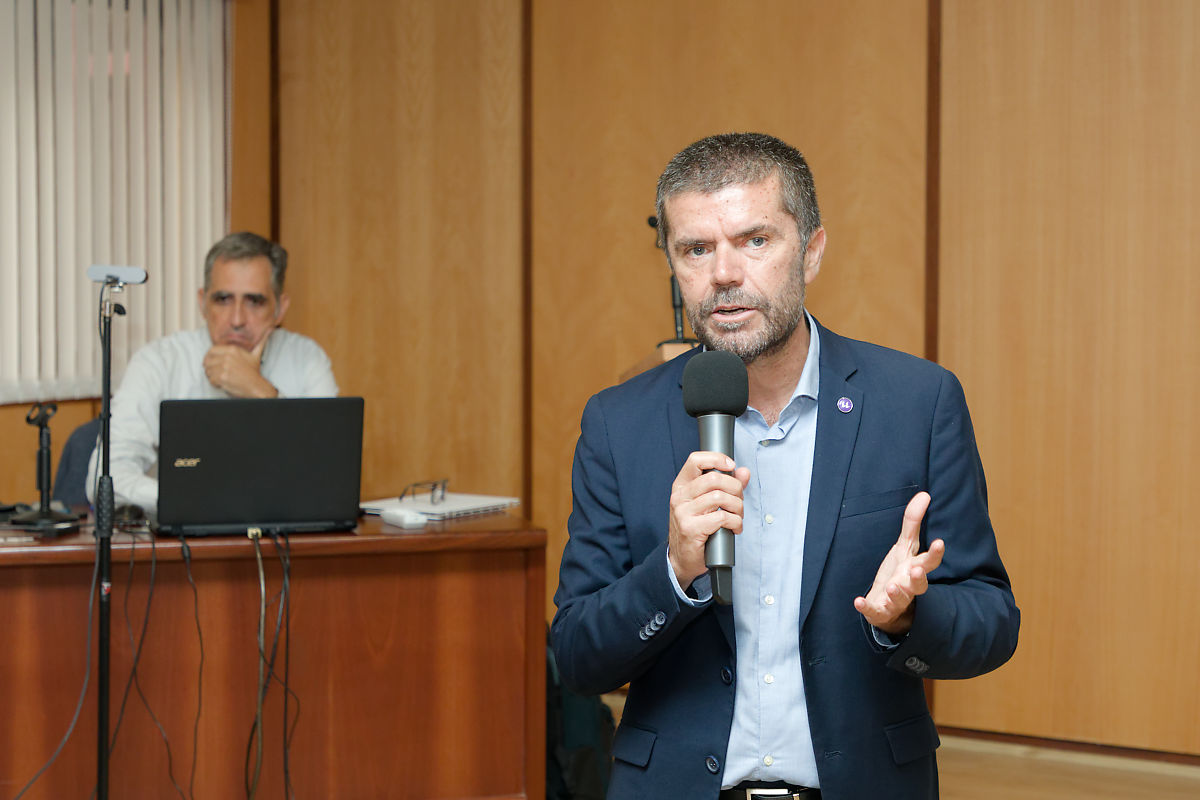
The rector during the introduction of the seminar.
The Rector of the University of La Laguna, Francisco García, welcomed attendees to the event, emphasizing the study's great relevance for the Canary Islands, a region with high levels of unemployment and inequality. He highlighted its academic importance, but also its role in disseminating knowledge about this phenomenon to society, with the hope that the results will contribute to progress in this fight.
Moderated by Sara Darias, director of Center for Inequality and Governance Studies, The speakers included Gustavo Marrero, Professor of Economic Analysis at the University of La Laguna; Juan César Palomino, from the Complutense University of Madrid and the University of Oxford; and Dimitry Petrov, from the University of Alcalá. With published articles that have garnered over a thousand citations, the participants form a prominent research group in this field, along with Clara Martínez-Toledano, from Imperial College and the World Inequality Lab, who was unable to attend.
Gustavo Marrero presented the context for the Canary Islands, which stems from a macroeconomic dynamic of the last 30-40 years that underlies current levels of inequality, both in income and wealth. These levels are based on persistently low labor productivity, weak growth, and poor job creation, coupled with low real wages.
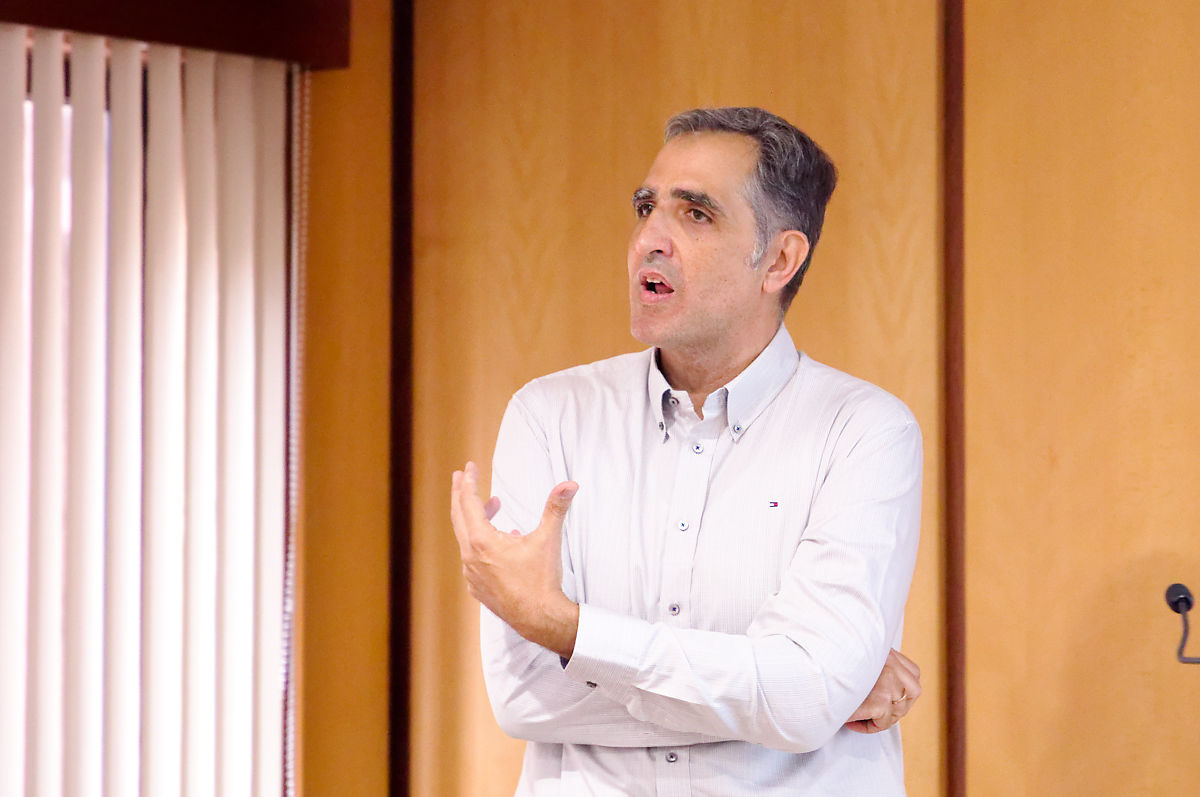
Gustavo Marrero.
This means that, as previously mentioned, the Canary Islands are among the territories with the highest levels of inequality not only in Spain but also in Western Europe, with high levels of relative poverty and a risk of exclusion. This is due to the low economic growth of the lower classes and the constant increase in inequality compared to the wealthiest individuals. Marrero points out that, in order to reverse this situation of recent decades, a diversification of capital is needed, moving away from its concentration in the construction sector and towards initiatives linked to knowledge—a shift he observes is not currently taking place.
Juan César Palomino explained the focus of this study's concept of wealth, concluding that "wealth inequality does not depend on the talent or effort of individuals," since 301% of inequality is generated by inheritances.
This is compounded by inequality stemming from access to opportunities, such as financial institutions denying loans to business projects or demanding collateral to mitigate risks, thus driving up interest rates. He also cited the influence of this inequality on institutions and decisions concerning the well-being of the majority, leading to political and social instability, linked to issues such as access to housing.
Dimitry Petrov discussed the methodology, sources, and data compared with other regions of Spain, excluding Navarre and the Basque Country, and with other countries, provided by the new Household Panel database. A key innovation is that this source has allowed for the differentiation of all real estate properties, including those classified as primary or secondary residences, as well as other types of properties.
Petrov presented the preliminary results of the report, which indicate that the largest group is the lowest stratum, which accounts for 50.1% of the population or even more in some indicators (this sector holds 2.41% of the wealth in the Canary Islands compared to the Spanish average of 6.1%). The upper-middle class represents 40.1% of the population at both the regional and national levels. However, inequality is amplified compared to the rest of Spain in the wealthiest 10.1%, which holds 60.1% of the wealth in the Canary Islands compared to the national average of 5.51%. Furthermore, according to the Gini index, inequality is slightly higher in the Canary Islands (70.75%) compared to other Autonomous Communities such as Madrid, Catalonia, or the Balearic Islands.
In the Canary Islands, financial assets are lower, which is offset by real estate holdings. Another difference compared to the rest of Spain is that Canarian families hold less wealth in current accounts and pension funds.
Regarding wealth distribution, in the Canary Islands, real estate assets are the primary source of wealth, along with life insurance and pension funds, with the exception of the wealthiest group (between 1% and 51% of the total wealth), for whom business assets are the main source of wealth. Only the wealthiest 0.11% of the total wealth is primarily acquired through publicly traded shares and investments in SMEs. Real estate assets represent 70% of the wealth of Spanish families (in the Canary Islands, this figure is 80-85%), with the wealthiest group increasingly investing in listed and unlisted shares and investment funds.
Among the study's conclusions, it is highlighted that the wealth gap is greater in the lower classes, where the ratio exceeds 50% and in some cases reaches 80%, although a slight improvement was maintained in 2019, and it is hoped that this can be compared with the data from 2021 and 2022. Using the Household Panel as a source, it will be possible to make comparisons with the policies applied and measure their impacts in the Canary Islands compared to Spain, which will be useful for working with the most vulnerable population, at risk of exclusion.

 Spanish
 English
 French