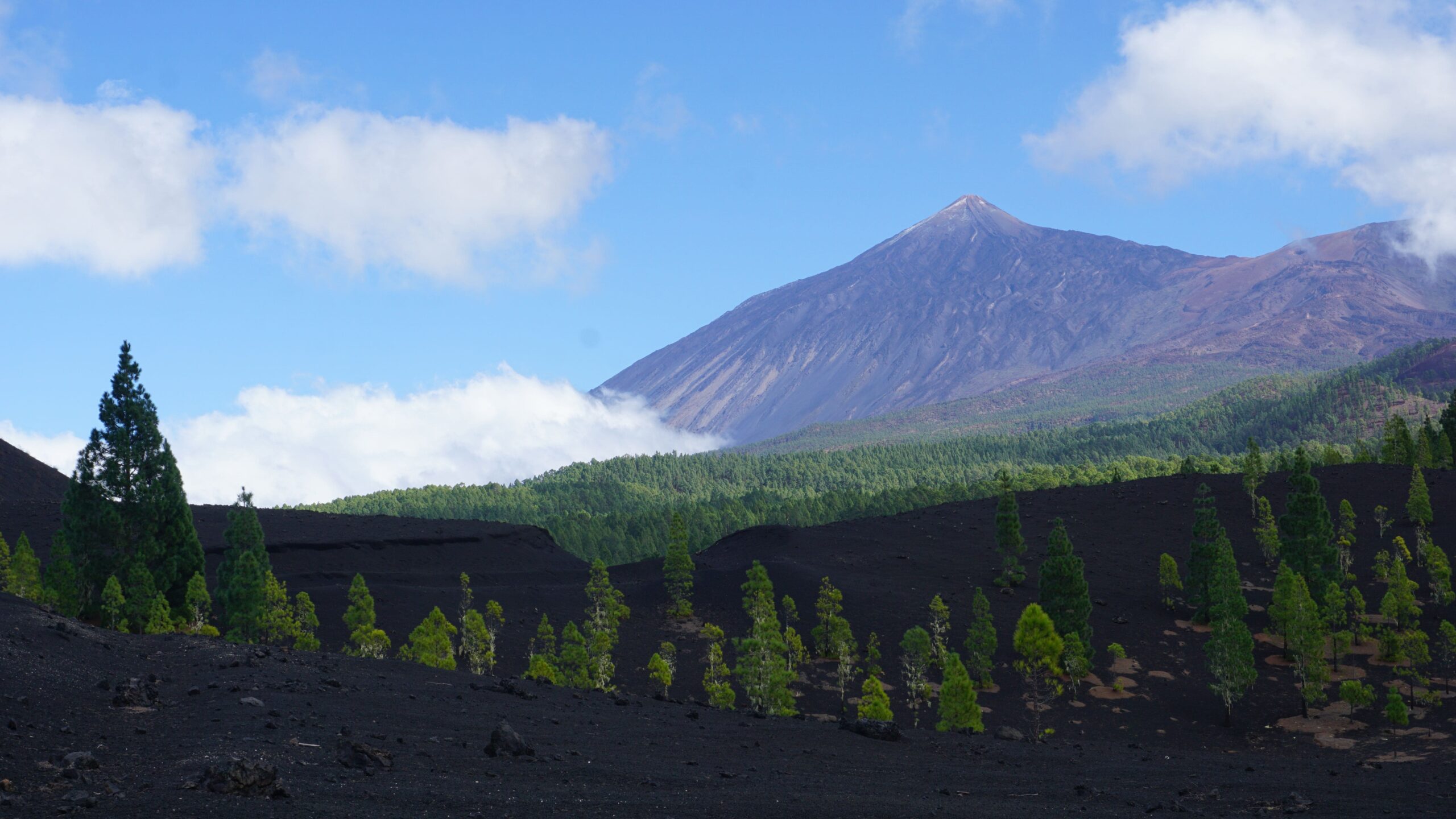
From Tasmania to Madagascar and New Guinea, islands represent just over 51% of the world's landmass, but are home to 311% of the world's plant species. A new study published in the journal Nature, The study, in which the University of La Laguna participates, shows that more than half of the plants classified as threatened worldwide are unique to the islands, due to factors such as habitat loss, climate warming and invasive species.
This scientific work reveals that islands are home to about one in three of the world's plant species, despite covering just over 51% of the planet's land surface. Julian Schrader, A researcher from the School of Natural Sciences at Macquarie University (Australia) has led a dozen researchers from Australia, Germany, Spain, the USA, Greece, and Japan in analyzing data on more than 304,103 vascular plants—essentially all species known to science worldwide—uncovering the treasure that is island biodiversity. At the University of La Laguna, the project has been led by a professor of Ecology. José María Fernández-Palacios.
The team found that 94,052 species are native to islands, of which 63,280 are endemic—found nowhere else in the world—representing 211% of global plant diversity. The team's research, recently published in Nature, This study provides the first comprehensive assessment of native and endemic marine island vascular plants worldwide. Vascular plants constitute the majority of plants on Earth and include trees, shrubs, herbs, grasses, and ferns. They are characterized by possessing a circulatory system, unlike non-vascular plants such as mosses and liverworts.
“This is the first time we have such a comprehensive understanding of which species are present and where, globally,” says Schrader. “Now we can explore the conservation status of some of our rarest plants and develop distinct strategies for their conservation, such as identifying botanical gardens that could host rescue populations.”.
Island diversity hotspots
The study identified several centers of plant endemism. Almost all are large tropical islands with complex topography and a long history of isolation. Topping the list is Madagascar, home to an astounding 9,318 endemic plant species. This African island nation is closely followed by New Guinea (8,793 endemic species), Borneo (5,765), Cuba (2,679), and New Caledonia (2,493).
“Large geographical distances, as well as climates and environments that differ from other archipelagos or continental regions, lead to a high rate of evolution of new species, or 'speciation',‘ says Schrader.
Such isolation has given rise to some remarkable examples of plant evolution; in Hawaii, 126 species of lobelias trace their lineage back to a single colonization event, while in the Canary Islands there are groups such as the bejeques (Crassulaceae) in which about fifty species have been formed from a single ancestor, a lineage that has subsequently spread to the rest of the Macaronesian archipelagos, and even to the African continent.
However, many plants that have evolved in isolation, developing unique adaptations to their original ecosystems, may be ill-equipped to compete with introduced species, and climate change poses an additional threat in this regard. Rising sea levels and the increased frequency of extreme weather events are potentially devastating for low-lying islands and their unique flora.
The team has created a standardized checklist of all known vascular plants occurring on islands, documenting their geographic and phylogenetic distribution and conservation risk. The dataset also provides a crucial basis for monitoring changes in island plant communities over time and could offer a plan for prioritizing protection efforts.

 Spanish
 English
 French