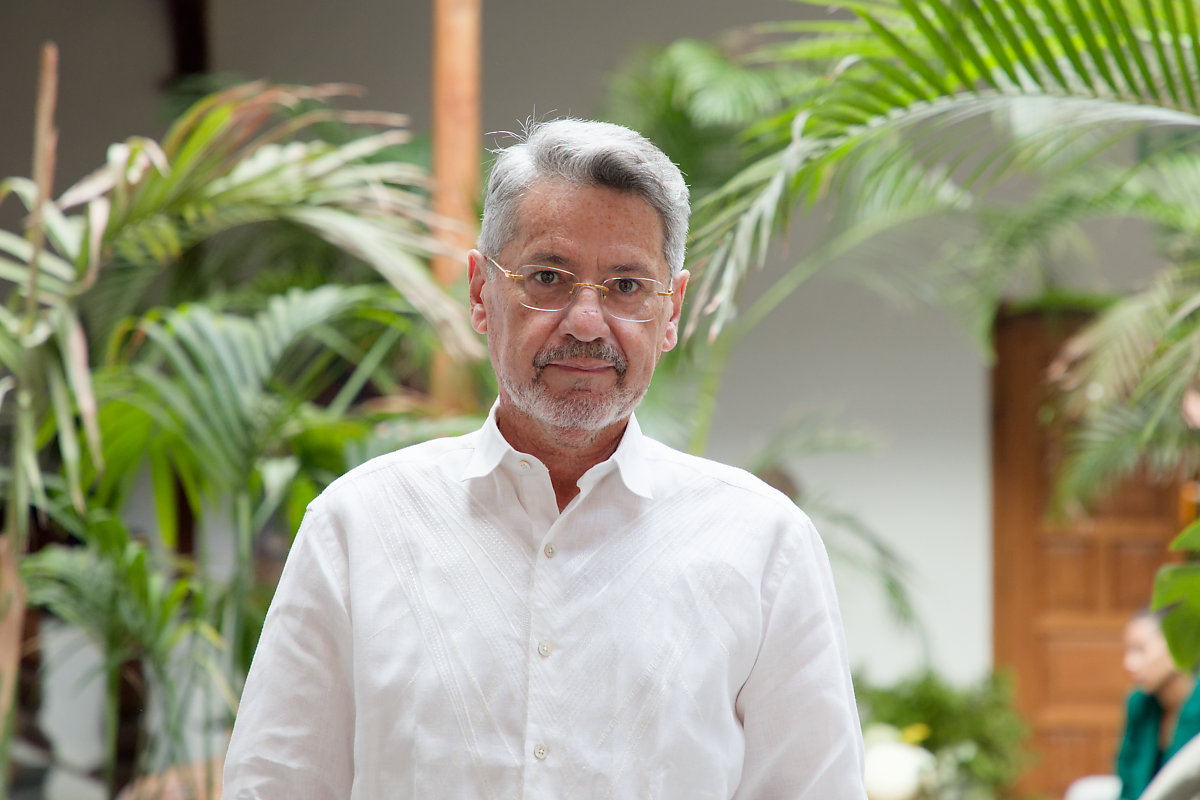
Raúl Vallejo He believes that global politics has taken on an increasingly confrontational tone, a phenomenon that finds a dangerous vehicle in social media. The writer and politician points to social media as a space that fosters discursive violence. According to him, brevity and the desire to make an impact have become weapons of aggression, where nuance disappears in favor of simple, direct, but extremely violent messages. In this context, "troll armies" act as echo chambers, amplifying tension and deteriorating the quality of public debate.
Ecuador, as part of this global phenomenon, suffers from constant confrontation in which ideas give way to insults and media noise. Vallejo describes this dynamic as profoundly destructive, preventing a genuine dialogue that would allow for understanding the country's contradictions and addressing them constructively.
“In Ecuador, there is a permanent confrontation, not in search of the truth, not in search of what would be a national agreement or a perspective that allows understanding the contradictions of the country and facing them, but through mechanisms of permanent confrontation, which tenses the atmosphere,” highlights the prolific writer, who was also Minister of Culture and Heritage.
The wounds of national identity
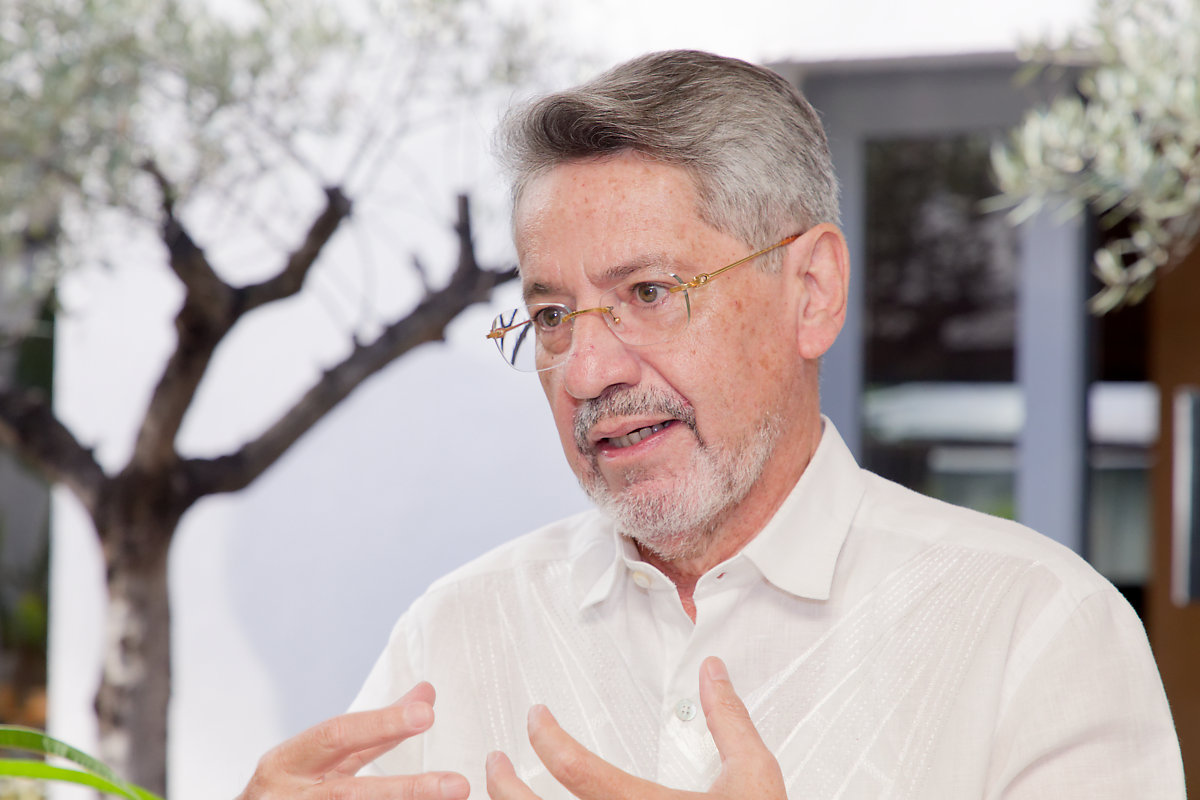 For Vallejo, Ecuador continues to bear the historical wound of the lack of integration of its plurinational character. Throughout its history, the country has been built as a mestizo nation-building project, driven by a Creole elite, but the Indigenous peoples have maintained their own cultural identity and have been historically marginalized. Although the 2008 Constitution defines the country as a plurinational and multicultural state, he believes that this definition has not yet been translated into everyday life.
It is a country with a high mixed-race population, the author describes. awarded by the Royal Spanish Academy. “There are Indigenous peoples who maintain their own identity, their own language, their own cultural practices, and who have not been, nor do they want to be, nor is it possible for them to be incorporated into a single project of a mestizo nation,” he explains. “This perpetuates a wound, because when there are protests or mobilizations by Indigenous peoples, which have occurred since colonial times, they are harshly repressed. These demonstrations are often violent, and I believe this is largely due to a lack of understanding of their cultural perspective.”.
According to Vallejo, the lack of understanding of the diversity that exists in Ecuador remains a major obstacle to the development of a true intercultural dialogue, and as long as a sincere space for such dialogue is not opened, plurinationality will remain an unfulfilled promise.
Inclusive and intercultural education
The Ecuadorian education system, an area in which Vallejo has been directly involved as minister, faces enormous challenges. According to him, there is still an urgent need to improve high school enrollment, reduce dropout rates, and, above all, make public education a pillar of quality. For Vallejo, education is the key to ending inequality in Ecuador. “As long as we don't have quality public education, social gaps will not close. Therefore, education cannot be considered an element of social mobility, and I believe it also cannot heal the wounds we're talking about,” he emphasizes.
 Vallejo also emphasizes the importance of an education that is not only inclusive but also intercultural. For him, the Ecuadorian education system must reflect the country's diversity and plurality, while also offering opportunities that truly propel new generations toward a better future. Initiatives like Campus América In his opinion, they are vital because they allow us to "understand from academia what the challenges are in the various areas and offer a vision that is fed by different perspectives," he stated.
Vallejo also reflects on the role of intellectuals in contemporary society. While in past decades they wielded a unique and influential voice, today that role has been democratized thanks, in part, to social media and the emergence of new voices. For Vallejo, this is a positive development, as it fosters broader and more democratic dialogue.
Despite its positive aspects, the writer also emphasizes that the increase in the number of influential voices is accompanied by the "noise" generated by trolls on social media, hindering constructive dialogue. However, he highlights that academia has replaced the "encyclopedic intellectual" of yesteryear, and that there are now specialists in history, social studies, and economics who offer deeper and more complex perspectives on reality. This shift has led to a fragmentation of intellectual life, but in a more pluralistic and nuanced way.
He too José Lezama Lima Poetry Prize The article focuses on the historical and migratory ties between Ecuador and Spain, highlighting the large Ecuadorian diaspora in Spain. However, it points to a significant barrier: the requirement of a Schengen visa for Ecuadorians to enter the European Union. In its view, this obstacle hinders free movement between the two nations and limits relations, although it acknowledges that Spain's membership in Europe makes these migration issues more complex. Despite these difficulties, Vallejo emphasizes that the historical and cultural bonds between Ecuador and Spain remain strong and fundamental, reinforced by "the shared homeland of the language.".
The new Ecuadorian literary movement
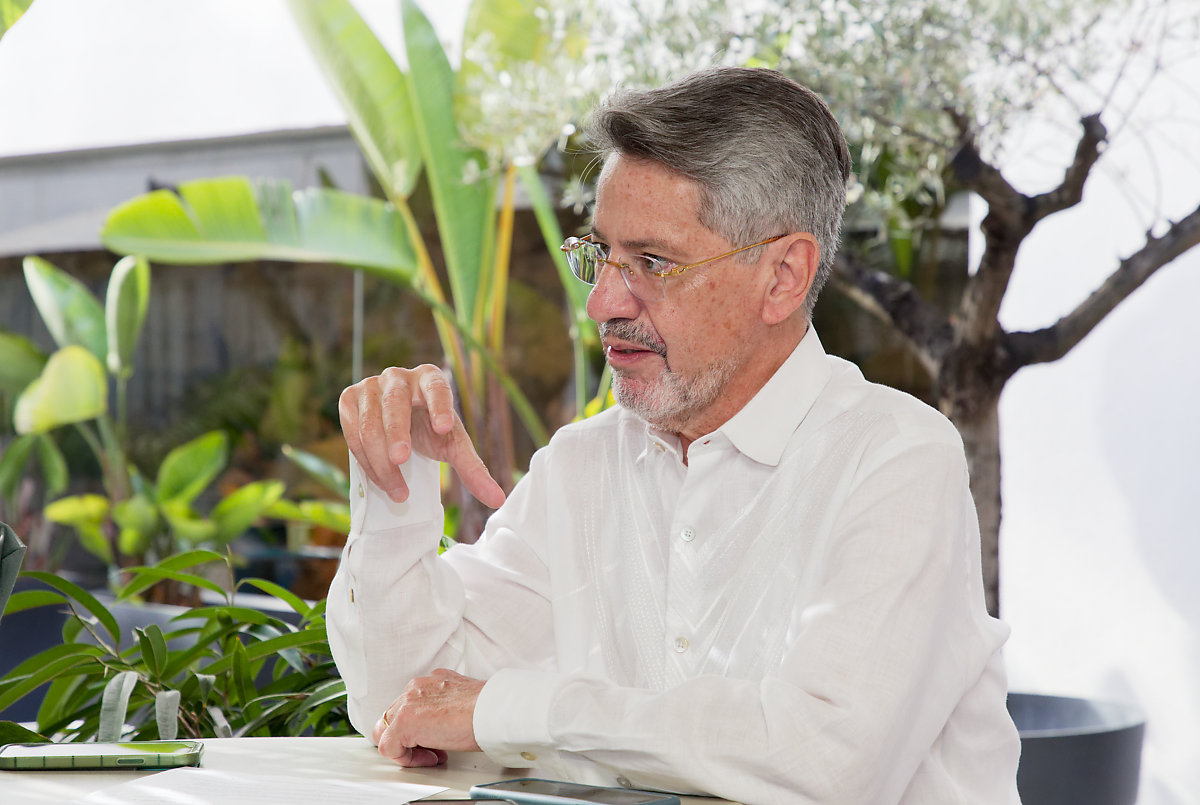 Vallejo expresses her enthusiasm when discussing the current state of Ecuadorian literature, especially the emergence of a group of young women writers who are making a name for themselves both in Ecuador and abroad. Names like Mónica Ojeda, María Fernanda Ampuero, and Natalia García-Freire, all based in Spain, have brought Ecuadorian literature to a new level, publishing powerful and profoundly influential works.
These authors, according to Vallejo, are creating a literature that moves between horror and fantasy, with influences that can be traced back to writers like Mariana Enríquez in Argentina. Vallejo has identified a phenomenon he calls 'eclectic neoromanticism,' an attempt to group some of these emerging literary trends, although he acknowledges that today's literature is so diverse that it is almost impossible to categorize it under a single movement.
The closing speaker at Campus America also highlights Yuliana Ortiz, Also present at this international event at the University of La Laguna is one of the most prominent voices in Afro-Ecuadorian literature, whose novel Carnival Fever In his opinion, it stands out as a fundamental work of Ecuadorian literature in general and Afro-Ecuadorian literature in particular.
Regarding his own literary work, Vallejo shares that he is currently finishing a short novel that explores the complex relationship between the indigenous peoples and the mestizo society of Ecuador, a theme that has been central to the country's history and continues to generate tensions and mobilizations.
“I have a short novel, which is basically finished, in which I work on a theme that has to do with that wound that the country has insofar as it has never managed to resolve its diversity, the relationship that exists between the native peoples and a large sector of society, let's call it white-mestizo, and which has always ended in mobilizations, protests and repression. It is a novel in which I explore these realities chronologically.”.
Communications Office

 Spanish
 English
 French