
The senior lecturer in Forensic Psychology at the University of Kent (United Kingdom) Afroditi Pina This week she spent a stay at the University of La Laguna, invited by a professor from the Department of Cognitive, Social and Organizational Psychology Helena Bonache Recio, Thanks to grants awarded by the Vice-Rectorate for Research and Transfer for visiting professors, Pina led a two-day seminar focused on the behavioral and legal aspects of cyberbullying and sexual abuse based on the non-consensual publication of intimate images, colloquially known as 'revenge porn'.
The two have been collaborating on joint projects since 2018, when the professor from La Laguna completed a similar research stay at the British institution. Both research sexual harassment and prostitution, and are currently developing an international project on the latter, in which a German researcher is also collaborating. The study focuses on public attitudes toward prostitutes, emphasizing their vulnerability. “We want to analyze how people from different countries with different regulations on prostitution think about this phenomenon: the United Kingdom, Spain, Germany, and we also have data from the United States,” Bonache explains.
In addition to advancing this joint project, Pina also led the aforementioned seminar on revenge porn this week. To the British professor's surprise, the room was filled with both undergraduate and graduate students, as the invitation to attend was distributed through the faculty's POAT platform, thus reaching a wider audience. "They asked me genuinely excellent, very thoughtful questions. It seems they had a good grasp of the issue and found it relevant. I had some very interesting conversations about the legislation here and in Europe," Pina explains.
Pina focused her talk on the motivations behind this practice of image abuse, the legislative changes in the United Kingdom, and also on her own research. She was one of the first and few academics who, around 2015, began to analyze the motivations behind this type of behavior, work that culminated in the design of a scale to measure the propensity to commit these abuses.
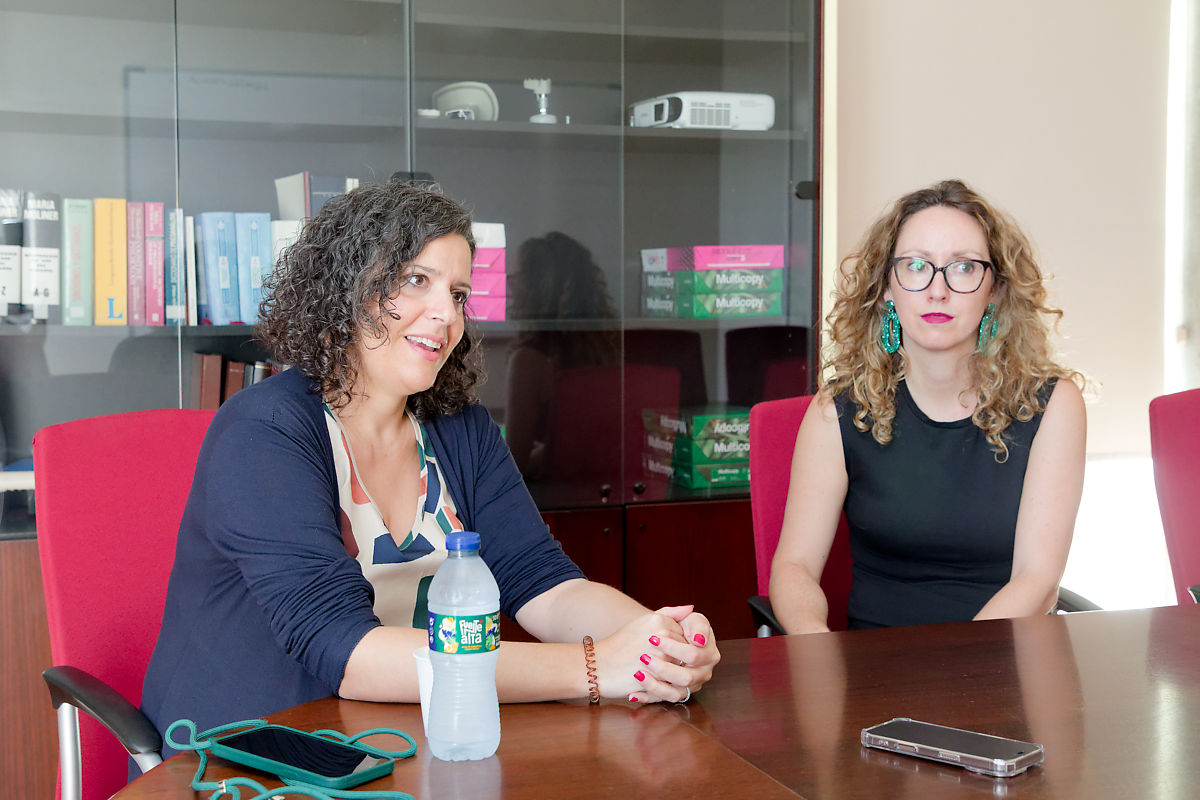
Pina and the ULL professor Helena Bonache.
“That scale has been used in many studies, both mine and those of colleagues, to find out what motivates people to commit these crimes. It is behaviorally based and is a proclivity scale that measures tendencies and, in effect, asks people what they would do in certain situations, whether they would find it fun, whether it makes them feel in control… We want to know if they would do it if the right conditions were present,” explains the British researcher.
Both psychologists believe there is a clear connection between pornography and prostitution, and also that the tendency of some people to take pictures of themselves or others has been exacerbated by a certain "pornographic culture" that is increasingly present in society. "We have a very voyeuristic culture; we like to watch other people, to know what they are doing, even during their sexual activity.".
And all of this is also closely linked to the type of pornography being consumed, "which emphasizes showing scenes that have been filmed without people's consent, using titles like 'She's my girlfriend doing whatever and she doesn't know she's being filmed.' That's why I think there's a strong connection between how we feel about prostitution and how we feel about pornography, with the added factor of misogyny and sexism to explain why people share these images that don't belong to them.".
Aside from the seminar, the visiting professor was able to connect with researchers in related fields at the Faculty of Psychology, such as those dedicated to animal abuse. Therefore, she believes there are “many issues that could naturally lead to joint collaborations between the universities of Kent and La Laguna.”.

 Spanish
 English
 French