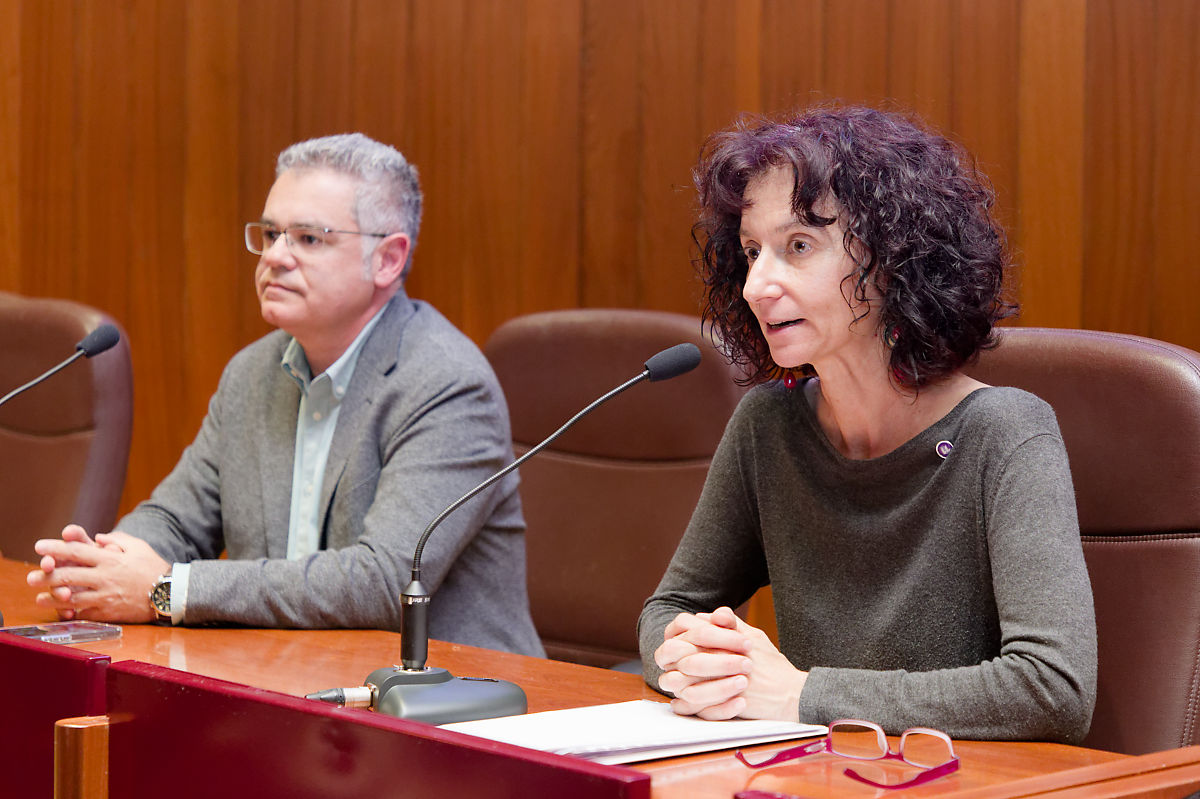
Coordination between the Canary Islands' public universities, high schools, vocational training centers, and the Regional Ministry of Education is essential to adequately prepare students for their transition from secondary to higher education. Therefore, meetings with guidance counselors are held every year. like the one celebrated today, On Thursday, October 31st, at the University of La Laguna, a meeting was held that brought together around one hundred people from the institutions involved in the process. This meeting focused particularly on the new University Entrance Examination (PAU) model, which will begin to be implemented gradually throughout the country starting this academic year.
The Vice-Rector for Students at the University of La Laguna, Rosario Hernández Borges, acted as host, welcoming the guidance counselors from both Canary Island provinces who had traveled to the Faculty of Economics, Business, and Tourism to attend this forum. She emphasized the importance of this professional group, given their vital role in "reducing the level of uncertainty" among secondary school students, especially at this particular time when there are doubts surrounding the change in the university entrance exam format. "Information and guidance provide students with the tools to make sound decisions in the future, and it will depend on you.".
Hernández Borges also addressed the high rate of school dropout in the Canary and Balearic Islands, noting that insularity is clearly a contributing factor, although it is a complex problem involving numerous elements. He reiterated that information and guidance staff in schools can play a significant role in finding solutions.
The opening ceremony also included the participation of the Deputy Minister of Education of the Canary Islands Government, José Manuel Cabrera Delgado, who began his remarks by offering, on behalf of the regional government, a message of support and encouragement to the areas affected by the devastating storm of October 30th, particularly Valencia. Turning to the subject matter, he addressed the changes to the University Entrance Exams (PAU), the result of a consensus reached between the autonomous communities and the Ministry of Education regarding the need for a more competency-based and standardized assessment across the country.
He noted that the changes introduced to achieve these two objectives will be “gradual” over the coming years, since “not all communities start from the same point.” This year is the first in this process, and he acknowledged that it had caused some concern within the educational community. However, thanks to the work of universities and faculty, the sample exams for the different subjects have now been completed on schedule and are available for consultation by anyone interested, which will help to clear up many of the existing doubts.
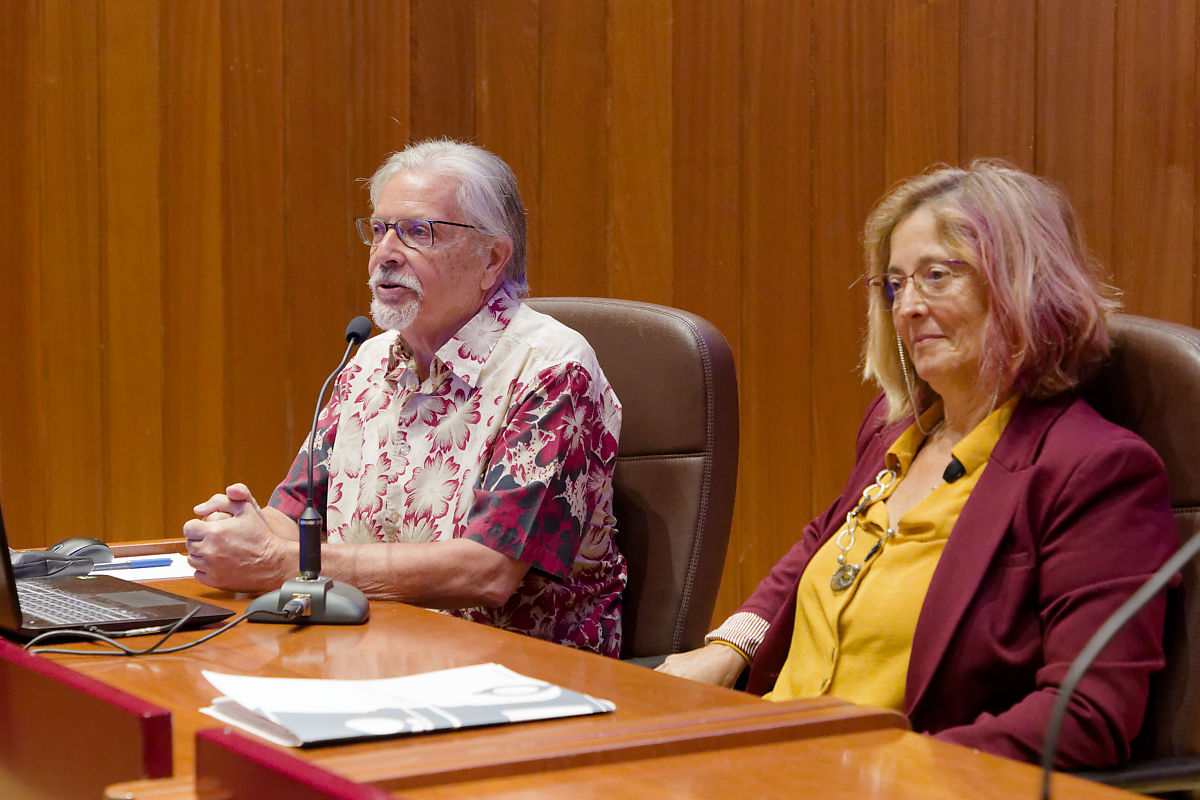
Antonio A. Delgado and Rosalía Mendoza.
The coordinator of the access tests at the University of La Laguna, Antonio Adelfo Delgado Núñez, was in charge of presenting the new features of the PAU of 2025, which are not many and, in addition, some of them had already been introduced in the EBAU of this year, such as the possibility of choosing History of Philosophy as one of the optional subjects within the general phase of the test.
Thus, this assessment will continue to have two phases: a general phase, which is mandatory, and a specialized phase, which is optional. In the first phase, each student must pass four tests: Spanish Language and Literature; a first foreign language chosen by the student from English, French, German, or Italian; a choice between History of Spain and History of Philosophy; and a core subject from the student's chosen 2nd year Baccalaureate specialization.
In the optional phase, there are some slight differences. Students can register for four subjects, two of which can be core subjects for their chosen specialization. They can also choose up to two foreign languages if they did not take the general phase exam, and only one if they took another language test in the general phase. The structure of four days for the June session and three for the July session remains the same, since there are more students in the former, and therefore the general exams will be held over two days: one for students in the Science specialization and another for those in the other specializations.
Following Delgado Núñez's presentation, Rosalía Mendoza, educational advisor from the Information and Guidance Service of the University of La Laguna, addressed topics such as the calculation of entrance and admission grades, the undergraduate degree programs offered by the University of La Laguna for the upcoming academic year, indicative cut-off scores, the weighting of different subjects, student support resources, and activities for prospective university students. After a break, representatives from the University of Las Palmas de Gran Canaria, including Antonio Sánchez and Cristina Chirino, spoke.

 Spanish
 English
 French