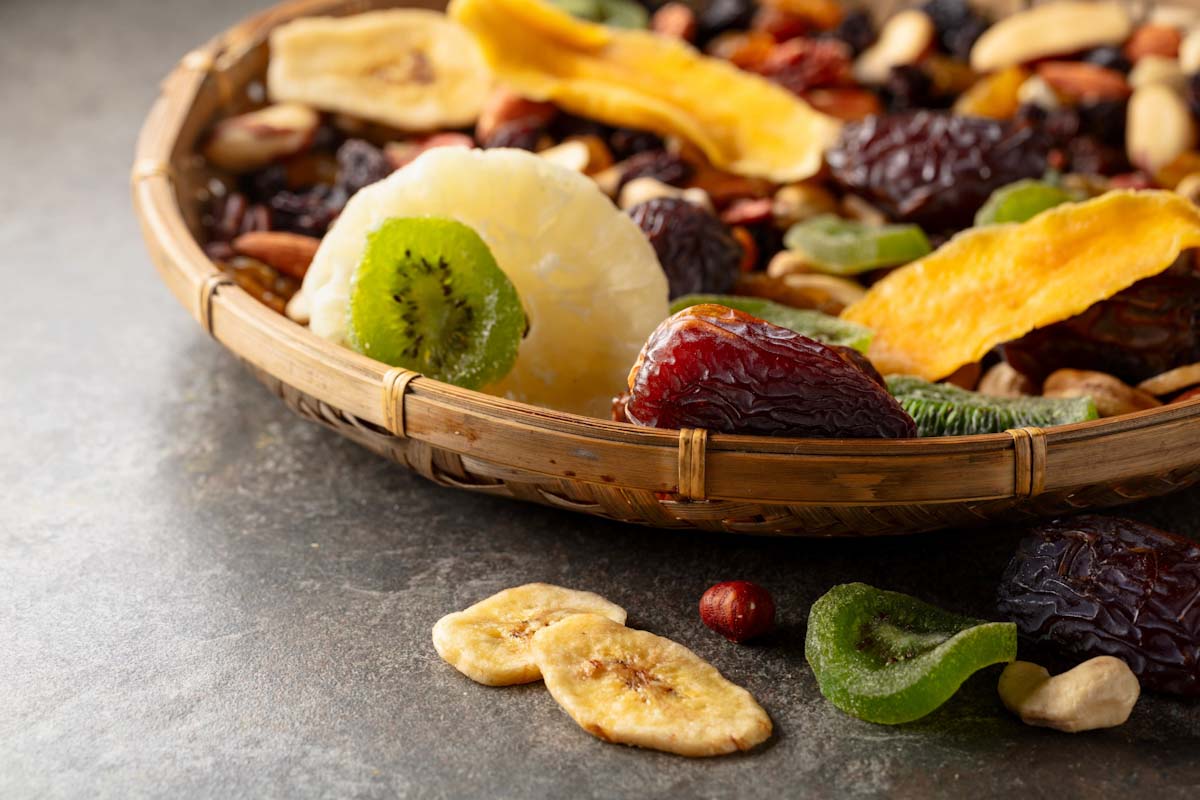
Dried fruit is one of the most consumed products by the Spanish population, and in fact, its consumption has increased in recent years due to its longer shelf life, faster availability compared to fresh fruit, and especially its nutritional properties, since dehydration leads to a higher concentration of vitamins, minerals, and fiber. A research group from the University of La Laguna warns of the presence of certain contaminants if the recommended daily intake is exceeded.
Many of these products come from third countries, such as dates, for example, and researchers emphasize that it is important to monitor the content of certain contaminants such as some toxic metals such as aluminum (Al), cadmium (Cd) or lead (Pb), among others.
A study from the University of La Laguna published in the Foods magazine The study analyzes the toxic metal content of dried fruits (dates, prunes, sultanas, dried apricots, and dried figs) to assess exposure from their consumption. The study was authored by Assistant Professor Dr. Soraya Paz Montelongo, of the Inter-University Group of Environmental Toxicology and Food and Drug Safety from the academic center.
The researcher explains that the dried fruit samples were purchased from major retailers in Tenerife (supermarkets and local shops), selecting the best-selling brands (store brands and well-known brands). The determination of toxic metal content was carried out using inductively coupled plasma optical emission spectrometry (ICP-OES).
Among the relevant results, the aluminum content recorded in prunes stands out, with an average of 12.7 mg Al/kg. However, when carrying out the risk assessment, and assuming a consumption of 30 g/day of these products (indicated as the recommended or normal serving), the lithium (Li) intake in all dried fruits is particularly noteworthy. In fact, in the case of dried prunes, it reaches 35% of the tolerable daily intake of lithium established by the EFSA (European Food Safety Authority) at 2 μg/kg of body weight per day (p-RfD, reference dose).
However, the researcher from the University of La Laguna indicates that maintaining a consumption of 30 g/day of any of the analyzed dried fruits would not pose any health risk from ingesting the toxic metals tested. Nevertheless, this type of study is relevant given the general increase in food contaminants.

 Spanish
 English
 French