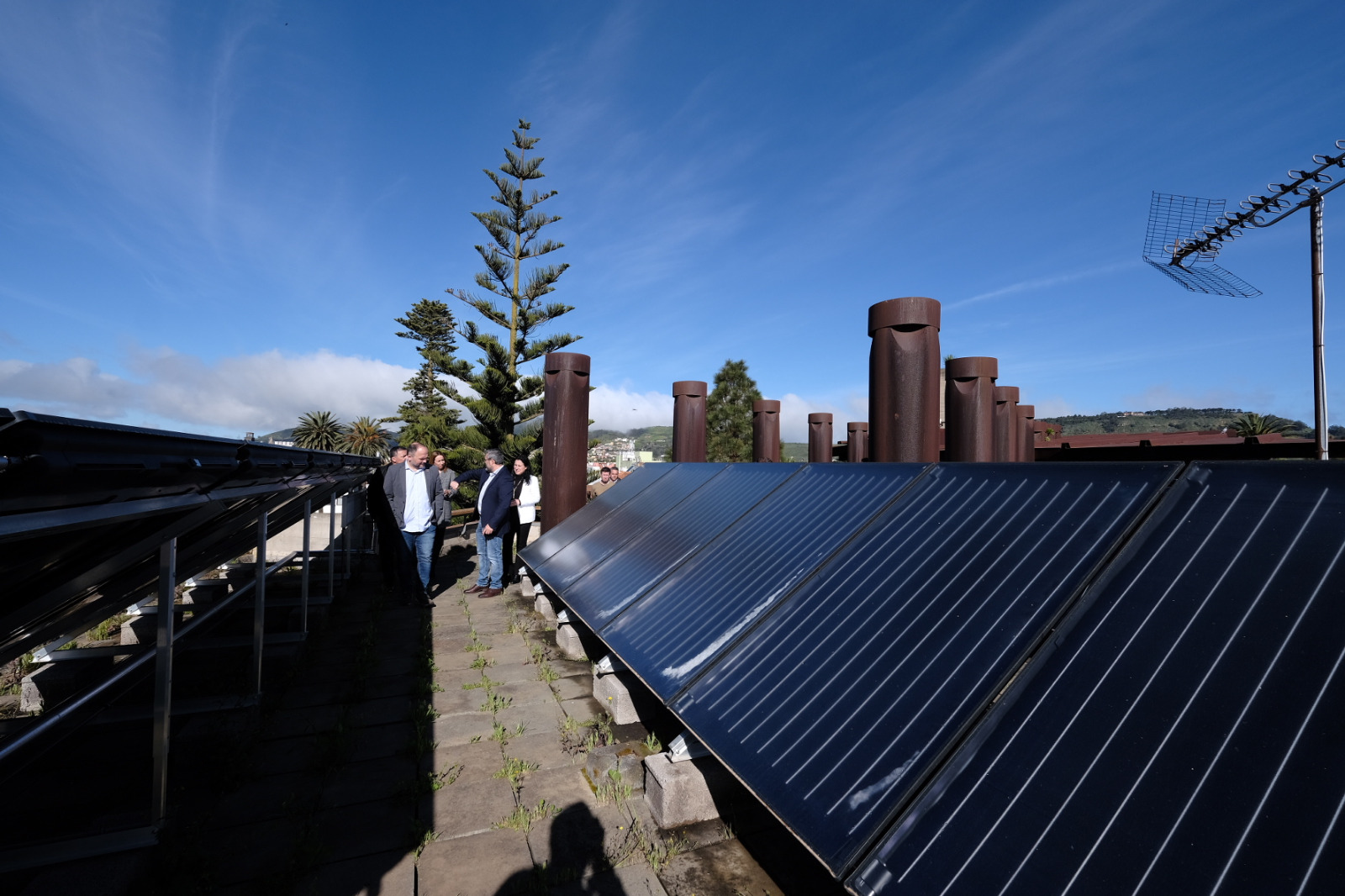
The University of La Laguna has received a grant of 2 million euros from the Government of the Canary Islands to promote the self-sufficiency of public administrations, within the framework of the Sustainable Energy Strategy in the Canary Islands (Program 1, Lines 1 and 2), charged to the Recovery, Transformation and Resilience Plan (Component 7, Investment 2).
In July 2020, the European Council agreed on an exceptional temporary recovery instrument known as Next Generation EU for all Member States. The Recovery Fund ensures a coordinated European response to address the economic and social consequences of the pandemic.
The Recovery and Resilience Facility (RRF) forms the core of the Recovery Fund. Its purpose is to support investment and reforms in Member States to achieve a sustainable and resilient recovery, while promoting the EU's green and digital priorities.
This grant will allow the academic center to continue advancing its energy-saving measures with the installation of a total of 3,500 photovoltaic panels on the roofs of 22 buildings. In fact, panels have already been installed on the roofs of the Law, Biology, Fine Arts, Journalism, and Technical Architecture buildings, as well as on the roofs of the General Research Support Service (SEGAI) and student accommodation centers.
This institution has nearly fifty buildings dedicated to teaching, research, and administrative and service activities, which are used daily by approximately 20,000 people. Currently, energy consumption is estimated at 12,000 MWh annually, with an approximate cost of 3.7 million euros. Therefore, the academic center has committed to a significant investment in photovoltaic installations to increase its self-sufficiency in electricity and reduce its dependence on fossil fuels.
It is anticipated that upon completion of the investment project, 3.8 MWh will be generated, covering approximately 32.1% of total energy consumption and resulting in annual savings of around €900,000. The institution plans to reinvest these savings in new sustainability policies, including improvements to interior lighting, upgrades to outdated installations, reinforcement of building envelopes, optimization of HVAC systems, improvements to water networks, and rainwater harvesting projects for irrigation.
This investment will significantly contribute to reducing the carbon footprint of the University of La Laguna, which, according to data submitted in 2023 to the Carbon Footprint Registry of the Ministry for Ecological Transition and the Demographic Challenge, the installation of solar panels on six buildings, along with the incorporation of two heat pumps and the purchase of certified renewable energy, have prevented the release of some 845,000 kg of CO₂ into the atmosphere.2.



 Spanish
 English
 French