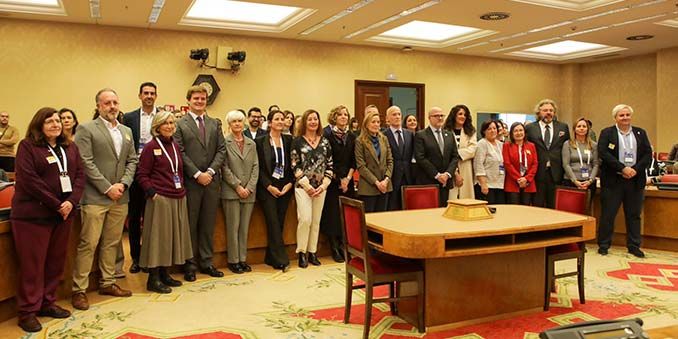
The Science and Technology Office of the Congress of Deputies (Office C) presented four new reports this week to the Constitutional Chamber of the Lower House, providing scientific evidence on topics of socio-political relevance for Spain in the medium term: Artificial Intelligence and Education; Active Suicide Prevention; Critical Materials and Raw Materials in the Energy Transition; and Sustainable Coastal Zone Management. Carina Soledad González, Professor of Architecture and Computer Technology at the University of La Laguna, participated in drafting the first of these reports.
The reports summarize the regulatory context and compile the available scientific and technological evidence and its implications for the topics analyzed. They are also supported by extensive literature and interviews with scientists, researchers, and experts, and are thoroughly reviewed. Method C, used to prepare these reports, can be consulted. here.
All reports are licensed under Creative Commons 4.0 and are publicly available: Artificial intelligence and education, Active suicide prevention, Materials and raw materials critical to the energy transition y Sustainable management of coastal areas. These documents were commissioned by the Bureau of the Congress at its meeting of February 22, 2024, from a selection of 12 topics proposed by Office C for their potential relevance to Spain in the medium term and in collaboration with its Advisory Board, which includes representatives from the main national research institutions, organizations and associations.
Carina González's contribution to the Report on Artificial Intelligence and Education focused on analyzing advances in intelligent tutoring systems, personalization, and adaptation—areas she researched in her doctoral thesis. She explored the evolution of these systems over the last 20 years, along with the scientific evidence supporting their development. “Furthermore, I addressed the current state of affairs, especially regarding generative AI and virtual assistants such as chatbots, voice assistants, and social robots, where I am currently supervising several doctoral theses and research projects,” explains the professor from the University of La Laguna.
Another aspect she addressed was the need to build a more ethical, inclusive, and gender-sensitive AI. “In the ITED research group of the Department of Computer and Systems Engineering at the University of La Laguna, we have created tools such as the ADC Toolkit and Ethix, which serve as a guide for integrating ethical and gender-sensitive values into the technology creation process,” she explains.
With the aim of involving civil society in drafting the proposed topics, Office C recently launched a public consultation in which any citizen, without needing to be an expert or belong to the scientific community, could contribute topics they considered relevant and amenable to scientific study. This consultation will contribute to the upcoming proposal of topics that Office C will submit to the Bureau of the Congress. The event was broadcast live on the Congress of Deputies' YouTube channel and is available for viewing. display.
(Note and image provided by Office C).

 Spanish
 English
 French