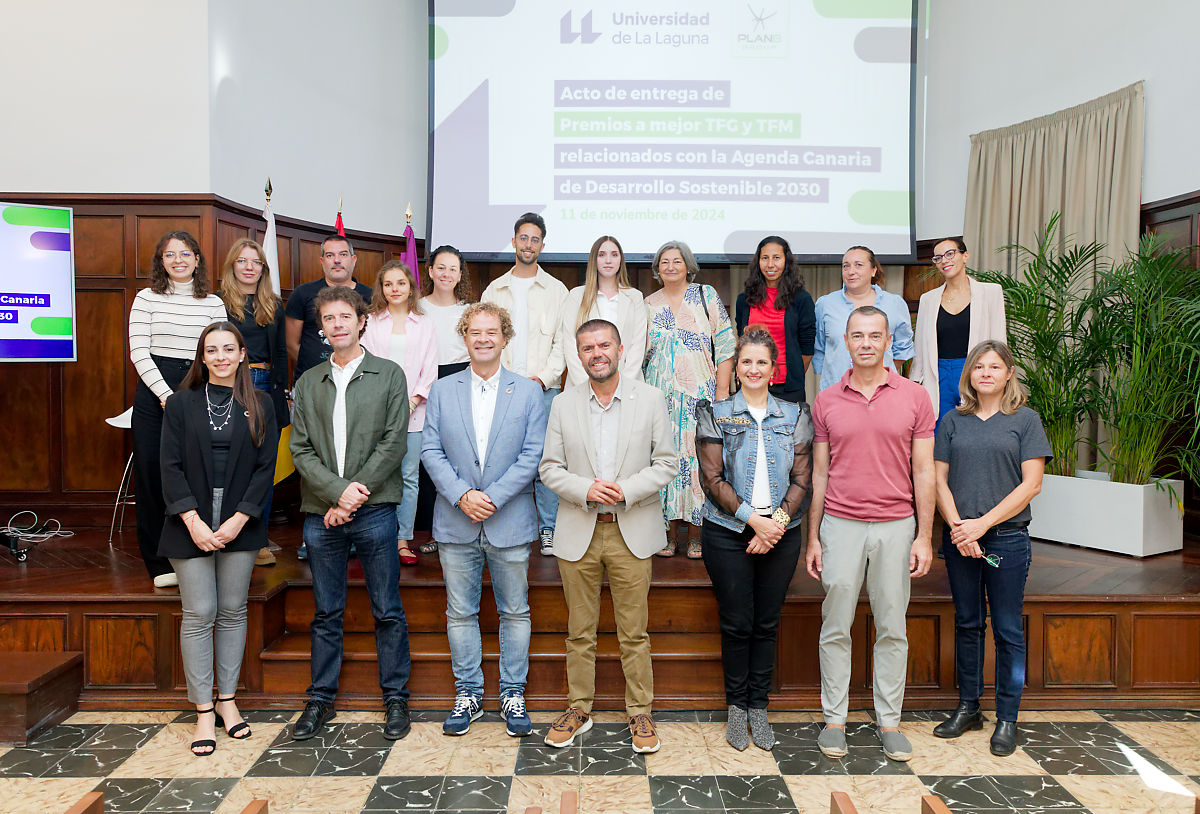
The University of La Laguna, under the organization of the consultancy Plan B Group, presented yesterday, November 11, the awards for best Bachelor's Thesis (TFG) and Master's Thesis (TFM) related to the Canary Islands Agenda for Sustainable Development 2030, This award, now in its third year, has been given to students of the educational institution. This initiative stems from the commitment of both entities to promote academic research that, aligned with the Sustainable Development Goals, proposes innovative solutions to the challenges and priorities facing the Canary Islands.
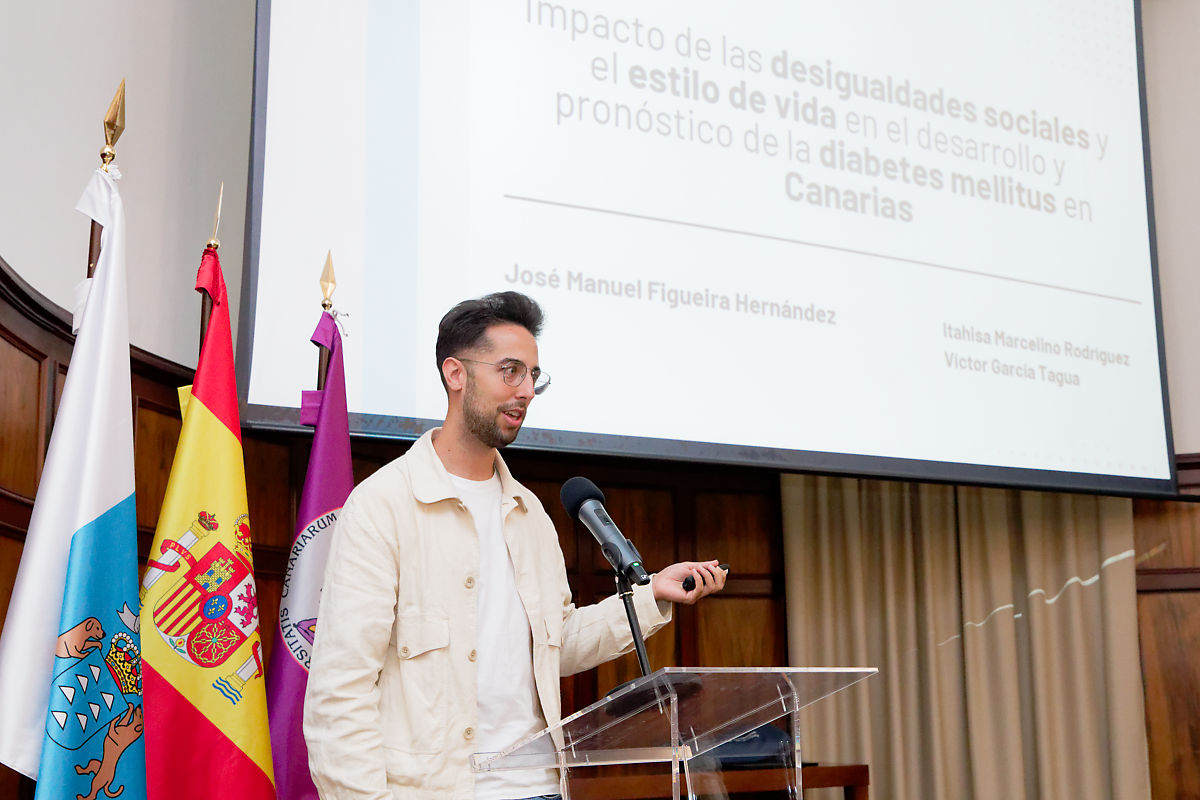
José Manuel Figueira.
José Manuel Figueira Hernández, a graduate of the Degree in Human Nutrition and Dietetics, and Wendy Rodríguez González, a graduate of the University Master's Degree in Gender Studies and Equality Policies, were the people recognized, respectively, with the award for best TFG and TFM, among a dozen works presented.
Under the title “Impact of Social Inequalities and Lifestyle on the Development and Prognosis of Diabetes Mellitus in the Canary Islands,” one of the most prevalent diseases in the Canary Islands, Figueira has sought to go beyond clinical analysis to focus on the socioeconomic factors that influence the likelihood of developing type 2 diabetes and suffering serious complications. Among the aspects evaluated are income level, access to education, and place of residence, with a sample of 7,160 people.
With overweight and obesity as the main risk factors for developing diabetes, the elements analyzed are so relevant that, in the conclusions, Figueira states that, “in terms of mortality, socioeconomic status plays a key role: the most disadvantaged social classes have a higher risk of death,” with the risks being three times higher in older men from this social stratum. This “underscores the importance of socioeconomic inequalities in the progression of the disease.”.
In this way, the results “could have a real impact by providing key information for the development of more effective and equitable health policies, in line with the objectives set out in Canary Islands Target 3.4.3,” Figueira points out. Specifically, this target aims to reduce mortality from cardiovascular diseases, cancer, diabetes, and chronic respiratory diseases.
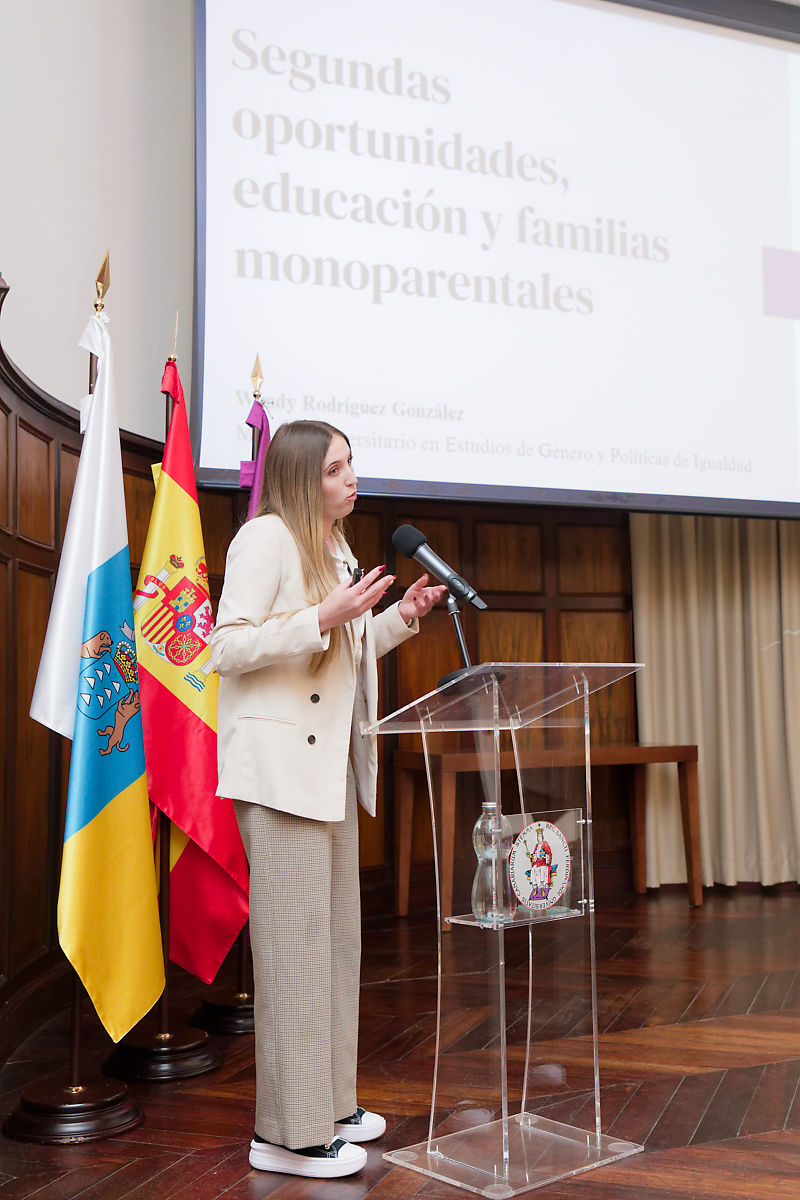
Wendy Rodriguez.
Education and single-parent families
Wendy Rodríguez's research, titled "Second Chances, Education, and Single-Parent Families," focuses on the inequalities faced by single-parent families compared to other family models, with female-headed families predominating (80% according to 2021 data from the National Institute of Statistics). The author emphasizes that her analysis reveals the overrepresentation of job insecurity and child poverty.
Based on a solid theoretical framework and using a mixed methodology that combines quantitative and qualitative data, Rodríguez analyzes in 64 families in Tenerife the gender gaps in the labor market and the added difficulties that mothers encounter in reconciling childcare with employment and training in the Canary Islands.
Furthermore, this work “aims to contribute to the design of second-chance programs that improve the training of mothers, positively impacting the educational performance of their children, for which the support of municipal public administrations will be fundamental,” says Rodríguez. This research addresses various challenges outlined in the People, Prosperity, and Public Governance dimensions of the Canary Islands 2030 Agenda.
The evaluation committee, chaired by Cynthia Albelo, coordinator of projects and corporate culture at Plan B Group, and also composed of Manuel González de la Rosa, professor of Business Organization at the University of La Laguna and Javier Concepción, head of the environmental service of the Santa Cruz de Tenerife Chamber of Commerce, highlighted the quality of the works presented and the growing interest of university students in the sustainable development of the Canary Islands.
At the opening of the event, the rector of the University of La Laguna, Francisco García, defended the importance of scientific knowledge and academic rigor in times when misinformation plays a major role, and expressed his gratitude for the continued public-private collaboration to address, with optimism, the challenges facing the future of humanity.
Alberto Santana, CEO of Plan B Group, also thanked the university for the joint work that both entities have been developing for many years and for being able to fulfill the objective of continuing to raise awareness of the 2030 Agenda among society with these awards, but also as a roadmap in which all the parties involved must work hand in hand: companies, public entities, universities, third sector organizations and citizens.

 Spanish
 English
 French