A recent study published in the planned Ecosystems and People, in which he has participated Zebensui Morales Reyes, Researchers from the Department of Animal Biology, Soil Science and Geology at the University of La Laguna, along with researchers from the Institute of Advanced Social Studies (IESA-CSIC), the International Center for Environmental Law Studies (CIEDA-CIEMAT) and the universities of Alicante, Miguel Hernández of Elche and Zaragoza, have demonstrated that the traditional ecological knowledge of shepherds can be key to reducing conflicts with wolves and facilitating their coexistence with extensive livestock farming.
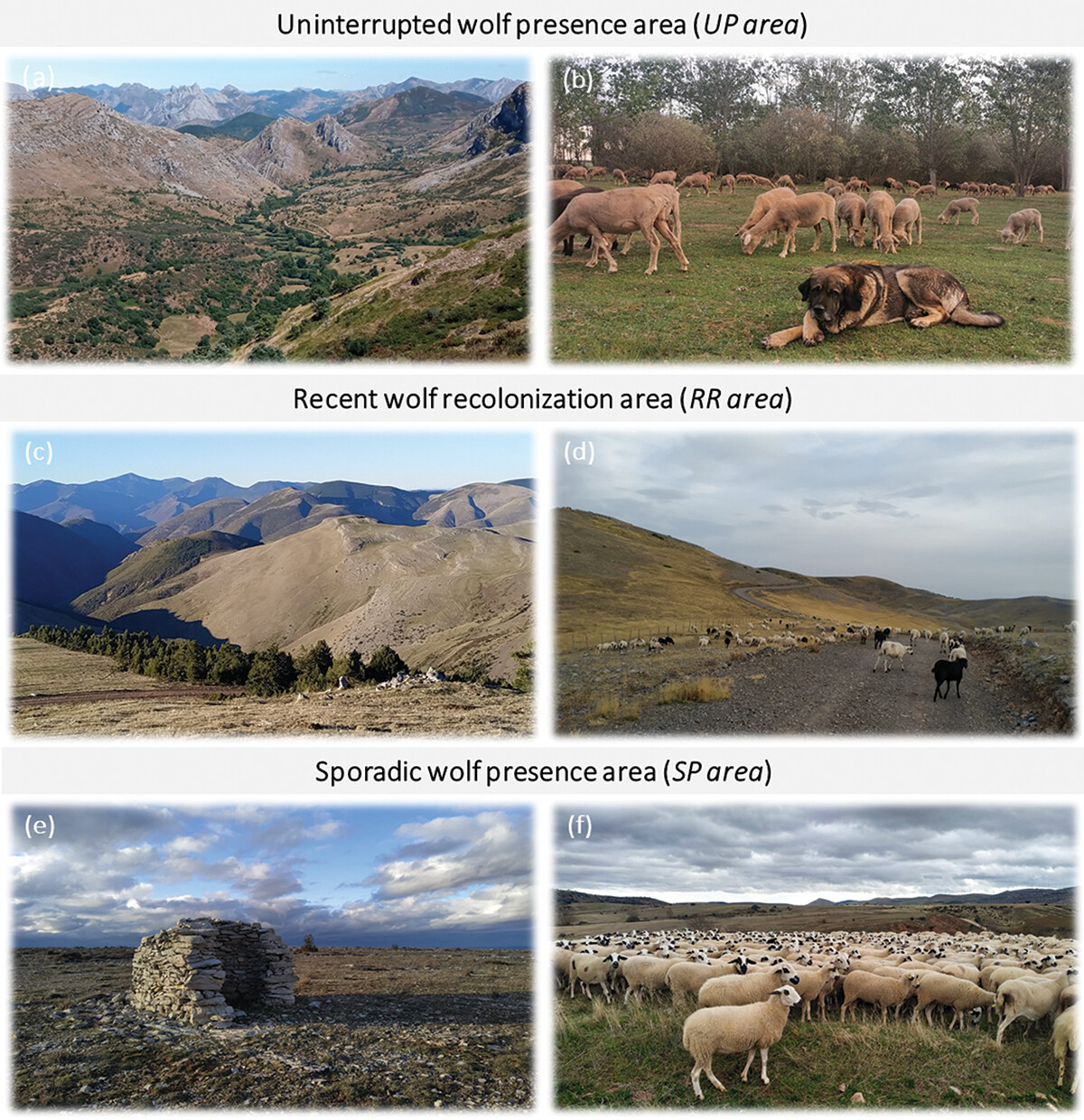
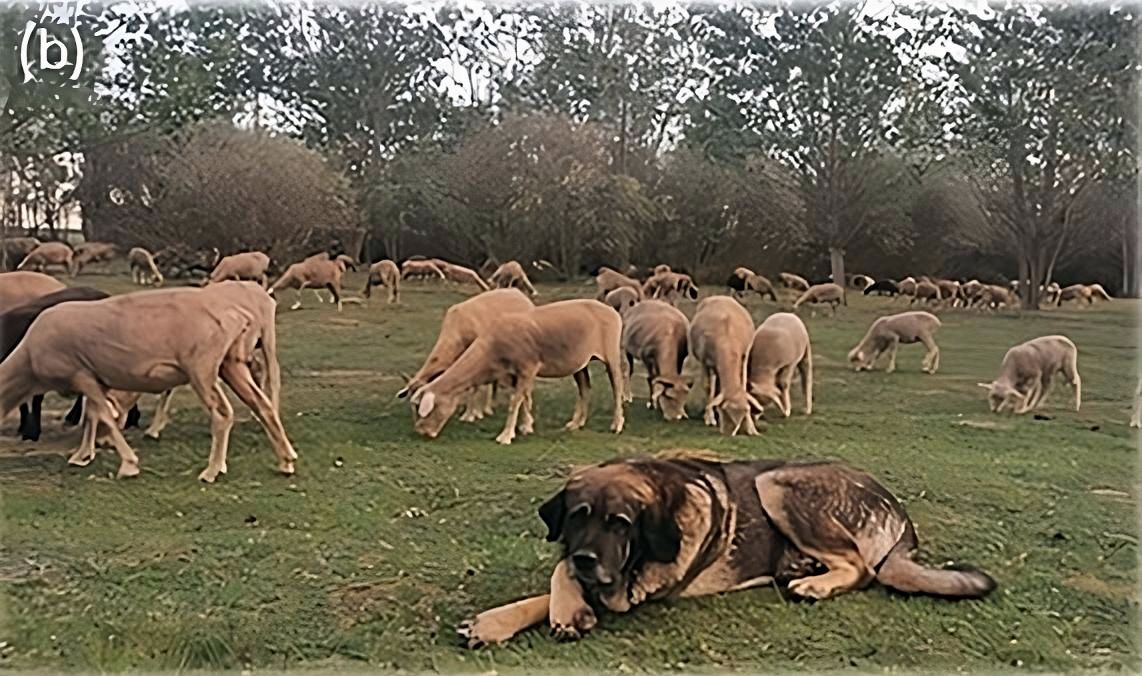
Photographs of the mountainous landscape (a) and the flock of sheep with a Leonese mastiff in the area of continuous wolf presence (b); of the mountainous landscape (c) and the flock of sheep in the area of recent recolonization (d); and of the plains landscape (e) and the flock of sheep in the area of sporadic presence (f). Credits: C. Javier Durá (a, c, d, e, f) and Abel Flórez (b).
The wolf (Canis lupusThe wolf is recovering some of its historical range in Europe. Therefore, it is important to highlight the ecosystem services that wolves provide to humans, contributing to the natural balance by controlling diseases in wildlife that are potentially dangerous to livestock, and their role as a regulator by controlling species that can damage crops.
To better understand the conditions of coexistence between wolves and shepherding, researchers have conducted interviews with farmers and shepherds from three Spanish regions with different levels of wolf presence: one area with uninterrupted presence (León), another of recent recolonization (north of Soria-south of La Rioja) and a third with sporadic presence (rest of the province of Soria).
The results show that, in areas where wolves have always been present, the maintenance of traditional knowledge associated with livestock management, such as the use of mastiff dogs, the shepherd's trade, and guarding livestock at night, has favored the coexistence of extensive grazing systems with wolves. This is evident in the accounts of some shepherds, who comment: “If there is a sick wild boar or a wounded roe deer, the wolf will eat it and thus eliminate diseases from the countryside”; “Having good mastiffs, I'm not worried about wolves.” “For example, I have seven mastiffs because I also want the wolf to exist, because if there were no wolves, there would be no mastiffs.”.
Conversely, in regions where the wolf had disappeared and has recently returned, the loss of traditional knowledge has led to less tolerance towards wolves and less appreciation of the benefits they provide.
The research team emphasizes that recovering and implementing this traditional knowledge in policies, such as the EU's Common Agricultural Policy (CAP), the Nature Restoration Act, or the Ministry's National Strategy for Wolf Conservation, could be essential to improving coexistence between wolves and extensive livestock farming. The latter, with an annual budget of €20 million, allocates funds precisely to promote this coexistence.

 Spanish
 English
 French