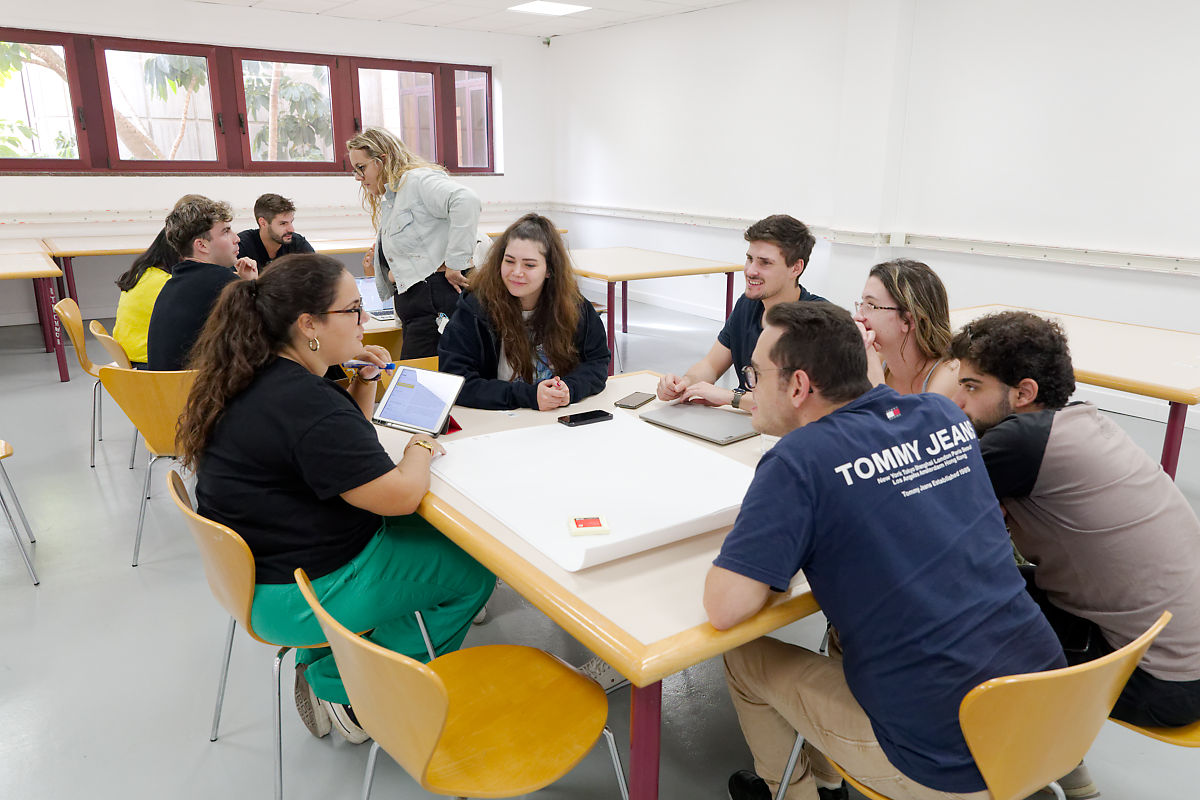
A dozen students from the European university alliance STARS EU, The University of La Laguna, to which it belongs, has finished today (Friday, November 15) the classes of a BIP Erasmus+ course on circular economy, the face-to-face part of which was taught in the Faculty of Economics, Business and TourismThis concludes the face-to-face part, developed after four consecutive weeks of online training, in which 25 students from five universities participated and innovative teaching techniques were used that promote collaboration between students from different countries.
These in-person sessions, held from November 9th to 15th at the University of La Laguna, allowed students to present their ideas in a series of joint proposals, as well as conduct fieldwork and interviews with faculty from three of the nine partner universities in the alliance. The program was complemented by a series of visits to local businesses and institutions, where participants were able to learn in situ real-world examples of the concepts learned in the program.
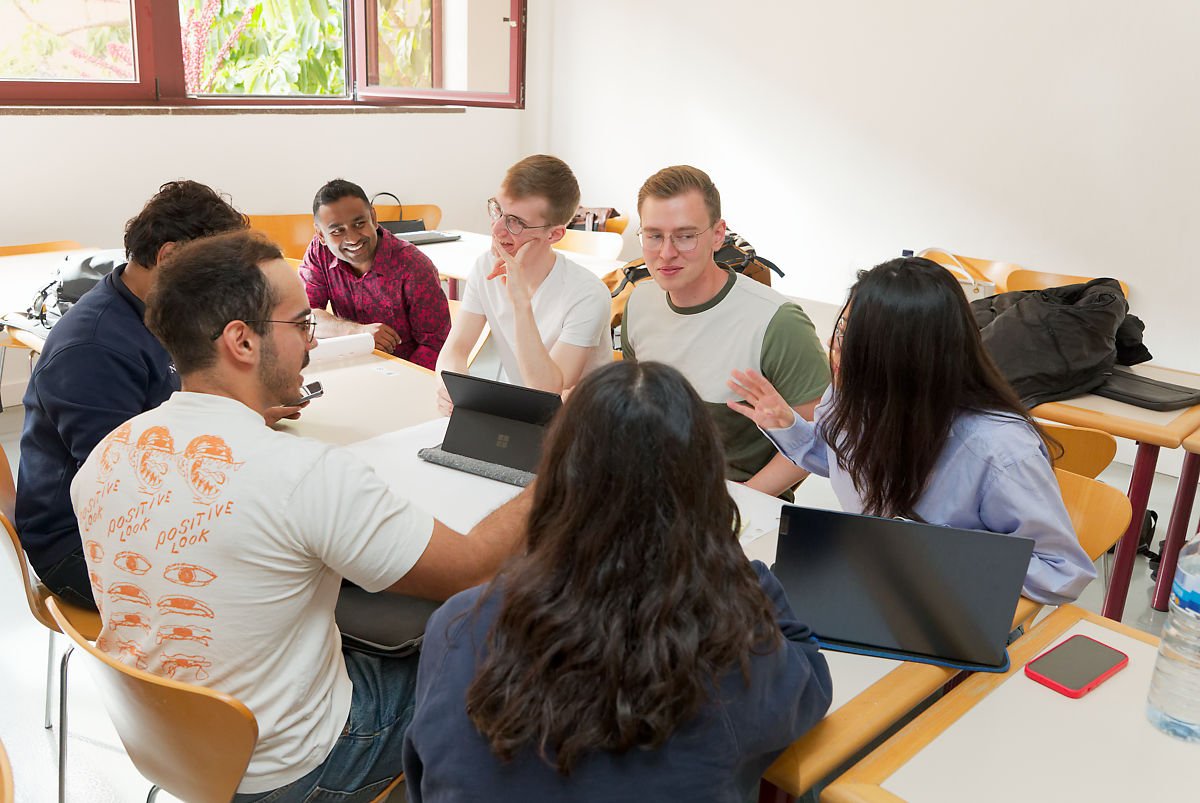 Circular Innovation Bootcamp 2024 —developed under the Blended Intensive Programme (BIP) modality of the Erasmus+ call— has brought together students and faculty from three STARS EU ALLIANCE universities: the Aleksandër Moisiu Durrës University (UAMD, Albania), the Institute Bragança Polytechnic (IPB, Portugal) and the University of La Laguna, which together with the organizer, the Kempten University of Applied Sciences (HKE, Germany), and the Kaunas University of Technology (KTU, Lithuania), have been an active part in the delivery of training activities.
After concluding the face-to-face program with the presentations shown in the classes, the students will have two weeks to develop a final project in which they must reflect and apply the fundamentals of sustainability, circularity, business models and innovation, acquired throughout the training period, prior to this short stay in Tenerife.
As he explains Rodrigo Trujillo González, researcher in the area of Mathematical Analysis, The coordinator of this BIP at the ULL, and member of the Steering Committee of STARS EU ALLIANCE, says that the objective of this type of hybrid and transnational training “goes beyond providing knowledge, since it allows students to have academic experiences close to real life and to contact a productive fabric very different from the continental one, which makes this bootcamp a compressed 'living lab' from which to enhance their abilities to face complex problems in the future.‘
Advantages of a bootcamp‘
Among the advantages offered by this Circular Innovation Bootcamp — which is equivalent to five credits — are providing students with an intensive study methodology in a short period of time, while facilitating the acquisition of practical and specific knowledge related to the circular economy, innovation and sustainability.
The face-to-face program taught in Tenerife has been structured around various business models ranging from the most advanced R&D to the tourism sector, and from water treatment (purification and desalination) to the blue economy, its turning points and importance in the 2030 Agenda.
The students in attendance received training in analyzing the development of circular economy models in these production niches and proposing innovative solutions for companies in this field. Specific knowledge about these models in the tourism sector was provided by Eduardo Parra López, an expert in tourism management and professor at [university name missing]. Business Organization, Digital Economy and Tourism at the University of La Laguna.
The online training, which began on October 7, was led by professors Sofia Cardim (IPB), Katrin Stefan (HKE), Andreas Müller (HKE), Alba Ramallari (UAMD), Lina Uziene (KTU),
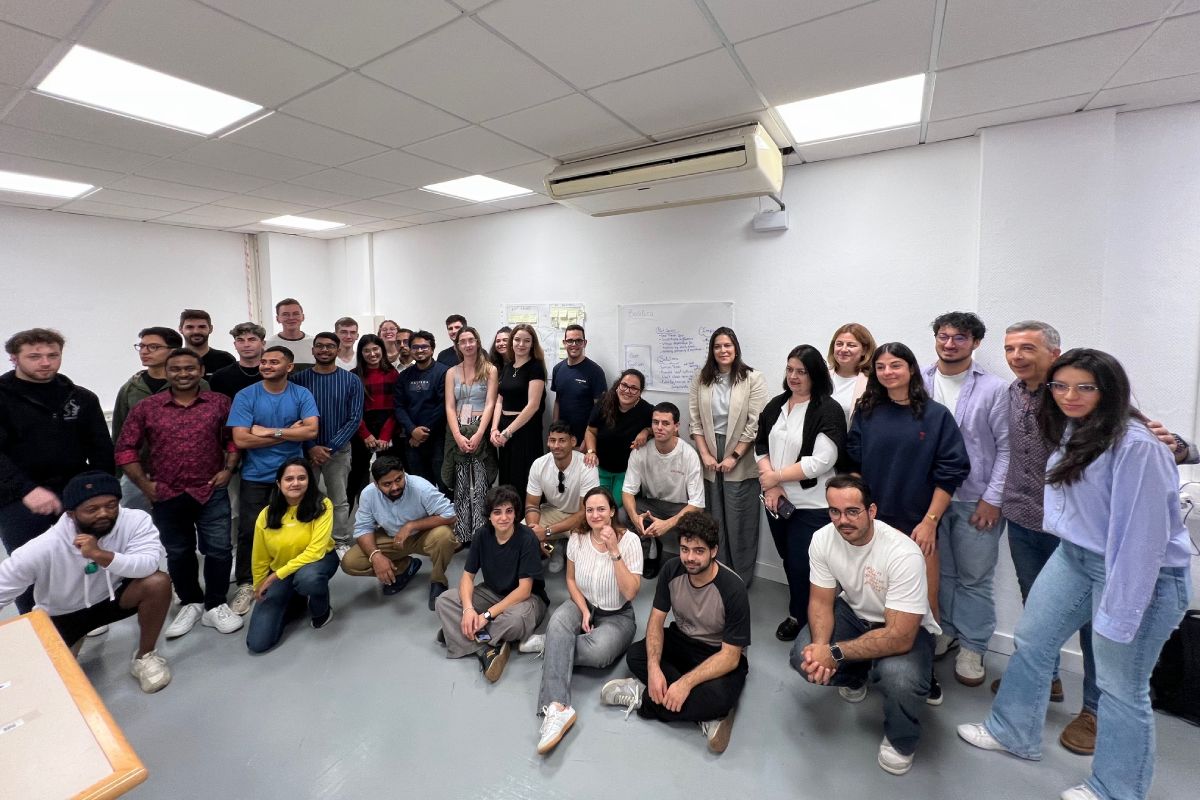
Students participating in the BIP with Professor Eduardo Parra (second from the right).
Llambi Prendi (UAMD), Paula Odete Fernandes (IPB), Filomena Barreiro (IPB), as well as Manuel Talamante and Rodrigo Trujillo, from ULL. The face-to-face classes taught at ULL were complemented with coaching sessions focused on the design of innovative proposals around the framework of the circular economy.
In addition to face-to-face classes, workshops and scheduled visits, participating students were able to explore some of Tenerife's most emblematic spots, such as Teide National Park, Garachico and the Anaga Massif. These activities were essential for understanding the island's geography and acquiring knowledge to prepare their inquiries to partner companies: IACTEC, TAGUA, Pisces VI, Wooptix and Loro Parque Foundation.
Sustainable business models
The 2024 edition of this BIP is based on a series of previous experiences developed in the Kempten University, who has perfected field studies on sustainable business models on the island of Tenerife since 2017, which included visits to the ULL, the Technological and Renewable Energy Institute (ITER), as well as meetings with members of PROEXCA, a public company for the internationalization of Canary Island companies, among other organizations.
This activity originated thanks to the professional contacts that Hon. Guenter Köch—a member of the International Advisory Board of the STARS EU ALLIANCE—maintained with the Kempten University of Applied Sciences. As a member of STARS EU, the HSB was the center that contacted the ULL to initiate this training and mobility cooperation, which, over the years, has been consolidated through the various editions of this BIP.
The organization and coordination of the company visits has been carried out under the supervision of Monika González-Koss and Köch, both at the head of Humboldt Cosmos Multiversity, a non-profit foundation that promotes the circulation of knowledge and the development of university talent.

 Spanish
 English
 French