The universities of La Laguna and Buenos Aires Researchers at the University of Buenos Aires (UBA) have begun a joint collaboration to determine the effects that atypical psychedelic substances can have on the treatment of disorders such as major depression and addiction. The objective of this research is to identify the impact that compounds such as ibogaine and noribogaine, psychoactive substances from the Gulf of Guinea (Africa), have on neuronal receptors.
The research will focus on characterizing the behavior of these two compounds, which have already shown potential in treating severe depression and rehabilitating people with addictions, as evidenced by previous studies conducted at the University of Buenos Aires and other international centers. These studies indicate that people with treatment-resistant depression who used these compounds experienced a faster recovery than those treated with conventional antidepressants.
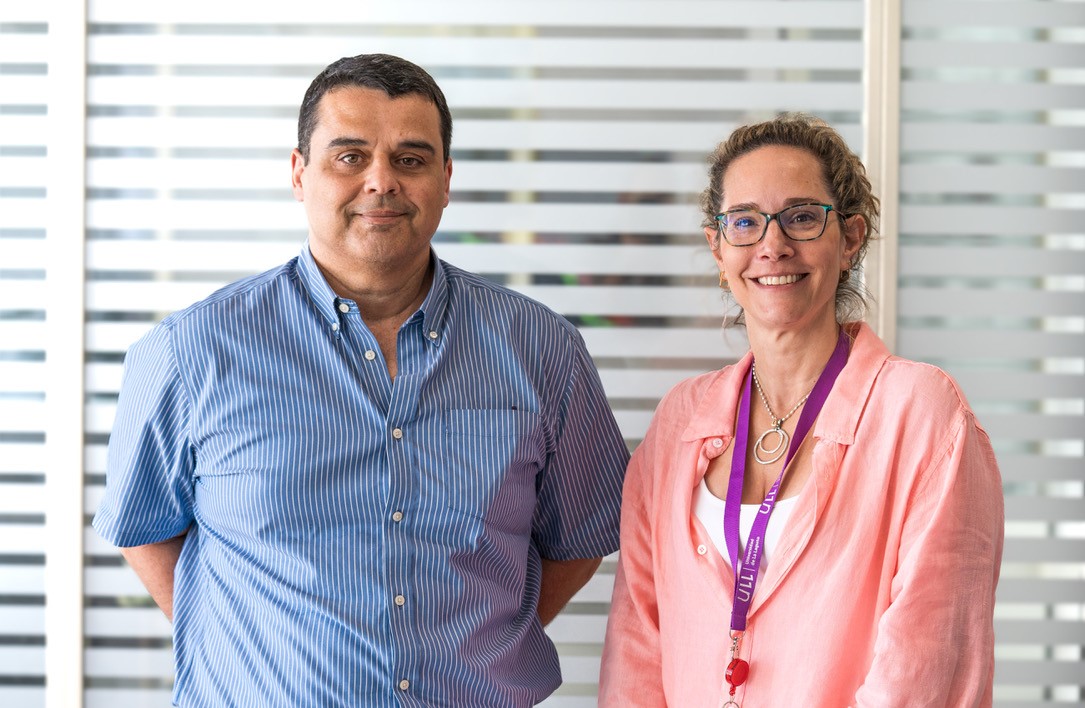
This has been indicated Teresa Giráldez Fernández, professor attached to the Department of Basic Medical Sciences of Institute of Biomedical Technologies (ITB) from the University of La Laguna, and Francisco J. Urbano Suárez, professor of the Faculty of Exact and Natural Sciences of the UBA. Both researchers have promoted a collaboration agreement to confirm that these compounds, as they have verified in the Latin American center, act by blocking NMDA receptors, the glutamate receptors with which Giráldez, an expert in models of neuronal diseases and in mutations of this type of receptor, has been working for many years.
Giráldez emphasized that this joint collaboration focuses on using systems that simplify the study of these receptors, and stressed that the research will begin with isolated cells under controlled conditions to ensure a solid foundation before considering more complex models. “Using controlled models, we can identify how these substances act in neurons, which could have clinical implications in the future.”.
Studying isolated cells offers many advantages because it allows researchers to develop approaches in the laboratory, manipulate the environment, add different substances, and make genetic modifications. “We can generate systems that range from the simplest to the most complex by adding parts of the problem. In a slice of brain or in an animal, control can be exercised to a certain extent, but in an isolated cell, most variables can be controlled, such as temperature, pH, or the physicochemical characteristics surrounding the cell. Pathological situations can also be simulated, and, above all, other components that could affect the interpretation of the response can be eliminated,” explains Giráldez.
Application of noribogaine in patients
Because ibogaine presents “certain dangers when used in humans,” according to the UBA researcher, efforts in this line of research will focus on studying noribogaine—the main psychoactive metabolite of ibogaine, and considerably safer—and its potential clinical application in patients. “Noribogaine has promising characteristics for use. In fact, it is being used in patients addicted to drugs like heroin, in order to prevent relapses. We can say that we are beginning a field of basic science that consists of characterizing its effect on the neuronal circuits of the cortex, or on cells that express these receptors.”.
Although this type of research is still in its early stages because it hasn't yet been determined whether these drugs (ibogaine and noribogaine) require the serotonin receptor, which is involved in aspects of depression, many psychedelics have begun to be used in clinical trials in the form of microdoses. "Now, microdoses have a very promising effect and eliminate many of the negative aspects that psychedelics can induce," explains Professor Francisco Urbano.
In addition to identifying the molecular mechanisms of these substances, the project, spearheaded by the University of La Laguna and the University of Buenos Aires, aims to promote academic and research staff exchange between the two institutions. The collaboration between the two centers anticipates, in the near future, the exchange of doctoral students, researchers, and faculty members to enrich research from both academic and experimental perspectives.
“The idea is to initiate a flow of people and ideas between both universities that will allow us to achieve joint scientific advances,” emphasized López, who gave a seminar during his recent visit to the University of La Laguna, within the framework of the program of grants for visiting professors for research staff funded by the Vice-Rectorate for Research and Transfer. Under the name "New frontiers of knowledge for the use of the atypical psychedelics ibogaine and noribogaine: participation of the 5-HT2A receptor in mouse thalamocortical circuits and its functional implications", the researcher from Tenerife addressed his studies focused on neurotransmitters and psychoactive effects.

 Spanish
 English
 French