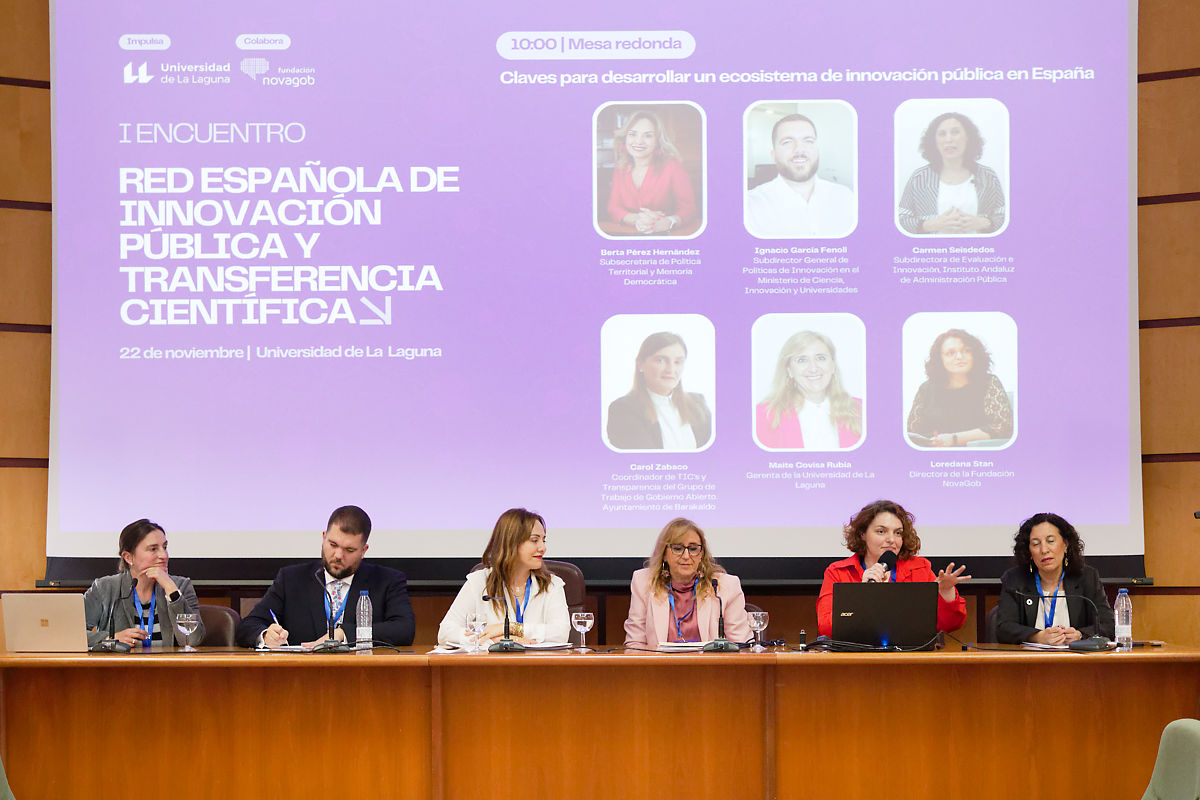
The University of La Laguna and the NovaGob Foundation have launched Spanish Network for Public Innovation and Scientific Transfer, an initiative that has started today, November 22, through a meeting at the Faculty of Economics, Business and Tourism of the academic center to promote the use of public policies based on scientific knowledge.
The purpose of this network is to foster collaboration between public administrations and the scientific community, create spaces to share experiences, recognize entrepreneurs as agents of change, and guarantee the transfer of knowledge, ensuring the creation of public policies that improve the lives of citizens.
This event was attended by public administrators from numerous Spanish administrations, including universities, regional governments, and municipalities. At the opening ceremony, Concepción Brito, president of the Canary Islands Federation of Municipalities, expressed her support for addressing innovation at the municipal level, emphasizing its potential to improve and modernize public services and foster closer ties with citizens. Antonio Llorens, Deputy Minister of Public Administration and Transparency for the Canary Islands Government, noted that strengthening governance and transparency within public administrations strengthens the democratic system. He emphasized that knowledge sharing is fundamental to increasing both social and economic benefits.
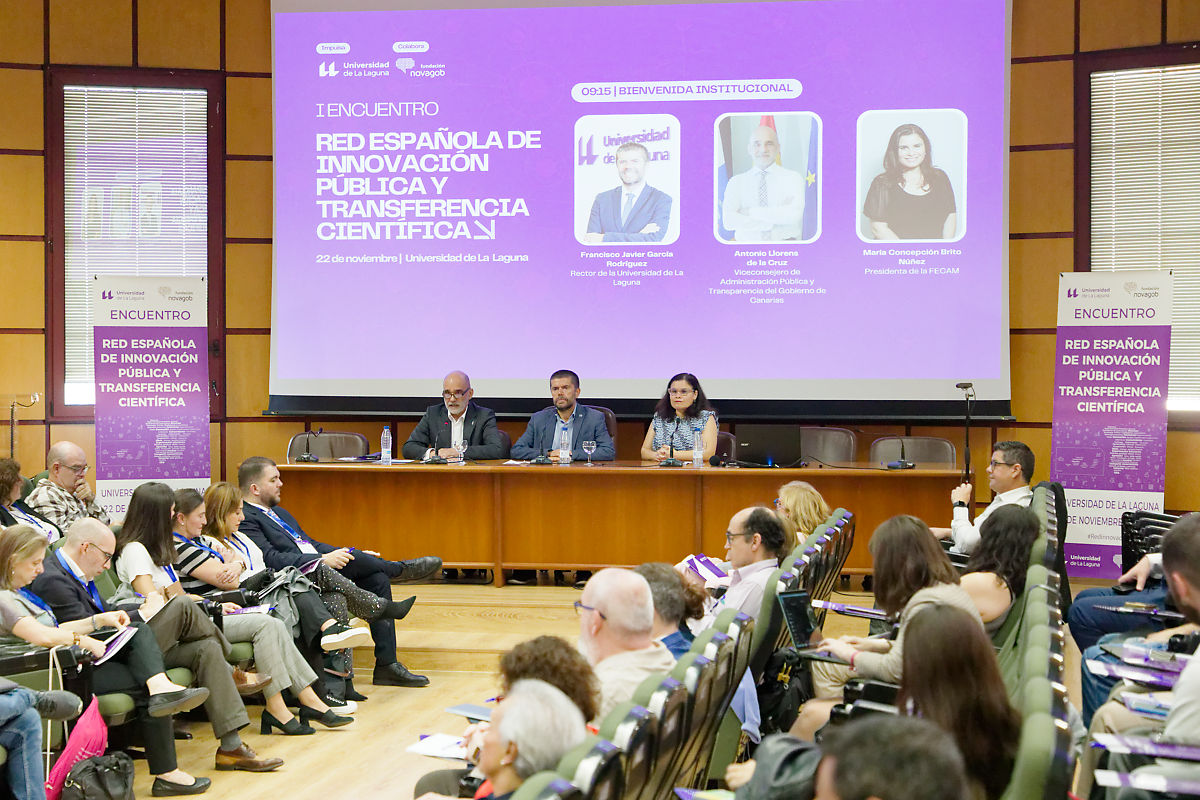
From left to right, Antonio Llorens from the Government of the Canary Islands, Francisco García, rector of the ULL and María Concepción Brito, president of FECAM.
At the network's inauguration ceremony, the rector of the University of La Laguna, Francisco García, pointed out that we live in times when science is increasingly important, yet it is becoming increasingly difficult for science to make itself heard. For this reason, he welcomed the idea of scientific knowledge transfer from the public administration.
Modernization at the ULL
“We’ve been forcing innovation, the way we always have, but that approach no longer works,” said Daniel González, Deputy Director of Strategic Planning at the University of La Laguna, speaking after the opening ceremony. And it no longer works because the world is constantly changing, making it essential to embed an innovative spirit within institutions. The Deputy Director explained that this cannot be done from a department head or a department, but rather from a higher level of strategic management.
“We need to plan for innovation in order to have an impact,” he stated, adding that alignment from the top down is essential, which means dedicating resources and time to it. “It’s about changing the organizational culture—that is, what we do when no one is watching.” In fact, he pointed out that culture can become the main obstacle to change. “There are many ICT projects in the public administration that haven’t seen the light of day because the administrative culture hasn’t changed,” the deputy manager noted.
Therefore, in his opinion, innovation must start from the ground up, from what already exists, not from the established norms. Innovation plans must be developed within institutions, not outsourced, ensuring that people participate from the outset. A plan of this nature should contain only five sections: current situation, objectives and indicators, project structure, governance, and implementation.
The speaker discussed the University of La Laguna's recently approved modernization plan, comprised of 48 projects with a six-year timeframe, developed through a participatory process. All projects are listed on the university's intranet, where all associated documents are published. The objectives are to improve the quality of services, reduce processing times and administrative burdens, ensure transparency, and promote participation and collaboration.
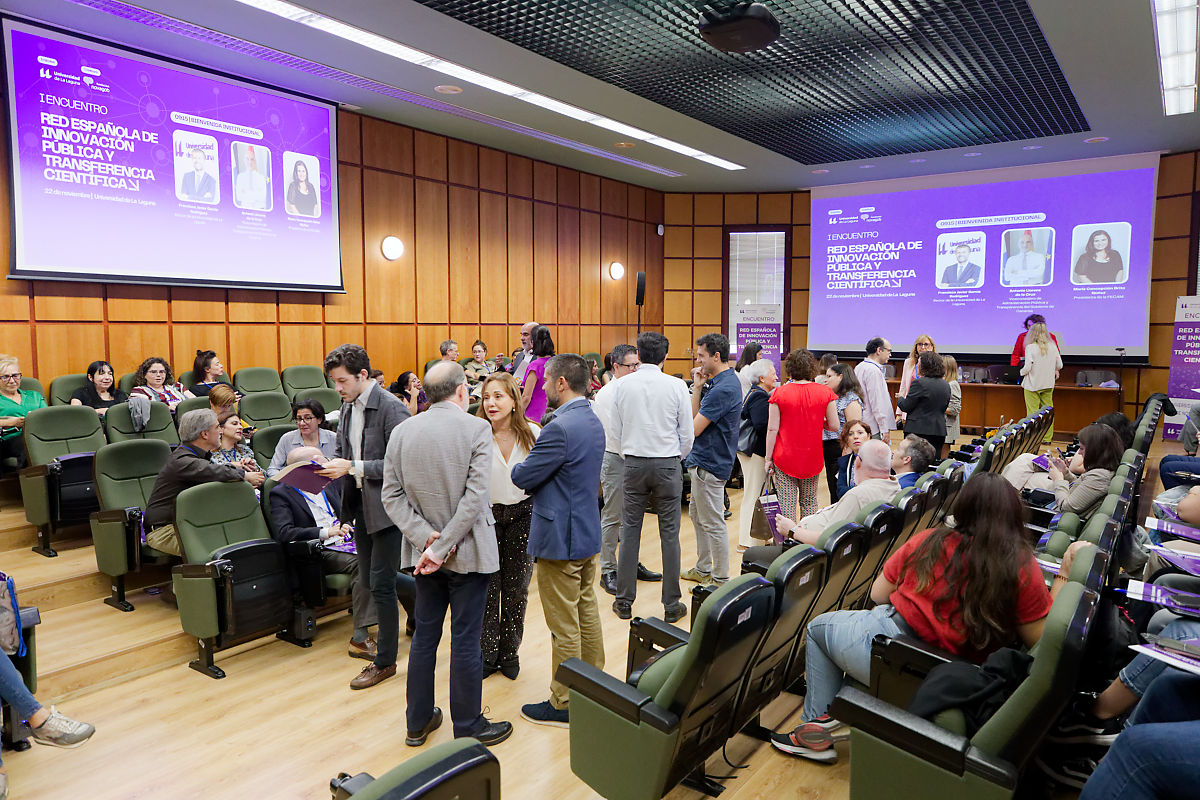 Keys to public innovation
A round table discussion then took place on the key elements for developing a public innovation ecosystem in Spain. Among the participants, Ignacio García, Deputy Director General for Innovation Policies at the Ministry of Science, Innovation and Universities, focused his remarks on simplifying and modernizing public procurement, a sector that represents a significant portion of Spain's GDP and should not be neglected. He also indicated that compliance with the law cannot be the sole objective of public administrations; rather, the goal should be the improvement of society, meaning that actions must be taken with a long-term vision.
For her part, Carmen Seisdedos, Deputy Director of Innovation and Evaluation at the Andalusian Institute of Public Administration, stated that “one of the keys to innovation is doing things without permission, but with leadership.” She added that their experience has created an ecosystem of innovative individuals that has served as a catalyst for other projects. “We innovate to generate public value and do things differently. Furthermore, innovation must incorporate a gender perspective, because women innovators do it to improve the environment.” Seisdedos acknowledged the need to engage more closely with universities and share knowledge with them.
Berta Pérez, Undersecretary of State for Territorial Policy and Democratic Memory of the Spanish Government, discussed some of the procedures for assisting citizens in the event of disasters, such as the DANA storm in Valencia. “It is in exceptional moments like these that a country's greatness is demonstrated, not by overwhelming victims with requests and documentation requirements in such extreme situations, but by having the Administration seek out and fulfill any additional requirements necessary to justify the requests and thus demonstrate its technological capacity, always preserving data protection.”.
Maite Covisa, manager of the University of La Laguna, believes it is crucial to know where we want to go. It's about co-creating together, sharing the workload, and highlighting our individual contributions—something for which this network is fundamental. “We need the organization to recognize our space, to have legal support, and, of course, to have the institution's backing.”.
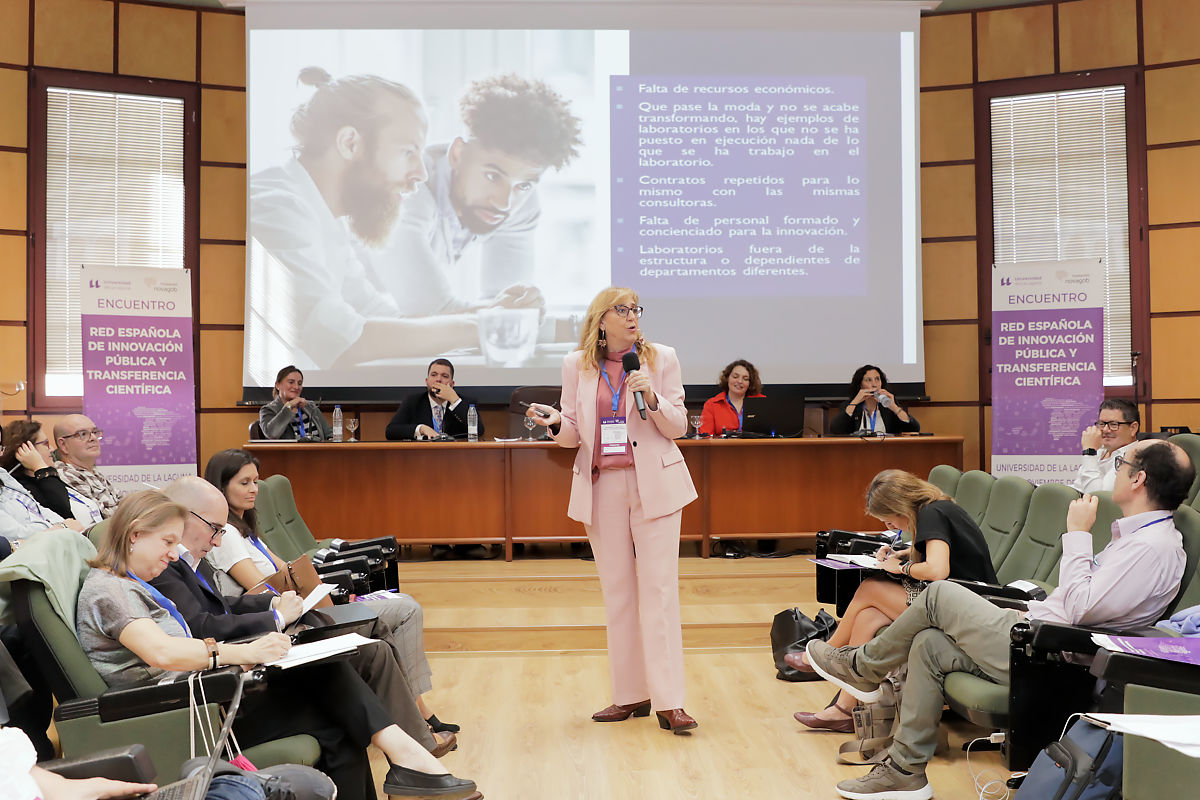
María Teresa Covisa, manager of the University of La Laguna.
The manager defended the usefulness of this network, because the sheer number of public administrations with common problems makes it imperative to unite and work together. “Through participation, we can reach many more places, sharing best practices, amidst great challenges and changes that force us to evolve very quickly.”.
“This network is about organizations, but it’s also about people, those we want to empower and create.” Covisa added that we generate new science and knowledge every day, but we don’t have time to share it, so this network will help us connect with each other. “This network aims to propose significant and impactful changes.”.
Carol Zabaco, ICT and Transparency Coordinator for the Barakaldo City Council in Biscay, also participated in the round table. “Ten or fifteen years ago, technology wasn't ready for society, only for experts. All that has changed, and the pandemic brought about enormous progress in that regard. We must use all channels, online or otherwise, for all types of people,“ the expert maintained. The speaker pointed out that in public administration, we cannot forget to consider how we will deliver projects to the public. ”Technology is the last thing that should be developed; first, we need to figure out what we want to change and how we are going to do it.”.

 Spanish
 English
 French