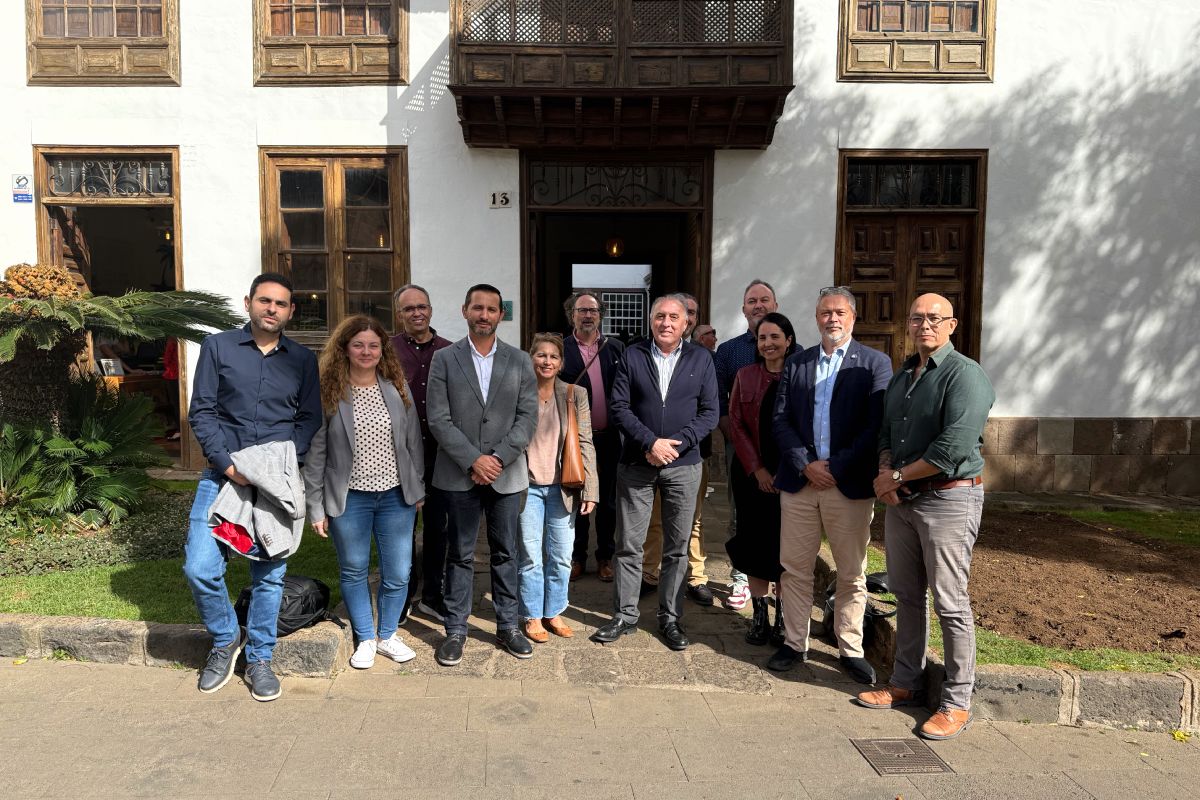
The Vice-Rectorate for Research and Transfer at the University of La Laguna has promoted an initiative this year that connects scientific personnel from a specific area with regulators and other stakeholders in the regional scientific system. Following a first meeting Held in October with representatives from the Humanities area, today, Friday, November 29, the second one was held, focused on the area of Chemistry.
Representing the university at this working breakfast held at the Cayetano Gómez Felipe House Museum were the Vice-Rector for Research and Transfer, Antonio Aparicio Juan; the Director of the Secretariat for Scientific Strategy, Esteban Porrini, who is also the coordinator of the activity; the Director of the Secretariat for University Institutes and Publications, Roberto González Zalacaín; and Rebeca Baz and Cristo Rodríguez, technicians from the Knowledge Transfer Office.
Representing the regulatory bodies at the meeting were Cristina Calero García, a member of the Canary Islands Parliament who is part of the Committee on Universities, Science and Innovation and Culture; and Manuel Pestano, director of the technical area of the Tenerife Science and Technology Park, an entity dependent on the island council.
Regarding the different areas and departments of the Chemistry area of the University of La Laguna, those who attended the meeting were José Manuel Padrón, Ana Estévez and Fernando Pinacho, from the Antonio González Institute of Bio-Organic Chemistry; and Javier Hernández Borges, Verónica Pino Estévez and José Luis Rodríguez Marrero, from the Department of Chemistry, the latter also being the Director of the General Service of Research Support.
During the approximately two-hour meeting, each participant had time to present their areas of expertise and share the needs and concerns arising from their scientific work. This highlighted the strength of Chemistry among the disciplines developed at the University of La Laguna, with publication and funding results comparable to those of Astrophysics.
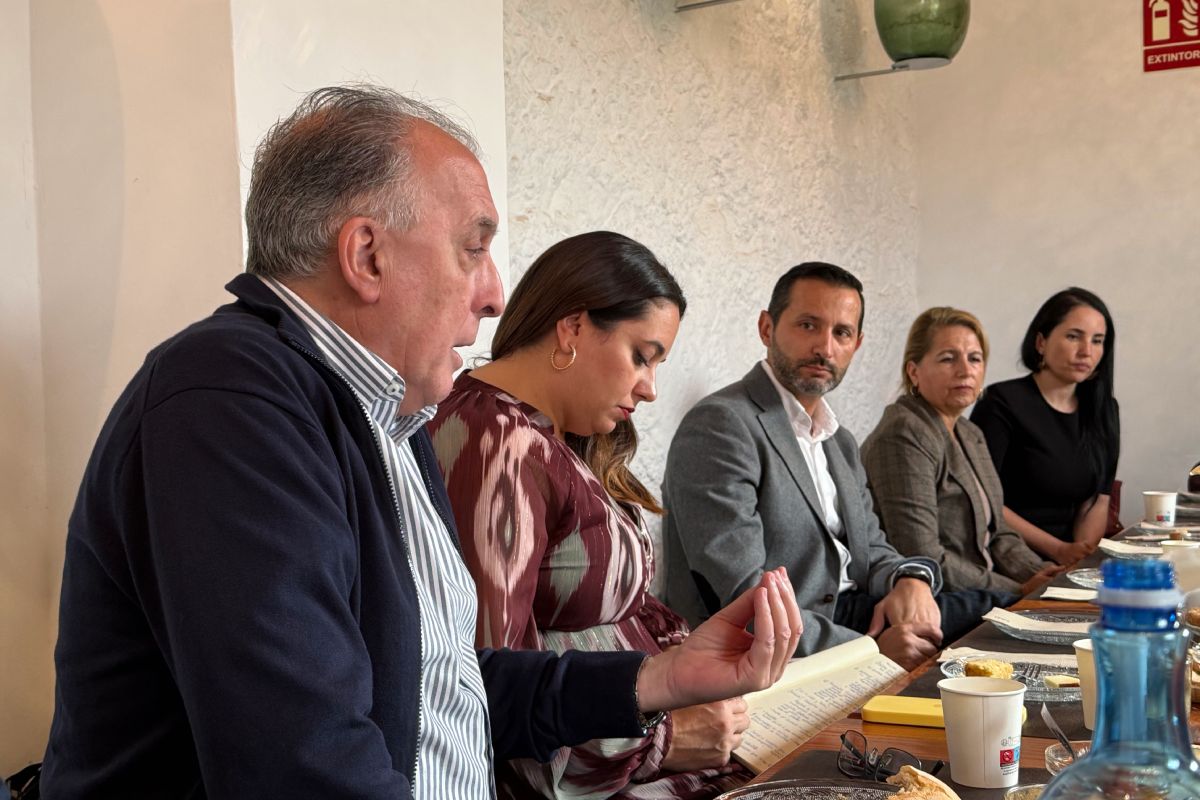 A widespread criticism was the overwhelming amount of bureaucracy that plagues project leaders, forcing them to dedicate significant time away from teaching and research to paperwork. There were also calls for increased research funding from public administrations, citing examples such as the investment in science in regions like Andalusia and the Basque Country, which represents a significant disparity compared to the Canary Islands.
During the conversation, the suitability of dedicating part of that funding to the acquisition of scientific infrastructure was mentioned, since the instruments needed to develop high-level research must be state-of-the-art and, as a rule, are very expensive and their useful life is fifteen years, so their renewal must be constant.
However, it is the expenditure on human resources that most worries the scientific community: whether they are predoctoral contracts or postdoctoral positions or even the consolidation of excellent research staff attracted through programs such as the Ramón y Cajal, it is essential to be able to expand this staff, especially given the aging of its teaching and research staff, such as that experienced by the University of La Laguna.
In this regard, concerns were also raised about the shortage of doctoral students, the main source of future researchers. On this issue, the regional deputy reflected that the Canary Islands universities must make an effort to attract more students from non-capital islands who will then decide to stay, although she acknowledged the difficulties this entails, given the current state of the housing market, among other factors.
The city council reiterated its significant support through various initiatives, a fact acknowledged and appreciated by those in attendance. Its representative explained that this effort prioritizes areas and projects with the greatest potential to address societal and industrial challenges. At this point, it was noted that the University of La Laguna ranks among the highest in terms of its influence on the development of its region, a strength that perhaps should be further leveraged to secure funding.
The university also valued the need to disseminate more and better among society the fact that excellent research staff, far from being an expense, contribute a lot through the results of their work, have a great potential to attract funds through the calls to which they participate, and generate jobs in their teams.

 Spanish
 English
 French