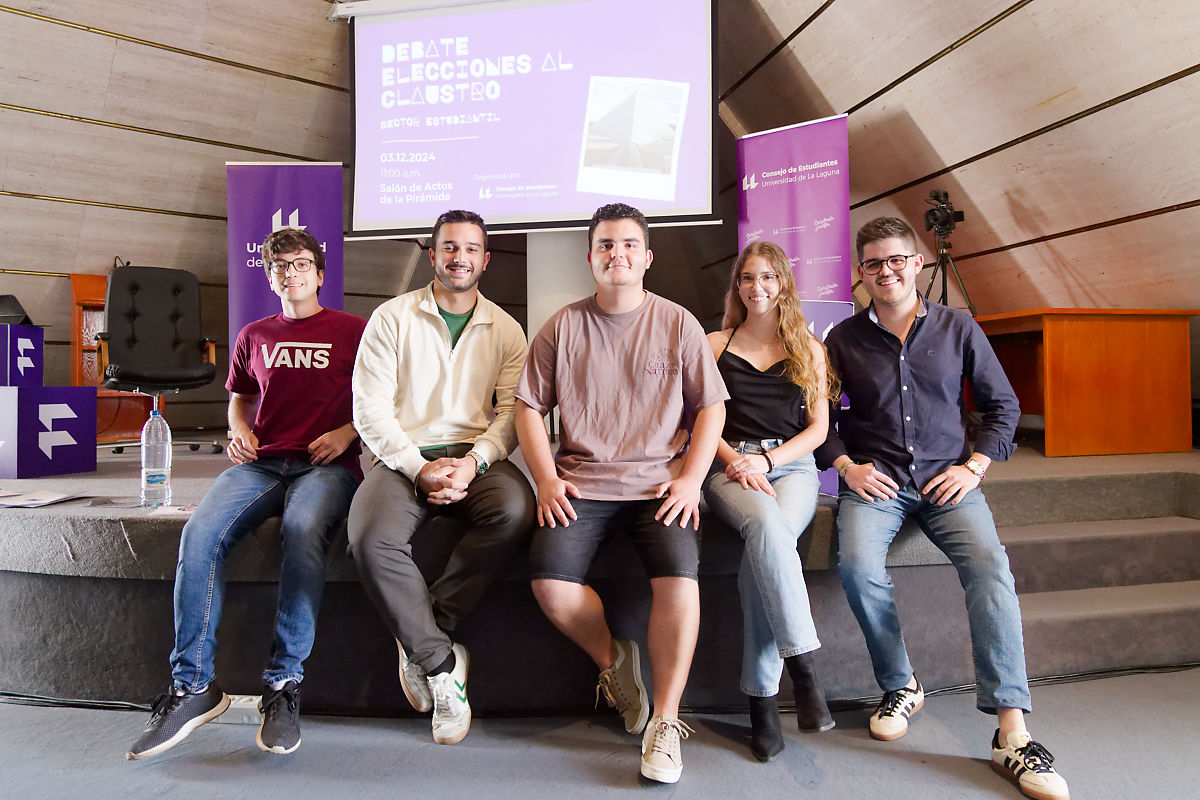
The University of La Laguna will hold elections for its University Senate this Thursday, December 5th. Around 23,000 people are eligible to participate in these elections, which will be held entirely online, to fill the 250 seats on the governing body. Of these, 75 are reserved for students, and a debate was held today, December 3rd, between the spokespeople of the five political groups participating in the election.
Sponsored by the Student Council and moderated by Journalism professor Sonnia Chinea, the debate was broadcast live and unfolded in a relaxed, agile, and engaging manner.
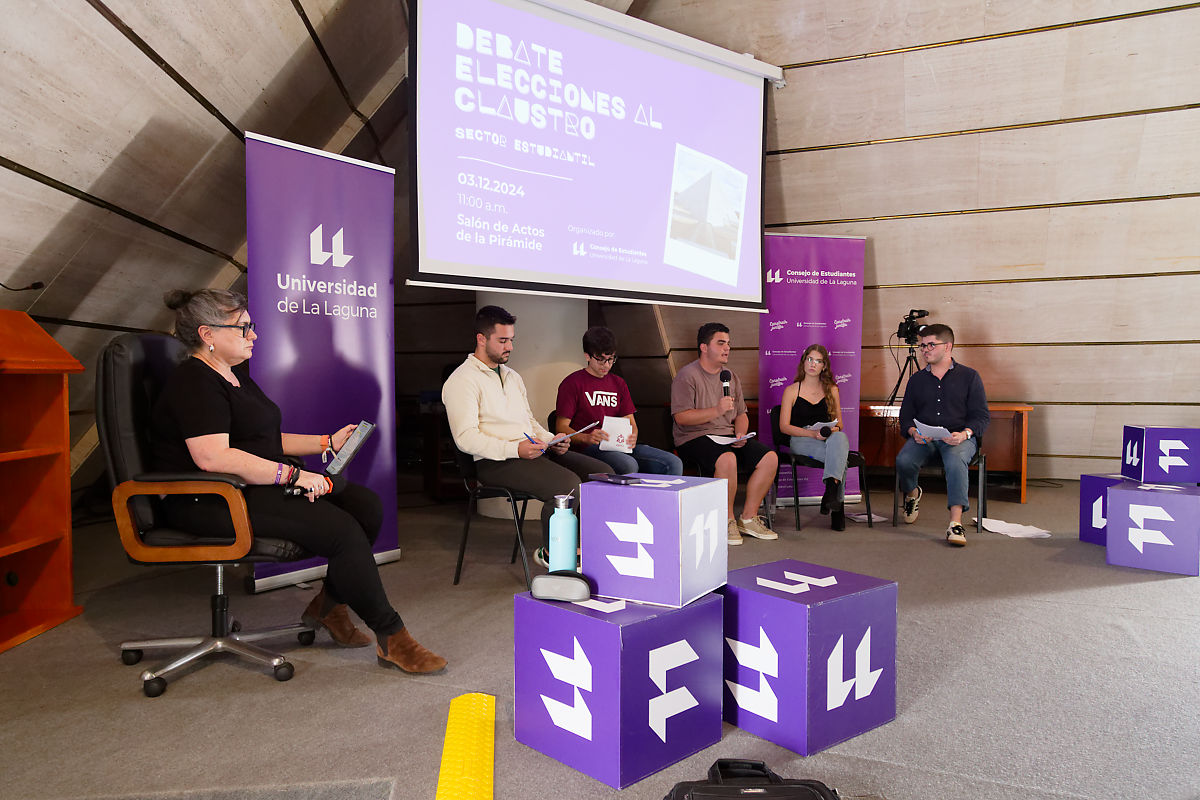
A moment from the debate.
Positive proposals and a constructive attitude were evident among all participants. Understanding, collaboration, and mutual respect were emphasized by Elías Falcón, president of the body that convened the only electoral debate in these elections, at an event attended by the Vice-Rector for Students, Rosario Hernández.
Before the session began, a draw was held to determine the order of speakers for each debate segment, and this order was followed precisely. At the start, each group gave a brief presentation, in which Mario Oramas, from Libertad Estudiantil (Student Freedom), stated that he was “tired of a university that is not adapting to the new era, with a lack of professors and some closed libraries,” and that his purpose was to give a voice to the student body.
Andrés Paz, from the Canary Islands Student Association (ACE), said that his group is "the one most similar to the University of La Laguna." He stated that their objective is to improve the academic experience by using real and accessible continuous assessment, improve infrastructure, strengthen the university's financial framework, curb the proliferation of private universities, and eradicate sexism.
Gabriel Suárez, from Ágora, called for a more accessible university, with high academic standards and a focus on inclusion. This group stated in its first presentation that it intends to “end with
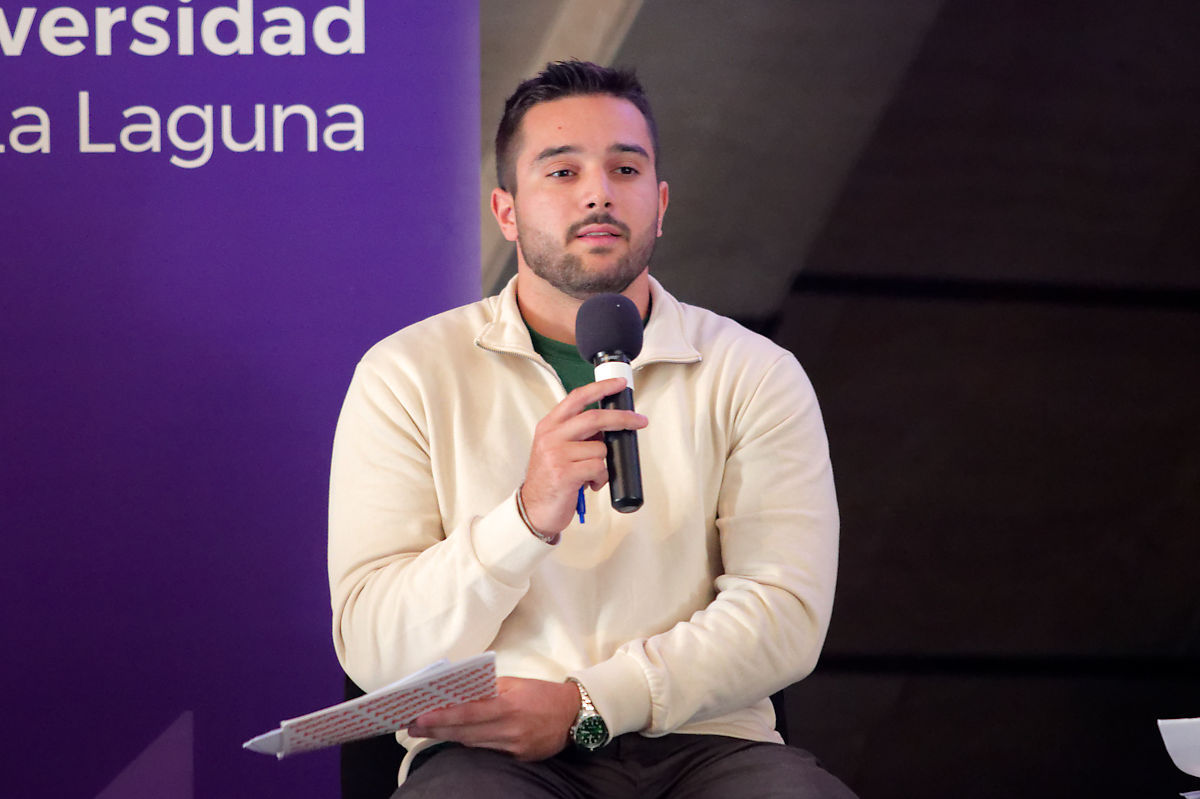
Gabriel Suárez, spokesperson for Ágora.
traditional parties that only look after their own external interests.” For his part, José Ramón Morera, from the Association of Students of the University of La Laguna (AEULL), proposed Modernize the university, guarantee habitable conditions in the classrooms, rejuvenate the teaching staff, update the curricula, with modern education and real continuous evaluation.
Aroa García, from Students in Defense of the Faculty of Education, stated that despite being a group limited to a specific center, they represent the entire student body. “We want to feel heard, we want to promote university life and feel at home,” she pointed out at the beginning of the debate.
Once the debate began, and focusing on education and academic quality—the first topic—the Ágora group within the university council advocated for greater technological development in teaching, with more resources, modernized tutoring with new formats, and the maintenance of degrees that are only available at public universities. The spokesperson for the Education group pointed out the need to promote the role of peer tutors and improve the management of undergraduate and master's theses by extending submission deadlines. She also added that more places and more faculty are needed in certain master's programs, which are not very accessible from undergraduate degrees.
The student-to-teacher ratio must be reduced, a point also echoed by Libertad Estudiantil, a group that emphasized the shortage of faculty in many areas. Furthermore, they indicated that degree programs need to be aligned with labor market demands to improve students' employability. "University is for learning, but also for securing a future.".
For his part, the ACE spokesperson requested an effective continuous evaluation system, with a fairer system of calls for applications, taking into account extraordinary situations and also for
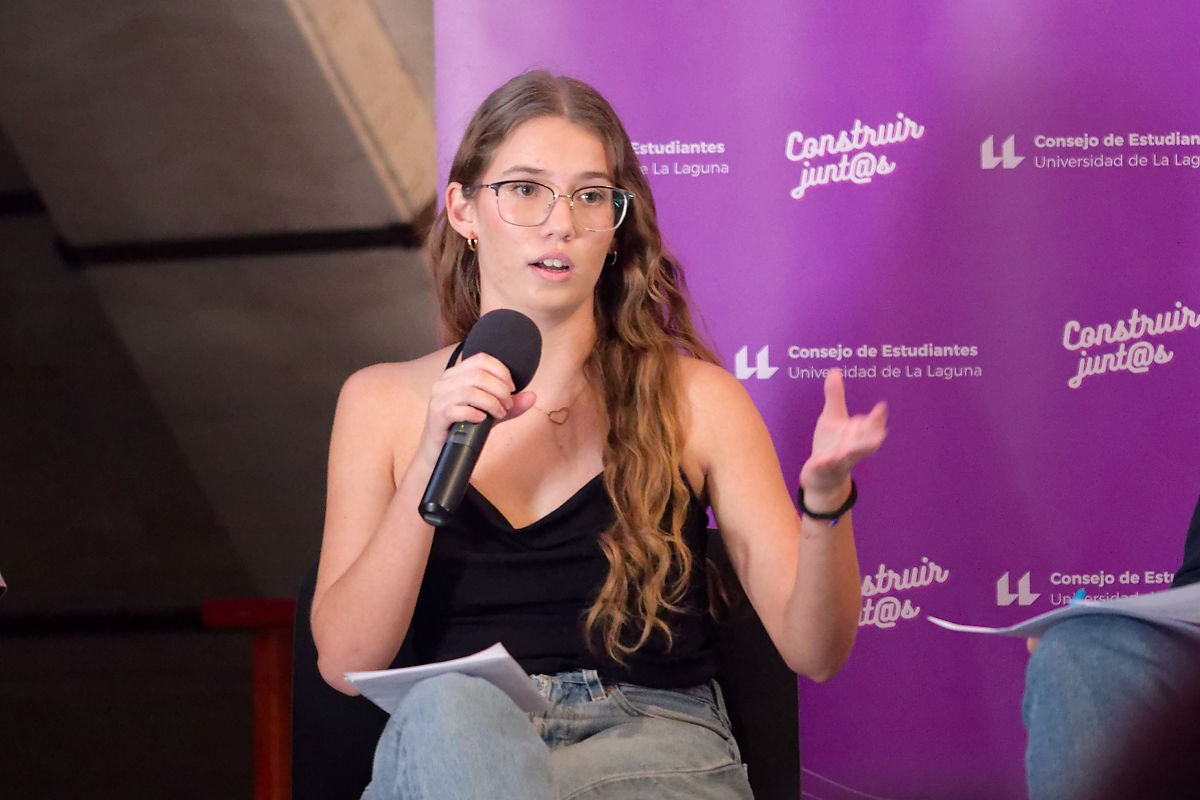
Aroa García, from Students in Defense for the Faculty of Education.
those who have economic difficulties and learning problems, in addition to alleviating the lack of teachers and guaranteeing academic quality in the affiliated schools.
AEULL advocated for the implementation of dual degrees, while also emphasizing the importance of genuine continuous assessment and more faculty. It criticized the lack of a Student Ombudsman, a position mandated by the LOSU (Organic Law on Universities), and argued for the need to regulate and harmonize the tutoring system.
Infrastructure and services
The second debate focused on university infrastructure and services. On this point, ACE proposed adding more accessible restrooms for people with disabilities, creating more work and rest areas on campus, replacing defective furniture, and improving the climate control of spaces and overall services. This group opposed the closure of cafeterias in some buildings.
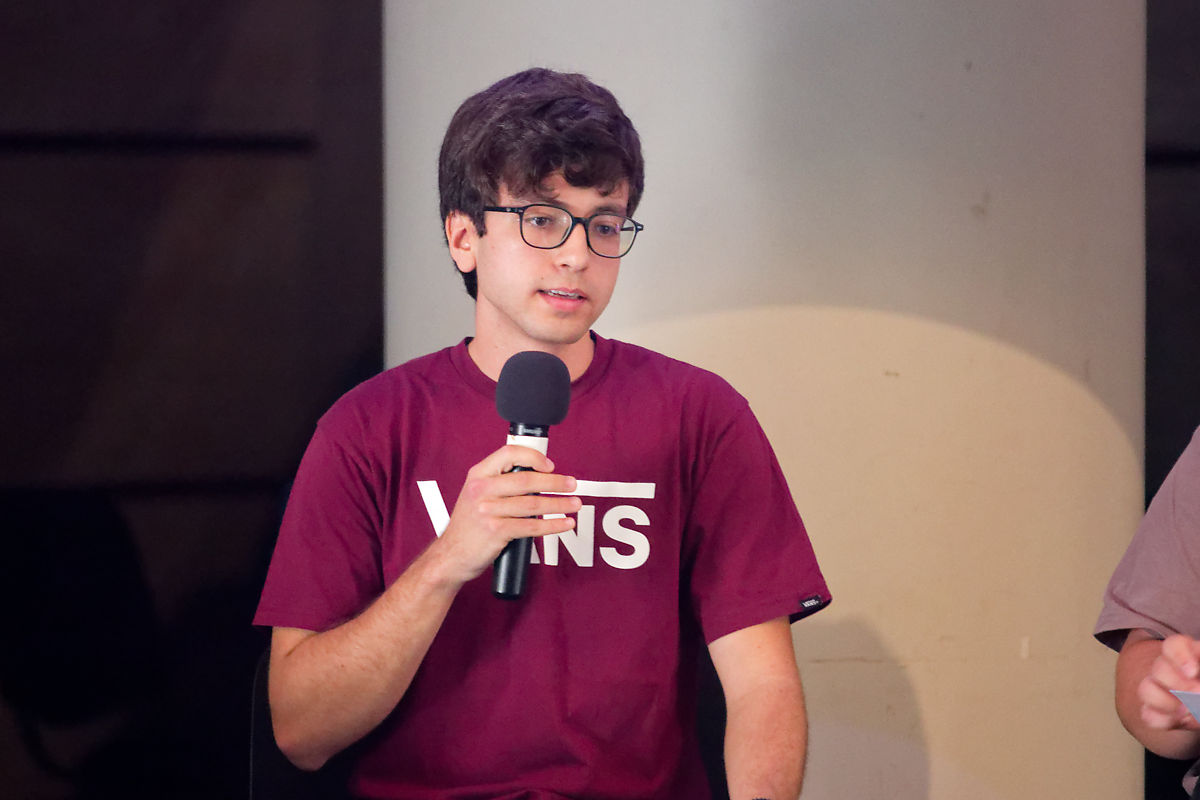
José Ramón Morera, from AEULL.
For its part, Ágora focused on modernizing classrooms, improving book lending services, enhancing accessibility, and improving public transportation routes to the campuses. AEULL indicated that it would be beneficial to increase the staff of the Technical Office to move forward with the works, while also securing more funding for this purpose. Leaks and closed restrooms were other issues highlighted by the spokesperson in this regard.
In this section, Libertad Estudiantil complained about the condition of many restrooms and the lack of cleanliness in some afternoon shifts. This group also complained about the poor user service in the libraries, with some morning and afternoon shifts closed, and also cited the need for greater mobility between campuses.
Students in Defense of the Faculty of Education pointed out that many proposals are merely stopgap measures, and that this faculty has one of the smallest cafeterias for one of the centers with the largest student body. They also called for the simplification of national and international exchange programs. Furthermore, they indicated that this faculty needs to be revitalized in a new, unified space, not divided into separate modules.
Student welfare
Student well-being was the theme of the third and final set of proposals in this faculty debate. ACE pointed out that the university's rental pool needs updating, and the [unclear - possibly "better" or "better"] need improvement.
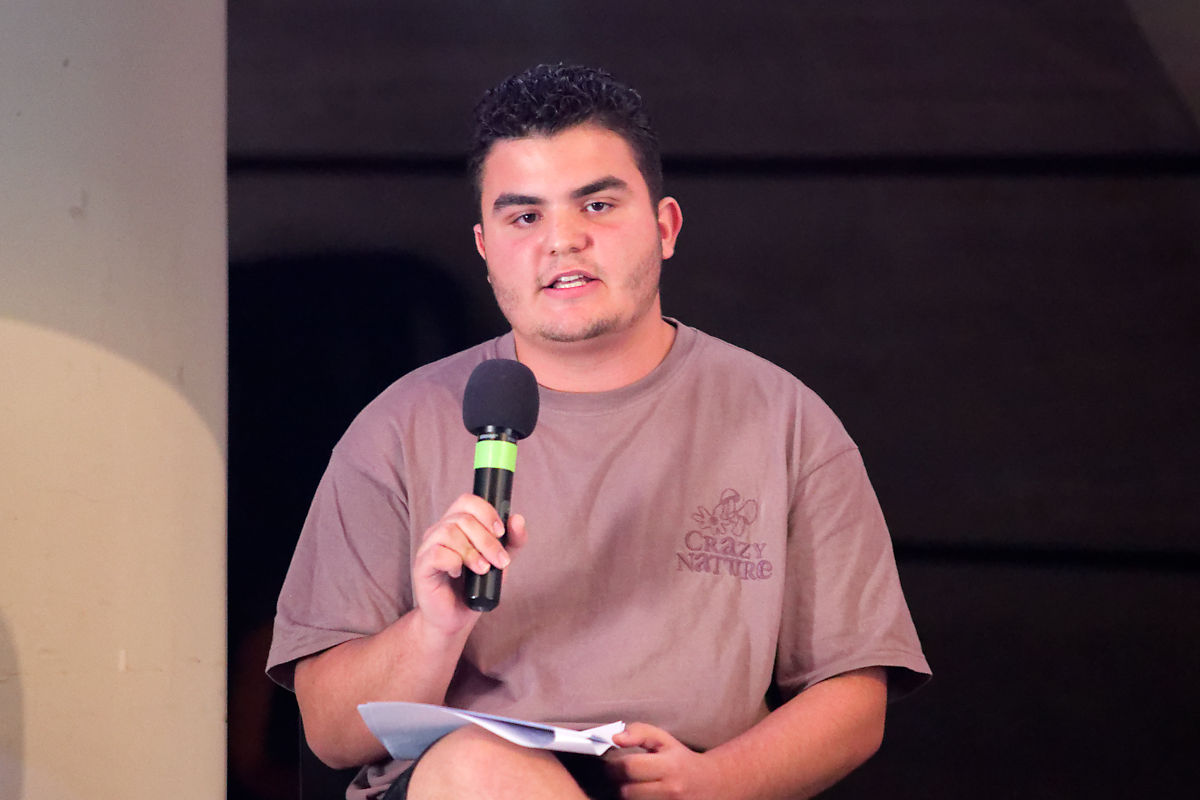
Andrés Paz, from ACE.
Teacher training in inclusive education, promoting work-life balance measures, and having more professionals in the Psychological Services Unit.
Student Freedom alluded to the strengthening of the Sports Service, while also maintaining the opportunity to have a more specialized service for students who are not from Tenerife. The spokesperson for the Education group referred to greater transparency, meaning access to resources, fostering active participation, and the need for mentors within each faculty, as already exists in some centers. She also proposed creating a support network among alumni, more accommodation options, and a safer faculty.
For its part, AEULL also proposed strengthening the Psychological Support Service, opening the Sports Service on Sundays while reducing some of its fees, advocating for student delegations with leisure spaces, upgrading campus furniture and improving classroom climate control.
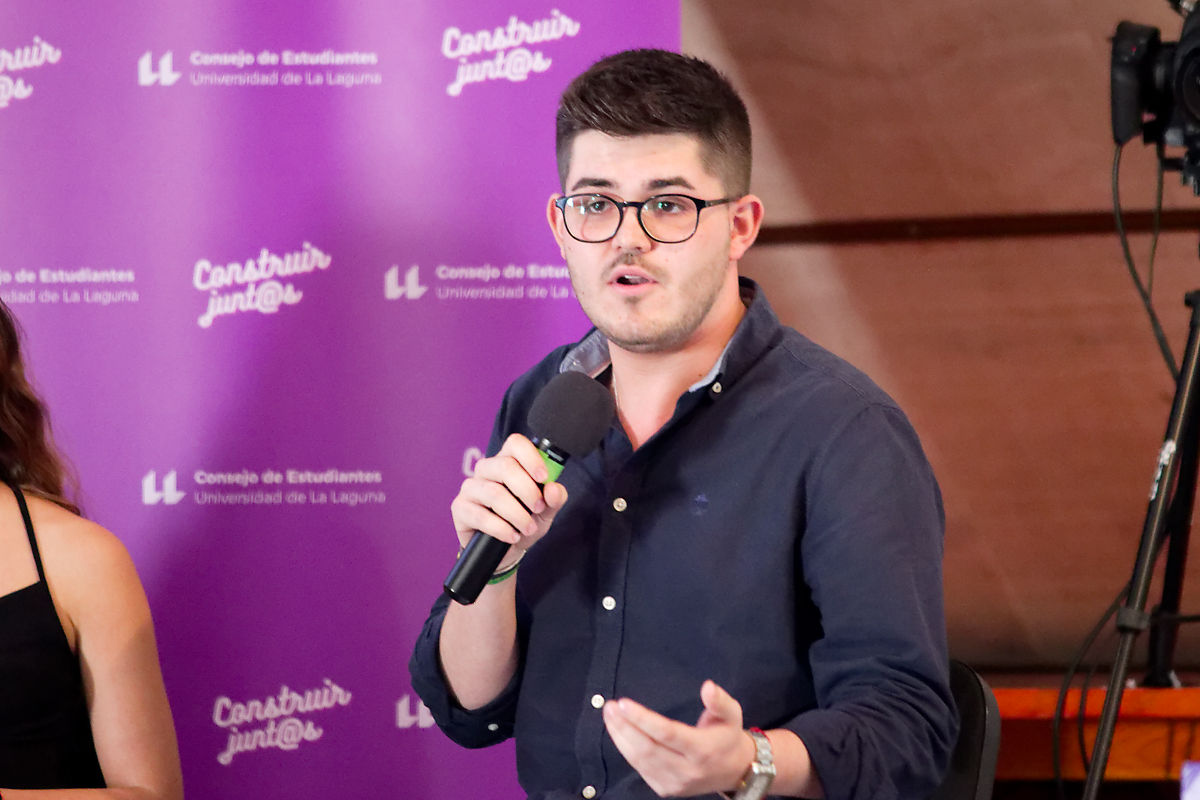
Mario Oramas, from Student Freedom.
Agora called for rest areas for students, more support for the Psychological Service, and student dining facilities, all to create a university life, the spokesman said, with the idea that students would want to stay on campus outside of class time.
The debate concluded with lively participation from the students present, allowing for a wider exchange of ideas and the presentation of new proposals from the student representatives. All information regarding this electoral process can be found at [link to website/website/etc.]. This website.

 Spanish
 English
 French