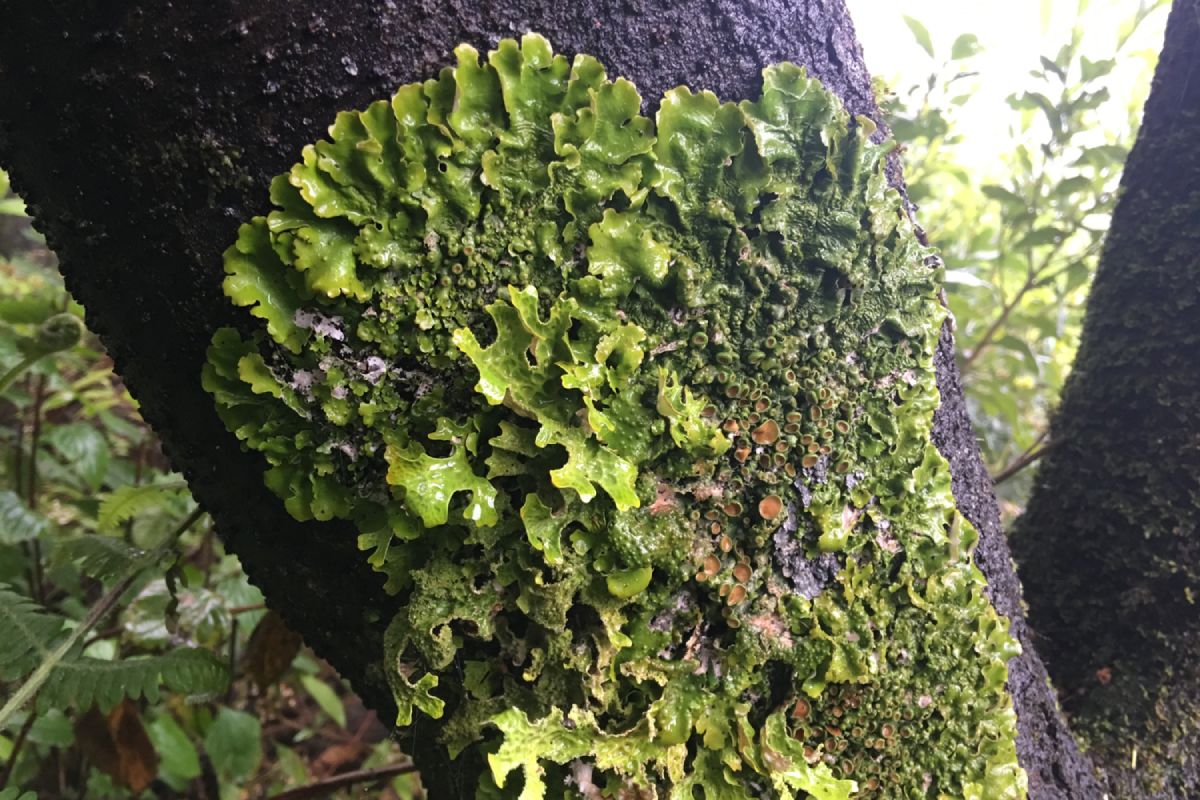
Cristina González Montelongo e Israel Pérez Vargas, Researchers from the Department of Botany, Ecology and Plant Physiology at the University of La Laguna have recently published a paper in the journal Journal of Fungi, The study, which examined epiphytic lichens (those that complete their life cycle on tree bark), analyzed the conservation status of the Canary Island laurel forest. It uncovered evidence of an "extinction debt" in Tenerife, likely stemming from the decline of this habitat in recent centuries. Furthermore, it revealed evidence highlighting La Gomera for its superior laurel forest conservation compared to Tenerife and La Palma.
Following a profound impact on an ecosystem, such as deforestation or fire, species closely linked to it can survive in undisturbed refuges for a time and, therefore, do not disappear immediately upon the disturbance. This greater number of species present in a territory compared to the number expected based on available space, habitat quality, or other conditions is called "extinction debt": the species continue to exist, although they no longer possess the necessary conditions for survival, and their extinction is only a matter of time if measures are not taken to reverse the damage.
Lichens are dual organisms, composed of at least one fungus and one photosynthetic bion that live in a close and obligatory relationship. These organisms, present in all known terrestrial ecosystems and capable of growing on virtually any substrate, have been widely used due to their special characteristics as bioindicators and biomonitors of environmental pollution, air quality in cities and industrial areas, and changes in land use, among other parameters. In this study, they were used to assess the conservation status of the Canary Island laurel forest.
The Monteverde is a highly threatened endemic forest of the Macaronesian region. However, until now, the effect of human impact on this forest environment through the use of lichens had not been evaluated.
Determination of the study area
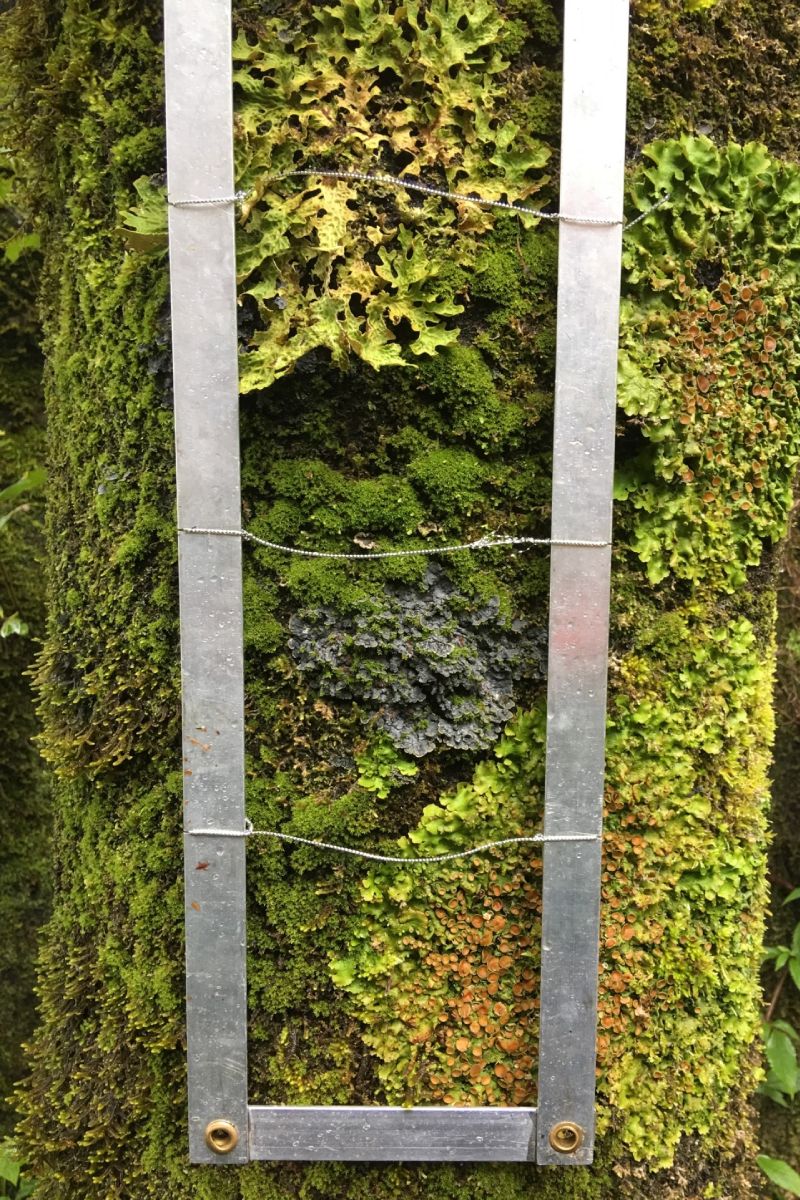
In this work, the research team established 18 study plots of 100 m2 on the islands with the best and most extensive representations of laurel forest in the archipelago: La Palma, La Gomera, and Tenerife. Epiphytic lichens were studied on the most frequent species in this forest (holly, laurel, faya, and heather), and lichen material was collected from a total area of 500 cm² on each tree.2 Samples were collected along each of the main orientations (North and South) for later identification in the laboratory. The necessary permits were obtained for the collection from the relevant authorities.
A total of 165 lichen species were identified: 96 species for Tenerife, 82 for La Palma, and 70 for La Gomera. Of these, only 241% were shared among all the islands: 91% between La Palma and Tenerife, 61% between La Gomera and Tenerife, and 51% between La Palma and La Gomera. The number of species on the different islands did not show significant differences, which does not fit with the most widely accepted theory of island biogeography, which proposes that larger islands have a greater number of species than smaller ones.
To test whether there is any pattern in the distribution of lichens as a consequence of the transformation of the Canary Island laurel forest by humans, the research group analyzed the distribution of these organisms in relation to the actual vegetation (that which currently grows in a territory) and the potential vegetation (that which natural succession tends towards if humans cease to intervene in the territory). It was then that they discovered evidence of a possible extinction debt in the diversity of epiphytic lichens in the Canary Island laurel forest.
To check if this phenomenon is occurring in the Canary Island laurel forest with respect to lichens and, therefore, to check the conservation status of the laurel forest, the team responsible for this project analyzed the areas of potential and actual vegetation as if they were islands and observed that the greatest differences between the potential and actual laurel forest occur in Tenerife, followed by La Palma and lastly in La Gomera.
These data support the claim that the latter presents the best representations of the Canary Island laurel forest, currently protected as Garajonay National Park. In contrast, on the island of Tenerife, the total area currently occupied by the laurel forest should not have as many species if we accept the aforementioned theory of island biogeography.

 Spanish
 English
 French