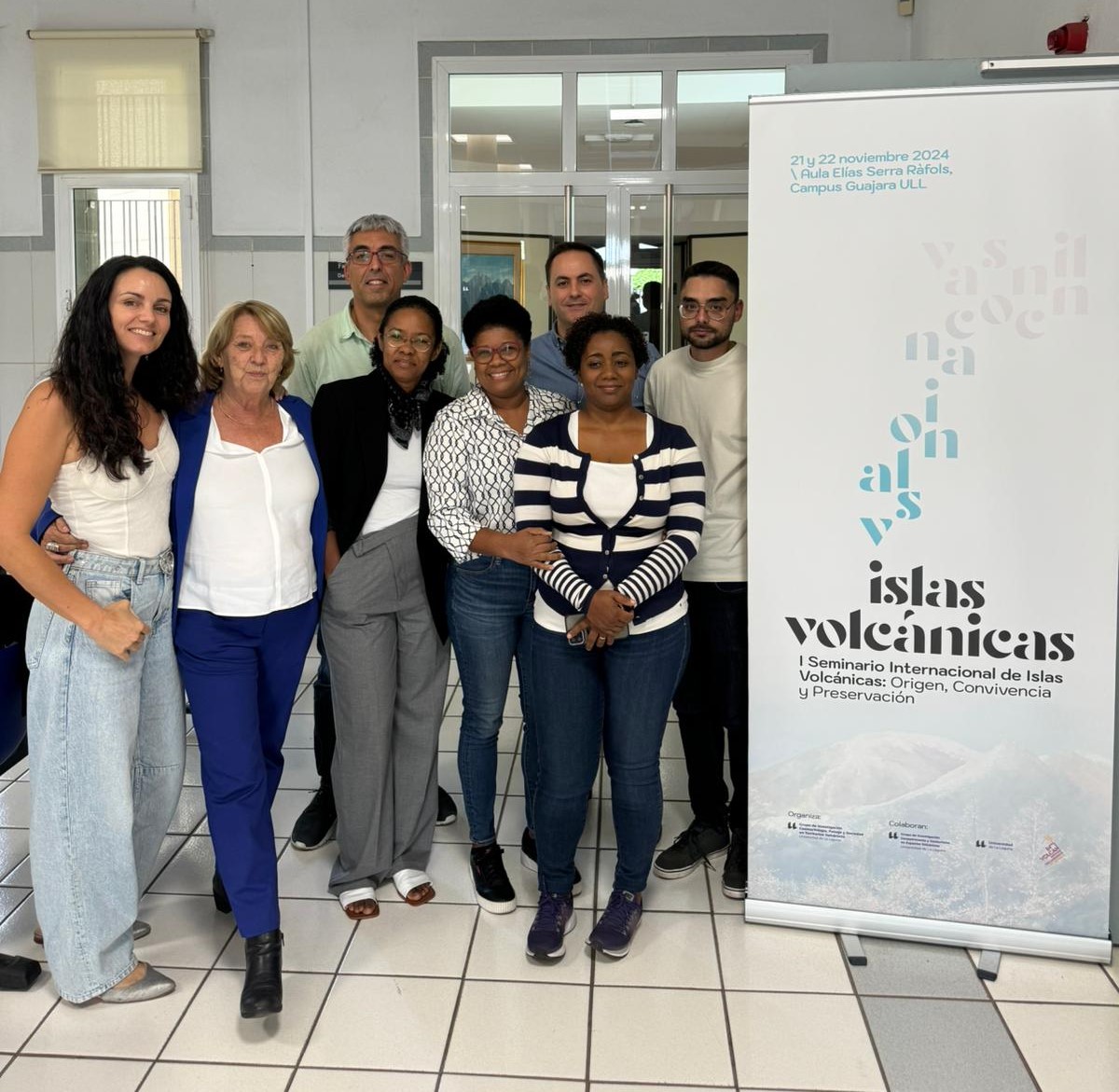
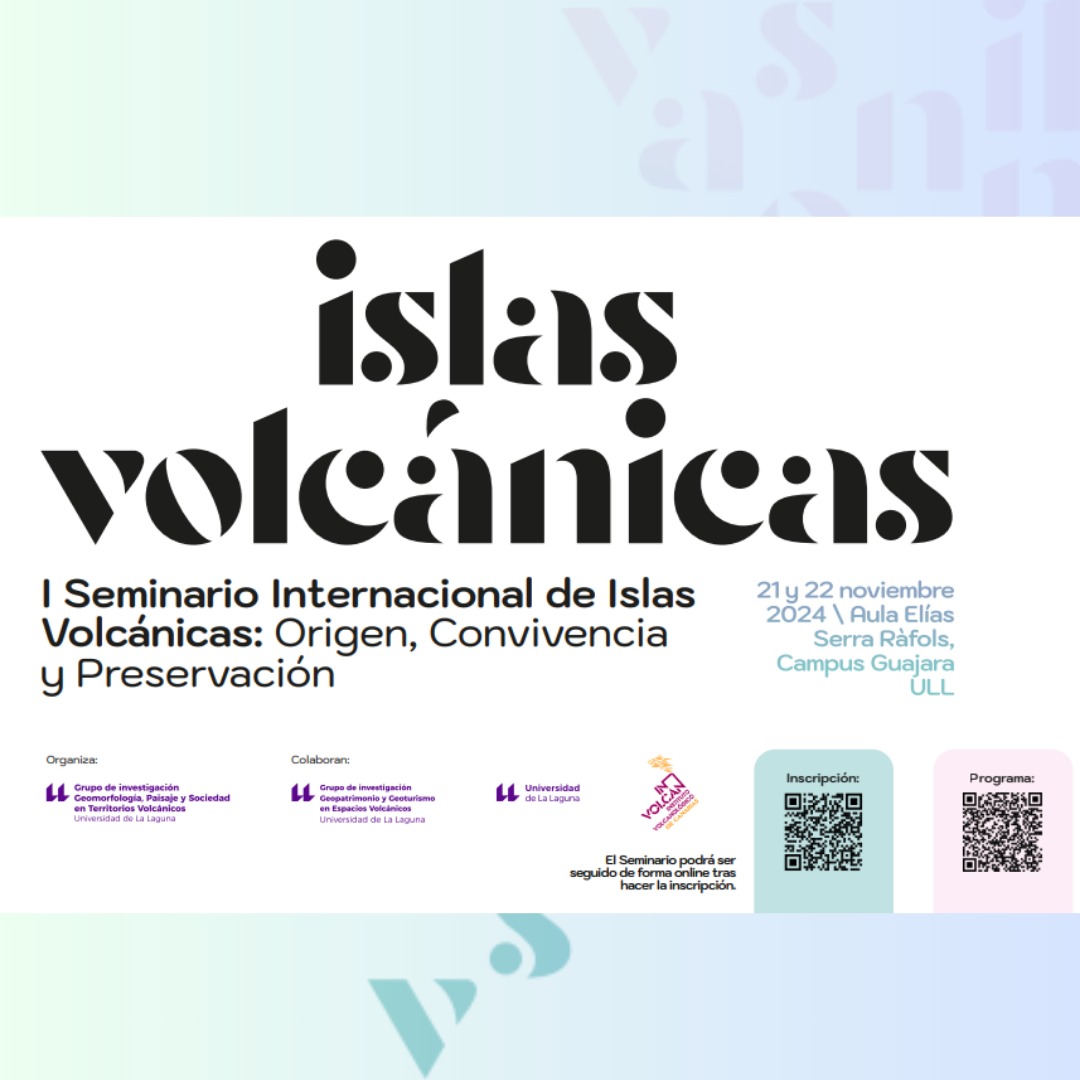
The Faculty of Humanities at the University of La Laguna hosted the 1st International Seminar on Volcanic Islands at the end of November, entitled 'Origin, Coexistence and Preservation'. This event was promoted by the Research Group Geomorphology, Landscape and Society in Volcanic Territories, in collaboration with the Vice-Rectorate for Research and Transfer, the research group Geoheritage and Geotourism in Volcanic Areas and the Canary Islands Volcanological Institute (INVOLCAN), with the support of GESPLAN.
The international character of the conference was marked by the exchange of shared experiences between the Canary Islands and Cape Verde, especially within the framework of the territorial recovery of areas affected by the eruptions of Fogo (2014-2015) and Tajogaite (2021). The seminar's main objectives were to serve as a space for reflection on the geological, geotourism, historical, and landscape heritage of both archipelagos, as well as to present the new proposals for land-use planning and the challenges of coexistence and preservation on the islands of Fogo and La Palma through the Detailed Plan of Chã Das Caldeiras and the Territorial Framework for the recovery of normality in La Palma, respectively.
 For this first edition, participants from Cape Verde included Vera Alfama, professor at the University of Cape Verde, and Ilce Amarante, president of the National Institute of Territorial Management of Cape Verde. From the Canary Islands, the presentations were given by Gustavo Pestana, technician from the Ministry of Ecological Transition, Climate Action and Territorial Planning of the Government of the Canary Islands; and Rafael Daranas, professor in the Department of Human Geography at the University of La Laguna and director of the Internationalization Area of GESPLAN.
Also participating were Pedro Apeles, architect from GESPLAN; Elena Mateo, coordinator of the Lanzarote and Chinijo Archipelago Geopark; as well as representatives from the University of La Laguna itself, with presentations given by Javier Dóniz, professor in the area of Human Geography and scientific coordinator of INVOLCAN; Esther Beltrán, professor in the area of Physical Geography; Carmen Romero, honorary professor in the area of Physical Geography; and Ramon Casillas, professor in the area of Petrology and Geochemistry.
A total of 125 registered participants had the opportunity to learn firsthand, both in person and online, about the diverse challenges and opportunities presented by island territories with active volcanism. The event allowed them to explore everything from the origin and unique characteristics of volcanic islands to the challenges of human coexistence and the preservation of their natural environments.

 Spanish
 English
 French