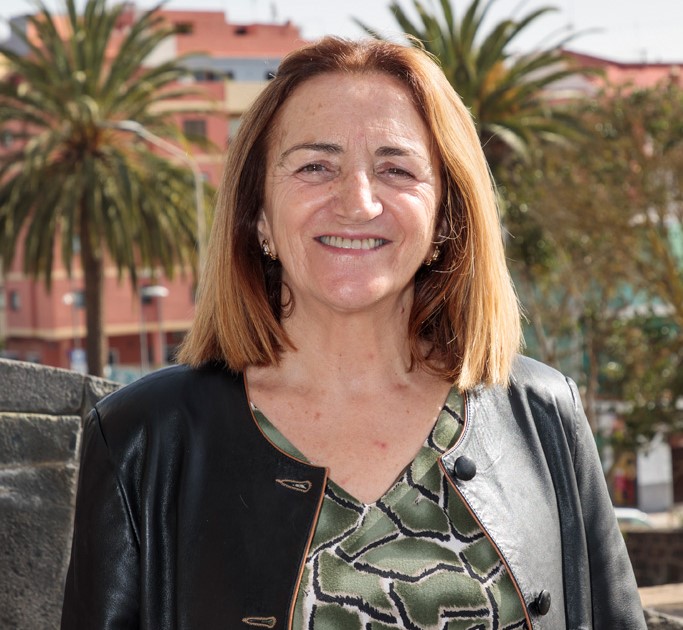
The study, titled "Intimate Partner Violence and Mental Distress, Symptoms of Post-Traumatic Stress, and Life Satisfaction in Colombian Women," aims to determine the relevance of intimate partner violence to women's mental distress, symptoms of post-traumatic stress, and life satisfaction. It was recently published in the journal Behavioral Sciences, The article is signed by the Professor of Personality, Assessment and Psychological Treatments at the University of La Laguna Pilar Matud, together with Professor Janneth E. Molina, from the Catholic University of Colombia.
The publication also analyzes whether age, education, socioeconomic status, social support, and self-esteem are associated with the mental health and well-being of women abused by their partners in Colombia. The sample consisted of 255 women aged 18 to 71 who were assessed using six questionnaires.
All the women participating in the study resided in one of the 17 localities of the Capital District of Bogotá. Individuals, families, and even entire groups with different sociodemographic characteristics arrive in Bogotá from different regions, fleeing poverty, exile, and displacement due to different types of violence: sociopolitical violence related to the armed conflict, violence related to drug trafficking, violence stemming from common crime, or domestic violence.
“The levels of poverty, insecurity, profound inequality, and social injustice are reproduced and reinforced by a patriarchal culture that promotes gender inequality, subjugation, exclusion, and the victimization of women,” explains the expert from the University of La Laguna. This is the context in which intimate partner violence against women occurs and is intertwined with other types of violence, making its understanding and prevention more complex, Matud continues, and determining why violence against women is a common, widespread, and recurring practice in the Latin American country.
The findings revealed that intimate partner violence against women is a common practice in Colombia and poses a threat to their mental health and well-being. Although there was significant variation in the intensity of intimate partner violence experienced by the women, all reported being victims of psychological violence from their partners. The majority (over 8.5%) were also victims of physical violence, and more than half (64.5%) were also victims of sexual violence.
“Women who experienced greater violence from their partners, especially greater psychological violence, had worse mental health and lower well-being,” the professor points out. In contrast, “higher self-esteem and, to a lesser extent, greater social support were protective factors for women’s mental health, associated with fewer mental symptoms and greater well-being.”.

 Spanish
 English
 French