In 711, Muslims arrived on the Iberian Peninsula and began a new life in a territory previously unknown to them. This marked the beginning of a cultural exchange between the local populations and the Muslims who arrived in the 8th century, leading to a rapid expansion of Islam in the region.
Over time, a social transformation occurred, driven by the comprehensive economic and social management model introduced by Islam, supported by a body of jurisprudence. Furthermore, it established a well-defined public finance policy. All of this succeeded in overcoming existing structures and led to the consolidation of an Islamic state, known as Al-Andalus.
Thus, the rapid expansion of Islam at that time left an indelible mark on the linguistic landscape of the Iberian Peninsula. Words like aceite (oil), almohada (pillow), and tabaco (tobacco) are examples of Arabic loanwords, that is, Spanish terms whose origin lies in Arabic.
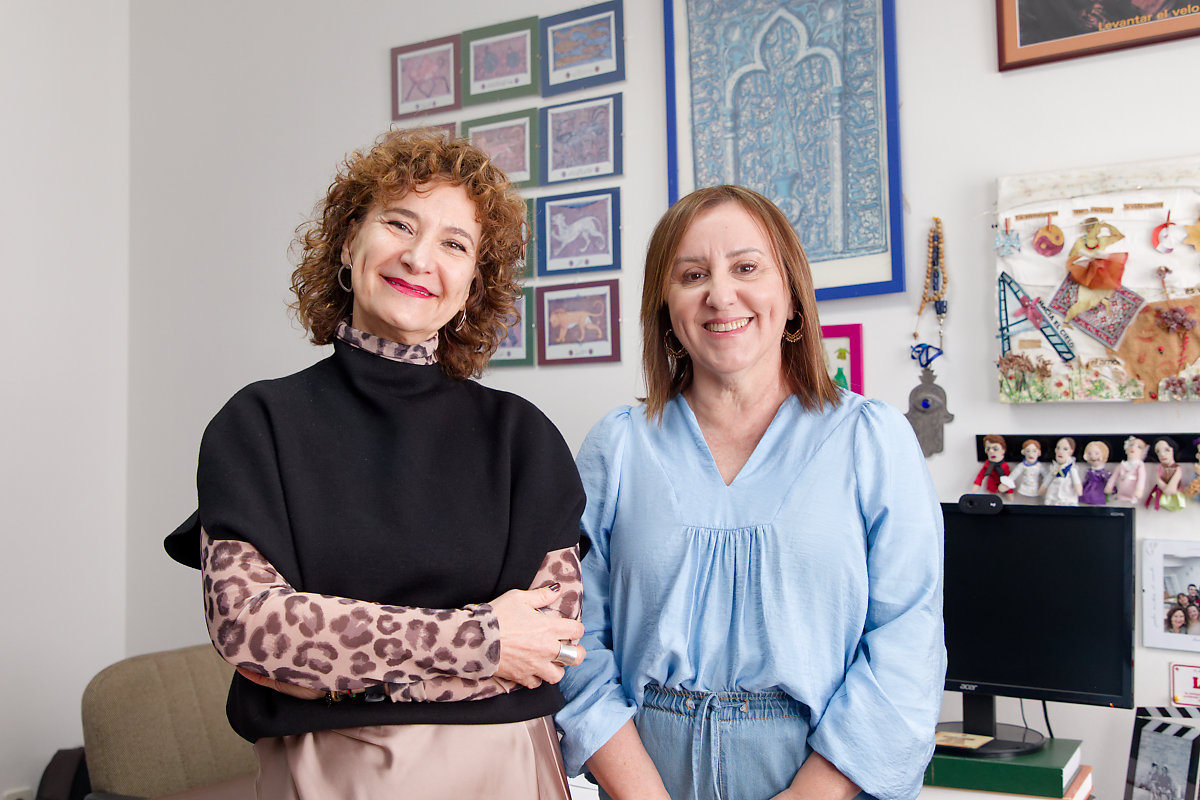
“We have a significant linguistic background,” he says. Dolores Serrano-Niza, Professor of Arabic and Islamic Studies at the University of La Laguna. Much of the vocabulary related to water or food, such as nougat or marzipan, which is enjoyed during the Christmas season, is steeped in Arabic context.
Serrano-Niza emphasizes that medieval Arabic brought with it material culture and its vocabulary. “In Spanish, there are around a thousand words of Arabic origin that we use in everyday life and that, in some cases, have become outdated because the object they designate is no longer used or named,” he explains. Likewise, Arabic has exerted a great influence on place names. “We have more than four thousand place names on maps that are of Arabic origin,” he maintains.
However, the influence of Arabic in the Middle Ages also extended to science. The vocabulary of medicine, pharmacology, astronomy, and mathematics was shaped around this language. “For centuries it was the primary vehicle for the transmission of scientific texts, just as English fulfills that function in the academic world today,” he states. Maravillas Aguiar, professor in the area of Arabic and Islamic Studies at the University of La Laguna.
A diverse range of terminology came from Arabic, although sometimes the origin of these words could be traced back to older languages, such as Greek. The important thing is that, through Arabic, these terms reached Latin and, finally, the Romance languages. In this respect, the work of the Toledo School of Translators was fundamental. Thanks to them, Arabic works, which in turn came from Greek, were translated into Latin and, subsequently, into the Romance languages.
“In general, people perceive Arabic as a monolithic and isolated element, associated with Islam,” says Aguiar. However, Arabic is much more than that. It is currently one of the world’s leading business languages and one of the most important languages for humanity due to its historical and literary significance.
The cultural and scientific legacy of the Arab world is undeniable. That is why World Arabic Language Day is celebrated every December 18th, commemorating the United Nations' decision to adopt Arabic as the organization's sixth official language in 1973. This language, spoken by more than 400 million people, is also official in 22 countries in Africa and Asia.

Maravillas Aguiar.
Challenges
Currently, Arabic faces some challenges in Western academia. Aguiar emphasizes that Arabic teachers must reach a consensus on the content that should be taught. They must decide whether to continue teaching only standard Arabic or whether to also include a dialect. “In Arab countries, certain dialects are being standardized,” he points out. “The Moroccan Arabic dialect—dariya"It's becoming increasingly standardized," he says.
Serrano-Niza, for her part, believes that the teaching of Arabic is going through a delicate period, as the number of students choosing Arabic and Islamic studies is decreasing. “Perhaps this should be linked to some external factors, such as the close association between Arabic studies and Islam as a religion,” she explains. Thus, the researcher points out that Arabic is a linguistic, not a religious, concept, as demonstrated by the fact that there are many Arabic speakers who are not Muslim, as well as a large number of Muslims who do not speak Arabic, such as Turks or Iranians.
With the aim of improving her teaching, Serrano-Niza has reviewed the teaching methods used in Arabic. As part of this effort, the researcher launched the project Interactive audiovisual vocabulary as a resource for learning Arabic vocabulary, Designed to address the main obstacle in learning this language: vocabulary. This project earned him an honorable mention in the 2015 University of La Laguna Educational Innovation Award.
Furthermore, her book is the work of this same researcher. Learning to write in Arabic, a tool that helps students learn to write the alphabet and is available through the publications service of the University of La Laguna.
Serrano-Niza is a member of the board of directors of the Spanish Society of Teachers of Arabic (SEDLA), an organization dedicated to promoting continuing education and professional development for teachers of Arabic. SEDLA also fosters the study of Arabic in Spain and Latin America, and promotes collaboration and establishes agreements with other related entities and associations.
From the University of La Laguna, Aguiar y Serrano-Nice They dedicate their research to the Arab and Islamic world. One of its most significant legacies is scientific. In fact, Arabic was the language of science. From the 8th century, with the first translations carried out in Baghdad, at the House of Wisdom, a major effort was made to develop a translation methodology. “They began to investigate whether a text should be translated word for word or whether, on the contrary, it was more important to convey the complete meaning of the sentences in the target language,” explains Aguiar. At that time, they believed that the ideal approach was to establish a technical lexicon and a suitable written expression for science in order to tackle the task of translating scientific texts originating from the Greek and Indian legacies.
Scientific vocabulary
This methodology, developed in Baghdad, allowed translators to work with scientific texts from the Greek, Byzantine, and Indian worlds. This work enriched knowledge and created a scientific lexicon. This process continued throughout the centuries, highlighting movements such as the Toledo School of Translators.
Furthermore, mathematical language is especially relevant in these texts, since in the 9th century an Arab mathematician began to develop a proto-mathematical notation. For example, he used the abbreviation of the Arabic word shay —meaning “thing”— to designate the unknown in an equation. He also began to use Arabic particles to represent different mathematical operations.
However, from the 13th century onward, Arabic science declined, driven by the rise of the Ottoman Empire, which brought about many changes. “I am increasingly convinced that, from that century onward, scientific works tend to be mostly referenced in what is known as the Golden Age of Islamic science,” Aguiar states.
Thus, from the 13th century onward, there was no such prominent scientific activity in the Arab world. “There was a turning point in which the West distanced the Eastern world from its historical development,” he states. However, this apparent decline did not mark the end of contributions, but rather paved the way for a paradigm shift that linked Islamic knowledge with the scientific development of the West.
Prominent figures
“Ibn al-Khatib, al-Qalasadi, and al-Hayari were three important figures who lived through critical moments in history, in the 14th, 15th, and 16th-17th centuries,” says Aguiar, who has translated
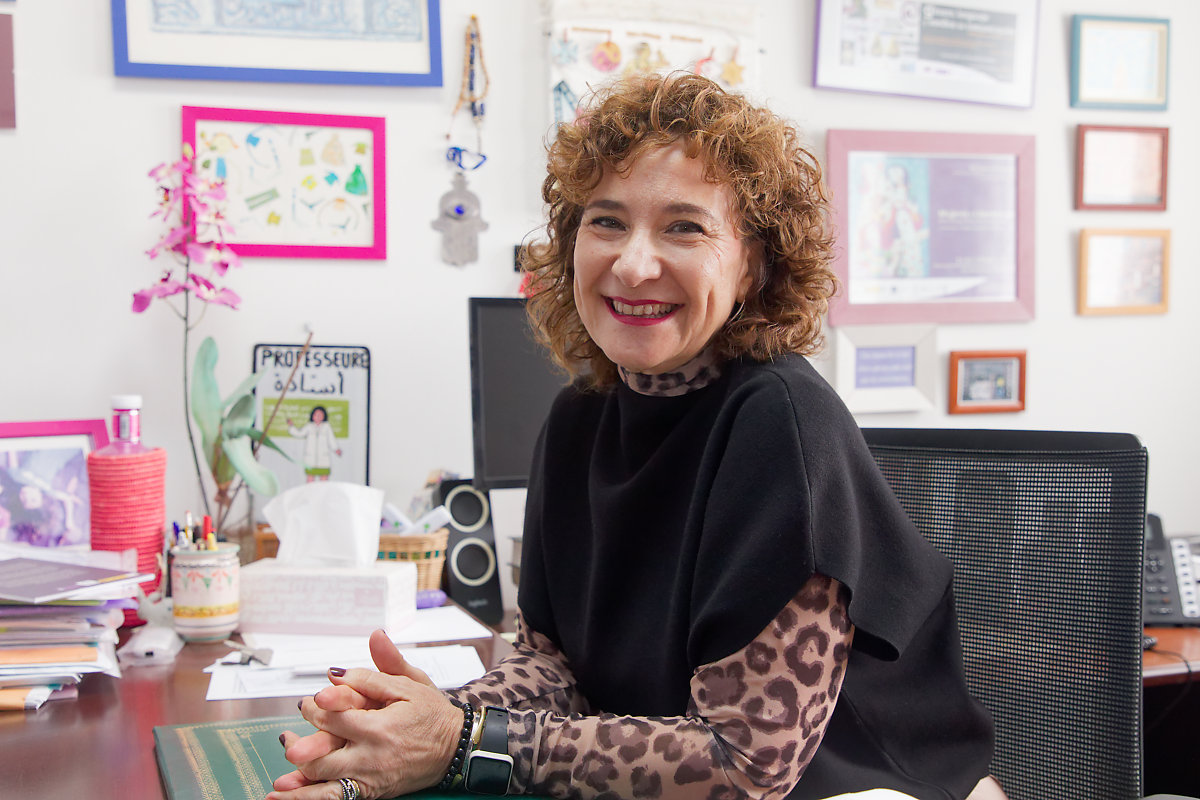
Dolores Serrano-Niza.
some of his texts in Spanish.
Ibn al-Khatib, minister at the courts of the Nasrids of Granada and the Marinids in Fez, left behind an extensive and complex body of poetic work. He also wrote on health-related topics, emphasizing the importance of maintaining good health and developing a kind of preventative medicine. This dual minister was assassinated in his cell. He is also known as the "one of the two tombs" or the "one of the two deaths," because after his burial, his body was found burned outside the tomb a few days later, and it was necessary to rebury him.
Al-Qalasadi, a 15th-century mathematician, is known for his work on fractional calculus, essential for the distribution of inheritances in the Islamic world. “He lived during the period of Al-Andalus’s decline and took refuge in North Africa, where he studied with various teachers,” he explains. “His work reveals nothing positive or negative about his experience; he simply documented his education, which gives us a very accurate picture of the type of higher education available at the time—grammar, law, literature, etc.,” he adds.
Al-Hayari, expelled from Spain following the decrees expelling Muslims and Jews, wrote an autobiography recounting his process of reinvention after exile. “The autobiography even takes on a novelistic quality at times,” he says. He describes his arrival in Marrakech, where he was received by the sultan, who praised his command of Arabic, highlighting his Andalusian accent.
Commercial and cultural connections
Aguiar has also analyzed the intellectual and scientific history of texts from Mamluk Cairo and the Maghreb al-Aqsa—the distant Maghreb. “Mamluk Cairo is much more studied than the history of the Maghreb al-Aqsa,” he comments. “This is probably due to historiographical tradition, since Europe has focused its interest on the history of the Mediterranean,” he adds. “It seems surprising that we don’t have more knowledge about a territory so close to our own,” he states.
“Mamluk Cairo appears as a highly bureaucratic city, with well-defined social classes and a very regulated organization,” Aguiar comments. A key aspect was the chancery, where everything was recorded in writing. This system, for example, is not as well documented in the Maghreb al-Aqsa.
“Interestingly, during the Middle Ages, the Atlantic was connected to Cairo because of pilgrimages and large-scale trade routes from Egypt to Mali via caravan routes,” Aguiar points out. Thus, it is known that there was a close relationship between these areas due to trade. A pilgrimage route also existed, as at certain times, people from medieval Morocco made pilgrimages to Mecca. However, the details of this safe route connecting these areas are still not fully understood.
Canary Islands
“Since the 9th century, there have been Arabic texts that mention the Canary Islands as the fortunate islands.” —al-ŷazā'ir al-jālidāt—,” Aguiar states. In 2022, along with Kevin Rodriguez, a researcher in the Medieval History area of the University of La Laguna, published an article on the first mention of the toponym Canarias in an Arabic text.
Until the 17th century, there are several short texts that refer to islands located in the West. However, a 13th-century text stands out for providing more plausible elements. “It recounts that a Moroccan saint visited some islands, found several settlements, and remained there until he taught its inhabitants the prayer of al-subh —Islamic prayer—,” he explains. He also points out that the testimony should be trusted, as it is part of an anthology of biographies of Muslim saints from medieval Morocco.
The historian Ibn Khaldun provided more precise accounts of the Canary Islands. “He noted that these islands were not sailed to because there were no nautical charts of the Atlantic,” Aguiar explains. Furthermore, he describes the islanders as people who plowed the land with horns and fought by throwing stones backward. “Although Ibn Khaldun never visited the islands, he probably based his information on a 14th-century Norman chronicle,” he states.
Although Ibn Khaldun, who died in 1406, claimed that no cartography of the Atlantic existed, the Catalan Atlas, which included names of the Atlantic coast of Morocco and wind lines, had already been produced in 1375. It is possible that he was unaware of this atlas, given that it belonged to a different context. However, he attributed the lack of navigation across the Atlantic to the absence of maps of that region.
Modernization of Arabic
During the 19th century, within the framework of the phenomenon of Nahda The resurgence that took place in Arab countries such as Egypt, Syria, and Lebanon, and as a consequence of this cultural renaissance, a revision and revitalization of Arabic occurred, resulting in the publication of works of great importance to their culture, such as the Kitab al-mujassas, a dictionary written in Murcia in the 11th century.
“In the context of medieval lexicography, it is a misunderstood book,” explains Serrano-Niza. However, 19th-century Egyptian reformers were able to take advantage of this dictionary to develop contemporary Arabic, which features a simpler grammar and vocabulary. This variant of the language, known as the language of the press—lugat al-yaraíd—, corresponds to modern or standard Arabic.
The researcher wrote her doctoral thesis on the Kitab al-mujassas. “It was part of that modernization project because it is, fundamentally, a thesaurus of the language, a repertoire of words and meanings,” he points out. It is an ideological dictionary that starts with a central concept and organizes all related words around it.
“When I wrote my thesis, this dictionary was practically unknown in the West,” she says. According to Serrano-Niza, it wasn't valued because people didn't know how to consult it. One of the results of her research is that the Kitab al-mujassas It is designed to be read, which explains the difficulty of using it as a conventional dictionary. "It's a true encyclopedia," he says.
Dress
Through the words treasured in medieval dictionaries, Serrano-Niza delves into other conceptual fields such as that of textile clothing, which appears in historical, literary, and legal texts, as well as in descriptions of material culture. For example, in Arabian Nights, Palaces, fabrics, and clothing are described. However, dictionaries fail to provide accurate translations.
According to Serrano-Niza, there are several different terms for silk in Arabic—at least six or seven. “Although these words appear in texts, dictionaries usually translate them all simply as silk, without differentiating their nuances,” she explains. This makes translation difficult, since some texts indicate that using one specific word is permissible, but using another is unacceptable. Without this clarification, the translator cannot interpret the text correctly or identify which type of silk is being referred to. Thus, her research seeks to clarify the differences between these terms.
In this way, Serrano-Niza creates a specialized vocabulary that identifies the type of fabric, raw material, or garment to which the term refers. Recently, she has even taken her work beyond lexicon to enter the field of reconstruction. “I consult many sources with which I reconstruct textile elements and garments,” she explains. An example of this is the reconstruction of a Moorish garment, the marlota.
An example is preserved in the Army Museum, attributed to the Nasrid sultan Boabdil. “Using this garment and historical texts, I collaborated with a specialist who made videos to reconstruct the design and type of fabric,” he explains. This constitutes a form of digital transfer.
Domestic space
In the Middle Ages, women played a fundamental role in the domestic sphere. Although they also frequented public spaces, it was in their homes that they were responsible for transmitting a rich material culture: they wove, sewed, and cooked. They even made their own pottery, crafting kitchen utensils.
“Furthermore, there is an emotional culture transmitted by women, such as customs,” Serrano-Niza states. An example of this is language. “It is not by chance that it is called a mother tongue, since it is the mothers who nurture and teach the language,” she maintains.
The researcher also has a study that demonstrates the emotional connection between Jewish, Muslim, and Christian women of the time. One example is a short text showing that Christian women lent dresses to Moorish women so they could marry in Christian weddings.
On the other hand, although large silk production centers existed in Al-Andalus, sponsored by Muslim magnates, silk production was always a domestic and family activity, carried out primarily by women. In fact, according to Serrano-Niza, during the expulsion of the Moriscos, some Morisco women were allowed to remain in Granada because of their knowledge of silk production. “Granada became a stronghold of silk production, which was also practiced in other regions of Al-Andalus,” she states.
The legacy of Granada's silk production extended to various Atlantic regions, including Mexico and the Canary Islands. "When I conducted my research, I met some weavers from La Palma whose process was exactly the same as the one used in Granada," she recounts. Furthermore, the weavers confirmed that silk production was a family business. Thus, Arabic represents not only a language, but also a cultural and scientific bridge that has endured throughout history.
(This report is an initiative framed within the InvestigaULL Commemorations Calendar, a scientific dissemination project promoted by the University of La Laguna).
Scientific Culture and Innovation Unit (Cienci@ULL)

 Spanish
 English
 French