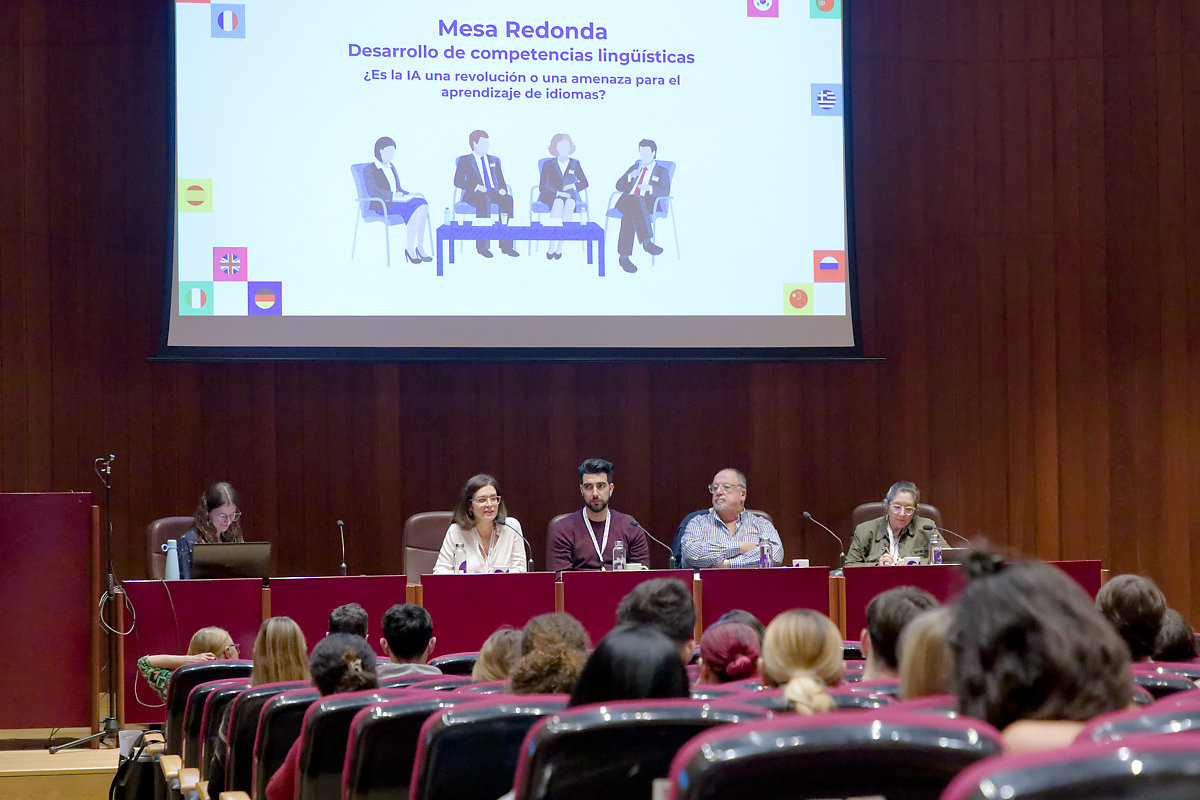
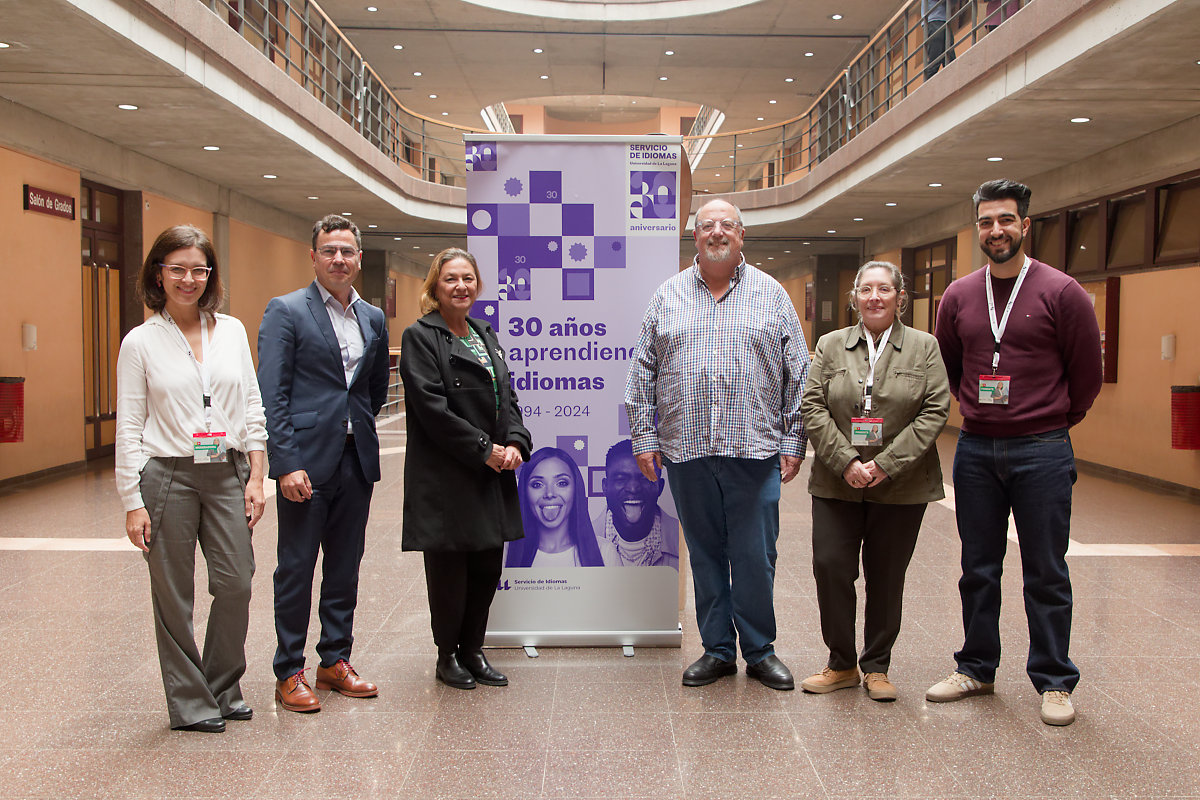
He Language Service The University of La Laguna, in collaboration with the Vice-Rectorate for Internationalization and Cooperation and the Cajacanarias Foundation, held today, Tuesday, December 17, a round table entitled “Development of Linguistic Competencies – IA in Language Learning”, which was part of the activities organized for the commemoration of the 30th anniversary of the service.
The round table, moderated by the director of the Secretariat for Internationalization Judit Mendoza, included interventions by Plácido Bazo, advisor on Linguistic Policies of the Language Service of the University of La Laguna; María Luisa Capón, teacher of the Service; and Sergio David Francisco, professor of the area of Didactics of Language and Literature of the academic institution.
One of the key issues addressed was the role of Artificial Intelligence in language development. Francisco outlined the opportunities for integrating new technologies into language learning, highlighting personalized learning; the optimization of time and resources, both from the teacher's and the student's perspective; and the increased commitment of teachers to creating more effective and meaningful classroom materials.
 Furthermore, he highlighted the development of digital skills to cope with the constant change in these technologies, as well as the improvement of assessment, the promotion of autonomy and interaction, and continuous learning, in which artificial intelligence offers greater access to interactive and personalized resources.
Following this presentation, the speakers discussed the challenges and risks of AI. First, Capón addressed several challenges present in the classroom, “the first of which is that teachers and students need to understand that artificial intelligence is an assistant and not a replacement,” as well as the importance of teachers' continuous adaptation to new technologies, the effective integration of AI into the curriculum, and the need to ensure equitable access to these tools.
Regarding the threats, the Language Service teacher highlighted the excessive reliance on technology, the depersonalization of learning, and security and privacy issues, as well as the information overload generated by the proliferation of platforms and applications. Overall, she advocated for a balanced use of technology that complements traditional teaching without replacing it, and that guarantees equity and data protection.
Secondly, Bazo spoke, emphasizing that “AI is not an end in itself, but a means to be used effectively” and that the biggest challenge is “maintaining the expert knowledge necessary to manage it properly.” Furthermore, he highlighted the importance of a well-rounded education that focuses not only on digital literacy but also on developing citizens capable of addressing social problems, something that artificial intelligence cannot teach.
In closing, Sergio David Francisco clarified that no one is fully prepared for the rapid pace of change brought about by new technologies, which can generate frustration and imposter syndrome due to the constant need to adapt. “We don't have to know everything, but we do have the tools we need,” he said, adding that the main challenge “is to see AI as an enabler, not a problem solver,” emphasizing the importance of knowing what to ask for and tailoring the tools to each user's needs.

 Spanish
 English
 French