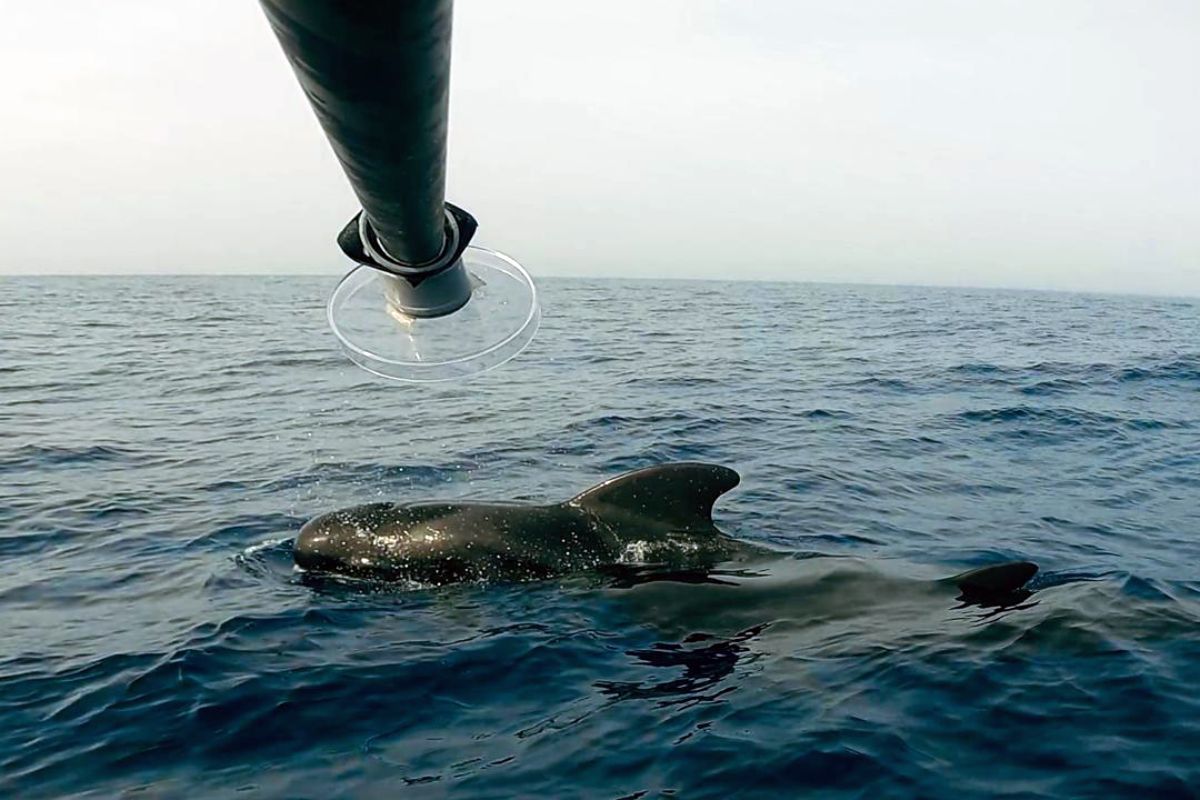
The magazine Conservation has recently published an article In this study, the authors apply non-invasive research techniques based on sampling the exhaled air of cetaceans in the wild to obtain DNA from the individuals, with the aim of monitoring the animals' health status with minimal impact. The work is authored by Patricia Arranz, from the University of La Laguna, and Ruth Coya, Elena Turac and Laura Millares, from the University of Oviedo.
The study focuses on the population of tropical Calderón (Globicephala macrorhynchus) a small-to-medium-sized toothed whale species resident in the Canary archipelago, which presents conservation challenges due to the impact of marine tourism.
Cetaceans contribute significantly to the functioning of ocean ecosystems and help mitigate climate change. However, there is still a worrying lack of knowledge about basic aspects of the biology, natural history, and ecology of their populations. This hinders a proper assessment of their conservation status and management needs in wild populations. Therefore, obtaining genetic material non-invasively from small, wild individuals is challenging due to the difficulty of obtaining samples of sufficient quality and quantity.
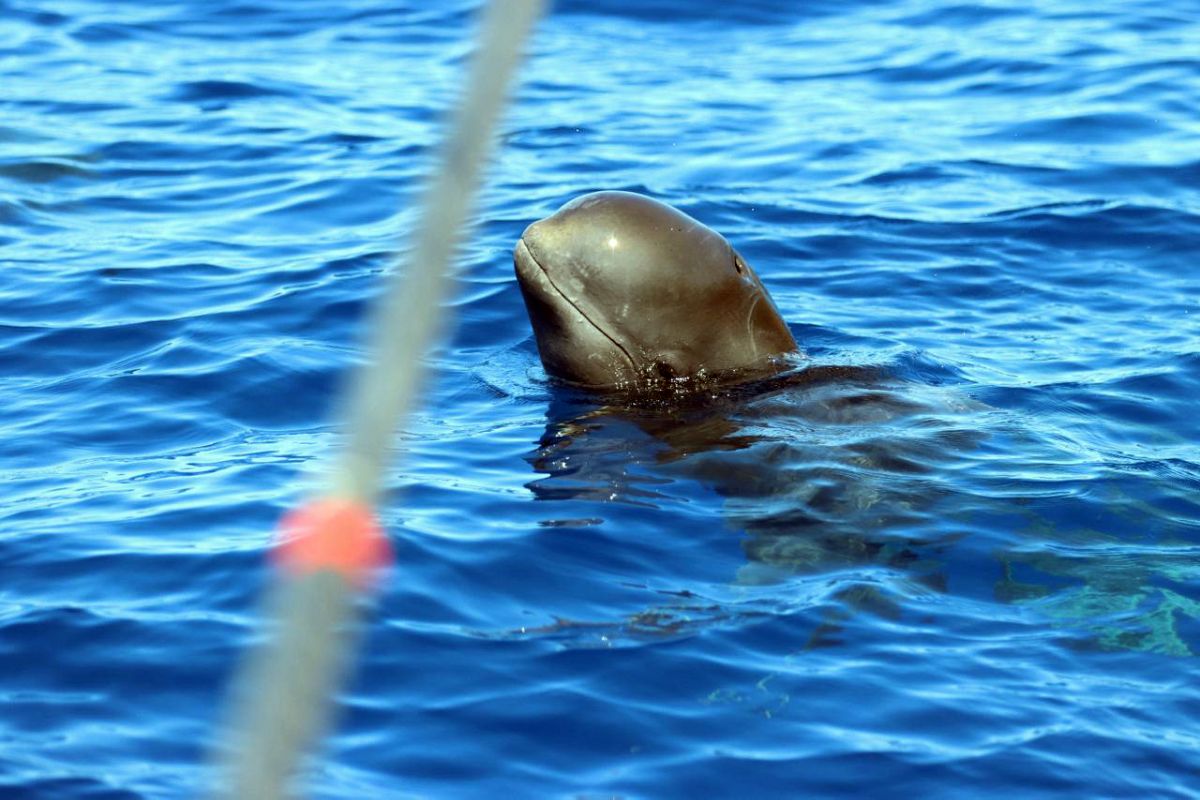
The study focused on tropical pilot whales.
The technique described in this article had only been successfully applied in large species with a larger exhalation volume, such as the blue whale (Balaenoptera musculus), the humpback whale (Megaptera novaeangliae), the right whale (Eubalaena borealis) and the orca (Orcinus orca).
In the study, the authors used a 6-meter-long pole to obtain breath samples by placing a polystyrene plate near the animal's blowhole (nose) as it exhaled. They were able to obtain a breath sample from each animal in an average of just two attempts.
Furthermore, from an innovative perspective in the processing of these samples, Laura Miralles, at her laboratory at the University of Oviedo, applied a protocol based on multiplexed markers optimized for highly degraded, fragmented, and scarce DNA, which allowed for the positive determination of the genetic sex of the 70% gene in the individuals. The results of the study confirm the success of the sampling technique, DNA extraction, and sex determination using this protocol in small cetaceans in the wild.
The study provides highly valuable genetic information on cetaceans and represents a promising management tool for future assessments of cetacean health and population dynamics in the wild with minimal impact. It was funded by the Spanish Ministry of Science, Innovation and Universities (PID2021-126940OB-I00 – CETOCAN – Projects for the Generation of Knowledge 2021) and the European Commission Horizon 2020 (0100644 – SATURN).

 Spanish
 English
 French