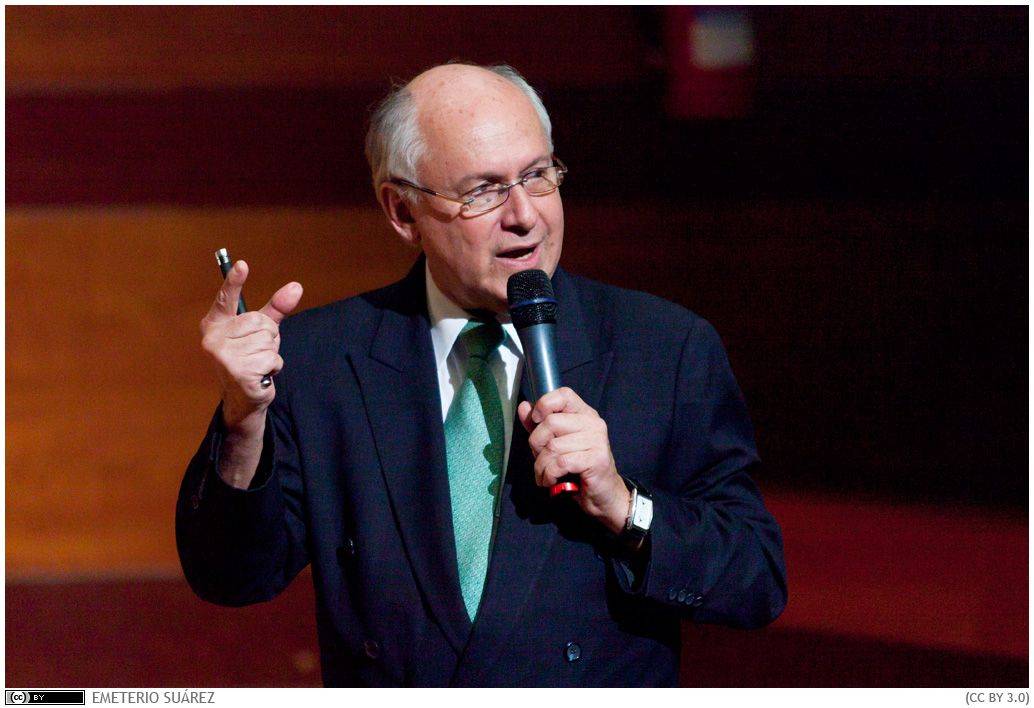
Colombian scientist Manuel Elkin Patarroyo passed away yesterday at the age of 78, after a lifetime dedicated to research and countless awards for his advances focused primarily on developing a vaccine against COVID-19. malaria (a disease also known as malaria). The Prince of Asturias Award laureate for Scientific and Technical Research was closely linked to the University of La Laguna throughout his professional career. So much so that in 1998 he was awarded a position as a professor. Doctor Honoris Causa, recognizing his important scientific work.
Elkin Patarroyo's work focused on the search for new vaccines, leading him to design synthetic inoculations against hepatitis B and tuberculosis. However, he gained worldwide recognition for his design and synthesis of Spf-66, an experimental malaria vaccine, which represented a major step towards the complete development of a vaccine to eliminate this disease that affects 260 million people worldwide, particularly children under five living in sub-Saharan Africa.
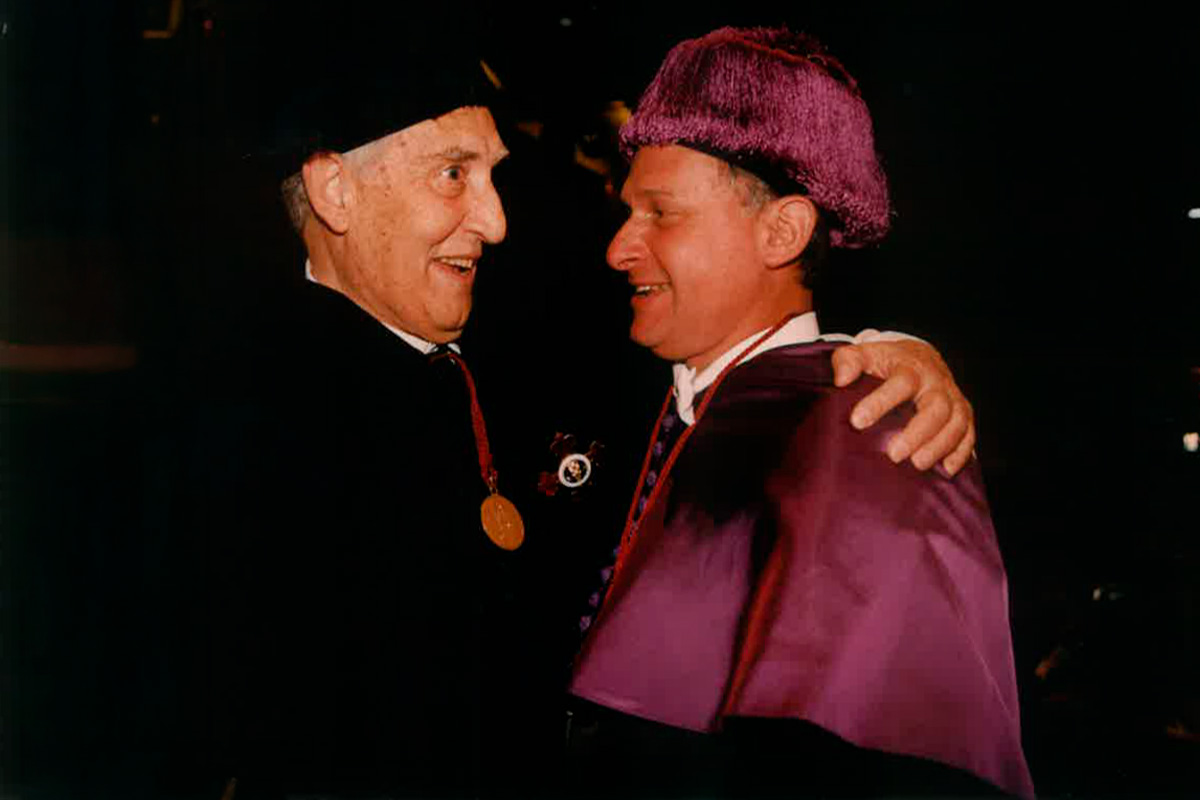
The honorary rector of the ULL, Antonio González, alongside Patarroyo at the investiture ceremony as Doctor Honoris Causa in 1998.
Elkin Patarroyo's relationship with the University of La Laguna has been extensive and has spanned the last few decades. After receiving his honorary doctorate, the researcher attended countless events at the academic center, and his close ties with the Institute of Tropical Diseases and Public Health were particularly noteworthy. He visited this institution on numerous occasions and even... He was present at its tenth anniversary in 2011.
“Manuel Elkin instilled in an entire generation of researchers, both in his native country of Colombia and in the rest of the world, the need to build nations by generating scientific knowledge,” said Jacob Lorenzo, current director of the aforementioned institute attached to the University of La Laguna, after learning of the news of his death.
“From the beginning, Elkin was one of the great pillars of our center at the regional, national and international level, and that is why biomedical science in the Canary Islands will always owe him a great deal,” Lorenzo stated.

 Spanish
 English
 French