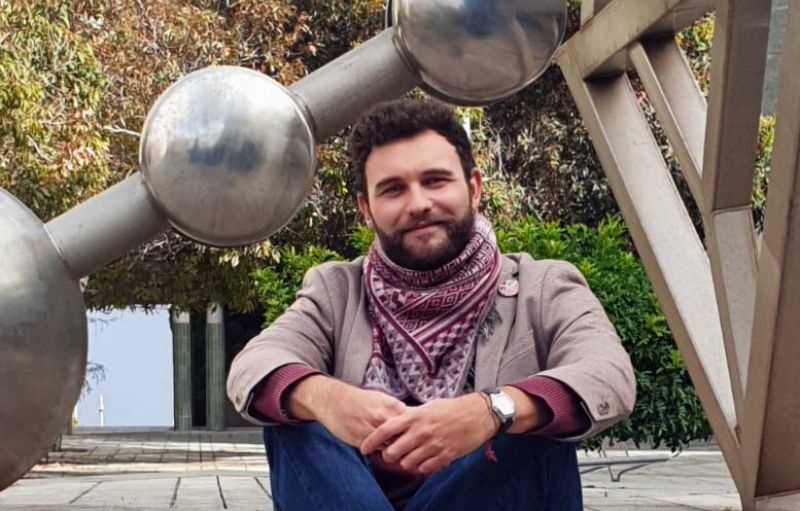
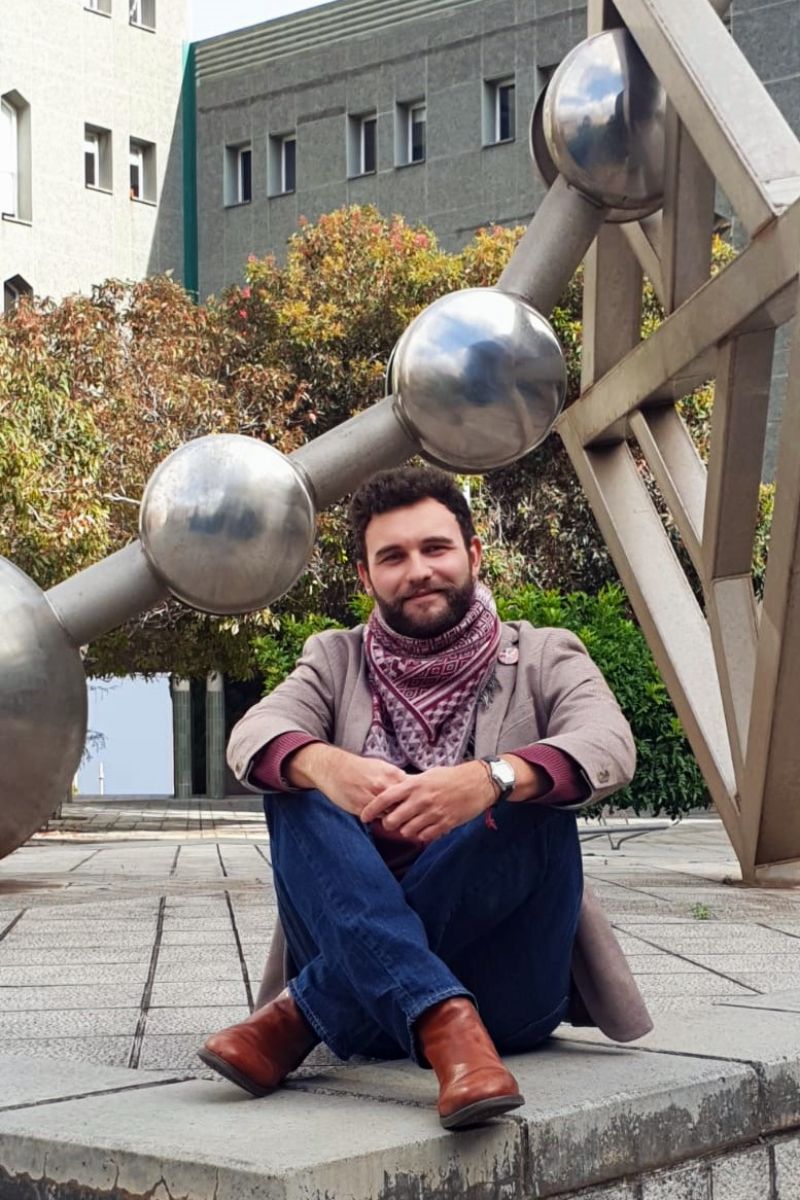
Alejandro Pérez-Olivares.
Alejandro Pérez-Olivares García, A professor with a doctorate in the Department of Geography and History at the University of La Laguna, he is one of the ten academic experts on the scientific committee advising on the design and development of the program of events commemorating 50 years of democracy after the death of dictator Francisco Franco, to ensure its “relevance and scientific quality.” This committee met yesterday, Thursday, January 16, for the first time at La Moncloa Palace, with the participation of the Prime Minister, Pedro Sánchez; the Minister of Territorial Policy and Democratic Memory, Ángel Víctor Torres; the Director of the Prime Minister's Office, Diego Rubio; and the Secretary of State for Democratic Memory, Fernando Martínez.
These activities will be carried out until November 2025 under the generic name of “Spain in Freedom. 50 years”, and is an initiative of the Government of Spain coordinated by the special commissioner Carmina Gustrán Loscos, from the University of Zaragoza, and the State Secretariat for Democratic Memory, advised by this scientific committee.
The historian from the University of La Laguna believes that for a young professor like himself, being selected for this committee is an opportunity he embraces with a tremendous “willingness to listen.” One of the main challenges of this program of events is reaching younger generations, who, being chronologically far removed from the dictatorship, risk developing an inaccurate and even idealized view of what that regime entailed. “There is a risk of normalizing anti-democratic behavior, as is already beginning to be seen in other European countries.” Therefore, the program places special emphasis on engaging with this group.
Another purpose of these activities is to bring scientific findings and discoveries that otherwise remain within academia to the public. Thus, this program includes outreach activities, political representation abroad, various cultural events, publications, and the designation of some thirty “sites of memory,” which are spaces where events of particular significance to democratic memory have taken place.
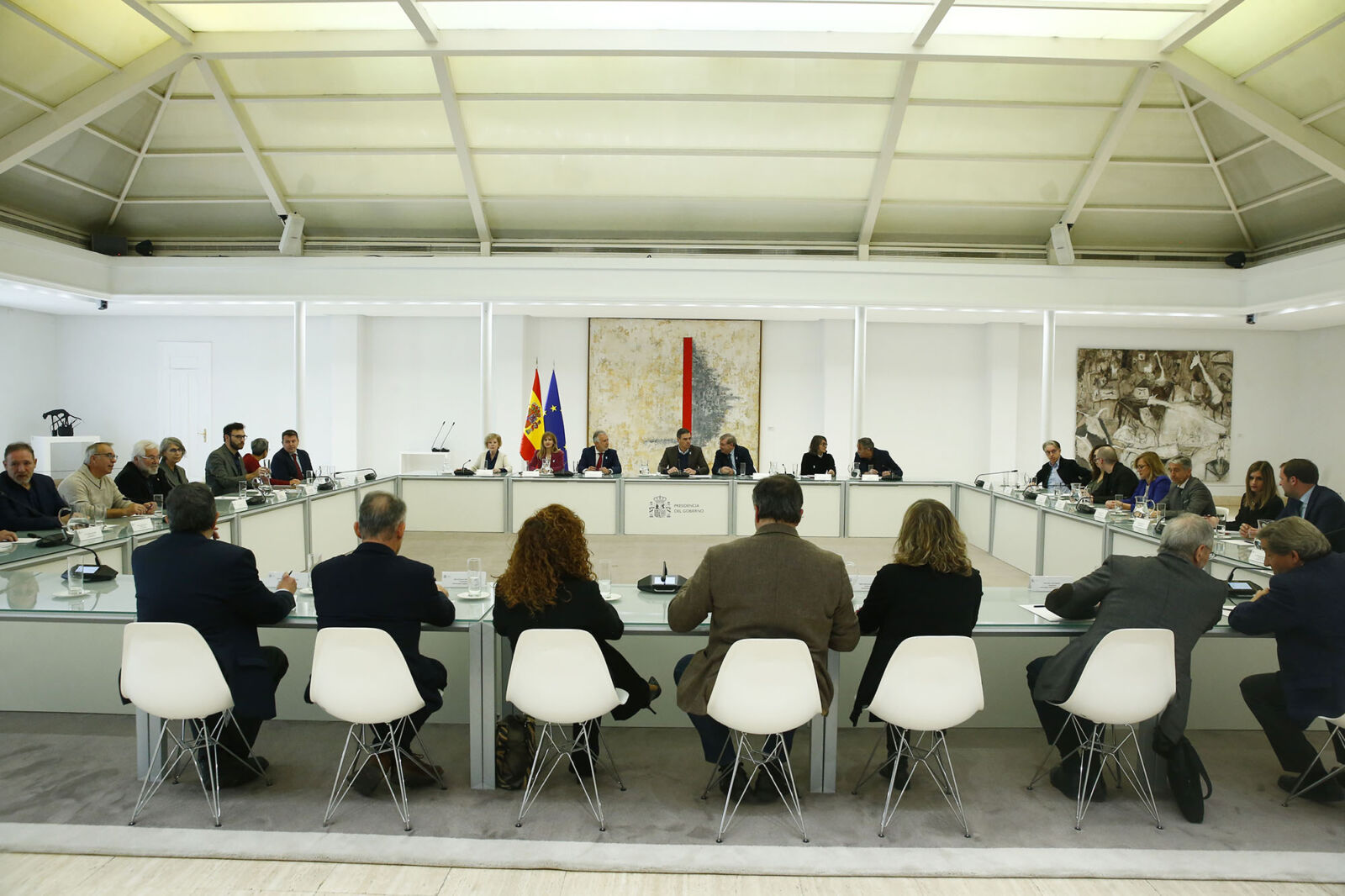
Image of the committee meeting held at La Moncloa on January 16. Photo: La Moncloa.
Pérez-Olivares explains that the symbolic date of 1975 was chosen for this fiftieth anniversary of democracy, as it marks the end of the dictatorship, although true democracy itself did not arrive until three years later. In this celebration, the historian believes it is important to take stock of all that has been achieved, without ignoring criticisms and proposals for improvement, and to pay attention to the comments, hopes, fears, and aspirations of younger generations.
Alejandro Pérez-Olivares (Madrid, 1988) has focused his research on the study of political violence from the perspective of control, in two senses. On the one hand, from a sociocultural approach, he analyzes the occupation of cities during "total war" and the construction of political and social archives under 20th-century dictatorships. On the other hand, from an environmental perspective, he studies the unequal management of resources in cities (urban political ecology) and the militarization of landscapes under Franco's autarky.
He holds a European Doctorate in Contemporary History and received the Extraordinary Doctoral Prize from the Complutense University of Madrid (2017) for his dissertation entitled «Victory Under Control: Occupation, Public Order, and Social Order in Francoist Madrid,» completed within the framework of the University Teaching Staff Training Program (FPU). In 2023, he received an honorable mention in the Mary Nash Young Researchers Award, granted by the Association of Contemporary History (AHC), for his work entitled “The Best Police Force Is a Complete File: The Documentary Archive of the Crusade and the Origins of the National Identity Document.”.
In addition to Pérez-Olivares García, the scientific committee includes Carme Molinero Ruiz, Professor of Contemporary History (Autonomous University of Barcelona) and President of the Association of Contemporary History (AHC); Julián Casanova Ruiz, Professor of Contemporary History (University of Zaragoza); Paloma Aguilar, Professor of Political Science (UNED); Ismael Saz, Professor of Contemporary History (University of Valencia); Ana Cabana, Associate Professor of Contemporary History (University of Santiago de Compostela); Miguel Ángel del Arco, Professor of Contemporary History (University of Granada); Zira Box, Associate Professor of Sociology (University of Valencia); Nicolás Sesma, Associate Professor of Spanish History and Civilization (University of Grenoble Alpes); and Margarita Vilar Rodríguez, Associate Professor of Economic History and Institutions (University of A Coruña).

 Spanish
 English
 French