Imagine what he would have thought if the journalist If Bob Woodward of the Washington Post had had internet access in 1972, his meetings with "Deep Throat" would surely have moved from the darkness of a parking lot to a Telegram chat. Imagine the look on Miguel de la Quadra Salcedo's or Jesús González Green's faces if they'd had their heavy film cameras and microphones replaced with a device that allowed them to broadcast live from anywhere in the world and fit in a vest pocket.
It is undeniable that, technologically, we are living in a golden age of communication. Never before have human beings had so many tools at their disposal to stay connected and receive information. Anything that happens in any corner of the planet is likely to reach us.
If we are more connected than ever, if technology allows us to reach places that were once only a dream, if the flow of information is unprecedented, why is the work of journalists at a low point? According to the latest barometer According to the Center for Sociological Research (CIS), the “role of the media and networks: disinformation, information manipulation, dissemination of hoaxes” is one of the main problems that Spaniards detect, above climate change or wars.
This new avalanche of information is sweeping us away. And like a skier buried in the snow, disoriented and awaiting rescue, not knowing what's up or down, the public can no longer distinguish reliable information from rotten and false information. It is in these moments of uncertainty that journalism is more necessary than ever. That's why we've taken advantage of Journalism Day (January 24th) to learn about some of the research being conducted at the University of La Laguna in this field.
Communication Lab
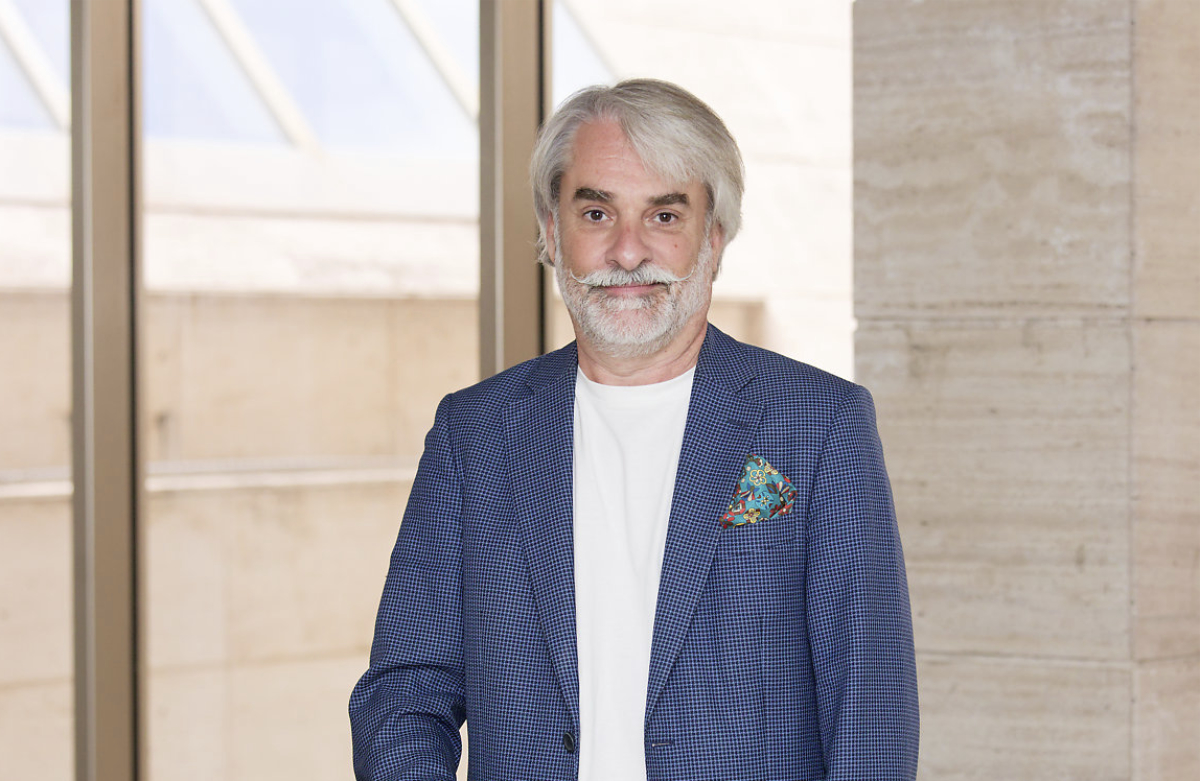
José Luis Zurita.
Laboratories are not exclusive to the areas of Chemistry or Physics. In the Department of Communication Sciences and Social Work At the University of La Laguna, there are also laboratories where professors and students experiment with information: its effects, spread, impact, construction, value, etc. One of these educational environments for learning the craft of journalism is... JournalismULL. At the forefront of this pioneering project is José Luis Zurita,Professor of Journalism. In his opinion, we are living in a golden age for the field. “We are in the best moment in history for the practice of journalism; there has never been so much information activity.” He demonstrates this conviction with PeriodismoULL, a real-world media project where students learn by taking on a multimedia role. It was launched in 2016 and, even today, “it is the only university digital newspaper project in Spain and one of the few in the world,” he points out.
PeriodismoULL is a formidable tool for students because it's not just an academic assignment, integrated into the curriculum as part of the news production course; all students, from first to fourth year, can participate. They learn to write inclusively, take photographs, retouch images, record videos, and create headlines as they will in a media company. This project, which aims to professionalize in the near future, has become a prominent channel within the university community and is of great interest to public media outlets.
This is the case of RadioTelevisión Canaria, which, together with the University of La Laguna, promotes the RTVC-ULL Communication Chair, This initiative was created with the aim of guaranteeing the quality of public service broadcasting and its audiovisual products through collaboration between the university and public television. According to the specific collaboration agreement, it will be responsible for promoting continuing education, dissemination, and research on the impact of new information and communication technologies in the audiovisual sector, with a special focus on new technologies and transmedia storytelling.
This professorship is a product of another project with a distinguished track record, the Journalism Conference, an event that fosters synergy among students from this department and five other vocational training centers, as well as professors and professionals from the Canary Islands public radio and television network. For Zurita, this conference is invaluable because it involves all stakeholders in audiovisual communication. “Students from casting, makeup artists, technicians, journalists, and actors participate, making dual training between the University and Vocational Training a reality.”.
Technology: Problem or solution to communication?
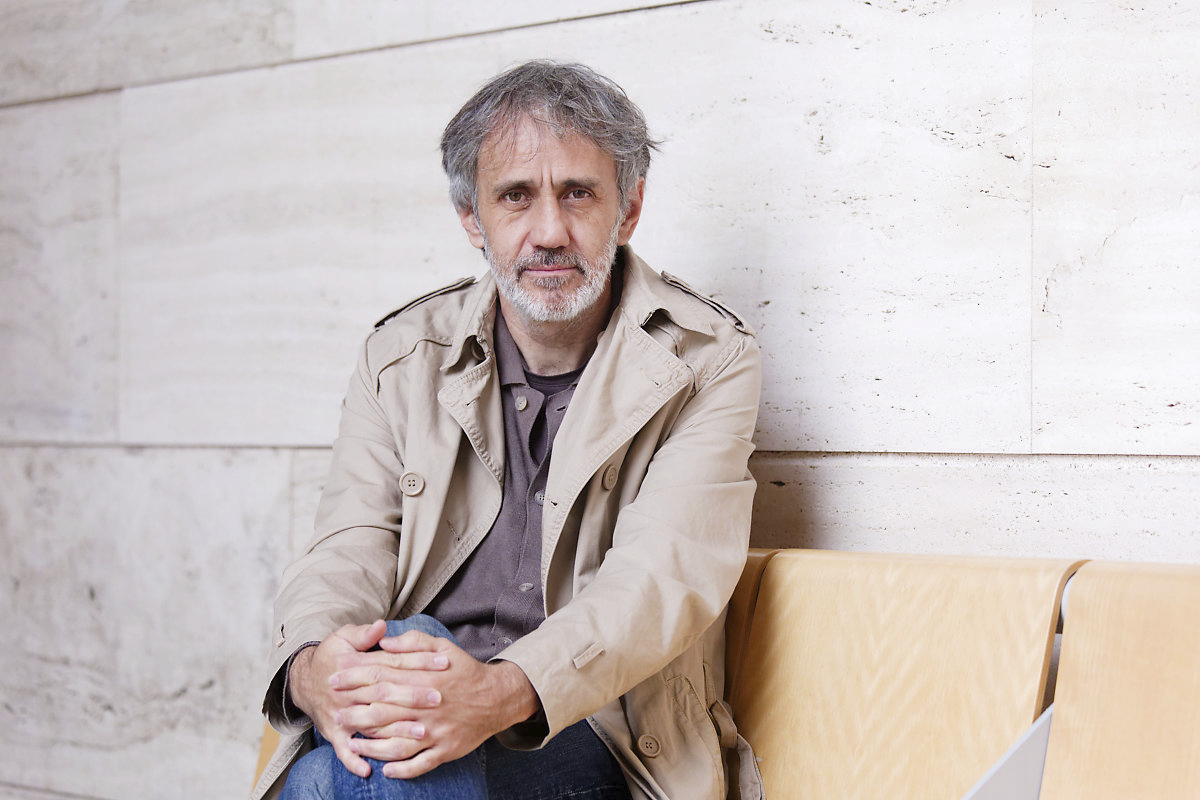
Samuel Toledano.
We live in difficult times for truthful communication. Hoaxes and fake news are becoming increasingly indistinguishable from daily information, blending in better and better with reality, so much so that it is becoming harder every day to know what is true and what is not. Alberto Ardévol, Patricia Delponti y Samuel Toledano They make up the Media Research Lab, a group that studies "the effects that content has once it interacts with the receiver." These professors are concerned with what happens in people's minds when they receive information.
With Donald Trump's recent return to the White House for the second time, we question the success of his strategy of systematically questioning the truth and promoting alternative narratives. How can a discourse laden with lies take root? Toledano expresses concern in this regard. “We face a serious threat because journalism, and information as a whole, has always been tied to facts. Facts have always been sacred. Now it seems that the important thing is to ensure you have that ideological affiliation, and this is a challenge—I would say more than a challenge, it's a threat—not only to the information process but also to the democratic process.” It is striking that as disinformation increases, so does polarization, and this, in turn, in an endless loop, fuels even more disinformation.
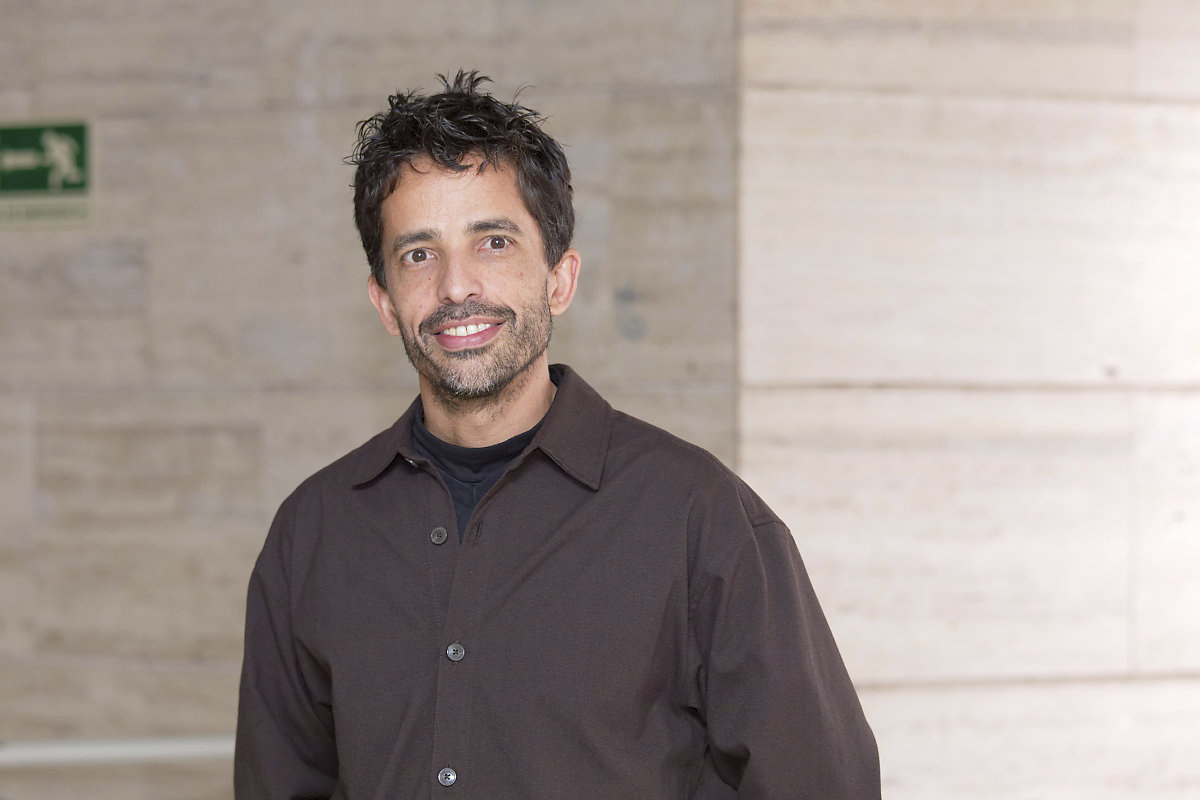
Alberto Ardévol.
Researchers emphasize that if information fails us, democracy fails. A fundamental democratic pillar is being well-informed about what is happening in the world, so that we can make decisions, one of which is, for example, voting. Ardévol gives a concrete example. “During the DANA storm, the rumor spread about supposed corpses that had appeared in a parking lot. This story was sold to you, and refuting it, from an informational standpoint, is proving much more difficult than demonstrating that it isn't true.” Psychology demonstrated many decades ago that once we are told a lie, it sticks in our minds even if we know it has been debunked. “It seems that our brain doesn't completely erase them,” and this is a problem, because undeniably false facts make us hesitate, and professional liars take advantage of this, proving the saying “lie and something will stick” true.
Social media is playing a major role in this flood of misinformation. Delponti emphasizes how our access to information has changed and its consequences, with social networks becoming echo chambers where we only hear people who share our opinions. “We’ve fallen into the trap of listening to or reading people who agree with us. We don’t want to be bothered by other opinions, and we’ve lost the ability to listen to other voices, other perspectives. As educators, we have to encourage this practice of questioning everything and thinking critically.”.
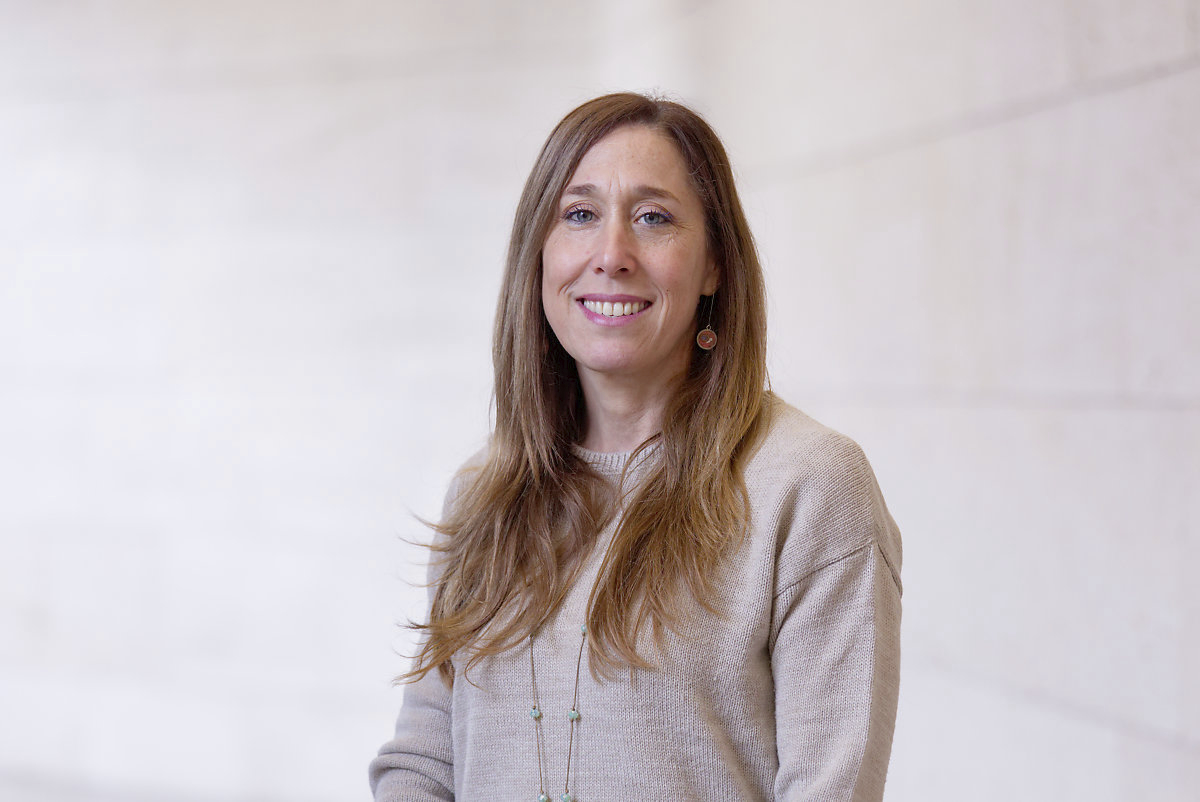
Patricia Delponti.
The promotion of critical thinking and its impact is precisely one of the laboratory's areas of interest. Chesterton wrote in his book Orthodoxy from 1908: The object of opening the mind, as of opening the mouth, is to shut it again on something solid (The goal of opening the mind, like opening the mouth, is to close it again on something solid.) In this sense, researchers draw attention to the phenomenon of News Finds Me (The news finds me). A phenomenon that exposes people to news without them having to seek it out. Information that reaches us through mobile alerts, balloons, notices, or messages. Something that isn't necessarily good.“We see that people who think the news will find them end up knowing less about what's happening in the world. The more you think about that, the less you know about current political affairs, the less you know about what is happening in economic terms in social reality.”.
And then came artificial intelligence
Artificial intelligence is changing our world and the way we interact. It does so when it tells us the fastest route to work, suggests a song, or recommends a vacuum cleaner. It detects cancerous cells, designs new drugs, and decides whether or not to grant us a mortgage. Naturally, AI has also arrived in the field of communication, and this is one of the research areas of the "Communication, Journalism, Emerging Technologies, and Artificial Intelligence" group.
According to the group leader, María Dolores Meneses, AI is just another tool that journalists must learn to use. “We used to write articles with ribbon typewriters, then came electronic ones, later computers with editing software. Now another tool has arrived: artificial intelligence.” But this is not a tool comparable to Microsoft Word. Most experts agree in warning about the dangers of AI misuse, its almost unknown capacity to cause harm in the wrong hands. “There are reasons to be concerned depending on how these artificial intelligence technologies are used, and in fact, we are already seeing anecdotal examples, for now.”.
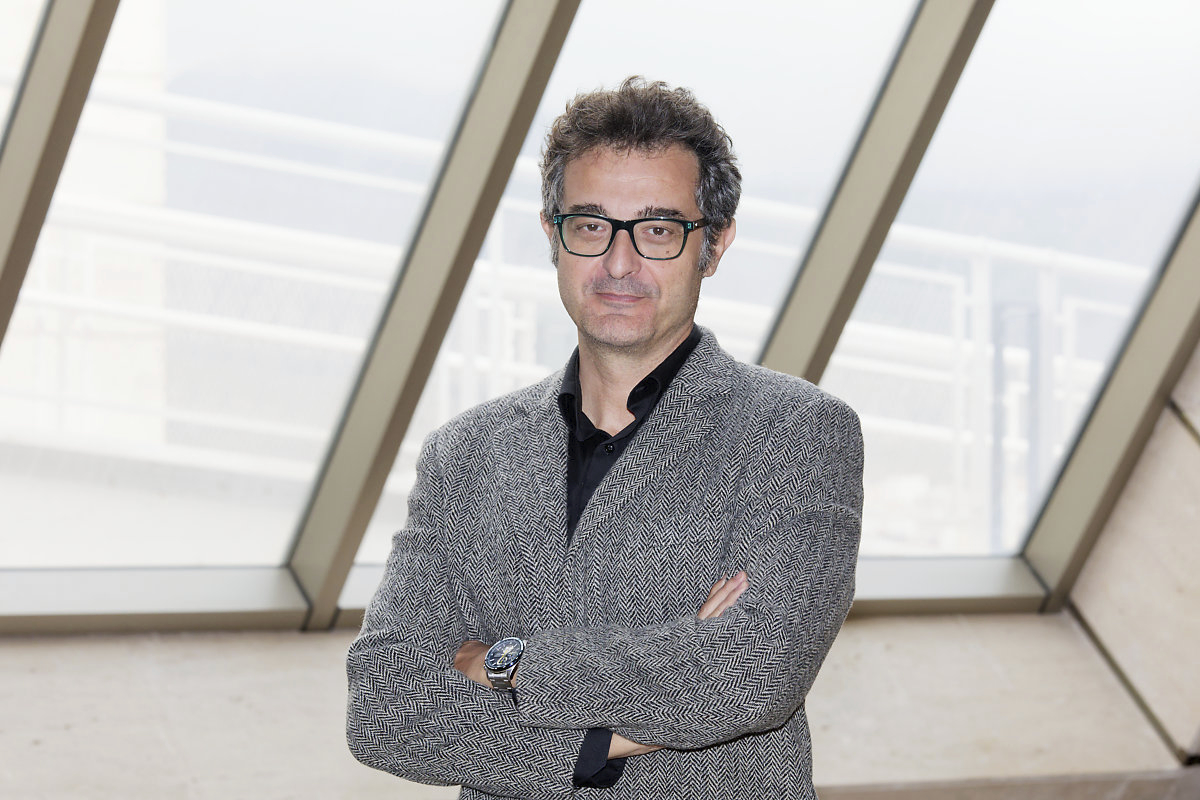
David Fuentefría.
David Fuentefría, A researcher in the area of Audiovisual Communication and Advertising at the University of La Laguna highlights the cultural clash that the arrival of AI entails, where today it is difficult to distinguish machine from human being and tomorrow it will be almost impossible. “Those of us who grew up reading books and newspapers are going to face a generation that will succeed us and that will not distinguish a soulless text written by a machine from one created by a person.” He also acknowledges that he has begun to notice this in classwork, which is why the trend of working with pencil and paper is gaining ground against desks full of laptops. “Because the cognitive processes that are unleashed when we write by hand promote learning.”.
Regarding the impact of technology on our lives, he believes that not everyone is benefiting equally. “There are 60 percent of students who, each year, we see their academic performance gradually declining. That's why it's not a trivial matter. Nor is it trivial to expect teachers to be a kind of entertainer who teaches by doing, rather than through knowledge, when the transmission of knowledge is the foundation of society.”
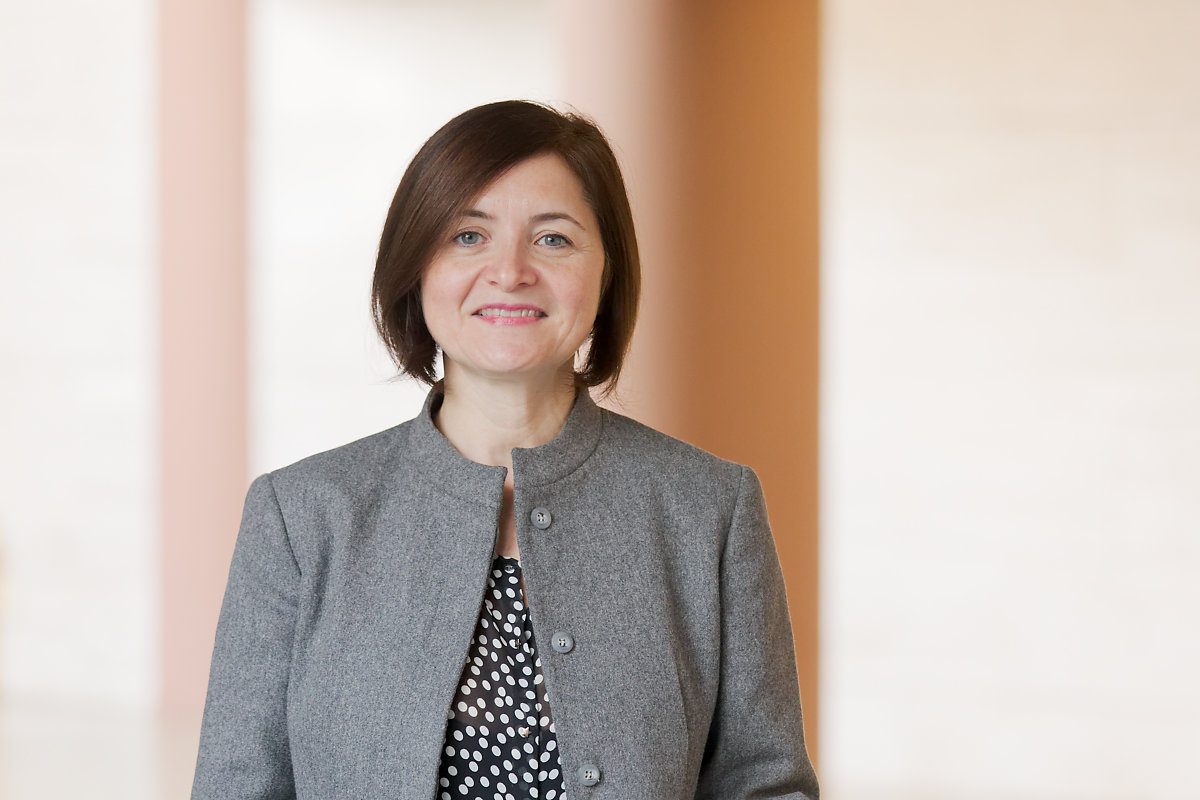
Milena Trenta.
Regarding the role of social media in disinformation, Milena Trenta, Trenta, a researcher in the Department of Communication Sciences and Social Work, is concerned about X and Meta's decision to eliminate fact-checkers. "The responsibility will fall on the public; now everyone has to fend for themselves to find out if information is false or not, at least within the United States." Deciding what is true and what is false will be the daily struggle the population faces, and regulating this will be "very complicated." Trenta also wants to draw attention to the age of this problem. "Let's not demonize AI; disinformation existed before it, and long before social media.".
The communication model has changed. Social media is in the hands of billionaire white men with a clear political affiliation who set their own rules according to their own interests—"networks so influential that they are replacing democratic institutions. Politicians have to look at X before saying what they think.".
Faced with such a rapidly changing landscape, teachers advocate for the classroom to be a haven where students can sit still for more than 20 minutes, reflecting on a topic and fostering critical thinking. Meneses champions the inherent critical thinking of journalists, encouraging them to constantly question everything in their pursuit of truth. “I’m worried that AI will automate our work.” And to prevent this, they advocate for... to digitally educate the entire society in general and in particular regarding what artificial intelligence technologies entail.
Scientific Culture and Innovation Unit (Cienci@ULL)

 Spanish
 English
 French