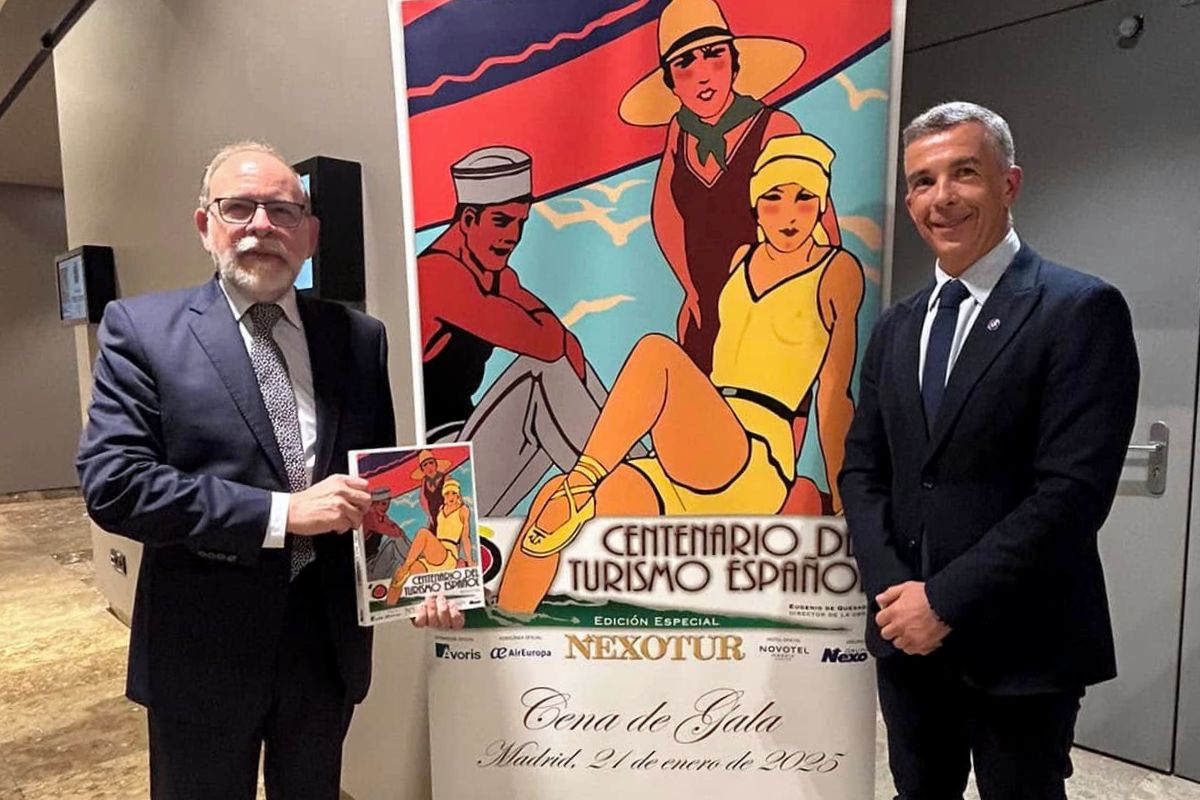
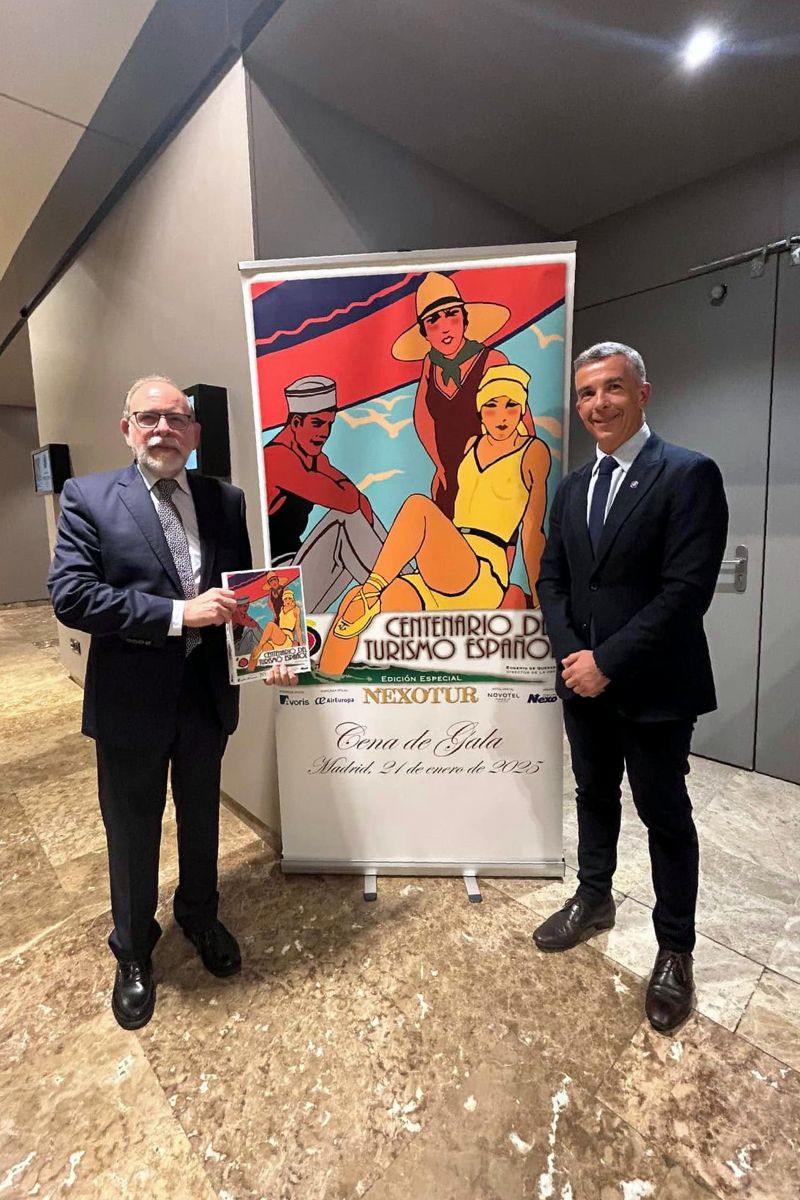
José Adrián García (left) and Eduardo Parra (right) at the Nexotur 2025 gala where the latter was highlighted as one of the "Tourism Protagonists".
The online platform for tourist information Nexotur On January 21st, on the eve of the FITUR tourism trade fair, the "Tourism Leader 2025" awards ceremony was held at the Novotel Madrid Center. One of the honorees was... Eduardo Parra López, Professor of Business Organization at the University of La Laguna. The Dean of the Faculty of Economics, Business and Tourism at the Tenerife institution also attended the event., José Adrián García Rojas.
During the gala, the book "Centenary of Tourism in Spain" was also presented, a monumental work commemorating one hundred years of evolution and development of the national sector. This large-format volume, with almost 500 pages, comprises 34 chapters covering all subsectors and segments of Spanish tourism. Its creation was made possible thanks to the collaboration of more than fifty deans, professors, lecturers, and researchers from the tourism faculties of 25 universities across Spain's 17 autonomous communities, including Eduardo Parra himself, who authored the chapter dedicated to tourism in the island territories, namely the Canary and Balearic Islands.
In his chapter, Parra analyzes the historical situation of all island destinations since the 19th century, reflecting “a very significant path of growth and adaptation in the face of all the challenges,” he explains. The study presents the first recorded data, which showed no more than 15,000 visitors, and points to the turning point in the 1950s, when “official status emerged” with the establishment of organizations such as AENA (the Spanish airport authority) and the regional tourism departments, leading to the significant growth of the early 1990s, reaching 4 million visitors—a similar process in both the Canary and Balearic Islands.
This analysis details the expansion of these destinations and highlights the importance of transportation and how connectivity contributes to a paradigm shift in the sector's development. The text examines each island individually, considering its scale, and generally emphasizes the importance of "resilient and sustainable tourism.".
It offers a vision for the future that highlights the importance of maintaining good relations with the local population, having better coastal infrastructure, promoting habitability, preserving resources and the environment, and committing to greener investments to foster an industry that conserves culture and heritage and better addresses challenges such as climate change, economic vulnerability, resilience, innovation and sustainable development.

 Spanish
 English
 French