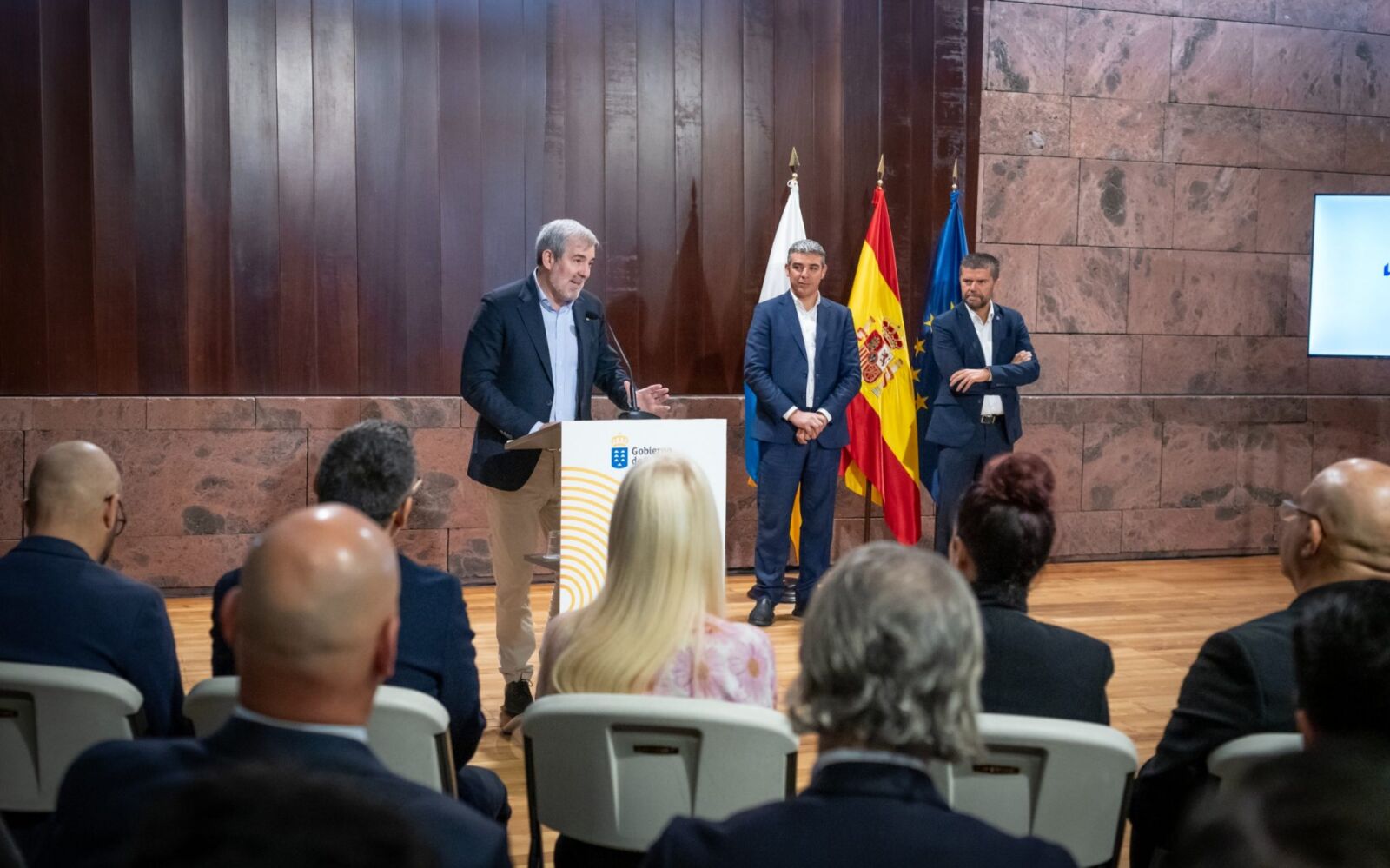
The President of the Canary Islands, Fernando Clavijo, and the Minister of Agriculture, Livestock, Fisheries and Food Sovereignty of the Government of the Canary Islands, Narvay Quintero, today, Wednesday, January 29, together with the Rector of the University of La Laguna, Francisco Javier García, signed a collaboration agreement that reinforces support for the Chair of Agritourism and Wine Tourism of the Canary Islands, created in 2019 and financed through the Canary Islands Institute of Agri-Food Quality (ICCA), with the aim of promoting training, dissemination and research in this field and fostering synergies between the primary and tourism sectors.
With the signing of this agreement, the fourth renewal of the initial agreement ratified in 2019, the Canary Islands Government reaffirms its commitment to consolidating the Canary Islands' position as a leading agritourism destination. Furthermore, funding for the Chair has been increased by 201% for 2025 and 2026, reaching a total of €145,000 for both years. The Canary Islands Government Headquarters in Santa Cruz de Tenerife hosted the signing ceremony, which was also attended by the Director of the Canary Islands Institute of Agritourism (ICCA), Luis Arráez Guadalupe; the Vice-Rector for Culture and University Extension, Isabel Karely León; and the Chair's Director, Jesús Enrique de las Heras.
With the aim of contributing to the responsible development of tourism activity in direct contact with agricultural and fishing activities, the Chair promotes technical training in the agri-food products of the archipelago, in addition to its dissemination in congresses, seminars, exhibitions and other events and initiatives through a group of teachers, researchers and professionals of the sector in charge of training companies in the primary sector and tourism activities and other entities.
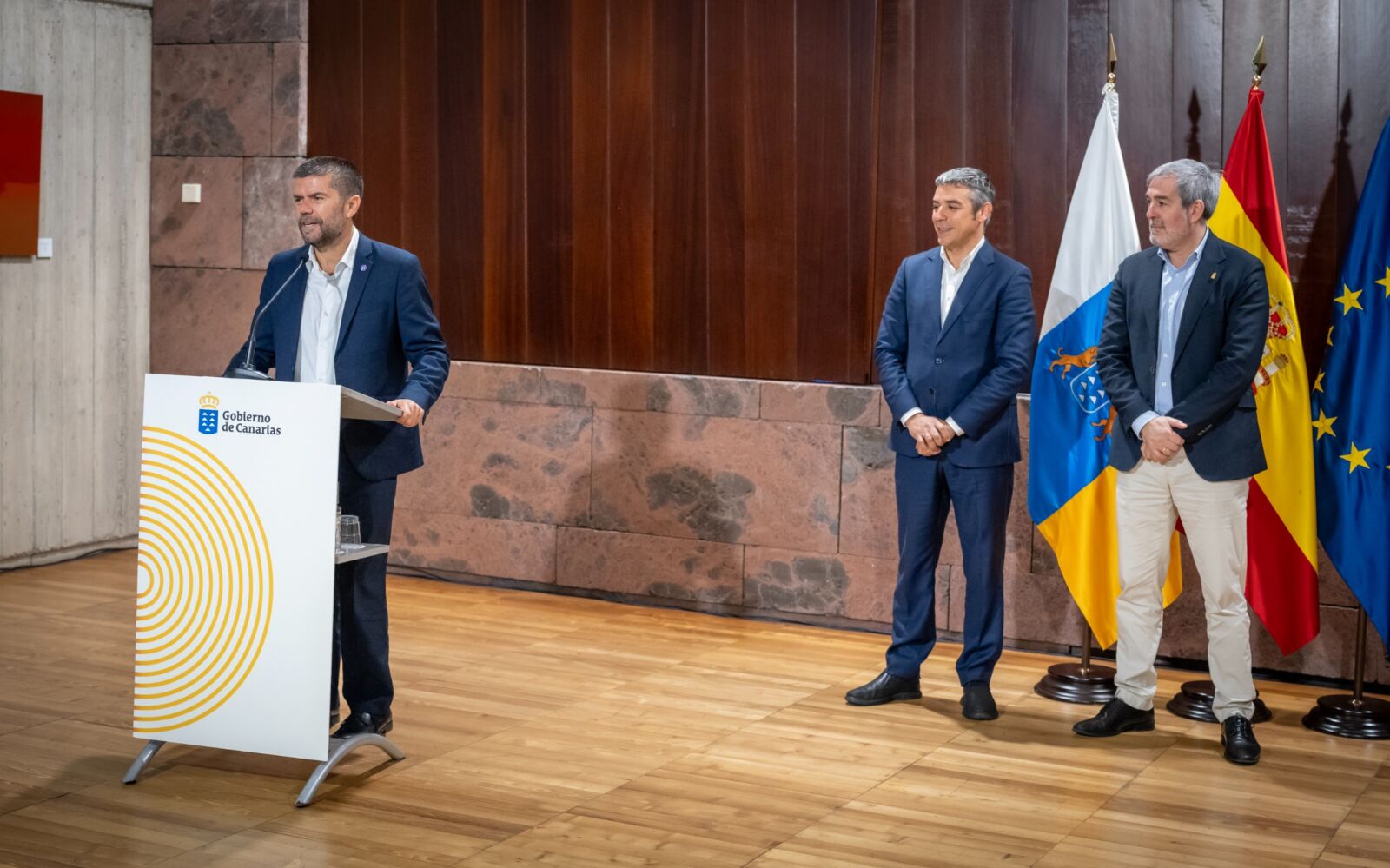
The rector of the ULL, in the first place.
Following the signing, the president recalled that this collaboration was forged within the framework of the "Growing Together" strategy led by the regional government to foster the link between the agricultural sector and other sectors, especially tourism. He noted that through the joint effort of the University of La Laguna, the regional government, and the companies collaborating on this initiative, "we are ensuring that in the coming years the Chair will continue to be an engine of change for building a more resilient future for the Canary Islands, making the archipelago a model of innovation and sustainability for Macaronesia and the rest of the world through agritourism.".
“This initiative has established itself as a benchmark in boosting the agri-food and tourism sectors of the islands, attracting almost a thousand people to the promoted activities over these five years, allowing us not only to transfer knowledge, but also to gather valuable lessons directly from the sector and generate business opportunities for our producers,” added the head of the Executive.
For his part, the rector emphasized that the University of La Laguna is committed to this model of institutional chairs because it is a very direct way to transfer knowledge. “In this case, it is a chair with a well-established track record in sectors such as agritourism and wine tourism, which highlight the value of the primary sector and allow for the dissemination and updating of traditional practices that, in addition to being a defining characteristic, can be significant economic and cultural assets,” he said, adding that “it is also a chair whose activities extend throughout the archipelago and which has forged alliances with numerous entities, so it is undoubtedly a project that demonstrates the university's commitment to regional development.”.
The councilor also highlighted that strengthening the primary sector in the tourism field is the best way to share our history and cultural values with those who visit us "and offer them, through our products, a unique experience that they cannot find in any other tourist destination in the world.".
Since its creation in 2019, the Chair has counted a total of 8,201 beneficiaries of its actions, of which 42% are professionals from the primary sector (wineries, cheese factories, agricultural estates, markets, etc.), 27% come from the tourism sector (guides, intermediaries, owners of rural accommodations, translators, etc.), 18% from the university community (students, teaching staff, research staff, etc.) and the remaining 13% are the general public and others.
During this time, a total of 324 training, research, consulting and knowledge transfer activities have been organized, both in the Canary Islands and on the Iberian Peninsula, through conferences and events in Valladolid, Madrid, Guipúzcoa, Zaragoza, Logroño, Cádiz, Jerez, as well as internationally, with meetings and activities held in Cape Verde, Brazil, Argentina, Peru, Portugal, France, Mexico, Uruguay.
The 2024 Activity Report, presented at the end of the year, summarized approximately 80 activities carried out and 430 participants. The document included milestones such as the creation of an interdisciplinary research group, the launch of the Specialist Course in Sensory Analysis of Wines and Agri-food Products from Macaronesia, and the consolidation of the Canary Islands Agro-Wine Tourism Meeting, which celebrated its ninth edition last year. At that same meeting, the commitment to continue promoting this initiative was also announced, a commitment reaffirmed today through the signing of this new agreement.
The most representative initiatives of this period include the completion of the study "Monitoring of wine tourism activity in the Canary Islands", which has provided an in-depth view of the
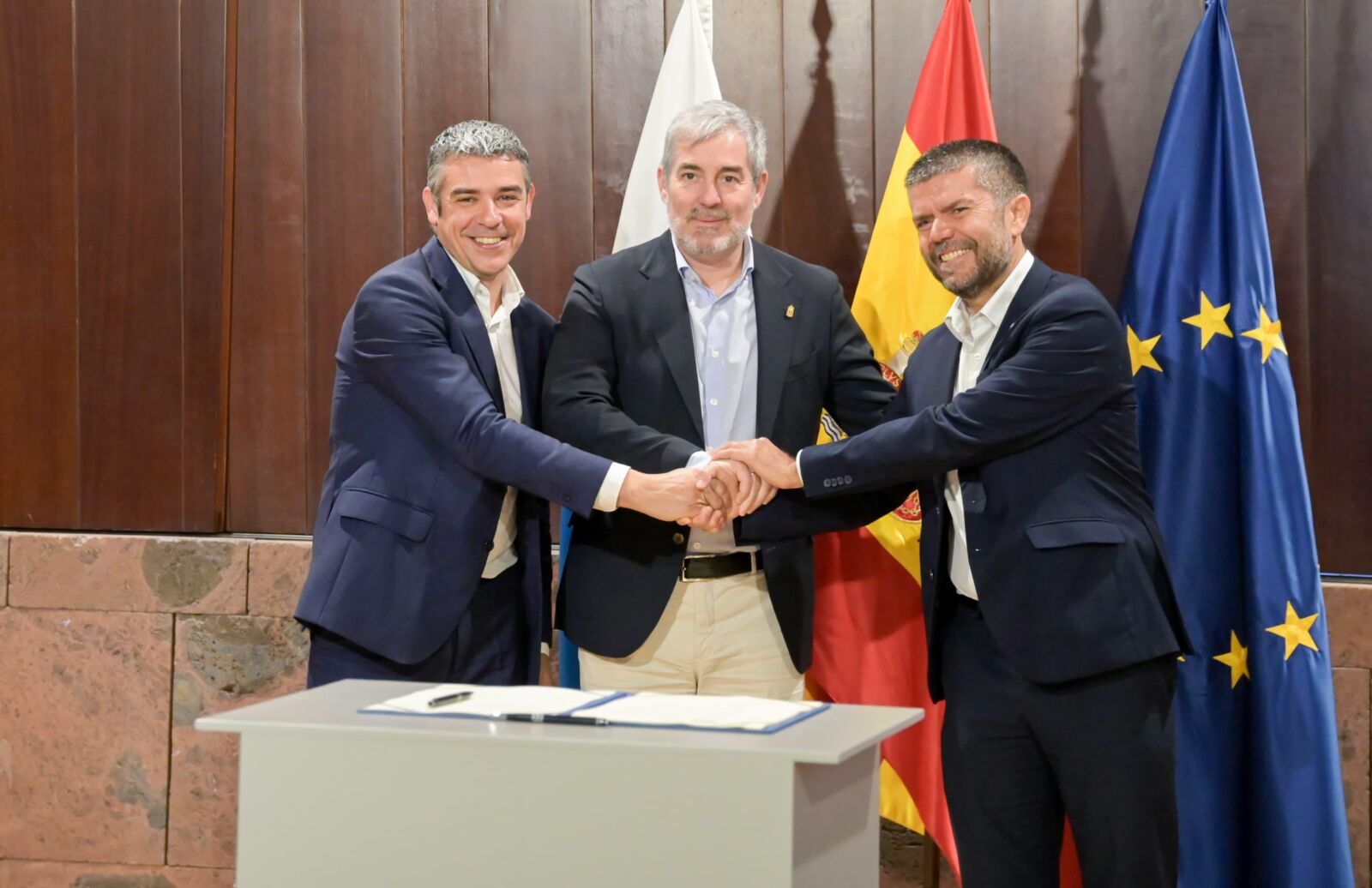
Councilor, president and rector, at the end of the event.
dynamics of the sector, and the Territorial Mapping of Wine Tourism, as well as the research entitled Approach to the reality of women in the cheese factories of the Canary Islands, which have established a precedent for the more efficient knowledge of the sector from a gender perspective.
Likewise, the Chair has also led emblematic events such as the International Technical Conference on Sustainable Viticulture, in addition to establishing links with other relevant entities such as the Canary Islands Wine Tourism Cluster, with which the Government of the Canary Islands collaborates through the public company Rural Environment Management of the Canary Islands and the ICCA.
Thanks to these initiatives and agreements, the Canary Islands have established themselves as a key hub for a knowledge network within the sector, particularly in Macaronesia, but also with ties to Latin America through agreements with various universities. Thus, thanks to the Chair's impetus, the archipelago has become, in recent years, the site of one of the leading international forums in the wine industry.
(Note and photos provided).

 Spanish
 English
 French