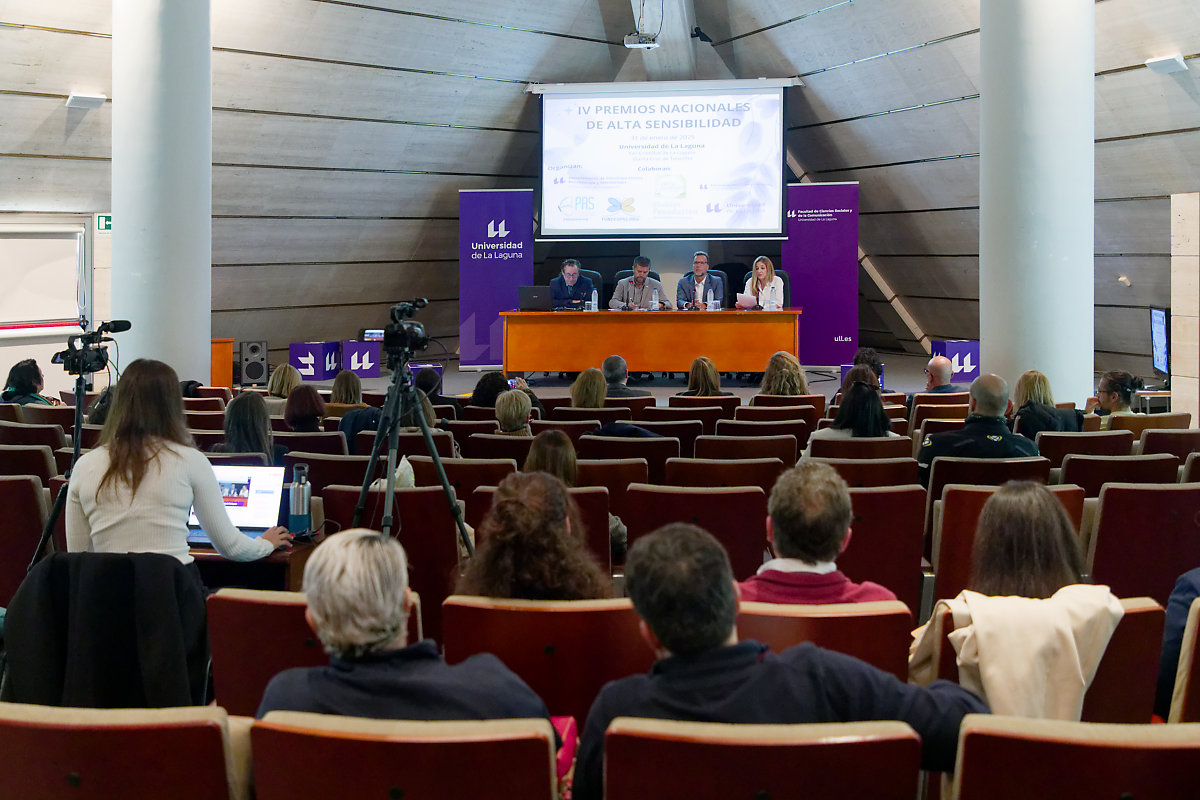
The Journalism auditorium is hosting a national meeting throughout the day today, January 31st, promoted by the Association of Psychologists and Professionals of High Sensitivity (PAS Spain), an organization that promotes knowledge and research on this personality trait attributable to the 20-30% segment of the population. The University of La Laguna hosted this event. event, through the Department of Clinical Psychology, Psychobiology and Methodology, and more specifically through Professor Moses Betancort, session organizer.
Manuela Pérez, president of PAS Spain, pointed out at the opening ceremony that this event, which will also host the presentation of the national awards granted by the association, reflects the commitment of the academic community dedicated to the visibility of this subject, in which this academic center has demonstrated special leadership through the European project Emotion.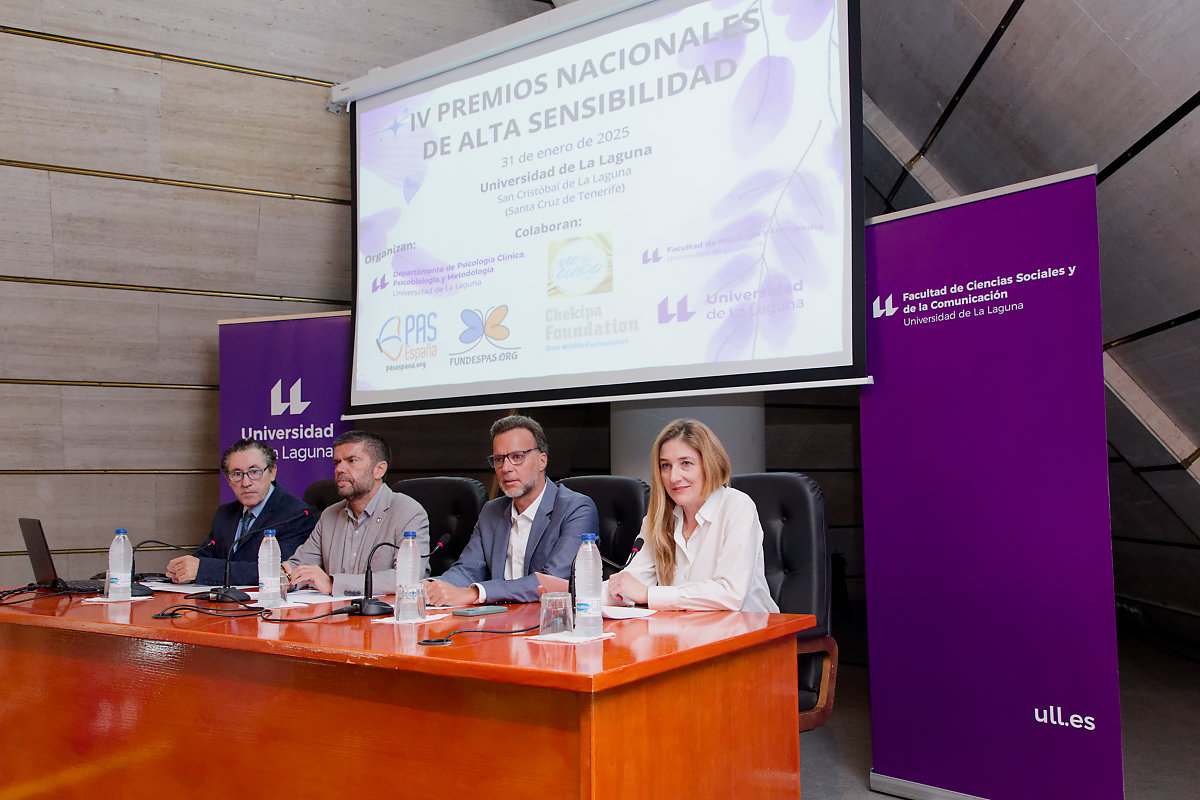 Betancor's position.
High sensitivity was described by researcher Elaine Aaron, who characterized these individuals as having a deep and thorough processing of information, a high degree of emotionality and empathy, which leads to greater emotional reactivity, and a much more detailed processing of the environment that causes an overload in the cognitive and emotional system that can lead to oversaturation, both physical and emotional.
The Dean of the Faculty of Psychology, Juan Manuel Bethencourt, pointed out that it is essential to understand the contributions of highly sensitive people in their communities, “in a world that values speed and rudeness, this group reminds us that there are people with different values, people who perceive the emotions of others and who contribute with passion and creativity to everything they do; their sensitivity is not a weakness but a very enriching contribution.”.
Ciro Gutiérrez, Deputy Minister of Universities for the Government of the Canary Islands, also participated in the session, noting that in an increasingly diverse world, creating more inclusive spaces is essential. “Only by understanding their experiences and observing their processes can we advance towards true equality.”.
For his part, the Rector of the University of La Laguna, Francisco García, expressed his pride that this academic center was hosting the fourth edition of these awards. “We are improving our understanding of this personality trait, while also recognizing the people who work in this field.” He also indicated that society is in great need of these types of individuals, and that “diversity generates richness to face many challenges and fills us with hope for the future.”.
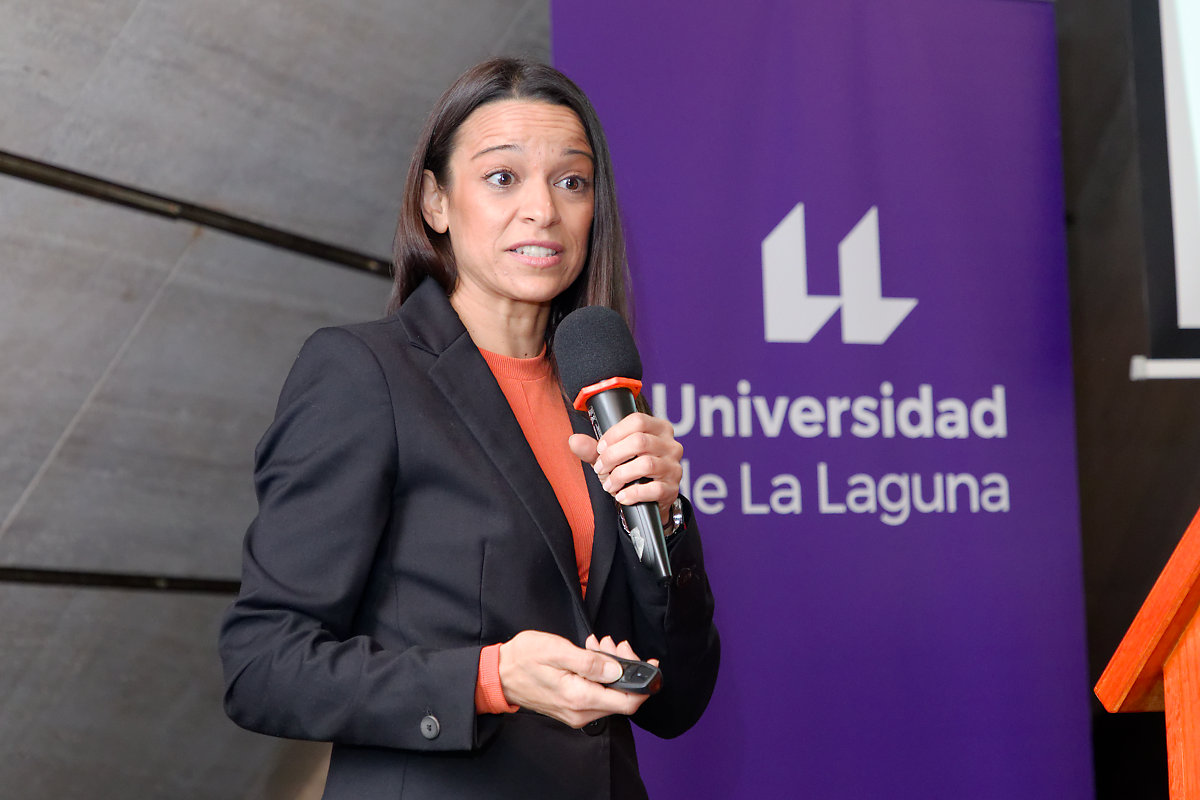
Luz Morales Botello.
Luz Morales Botello, a master's degree holder in neuroscience and behavioral biology and a professor at the European University of Madrid, was the first speaker at the session. She emphasized that high sensitivity refers to sensory processing and that it is a personality trait of genetic origin, but also influenced by the environment. These individuals are more sensitive to the sensory environment and bodily sensations, exhibiting greater reactivity to stimuli and a deeper level of processing.
High sensitivity is studied from many disciplines, especially psychology, but there are few demographic studies on the people who experience it. The speaker presented data from a recent study with a sample of 10,000 people in Spain, which concluded that the typical profile is that of a woman between 35 and 44 years old, with a university degree, working full-time, and with two children. Morales Botello added that in the group of people with low sensitivity, the proportion of men and women is similar, but as age increases, the percentage of women with this trait grows.
Lorea Zubiaga, a neurodevelopment expert and professor at Cardenal Herrera University, pointed out that although a specific genetic predisposition exists, it is not always interpreted by our cells, depending on our environment. “We don’t want to add another label; we want to remove them,” she said. “Human beings can share roles; we need each other. We need people with the capacity for action and others with the capacity for reflection.”.

 Spanish
 English
 French