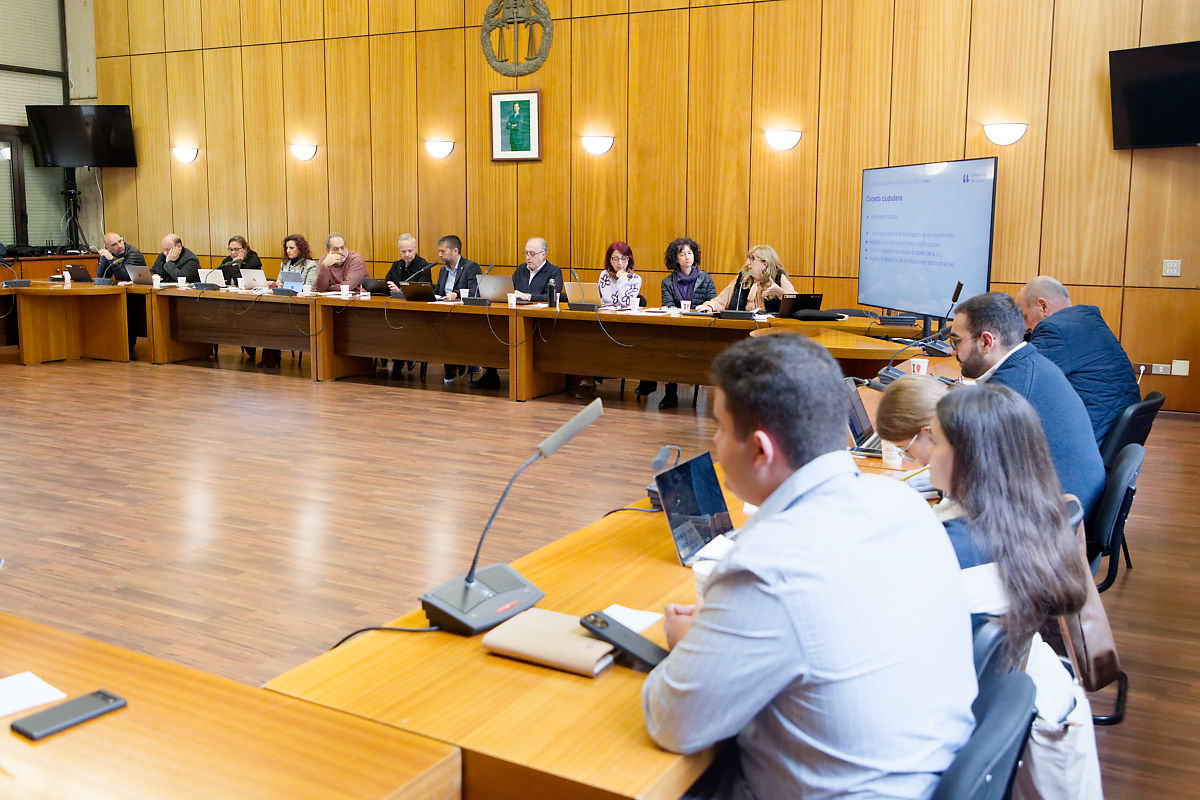
The Governing Council of the University of La Laguna has today, February 4, expressed its agreement that the academic institution will grant one of its most significant distinctions, its Gold Medal, to several media outlets in the islands and to the universities of Las Palmas de Gran Canaria (ULPGC) and National Distance Education (UNED).
As Rector Francisco García explained, this award recognizes highly relevant institutions in the region, with whom the university maintains close ties and which have distinguished themselves in the fields of education, culture, science, and knowledge dissemination. These institutions have enjoyed a long-standing presence in our community, with a continuous relationship with the University of La Laguna that has been particularly valued.
One of these entities is Radiotelevisión Canaria (RTVC), which has just celebrated its 25th anniversary, a quarter of a century dedicated to covering all events in the Canary Islands. RTVC collaborates with the Faculty of Social Sciences and Communication, provides internships for students, and is committed to fostering local talent by supporting small production companies on the islands. Furthermore, an institutional chair agreement with this news outlet will be signed today.
Another recipient of the Gold Medal from this university is Spanish Radio and Television in the Canary Islands (RTVE), which has celebrated 60 years of presence in the islands. This broadcaster has covered the most significant events that have occurred in the Canary Islands, from volcanic eruptions and the Los Rodeos airport disaster to the decolonization of the Sahara, the rector noted. He also highlighted RTVE's contribution to scientific outreach through specialized programs with direct participation from researchers, as well as the regular internships offered to students.
Radio Club Tenerife is the oldest radio station in the Canary Islands, and in fact, it was the region's first non-printed news outlet. The rector stated that it is a medium closely linked to the archipelago's social and political history, highlighting its connection with Latin America and its leading audience share in the province.
Radio Ecca, for its part, celebrates its 60th anniversary this year, having broken down cultural and educational barriers. This milestone was recently highlighted in a traveling exhibition on the Guajara campus that reviewed its history. The rector emphasized the station's use of radio as a literacy tool, which has since evolved into an exclusively online educational platform.
The National University of Distance Education (UNED) will also receive the Gold Medal. This public institution has enabled people from all walks of life in the Canary Islands to access higher education, offering accessible, high-quality, and inclusive training. The rector highlighted the role of the La Laguna branch, which has a special relationship with the University of La Laguna (ULL). In fact, many of the branch's tutors belong to the ULL, in addition to the joint cultural chairs and shared objectives and values.
Finally, the University of Las Palmas de Gran Canaria, coinciding with the recent 35th anniversary of its founding, is also deserving of this distinction. It is a university born out of societal demand, and it excels in fields such as marine sciences, biotechnology, and tourism. The relationship with the University of La Laguna (ULL) is a model of collaboration that has allowed for the strengthening of joint projects and the sharing of strategies, values, and interests, noted the rector, who also affirmed that the socioeconomic stability of the region depends on the collaboration between the two public universities.
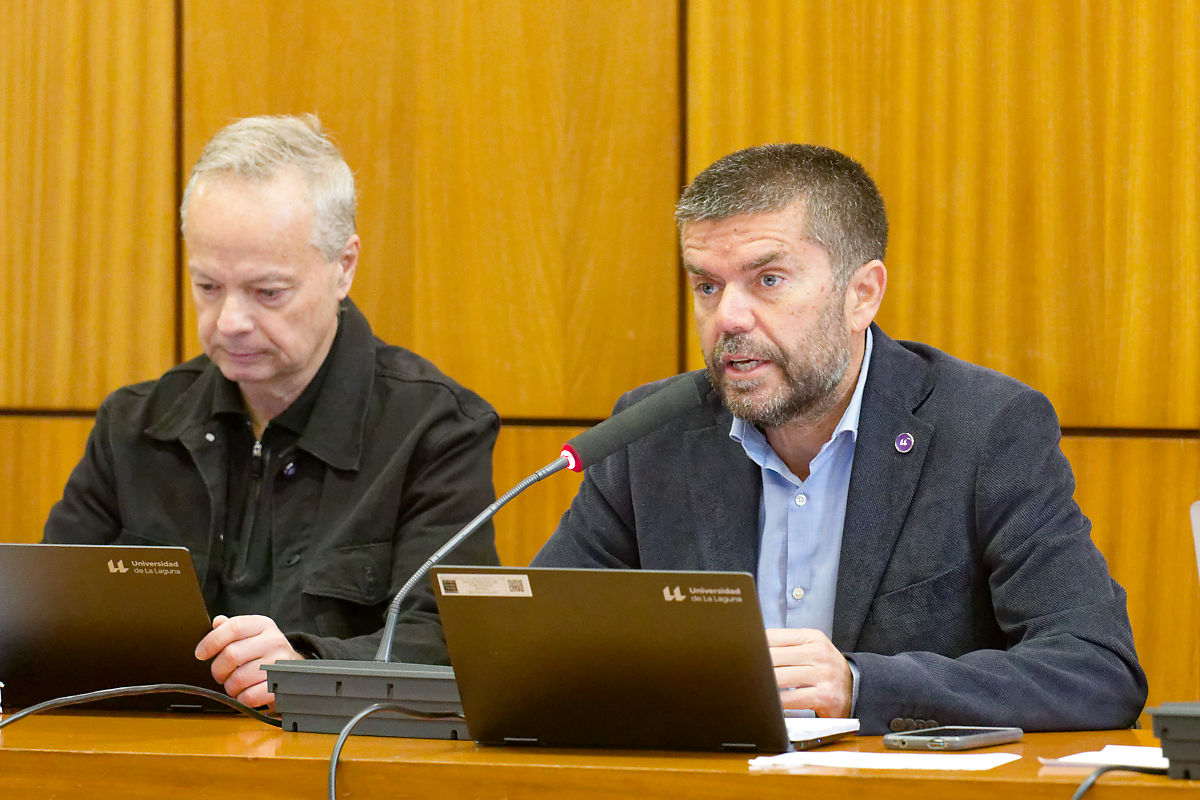
The secretary general and the rector.
Regulatory modifications
In other business, the Governing Council approved a series of regulatory changes affecting teaching activities at its meeting today. Particularly noteworthy was the approval of progressive academic pathways, which allow students who have already completed a certain percentage of credits to enroll in a master's program, provided they submit a written report and receive prior approval from the academic committees and faculty boards. This only applies to engineering and architecture degrees. The council has given its approval to all 13 programs submitted, pending approval from the regional quality assurance agency.
In connection with this, the governing body slightly modified the regulations for this type of study. There has also been a partial modification of the regulations governing the recognition and transfer of credits, as well as those regulating university master's degrees. Today, the text regulating the Master's Thesis was also amended.
Likewise, the governing body approved in this morning's session the modification of the regulations for emeritus professors, relaxing some access requirements to allow for a greater number of candidates, while also making some minor corrections.
The Governing Council also authorized the proposed places offered for changing universities or official Spanish and foreign undergraduate university studies for the next academic year 2025/26, which cannot exceed 10% for transferring records and 5% for partial validation.
Electronic headquarters
The manager of the academic institution, María Teresa Covisa, presented a new regulation that governs the operation of the electronic headquarters, and that establishes a new framework of legal security with all digital administration, an element that was already included in the modernization plan of the university center itself.
Covisa explained that the text includes all the legal guarantees of the authentic copy of the application, the elimination of the requirement to individually sign each of the attached documents, the incorporation of economic data in the standardized models and the standardization of the responsible declaration.
This establishes the legal framework for creating the citizen's digital folder, with a personalized area for consulting procedures and accessing communications and notifications, among other things. The document stipulates that the identification of individuals is guaranteed by the submission of the application itself, without requiring a photocopy of their national identity document. It also regulates automated administrative procedures and establishes the reuse of documents and data already held by the university.
Adverse weather phenomena
The Secretary General, Juan Antonio García, presented the proposed basic action plan for the university in the event of adverse weather conditions to the Governing Council, a matter previously requested by the University Senate itself. The document distinguishes four levels of risk: the first is normal, with preventive and self-protection measures; the second addresses a precautionary situation, with measures such as the suspension of outdoor activities; the third is orange, and includes measures such as switching to online teaching; and the last, maximum alert or red, involves the suspension of all activity except those deemed essential for the university. At levels 1 and 2, action is taken by individual centers or faculties, depending on their classrooms and infrastructure, while at levels 3 and 4, the emergency committee acts and the Rector's Office assumes command.
The Secretary-General added that there will be specific developments for the university's accommodation centers, and added that several climate change experts have selflessly offered their advice on this matter.

 Spanish
 English
 French