Even before we are born and our organs are fully developed, we are already able to identify our mother's voice. Amidst the cacophony of sounds the fetus hears, muffled by the amniotic fluid, Mom's voice rings out with crystal clarity. That's how important our mother tongue is—the one we learn from infancy by listening to our loved ones speak. Around the world, a large percentage of babies hear Spanish as their first language.
According to the latest report “Spanish in the world”According to the Cervantes Institute, 452,807,955 people have Spanish as their native language. If we add those who speak it as a second language or with limited proficiency, the group of Spanish speakers reaches 600 million, 7.51% of the world's population. Looking at these figures, we also find some interesting facts, such as that Spain is not the country where Spanish is most widely spoken, a distinction now held by the United States, where, although they may be reluctant to admit it, more than 62 million people speak the language of Cervantes.
A mother tongue is an intangible heritage that fosters cultural diversity worldwide, as it is the primary means of transmitting knowledge and preserving cultures. All languages are important, from the most widely spoken, like Spanish or English, to those on the verge of extinction, such as Breton, spoken by barely 200,000 people in northwestern France. Just as with flora and fauna, languages also have a list of extinct languages, voices that will never be heard again, such as the Slovinian language of Poland, which has not been spoken since 1999.
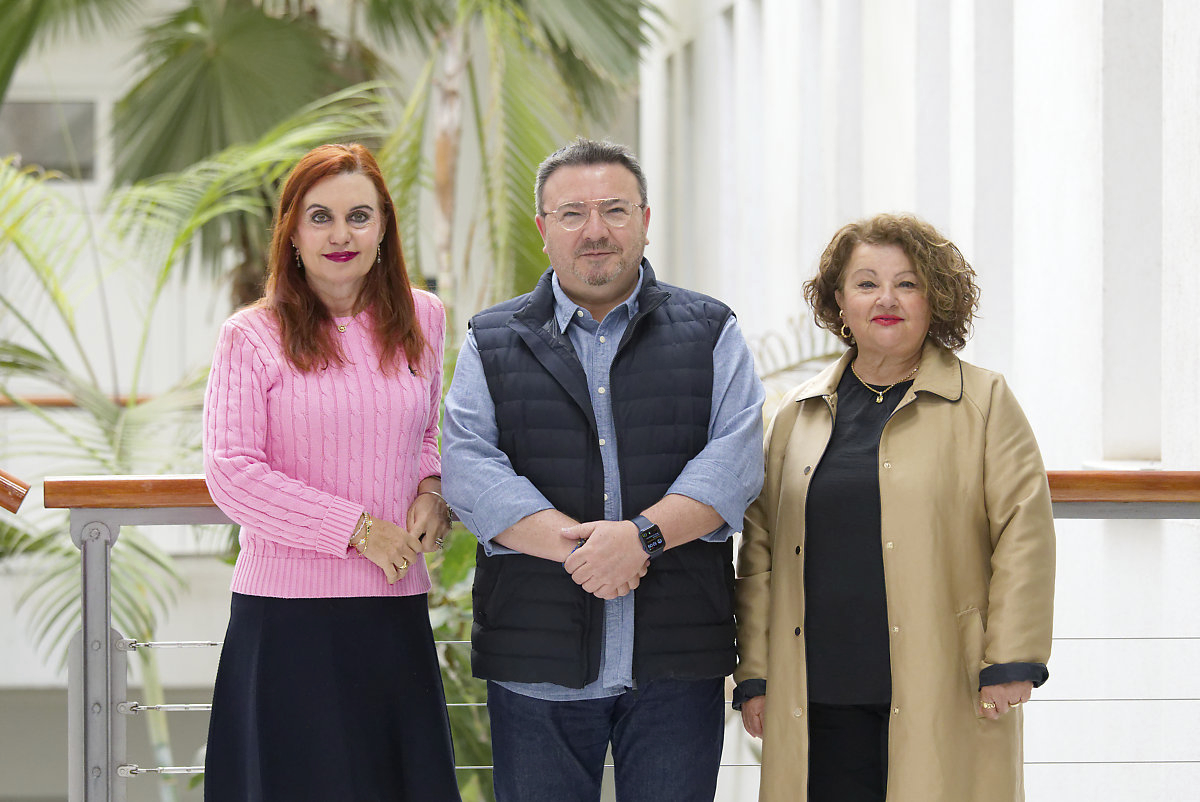
To combat the extinction of mother tongues and the resulting disruption of cultural transmission, UNESCO decided to celebrate International Mother Language Day every February 21st. This proclamation marks its 25th anniversary this year, and we wanted to celebrate by showcasing the researchers at the University of La Laguna who work with Spanish as their primary language, from phonetics and syntax to lexico-semantics.
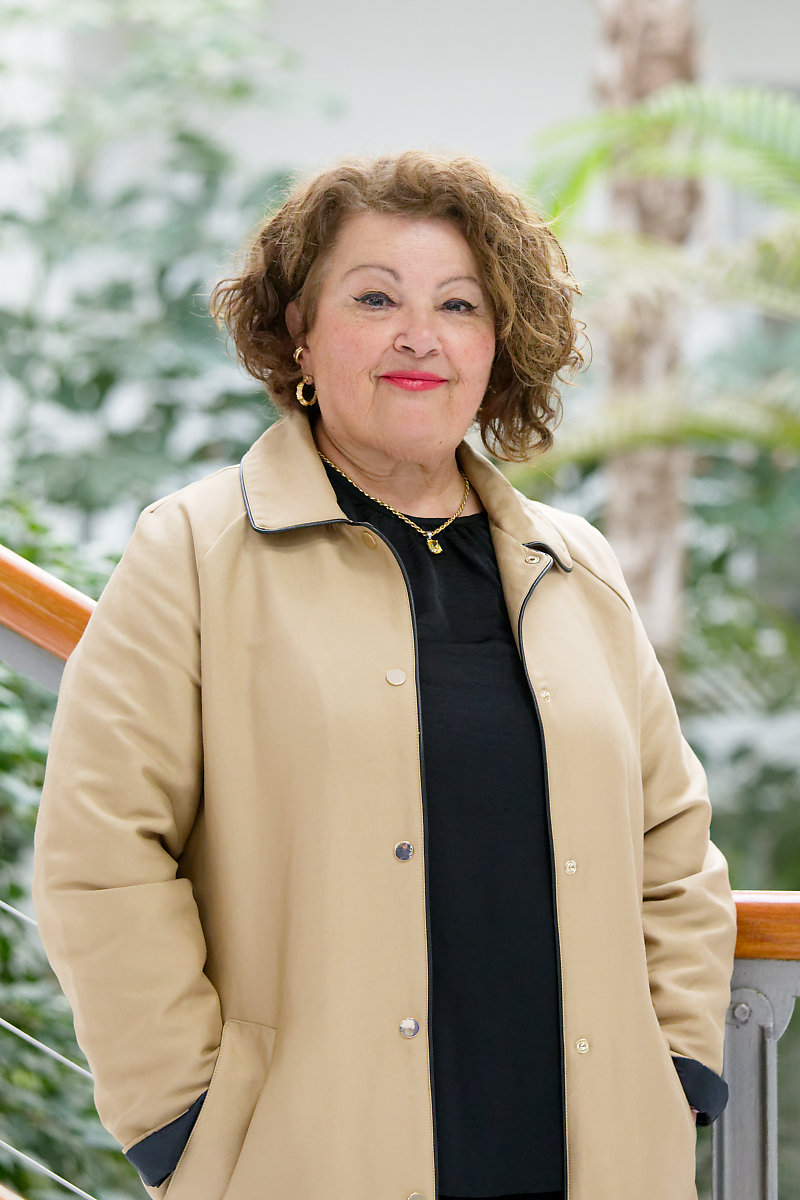
Josefa Dorta.
Every voice is unique
All around us we see synthesizers, computer equipment, screens, amplifiers, microphones… it seems like we're in an electronics lab, but no, we're on the first floor of the Philology Department, in the Phonetics Laboratory. This installation is associated with General Research Support Service (SEGAI) has been in operation since 1991 and is headed by [name missing]. Josefa Dorta Luis, professor in the Department of Spanish Philology at the University of La Laguna.
Just as fetuses can distinguish their mother's voice from others, this laboratory can detect the unique signature of each human voice. Its unique and untransferable nature, like fingerprints, opens up a range of very promising applications. If the voice is unique, belonging to each person like a signature, it can be used for access control or identity verification. But like signatures, can the voice be forged? The professor is emphatic on this point: each voice is unique. "In our laboratory, we compare voices and verify that articulation and intonation can be imitated; all of that can be copied, but the phonation itself cannot." The vocal cords leave a unique trace that, thanks to analysis software, can be identified. This unique characteristic of the voice has been used to locate criminals and detect recordings made under duress. "When you're nervous, your phonation is different, and that can be observed in the analyses.".
But voice analysis can also be used to diagnose illnesses. Thanks to this unique characteristic of our voice and the close relationship between the vocal cords and our brain, the voice can be used to diagnose neurodegenerative diseases such as Alzheimer's. "When we analyze the voice of a person with Alzheimer's, we observe that the two constituent phonemes, especially the second one, which relates to the timbre of the voice, appear very distorted with dips and drops in the graph." This is a similar characteristic to what appears when people are nervous, since no one disputes that the voice is intimately related to mood. "Everyone accepts that, for example, dysphonia can also be caused by emotional factors.".
In a world flooded with virtual assistants powered by increasingly sophisticated Artificial Intelligence, we couldn't resist asking if an AI-created voice could perfectly mimic a human voice. “Despite its advancements, artificial intelligence isn't something we see as having an impact on our field, namely forensics. Voice imitators have always existed.” Whether human or mechanical imitations, there is one physiological characteristic that AI has yet to replicate: the vocal cords.
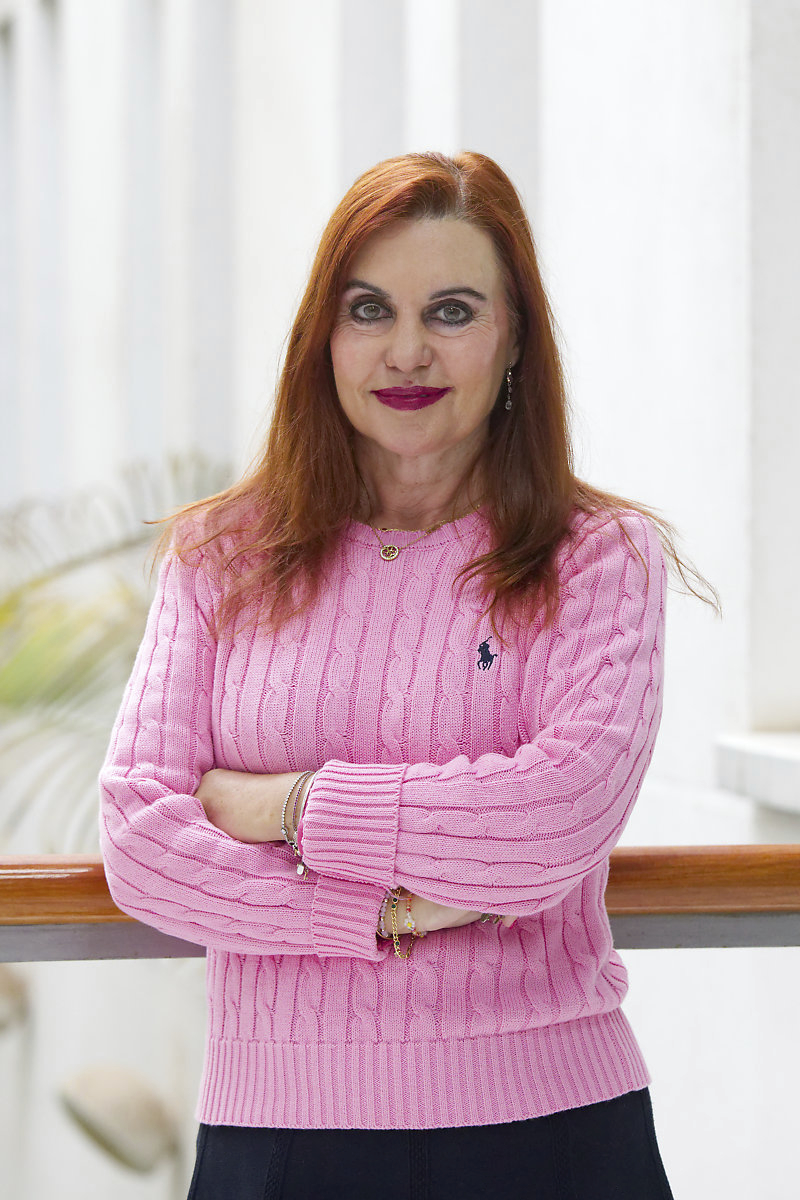
María José Serrano.
Diversity and variability of language
There's a Spanish saying that highlights the idea of diversity and variability as an enriching characteristic of our lives: "Variety is the spice of life." In academia, variation refers to the changes or differences that can occur in a language over time, in different places, or among different groups of speakers. Even though they sound the same, saying "yesterday I ate lentils" is not the same as saying "yesterday I have eaten lentils," or "this afternoon I will go to the movies" is not the same as saying "I am going to the movies." Why do we choose one option over the other?
María José Serrano Montesinos She is a professor in the Linguistics department at the University of La Laguna. In the research group Communication, Society and Language (COSOLEN) analyzes morphosyntactic variation by adding a cognitive perspective. Although the previous expressions may seem to express the same thing, the research says otherwise. “When we choose one formula or another, it is not because they seem the same to us, but because we have chosen it. We are choosing their meanings, which are different even though they may seem the same.” The researcher reveals that therein lies the key: they seem identical but they are not, and, moreover, the speaker chooses to use one or the other.
One of their group's tasks is to listen to and record how people speak in conversations, interviews, newspaper articles, radio and television programs, podcasts, and social media. “We have corpora from social media, not only from typical platforms like Facebook and Instagram, but also from other platforms like TripAdvisor. We delve into them looking for cases of morphosyntactic variation and analyze them based on their meaning.” In this work, they have discovered curious cases such as certain infinitives that are typical of a social network like X: “Waking up, opening the window, making coffee, and enjoying the view from home.” The professor and her group aren't so much interested in the use or misuse of language; they go further. They want to know why the user of this social network chose, in this case, the infinitive to express themselves. “This type of construction is a new variant that has been created from a resource offered by grammar: the infinitive. These variants either emerge from where they originated or remain where they persist; for example, we might see this on TV or in our conversations.”.
The way we express ourselves reveals how we think, even what experiences we've had. The study of variation carried out by Serrano and his team includes a cognitive connection that aims to explain our linguistic choices when expressing ourselves, which are even highly localized. “In Galicia someone might say: 'this morning I woke up,' while in Castellón they would say: ‘'I woke up this morning.' In Oviedo, however, it is common to hear: 'I never had children,' since there they prefer to use the preterite tense instead of the present perfect tense.’.
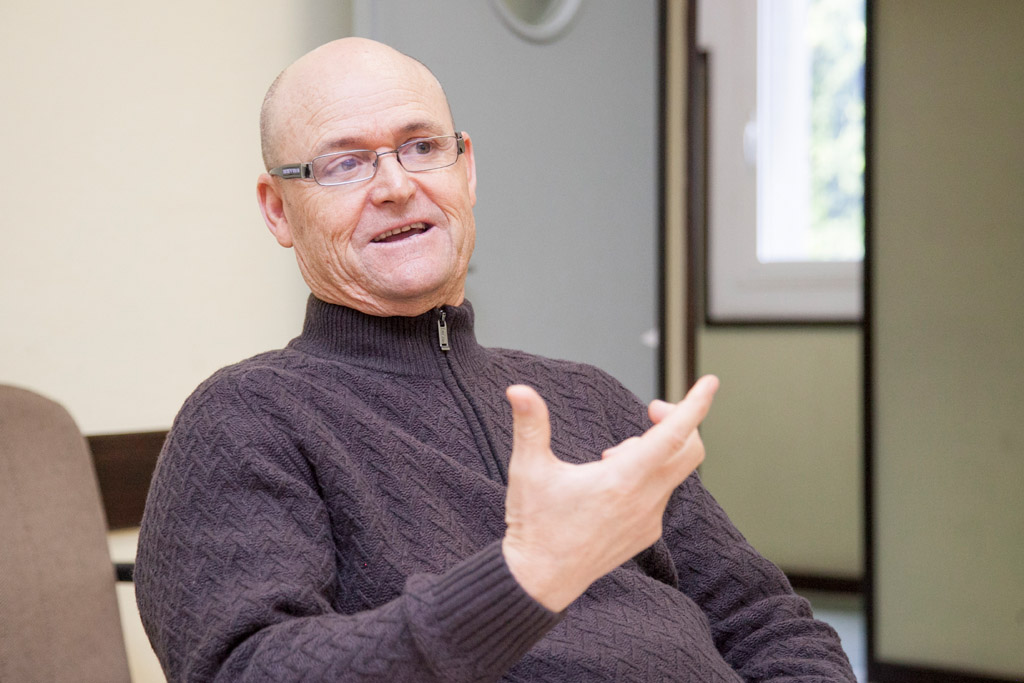
Marcial Morera
Studying how we Canarians speak
A dialect is a variety of a language spoken in a particular region. It differs from the standard language in aspects such as vocabulary, pronunciation, and grammar, but remains intelligible with other varieties of the same language. This is the case with Canarian Spanish. Not so long ago, island radio and television journalists had to disguise their accent when reporting on national news. It was believed, and we had even been convinced, that speaking Canarian was speaking incorrectly. Thanks to extensive academic outreach and the support of the Canary Islands Academy of Language In 1999, our language was not only no longer rejected, but was spoken with pride in any national and international forum.
Our dialect is the subject of study for the professor of the Spanish Language Department. Marcial Morera Pérez. He has dedicated a significant part of his research career to the study of Canarian dialectology, particularly in relation to the islands' vocabulary. His latest work examines the thalassonymy of the islands' fishermen, or in other words, the ingenious toponymy of the islands' seas. "In this book, I study the system of markings used by Canarian fishermen to locate fishing boats." These markings were recorded in notebooks passed down from father to son and were kept secret, as a good catch, and therefore a family's livelihood, depended on knowing them. Now, GPS has replaced these markings, which nevertheless form part of the lexicographical heritage of the Canary Islands.
Obviously, we Canarians speak the same language as the rest of Spain, but we speak it differently. The linguistic system, common to everyone, is one thing; the distinct phonetic, grammatical, and lexical systems spoken in each region are another. “Basically, it’s the same language, and what differs is its realization—how it’s used, how it’s materialized, how it’s updated.” This intangible heritage of words, in the case of the islands“ lexicon, is ”bankrupt.”.
Despite the efforts of academia, researchers like Morera, and the media, much of the Canarian lexicon is in danger of extinction, primarily due to lack of use. If we no longer farm, fish, or trade as we once did, if we no longer look to the sky or nature, if we no longer do these things, we will stop using the hundreds of words our ancestors used. And philologists know full well that words that are not spoken, die. “Traditional vocabulary, especially the more peripheral, the more domestic, with words like gofio, mojo, and so on, is maintained. But peripheral vocabulary—the names of goat colors, parts of a plow, camels—is not used, and therefore disappears.” Words like majalulo, chanclo, or abracar are no longer heard; nobody pronounces them, and that is why they will die.
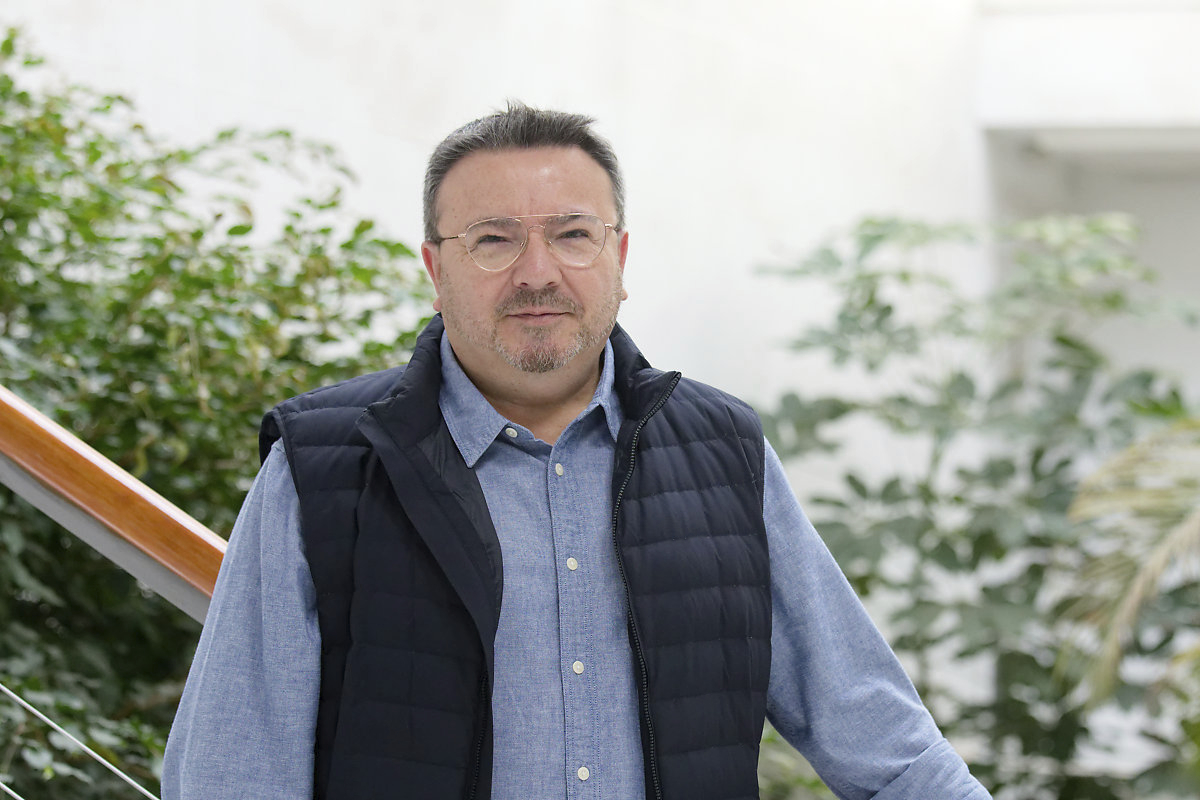
Antonio Cano.
When Spanish is not your native language
What's the best way to teach Spanish? Spanish with 1,000 words? Should we start with verbs? Despite what marketing claims, research says there are no magic formulas. Antonio Cano Ginés He is a tenured professor in the Department of Spanish Philology and head of the research group Analysis of Grammar Instruction in Spanish as a Foreign Language (ELE) (AIGELE). Together with her colleagues, she studies the teaching and learning process of Spanish as a foreign language, addressing written expression and comprehension, as well as oral expression and comprehension. This research focuses on everything that helps a non-native speaker reach at least a level that philology calls the threshold, the level necessary to communicate more or less fluently in a foreign language.
Cano Ginés laments that traditionally, great importance has been placed on teaching grammar and vocabulary, while the pragmatic aspect, which focuses on how and where to use language, is neglected. “Speaking to your brother is not the same as speaking to your father, the doctor, or the judge. We must teach the importance of context and adapting your speech; that is the most complicated thing for someone approaching Spanish as a second language.” Learning a language by focusing solely on speaking is also a mistake; ideally, he affirms, one should work on all four language skills: speaking, listening, writing, and reading.
Is Spanish a difficult language to learn? The researcher acknowledges that it all depends on your native language, as learning Spanish from a Romance language, like Italian, is not the same as learning it from an Asian language, like Chinese. The nightmare for all aspiring Spanish learners is verbs. “We have a rather irregular verb system that is very difficult to learn. The use of past tenses and prepositions is always a very complicated topic in all languages, and Spanish is no exception.” Not to mention masculine words ending in -a and the use of the indicative and subjunctive moods.
Currently, Cano Ginés's team is conducting a meta-analysis of academic discourse with the aim of providing guidelines and advice to students and professors on writing academic texts. "We are analyzing thousands of doctoral theses to determine which connectors, verb tenses, pronouns, etc., are used." This extensive corpus will help us understand how science is communicated in academia.
Guardians of the treasure
Canoe. This is the first known Americanism. Christopher Columbus noted it in 1492 in the journal of his first voyage, calling it "an alfa." Thus, unknowingly, he inaugurated American lexicography. Later came hammock, hurricane, hummingbird, and a long list of terms now shared on both sides of the Atlantic.
Collecting that linguistic heritage is what has been proposed Alejandro Fajardo Aguirre, tenured professor in the Department of Spanish Philology at the University of La Laguna and head of the research group LexHis, dedicated to Lexicography and History. Since the beginning of this decade, the researcher, along with his partner Dolores Corbella Díaz, They are promoting a major, unprecedented international project, the creation of the Lexicographical Treasury of Spanish in America (TELEAM), which “aspires to become a repository of collective memory, an archive of an ethnolinguistic and cultural nature.”.
Creating a dictionary of dictionaries is no easy task. On the one hand, there are the very old dictionaries that first have to be located and then digitized. But modern dictionaries are not without their problems, as they are protected by copyright. Between the weathered texts from the discovery of America and modern PDFs, research is building a lexicographical treasure involving dozens of American and Spanish institutions.
Unearthing so much information always uncovers surprises in the form of unpublished texts or hidden glossaries. “That’s the beauty of it, the surprises we keep finding, what we call hidden glossaries, which you discover where you least expect them because they were embedded in another work, perhaps with a dictionary included by the author, or in a little-known novella where the author added a few pages of glossary at the end. This provides very interesting information. We are discovering many things that were previously unknown.” Footnotes, glossaries, and alphabetized lists are the most common sources, since dictionaries as we know them today didn’t appear until the 19th century.
With this type of work, not only is a lexicographical compilation made, but one can also learn about the origin of words and the journey around the world of the named object. “The first time the word avocado appears in a text is in 1627. If you want to know the history of the avocado, well, in TELEAM you have everything that has been said about it from the first person who saw it and thought of putting it in the dictionary, even those who record its use, rituals, cultivation, etc.".
(This report is an initiative framed within the InvestigaULL Commemorations Calendar, a scientific dissemination project promoted by the University of La Laguna).
Scientific Culture and Innovation Unit (Cienci@ULL)

 Spanish
 English
 French