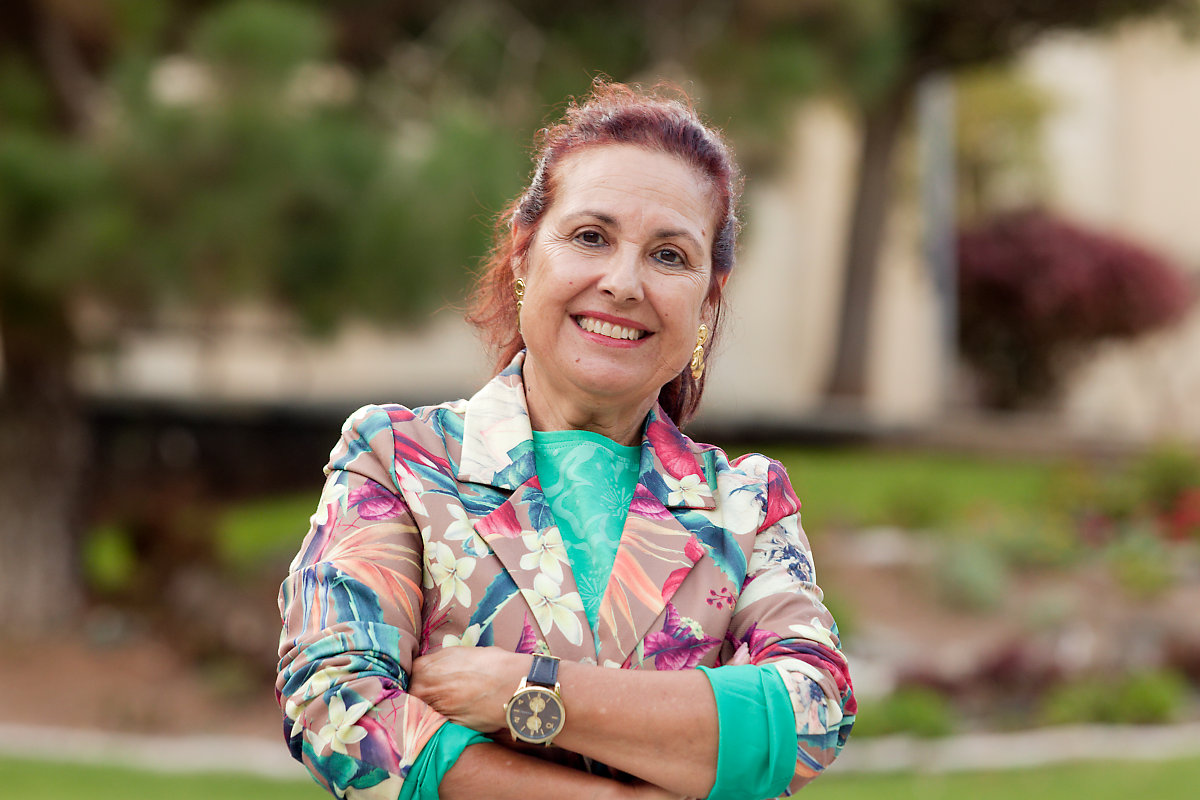
The Professor of Theory and History of Education at the University of La Laguna Teresa González Pérez She has dedicated a significant part of her research career to investigating the history of the pioneering women educators in the Canary Islands, those first women who ventured into a world traditionally reserved for men. Some time ago, she explored the first women to obtain a high school diploma and graduate from university in the islands, and more recently, she has focused on the first certified female teachers in the archipelago. an article published in the Italian journal History of Education & Children's Literature.
Thanks to this research, we know that, in total, between 1863 and 1900, 360 teachers graduated from the La Laguna Normal School for Teachers, of whom 259 received the elementary level qualification and 101 the advanced level qualification. At the Las Palmas de Gran Canaria Normal School for Teachers, the total number was 275, of whom 188 received the elementary level qualification and 87 the advanced level qualification.
Ignacia Oramas, from Granadilla, and María del Castillo Franchi, from Antigua, were the first two certified elementary school teachers at the La Laguna school in the 1863-64 academic year. The following year, four more teachers graduated, and this number continued to grow. At the Las Palmas de Gran Canaria school, the pioneers in the 1865-66 academic year were Juana Alemán (Ingenio), Ana Navarro (Santa Brígida), María Carmen Santana (Las Palmas de Gran Canaria), María Pilar Gil (San Mateo), and Tomasa Álvarez (Tetir, Fuerteventura).
Regarding those who earned a higher degree, at the school in La Laguna the first was Francisca Pérez Ríos, a native of Gáldar, in the 1864-65 academic year, followed a year later by Luisa Vizcaíno, from Santa Cruz de La Palma. At the school in La Palma, the first graduate was Juana Jiménez, from Teror, in the 1865-66 academic year.
The article details the role of Normal Schools as fundamental institutions for training female teachers, which were not established in all Spanish provinces. The first one opened in Madrid in 1838, and by 1867 there were 48 of these schools for male teachers and 29 for female teachers. The Canary Islands was, in fact, one of the last provinces to have teacher training colleges for women, which opened at the beginning of the 20th century. However, there were male teacher training colleges from 1849 in La Laguna and in Las Palmas de Gran Canaria from 1853.
With the Public Instruction Law of 1857, these Normal Schools became professional institutions, with a two-year curriculum and a revalidation exam to obtain the title of elementary school teacher, and one more year for the title of advanced teacher. However, women in the Canary Islands were not allowed access to this curriculum, so they could only take the revalidation exam independently at the corresponding Normal School for teachers, preparing in private schools or with other female teachers.
The ideology of the time was evident in the requirements the tribunal demanded of every woman taking the Revalidation exam: a baptismal certificate proving she was twenty years old, a certificate of good moral and religious conduct, some sewing and embroidery work by the applicant, two handwriting samples in different sizes, and proof of marriage, if applicable. All of this reflected the type of education they were going to provide, heavily focused on domestic economy, as the objective was to train future mothers, wives, and homemakers.
From 1881 onwards, a regulatory change increased the academic requirements for female students, improving teacher training as the curriculum was unified with that of men, with the exception of the subject of Home Economics for female students. Both sexes were required to take the same subjects, although the biases of January persisted, as subjects considered feminine remained prevalent and a third of the weekly schedule was dedicated to domestic subjects.
The article provides the names of all the women who completed these first teacher training programs, and also details their geographical origin, noting that in the school in La Laguna the students came from the Canary Islands, while in the one in Las Palmas de Gran Canaria there are also records of students from mainland Spain, Cuba and Venezuela.
As the study itself points out in its introduction, a methodology of historical educational analysis with a gender perspective was followed, combined with the interpretive technique of documentary analysis of primary and secondary sources. The author notes the difficulty of undertaking this study due to obstacles in accessing certain documentation, much of it handwritten and undigitized, and the lack of historical statistical data. These documentary deficiencies have hindered the reconstruction of the micro-biographies of these women and, therefore, have prevented the tracing of their individual trajectories, although their collective history has been identified.

 Spanish
 English
 French