
Fri-Housing (friendly housing) It is a national project that aims to create a tool for analyzing housing models and accessible living environments for people with intellectual disabilities. A dozen universities, including the University of La Laguna, are participating in this initiative, along with the University Institute of Lisbon and other organizations specializing in this field.
The project is led by the Pablo de Olavide University in Seville and the University of Jaén, which have a multidisciplinary team in areas such as social work and social services, psychology, urban planning, land management, statistics, architecture, and sociology. The tenured professor of Social Work at the University of La Laguna is also involved. Celsa Cáceres He leads the research team on behalf of this academic center.
As part of the work of this project, the team from the University of La Laguna has recently met at the Faculty of Social Sciences and Communication with different groups related to the problem studied, divided into specific focus groups: professionals and research staff specializing in intellectual disability, people with disabilities, family members, people from the community and political representatives.
Each group discussed the characteristics, both internal and external, that a home "friendly" for a person with an intellectual disability should have. As Celsa Cáceres explains, the idea of friendliness relates to being practical so that it can be inhabited by a person with an intellectual disability.
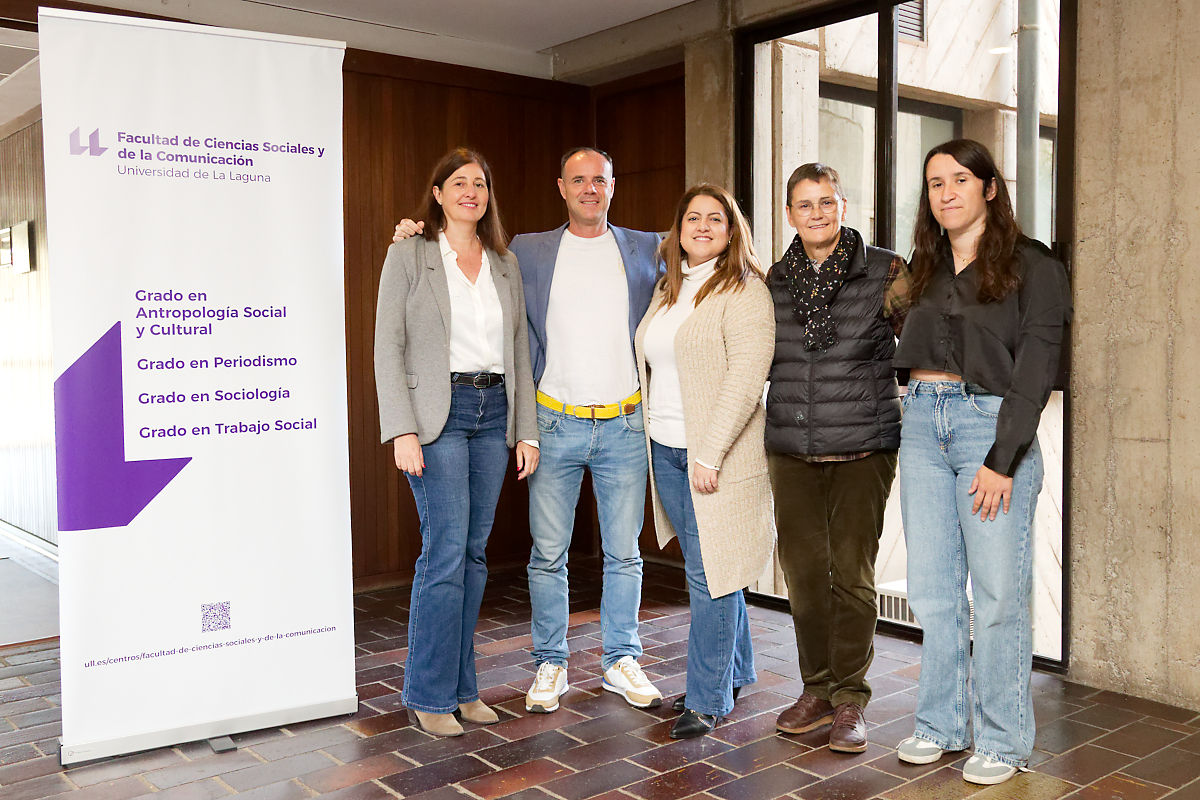
The ULL team: From left to right, Cristina Sáenz-Marrero, Mario Cortés, Maryurena Lorenzo, Celsa Cáceres and Cristina Chinea.
The discussions in these focus groups are organized by thematic areas such as space (where they should be located and what they should be like); access to services; mobility; the type of management and funding; the characteristics of the people involved, especially regarding gender; and more intangible aspects, such as features that would facilitate interaction with the neighborhood or personal development in a broader sense. Because the groups are composed of people with diverse backgrounds, different perspectives on the same issue are obtained, making these meetings essential for building a participatory model that integrates these diverse experiences.
For Cáceres, these meetings have been “a highly rewarding experience. The participants are extraordinarily generous when they share their experience and expectations. Their contribution is one of the most valuable elements of this project.”.
The Fri-Housing project is currently in its second phase. The first phase consisted of a survey of disability and housing experts from the same sectors as the focus groups, which concluded in December 2024. This second phase involves conducting the focus groups and analyzing the information that will be used in the third phase. No further meetings of this type are planned, although others will be held for follow-up and coordination among the different universities.
Cáceres explains that after the groups finish, the information obtained is transcribed and analyzed, with the goal of building a set of indicators for the essential aspects that a home should have for people with intellectual disabilities. The indicators identified by the experts in the first phase are also incorporated into this set.
All of this will be compiled into a questionnaire that will be sent to a sample group, also composed of people from different sectors, who will be asked to assess the importance and relevance of each indicator. Ultimately, a prototype of the ideal indicators will be developed into an app that will allow for the evaluation of the suitability of the "accessibility" of homes currently inhabited or to be inhabited by people with intellectual disabilities.
Within the Fri-Housing project, the team from the University of La Laguna is responsible for the fieldwork in the Canary Islands and for the design, processing, and analysis of all the information gathered in the focus groups with families from the ten participating universities. They also lead the publications related to this part of the project. In addition to Cáceres, the team includes... Maryurena Lorenzo Alegría y Cristina Chinea Montesdeoca, both from the Social Work and Social Services area of the academic institution; and Cristina Sáenz-Marrero Lorenzo-Cáceres and Mario
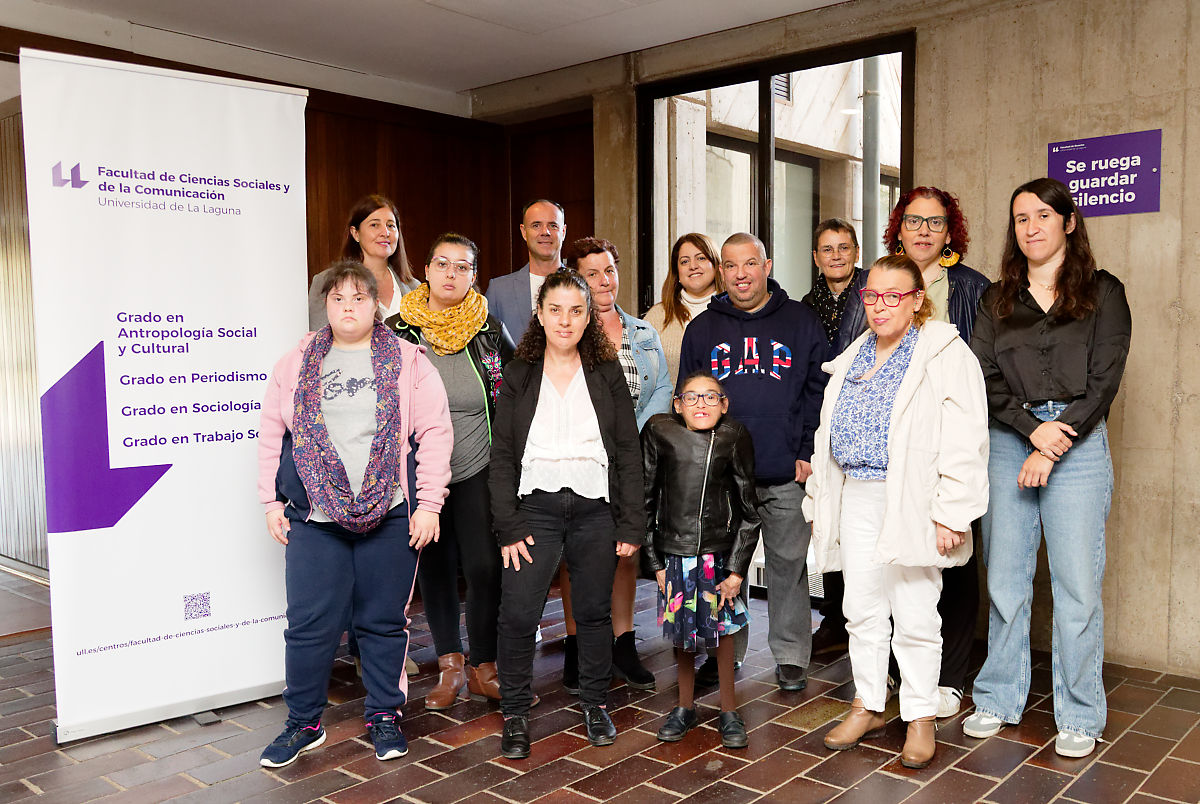
Family photo of the researchers and the focus group.
Cortés Martín, from Estudio Marrero Arquitectos, architects specializing in accessibility, are included as external collaborators. Also collaborating are social organizations for people with disabilities: Fundación Sonsoles Soriano, PROBOSCO, APANATE, Down Tenerife, Plena Inclusión Canarias, and FUCAS.
For Cáceres, it is important to emphasize that this project aims to contribute to the realization of Article 19 of the International Convention on the Rights of Persons with Disabilities, which recognizes the right of all persons with disabilities to live in the community on an equal basis with others, with the same choices as everyone else. Specifically, it stipulates that this group has the opportunity to choose their place of residence and where and with whom to live, on an equal basis with others, and should not be forced to adapt to a specific way of life.

 Spanish
 English
 French