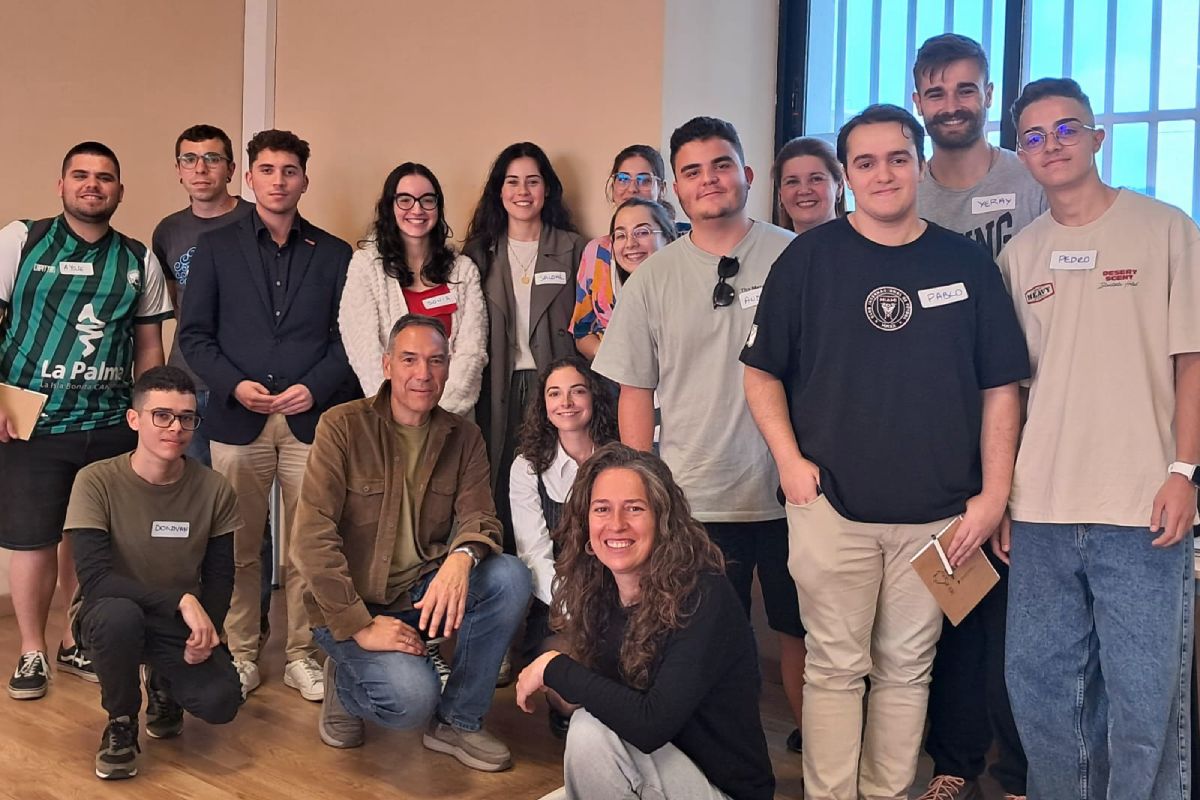
The University of La Laguna and the Cabildo of La Palma recently convened their students from the island of La Palma who study on the Tenerife campuses to reflect together on the importance of maintaining the link with the island, so that employment and entrepreneurship options can always be found open there.
Young people from different parts of the island spoke with the technical team of the 'La Palma for Youth Employment' project about the current situation in La Palma, viewed from a distance and through the lens of their university experiences, which varied in length, as they included both newly enrolled students and those about to complete their doctorates. The conversations revealed a shared understanding of the importance of maintaining a connection with La Palma and a call for greater attention from the island's society and institutions.
This young population faces dilemmas such as the aspiration to contribute to shaping an island that allows them to thrive in all aspects of their lives, which entails considering changes while preserving its essence. There is also a demand to compare the employment and entrepreneurial opportunities offered by La Palma with its internal educational offerings, strengthening guidance for those considering studying elsewhere.
In this respect, institutional commitment and the involvement of entities like the University of La Laguna seem key. Mentoring could be a measure to explore, while also strengthening spaces for interaction: “I would opt for 'building a close-knit group' with the people who come from the island to study,‘ for example, ’through meetings where we can share our talent and experience,” noted one of the participants.
Young people from La Palma who live elsewhere also advocate for the creation of spaces for participation on the island, tailored to their profile, needs, and aspirations: “If we are involved in shaping the kind of island we want, we will want to return to enjoy it.” This would counter the notion that these young people are “lazy” or that they return “out of their minds,” when, in reality, what seems to be lacking is more information about existing opportunities and how to take advantage of them.
In this regard, it is necessary to work more directly with the business sector, both those based in La Palma and those planning to expand to the island, to encourage the consideration of candidates trained both locally and elsewhere. This will foster greater trust, as it sometimes seems that young people, particularly those with higher qualifications, are often "not trusted." Overqualification can be a significant obstacle in many cases for entering the job market and gaining the necessary experience for career advancement in La Palma.
Therefore, they demand more opportunities to acquire the essential skills that will allow them to thrive in a frequently unfavorable work environment. This implies investment in pre-employment guidance, developing individualized strategies, and thus anticipating the critical stage in which they decide whether or not to return to an island that sometimes seems "stuck in the same old vision." Ultimately, the younger diaspora wants to be the protagonists of their own destiny; for this, maintaining their connection to their roots is essential.
Political presentation
The Island Council's plenary hall hosted the presentation of the main lessons learned and some of the key community elements of the 'La Palma for Employment' project, a meeting specifically designed for people with political responsibilities within the Island Council and the various municipalities of La Palma. Representatives from the Canary Islands Employment Service on the island were also invited.
The meeting was presented by Fernando González Negrín, the island's vice president and head of training and employment, who stated that "it is essential to understand, in sufficient depth, the results and lessons learned from the projects we promote, in order to improve decision-making regarding one of the key issues for the island's present and future." In this regard, he emphasized the importance of any strategy that seeks to involve the entire community of La Palma.
The workshop was attended by the councilor responsible for the area of youth and citizen participation, Yurguen Hernández González, who positively valued the work being carried out with the young population of the north of the island, both those who are inside and outside, "a strategic investment to ensure its human capital, key to the viability of La Palma, especially in the regions furthest from the central strip.".

 Spanish
 English
 French