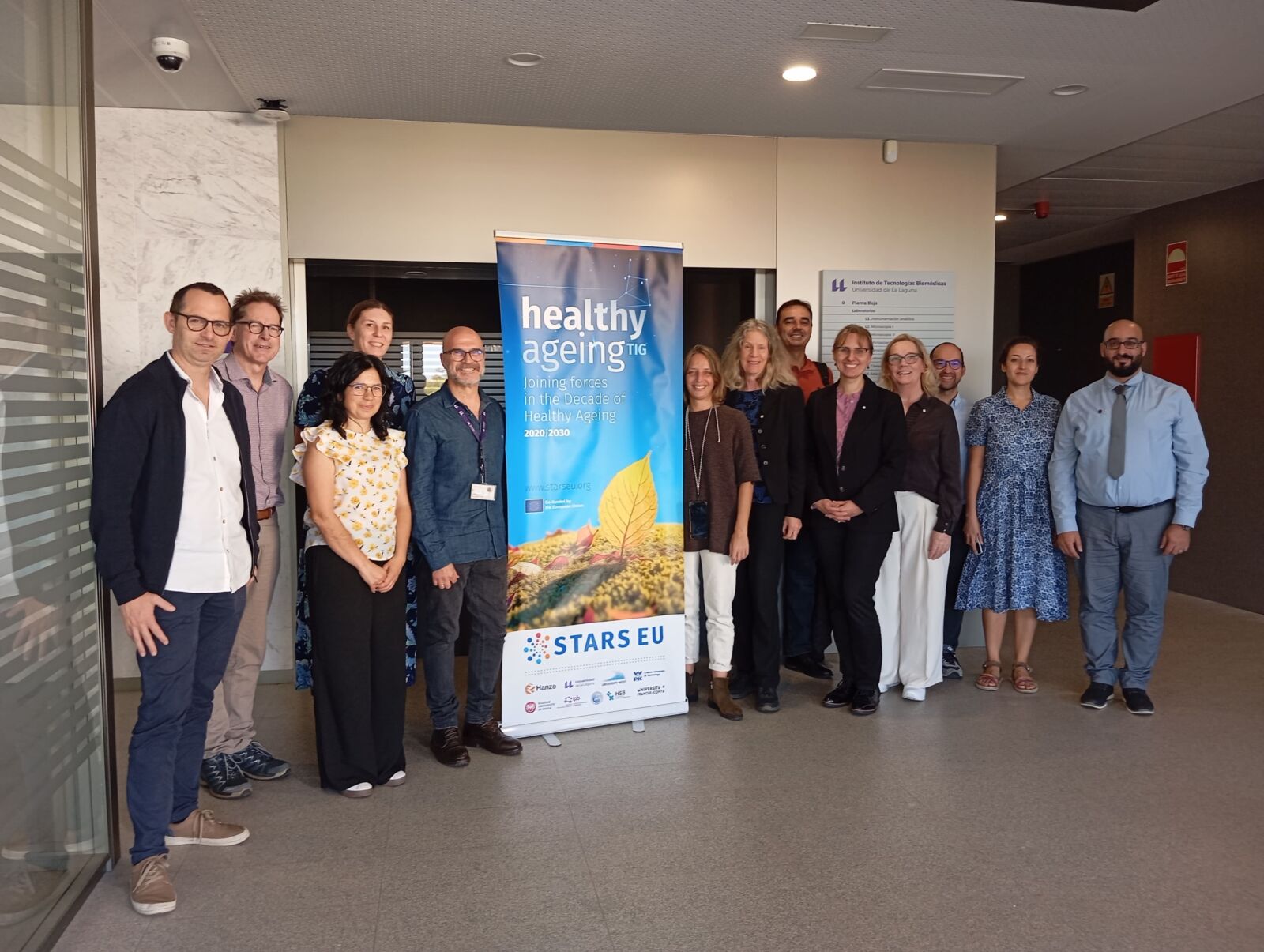
The University of La Laguna is an active participant in a research project by the alliance of European universities STARS EU, The academic center, which is part of the organization, will soon launch an initiative to improve the capacity of older patients with poorer health and limited digital literacy. The initiative, called STARS-Health, is led by the Hanze University of Applied Sciences next to the ULL, the University of the West, Polytechnic University of Braganza y University of Silesia in Opava.
The main objective of STARS-Health is to help older patients understand and use digital services to prevent and manage health conditions, empower patients, and improve communication with their caregivers. All these measures are ultimately aimed at reducing inequalities in access to healthcare, the ultimate goal of STARS-Health, a European-funded project with a total budget of nearly one million euros.
To achieve the stated goals, as explained by the project researchers at the ULL, Angel Acebes Vindel, professor of Department of Basic Medical Sciences and Sara Darias-Curvo, a teacher at Department of Nursing, An app called FindMyApps, originally developed for people with mild dementia, will be redesigned to be adapted for older adults with lower health and digital literacy (LHDL). In addition to this app, the project addresses the development of training programs for caregivers in primary care, hospital, and community settings.
In the integrated care process, it is essential to consider a series of specific care needs. That is why STARS-Health starts by identifying the needs of elderly patients with LHDL, as well as those of their caregivers; reviewing digital services designed for these individuals; redesigning and implementing FindMyApps; and providing specialized communication training for professionals specializing in the care of the elderly.
As indicated by those responsible for STARS-Health at the ULL, developed within the scope of Thematic Interest Group (TIG) Healthy Aging Thanks to the alliance, its results will not only impact the health of older adults with LHDL, but will also help alleviate pressure on health centers and primary care, as well as improve communication between patients and caregivers. "The goal is to promote secondary and tertiary prevention in primary, hospital, and community care for these individuals," the ULL researchers emphasize.
Promotion of new prevention strategies
The initiative will also promote new prevention strategies and improve equity in access to healthcare, especially for residents of rural areas. Another benefit would be the potential reduction of pressure on the healthcare and social services system, resulting from improved performance and job satisfaction among caregivers thanks to the use of support tools.
It's important to recognize that caregivers support patients in managing their own health through the use of digital tools, such as apps, health portals, and monitoring devices. Many of these caregivers and patients struggle to find, understand, or use health information in digital media, so they need an integrated and effective healthcare system that guides them from hospitals to community care services.
The fact that 421% of the European population has a low level of health literacy affects the quality of care, increases pressure on healthcare systems, and exacerbates inequalities, especially in rural areas. Recent data indicate that lower health literacy among patients is linked to a higher prevalence of chronic diseases, hospitalizations, and doctor visits, which puts pressure on secondary and tertiary prevention programs within the healthcare system.
The project's research team, which includes five of the nine partners that make up STARS EU, is headed by Sandra Jorna-Lakke (Hanze), the project leader and coordinator, along with Hans Hobbelen, from Hanze University of Applied Sciences (Netherlands); Margareta Karlsson, from the University of the West (Sweden); Rui Pedro Lopes, from the Polytechnic University of Bragança (Portugal); Sara Darias-Curvo and Ángel Acebes, from the University of La Laguna (Spain); Yvetta Vrublova, from the University of Silesia in Opava (Czech Republic), along with the Canary Islands Health Service of the Government of the Canary Islands, represented by Lilisbeth Perestelo-Pérez.
STARS-Health, which starts next April, will last three years and has funding of 912,060 euros, granted by the European Partnership for the Transformation of Health and Care Systems (THCS). This is a co-financed action that is developed within the framework of the European Union's (EU) Horizon Europe Research and Innovation (R&I) Programme for the period 2021-2027.

 Spanish
 English
 French