
The Minister of Territorial Policy and Democratic Memory of the Government of Spain, Ángel Víctor Torres, closed the conference at the University of La Laguna today, March 18. ‘'Spain, from isolation to integration into Europe'’, an initiative of the two public universities of the Canary Islands to learn about this crucial period of political change in our country, and framed within the program of commemoration of the fiftieth anniversary of Franco's death.
“We have to start from the fact of truth, because history is what it is. And one of those facts is that I studied here,” the minister said jokingly, before delving into the substance of these sessions: “We must know what happened, so that everyone can draw their own conclusions and decide what they want for the future.”.
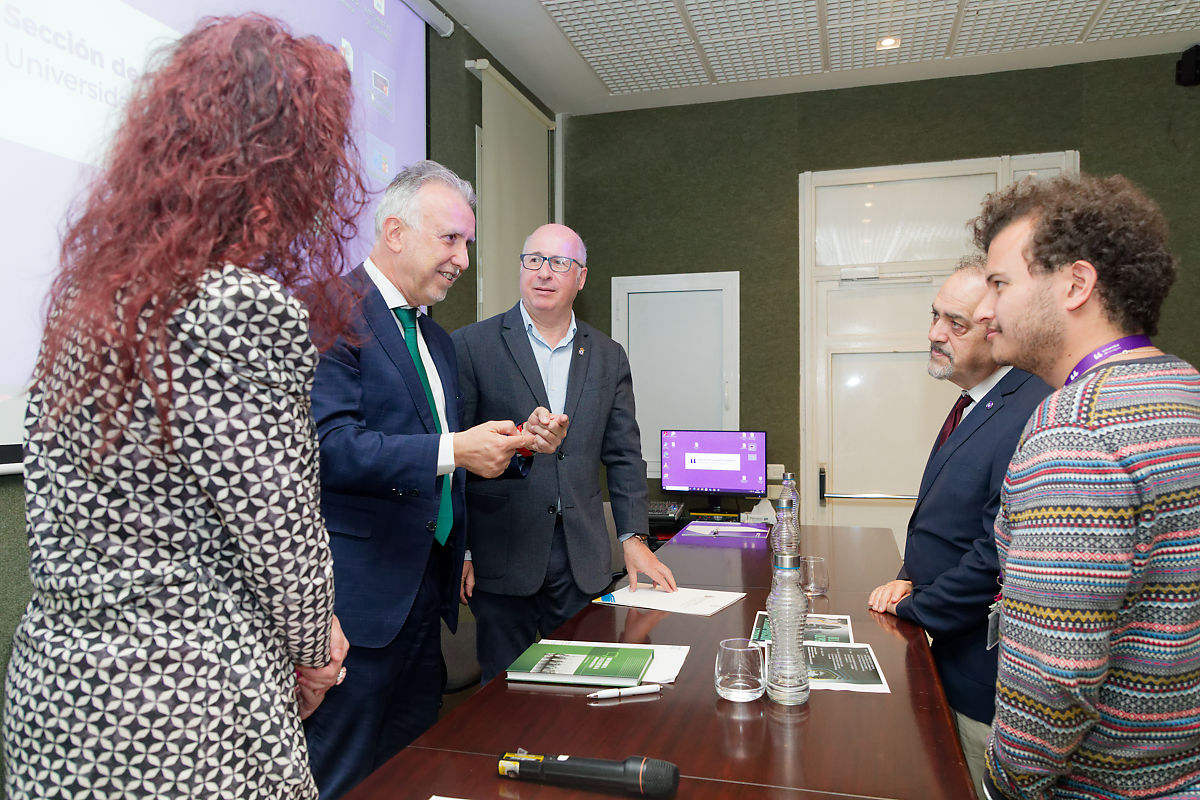 The minister recalled that Spain was the only place where fascism persisted. “The reality is that we endured 40 years of dictatorship while Europe progressed, losing the rights achieved in the preceding secular and republican Spain. We must understand what the absence of democracy means; and also understand the democratic process, because we must know how to lose and also how to win in a democracy.”.
Being part of a union of democratic countries has been fundamental, Torres stated, adding that this membership is crucial today, especially in the face of the new international order. “Today we are at a moment in which the EU is vital for global stability.” The minister recalled the situation caused by the pandemic and the European aid “without which this country would not have survived, another reason why we must defend the EU's political structure.”.
This series of lectures is being held at universities throughout Spain, at the behest of the ministerial commission to commemorate the 50th anniversary of Franco's death and to reflect on the Francoist dictatorship and the years of democratic consolidation. The universities of the Canary Islands have contributed to these events, which will continue tomorrow at the University of Las Palmas de Gran Canaria.
Inmaculada Blasco, Professor of Contemporary History, is the academic director at the University of La Laguna (ULL), along with Marta García, from the University of Las Palmas de Gran Canaria (ULPGC). The Deputy Minister of Justice and Security of the Canary Islands Government, Cesáreo Rodríguez, participated in the event's opening and emphasized to the students the importance of remembering the value of democracy, which did not arrive suddenly, but was the result of conflicts and struggles that ended with the deaths of many people. "Democracy must be cared for," he maintained. "It is very important that no part of the truth is omitted." The Vice-Rector for Culture and
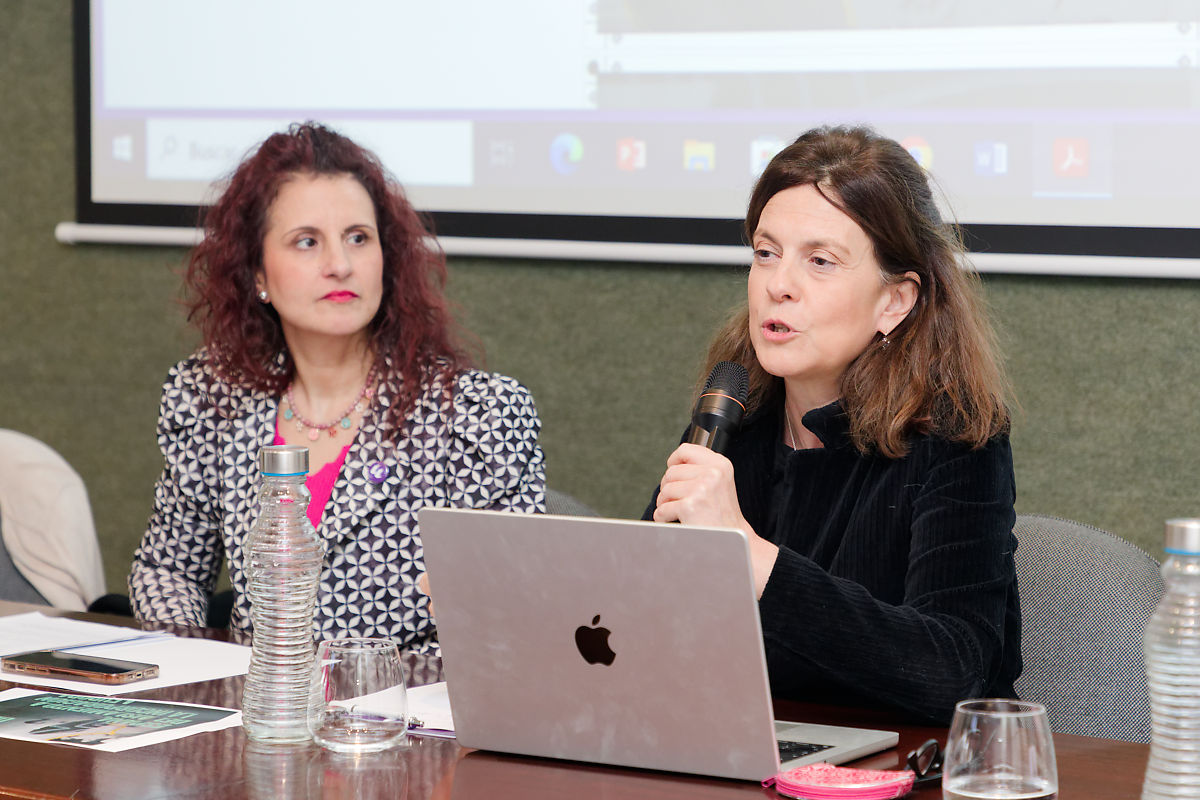
Elena Cavallaro
Isabel León, from the University Extension department, who presided over the session, outlined the interdisciplinary program her department is working on about Spain after 1975, which will be announced later, and the struggle for freedoms. “The enjoyment of freedom is collective, and we must be vigilant about its preservation.”.
Three speakers participated this afternoon. María Elena Cavallaro, Professor of the History of Relations The first speaker, an expert in International Relations from the University of Rome Lluis, was a specialist in the associations created in exile during the Franco dictatorship, to which she dedicated a significant portion of her talk. “From the 1950s onward, Europe began to become a beacon of hope, even as a way to distance itself from the United States. Europe thus acquired a very important symbolic meaning, associated with the protection of human rights,” the speaker explained. The expert then meticulously analyzed the Federal Council of the European Movement, chaired by Salvador de Madariaga, and the Spanish Association of the European Movement.
Starting in 1967/68, Spain signed a preferential trade agreement with the European Economic Community, a deal that did not meet with the approval of pro-European associations because it was merely an economic agreement, not one concerning rights and freedoms, the expert pointed out. The regime's propaganda presented it as a political success, which was not true, the expert concluded.
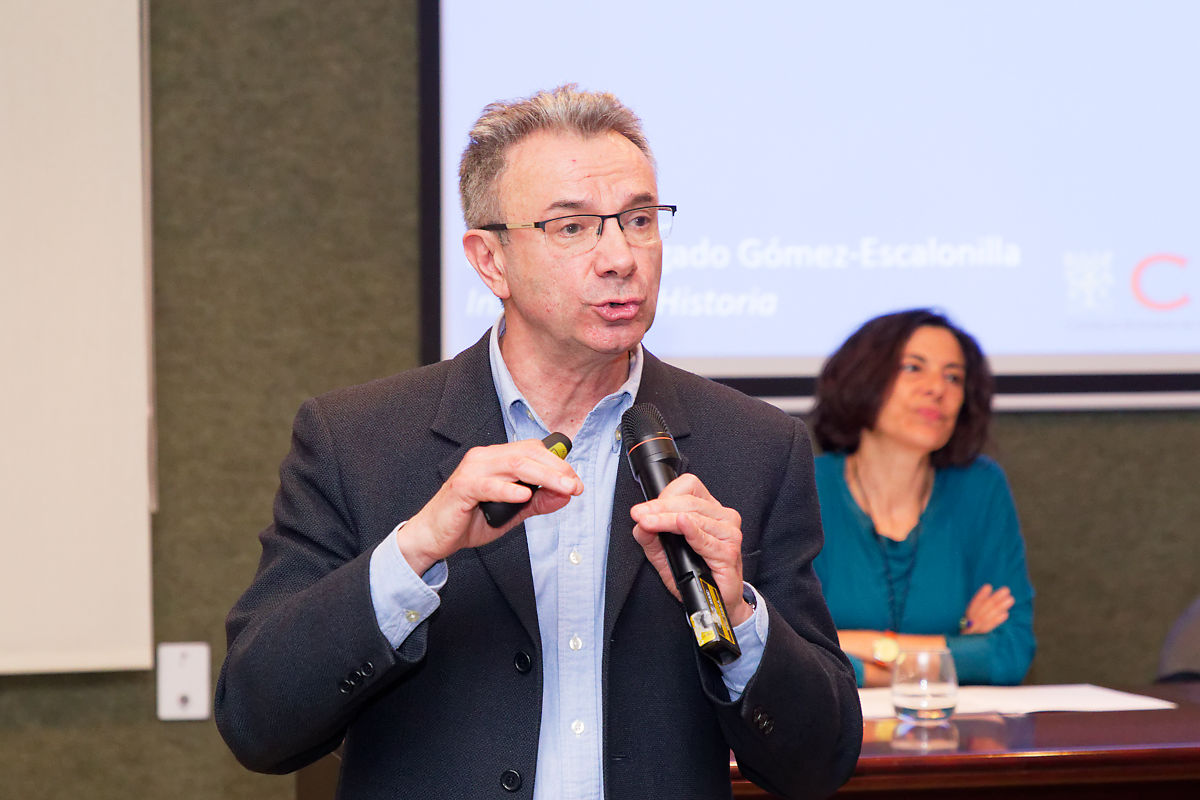
Lorenzo Delgado
Europeanism and Atlanticism
Lorenzo Delgado, a professor at the Institute of History of the Spanish National Research Council (CSIC), was another participant in today's session, and his presentation focused on Spain's relationship with the United States after World War II. He explained that Europe, after the great conflict, had to rebuild itself. "From that disaster, the United States emerged as the great point of reference, because it represented a model of well-being and prosperity, the country where women had entered the workforce en masse." However, this dominance would be short-lived, because the expansion of the Soviet Union and its influence in China, for example, was beginning.
The United States realized the need to cultivate the affinity of its allies by creating networks of influence and trust, targeting key sectors in each country. “Everything in the US revolves around the concept of national security and the capitalism/communism confrontation. The defense of freedom and the consolidation of the two blocs are the iconic elements of the 1950s.”.
At that time, the speaker added, the United States condemned the Franco dictatorship, but went no further. Spain was isolated from the European convergence process, a process driven by the US, and for that reason, he explained, Atlanticism and Europeanism went hand in hand.
The 1953 military pacts were designed to establish military bases in Spain, a country of strategic interest to the United States, with promises of development that ultimately failed to materialize. This resulted in a partial modernization of the Spanish army, establishing an asymmetrical relationship, because, in the expert's opinion, the installation of the bases did not strengthen Spain's security, but it did secure significant economic aid and, in any case, increased the country's international profile.
Nevertheless, this American aid enabled the modernization of certain strategic industrial sectors, because the military bases had to be built and financed. This led to the creation of a whole propaganda campaign to convince public opinion of the benevolence of these actions, equating modernity with the United States and further boosting the still nascent consumer society. All of this occurred, the speaker argued, “because Spain was considered immature for democracy,” a process that the US supported reactively, its influence waning over time, but without providing decisive support. This is what the expert called “developmental freedom” or what is known as “modernizing dictatorship,” typical of a country lacking freedoms but enjoying comforts.
Emilio Grandío Seoane, professor of Contemporary History at the University of Santiago de Compostela, The specialist in the Second Republic was the last to speak, and he focused on the role
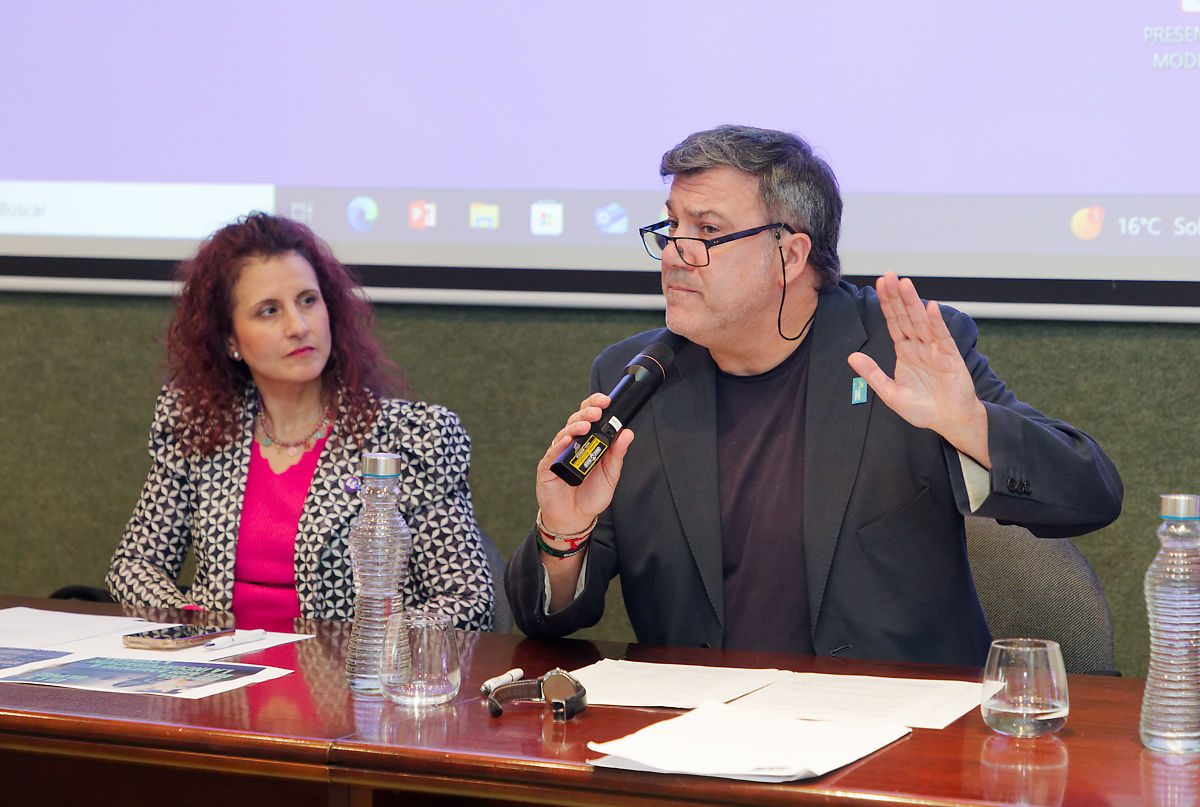
Emilio Grandío.
which played out at the Munich Congress of June 1962, as a prelude to political change. Some fifty pro-European organizations met at this gathering, considered the largest meeting of the democratic opposition in Spain, with 168 attendees.
Traveling to the German city was a major complication at that time, the historian explained. There was no formal debate between republic and monarchy, although there was much internal discussion on the matter. From Munich, a structure of continuity could not be established, but, little by little, there was a "progressive acceptance of a monarchy with a republican soul," and with something more important than what was ultimately agreed upon at that meeting: the concept of evolution, which prevailed, allowing the regime to also find a way out. "The past is abandoned, and the future is looked to from the perspective of Europe.".

 Spanish
 English
 French