
Rector Francisco García is part of the delegation from the University of La Laguna that has traveled to the Alexander Moisiu University of Durrës (Albania) to participate between March 19 and 21 in the annual conference from the university alliance STARS EU. In addition to participating in several working meetings, García was a panelist at the roundtable held yesterday, March 20, on the impact that the alliance and academic institutions in general can have on the regions. In his remarks, he explained that the data clearly demonstrates that universities contribute to improving the competitiveness of their respective countries, but that an effort must be made to "leave the building" to address real-world problems.
García participated in a mixed round table discussion with representatives from both academia and the business world. Joining him in the session were Ana Carvalho, president of the business organization NERBA, located in Braganza, Portugal; Jeroen Loef, a researcher at Hanze University of Applied Sciences (Netherlands); and Adéla Hradilová, president of the board of the Moravian-Silesian Innovation Centre (MSIC) in the Czech Republic.
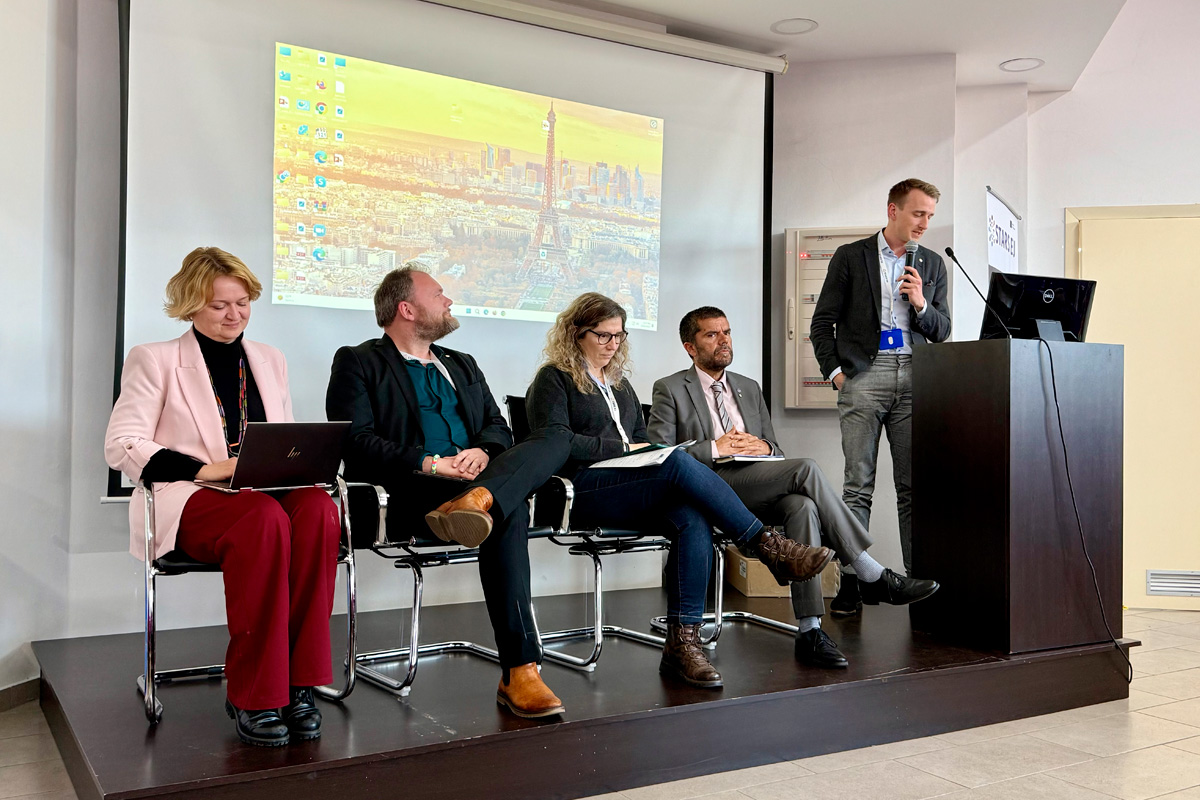
The rector of the ULL, seated and first on the right, next to the rest of the participants.
In his address, the rector of the University of La Laguna explained that the first major social impact of universities, especially public universities, is their clear influence on economic productivity through contributions made via innovation and research. “In this sense,” he said, “it is clear that the more productive the economy, the higher its revenues and the greater its GDP.” per capita"”.
However, when referring to the specific situation in the Canary Islands, the rector could not offer such an optimistic picture of reality, explaining that it is one of the poorest regions in the country, to the point that, since 2000, its GDP has been gradually falling behind the national average. Furthermore, there is the “vicious cycle” that arises because universities are training highly qualified professionals that the local economy is unable to absorb. Therefore, he believes it is necessary to address this disconnect between academic offerings and the labor market by establishing greater dialogue with stakeholders such as businesses and institutions.
One possible solution would be to develop a more flexible academic offering, adapting programs to social and business needs. This is essential to compete with other options that have emerged in recent years, allowing students to learn from home. García emphasized the micro-credential system as a way to foster a more dynamic, intensive, and goal-oriented approach to education, which is part of the STARS EU framework, under which courses based on this methodology are planned.
“It’s impossible to address problems theoretically without going out into the field and learning from the people who experience them, so we must leave the building and offer more practical training.” In this regard, he cited as a success story the initiative of law students who, in response to the immigration crisis, developed a legal assistance program for migrants, which has also been extended to other groups. This is an example of how academia can engage with the community to address everyday situations.
The other speakers echoed these sentiments, emphasizing the need for a more fluid dialogue between universities, businesses, and government. Carvalho highlighted the opportunity for higher education institutions to help businesses, especially small and even micro-enterprises, improve their competitiveness. Loef, for his part, pointed out that "creation is the business of universities" and that they should be able to share it with the rest of society. Hradilová emphasized the importance of students developing an "entrepreneurial mindset" that will help them take risks to develop interesting projects.
Research Panel
The STARS EU conference is structured around parallel sessions, allowing for simultaneous meetings between those involved in the various project tasks. Thus, while the rector was speaking on his panel, a professor from the Department of Industrial Engineering at the University of La Laguna was also participating. Benjamin Gonzalez, who is also the leader of the STARS EU working group on energy transition, participated in another round table, this time about the Research Solutions Agenda that the alliance is developing as an instrument to bring research results closer to regional development, among other objectives.
During their meeting, they analyzed the pros and cons of working together to address research challenges and the capacity to respond to the needs of the regions involved. “If we work together, we will be stronger, provided we are aware of how to adapt this common approach within the different national regulations to achieve a shared goal.”.
For González, one of the advantages of participating in the alliance is that it is no longer necessary for each university to have experts on all the problems that concern its region, since it can count on
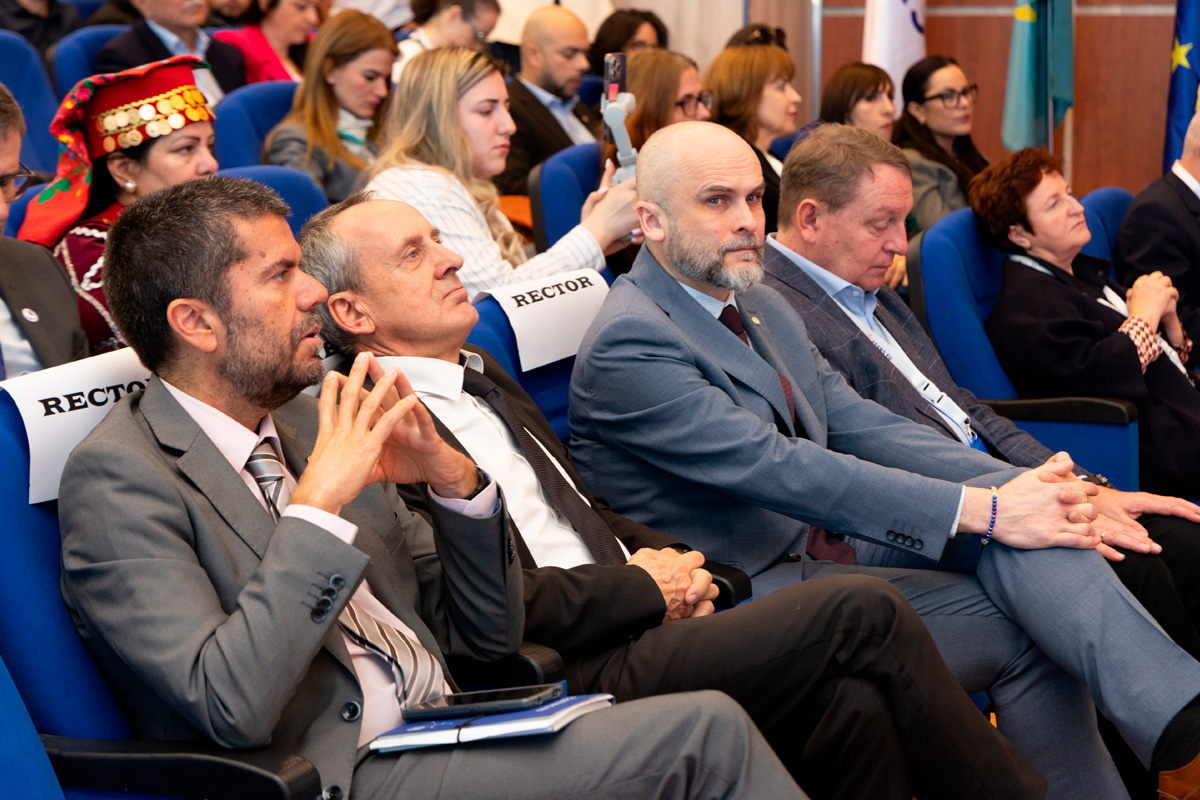
Several rectors from the eight universities that make up the alliance attended this meeting.
with specialists from the eight partner universities, who complement each other to conduct a holistic analysis of these problems. Since these academic institutions are located in non-capital regions, the fact that they are in different countries is not so relevant, as the problems they face are similar and, therefore, similar solutions can be found.
STARS EU Conference
In addition to the rector and Professor González, the delegation from the University of Laguna included professors and researchers Rodrigo Trujillo, José Sigut, and Ernesto Pereda, who are also members of the STARS EU board of directors; professors Cintia Hernández, Francisco Ramos, José Cáceres, and Ángel Acebes; student members of the alliance's Student Board Fabián Nuhazer, François de Moreno-Carmina, and Daniel Montes de Oca; technical, management, and administrative and service staff María José Dorta, Javier Quijada, and Acaimo González; alliance technicians and officers Beatriz Medina, Laura Esquivel, and Carla García; and external advisor Günter Koch.
In addition to the University of La Laguna, the STARS EU alliance, integrated within the European Universities initiative of the European Commission, is made up of the Hanze University of Applied Sciences (Netherlands), which leads it; Polytechnic University of Braganza (Portugal); Bremen University of Applied Sciences (Germany); Silesian University of Opava (Czech Republic); West University (Sweden); Krakow University of Technology (Poland); Marie & Louis Pasteur University (France) and Aleksandër Moisiu University of Durrës (Albania), host of this meeting.
Over these three days, some 200 people from these entities, divided into different working groups, have made progress in person on the work developed throughout the year on issues such as regional development, the creation of common training programs, student and staff mobility, the creation of a common campus both virtual and real, and research, which has been one of the main issues of this meeting, given that the agenda on this matter must soon be presented to the community authorities.

 Spanish
 English
 French