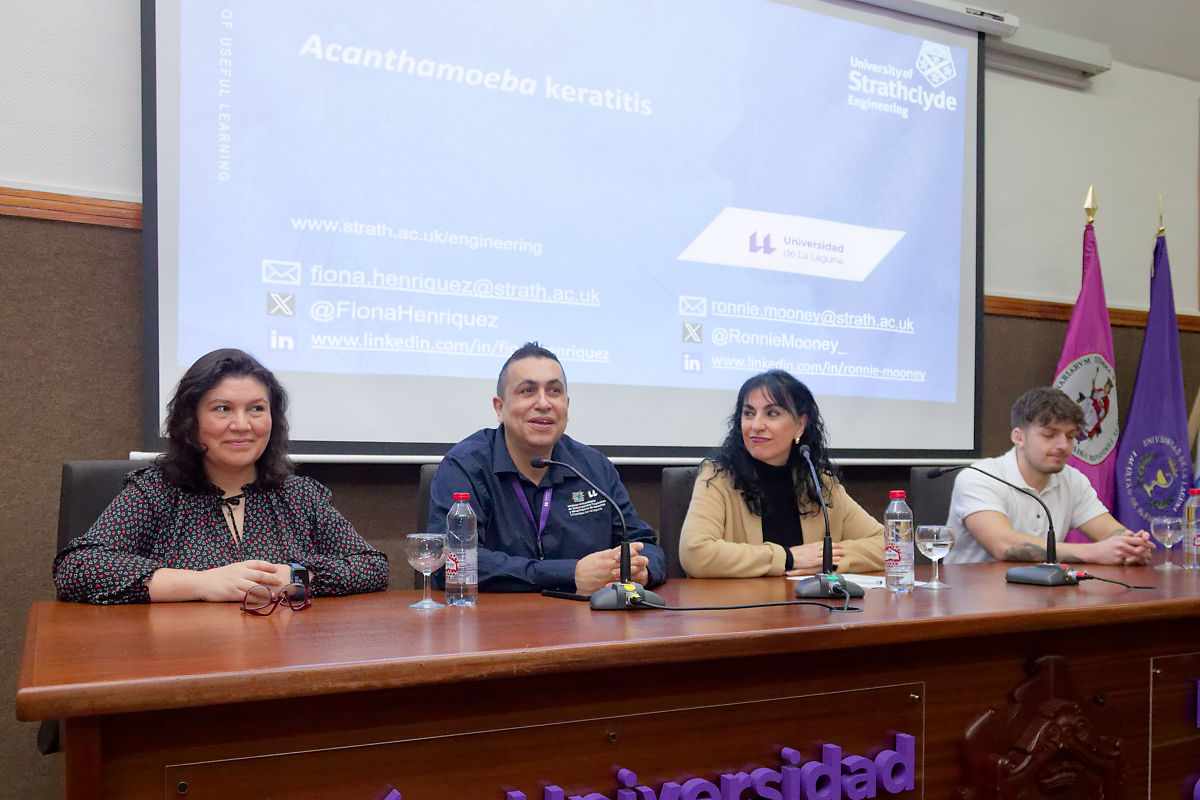
Fiona Henríquez-Mui and Ronnie Mooney, from the University of Strathclyde (Glasgow, UK), gave seminars today, Wednesday, March 26, at the Faculty of Pharmacy of the University of La Laguna. The seminars aimed to present the university community with the latest findings from their research on free-living amoebae, pathogenic organisms. This event was made possible by funding from the Vice-Rectorate for Research and Transfer and was moderated by Jacob Lorenzo-Morales, director of the Canary Islands Institute of Tropical Diseases and Public Health at the university.
Free-living amoebae include genera and species that cause keratitis and lethal infections of the central nervous system. The global increase in water temperature has allowed these thermophilic amoebae (which thrive at temperatures above 30 degrees Celsius) to expand the range of environments in which they can survive and persist. In the marine environment, they are already causing mass die-offs in sea urchin and coral communities, among others, on both sides of the Atlantic and throughout the Mediterranean. Similarly, their abundance in dust and soil is increasing.
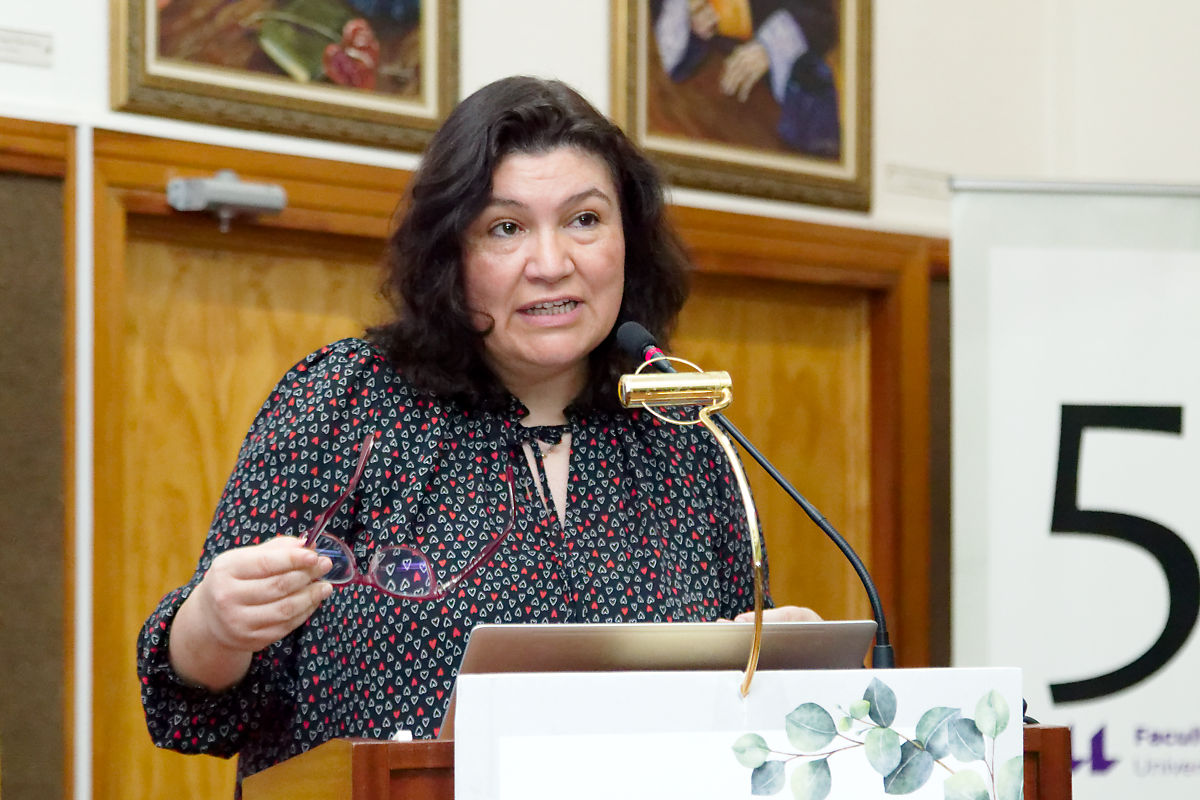
Fiona Henríquez-Mui
The presentations by Henríquez-Mui and Mooney, as well as the subsequent debate, have also highlighted that free-living amoebas in the environment can act as a reservoir for pathogenic bacteria and serve as a niche for the generation of bacterial strains with antibiotic resistance, so they not only act as emerging pathogens themselves, but as a "source" of resistance in bacteria in the environment.
In addition to this seminar, the visiting professors have discussed with the University of La Laguna the possibility of establishing collaborations in the field of research and, in fact, in the next calls for European funds both centers have proposed submitting joint applications.

 Spanish
 English
 French