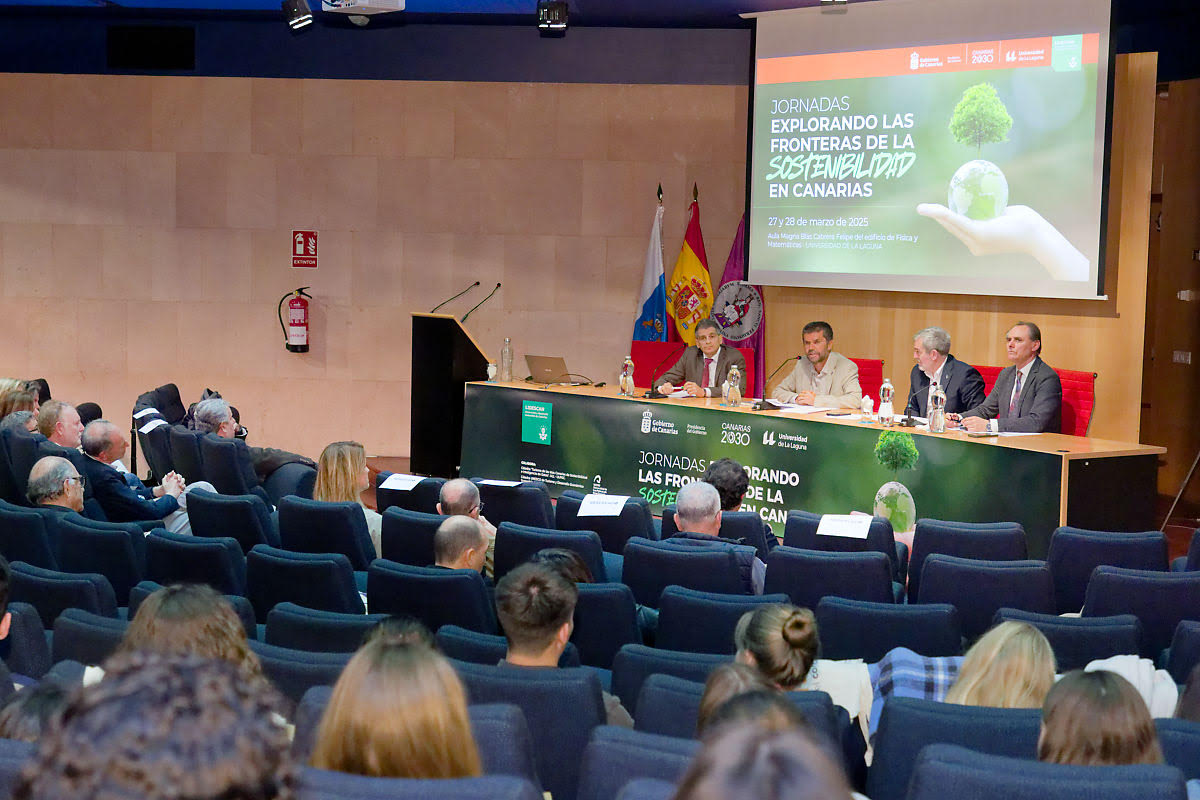
Exploring the frontiers of sustainability. That is the motto and purpose of these conferences, which began today, March 27, at the University of La Laguna, presided over by Rector Francisco García and attended by the President of the Government of the Canary Islands, Fernando Clavijo. The objective is to study in depth new models and ideas to address this major challenge for the Canary Islands, which also has a global dimension.
The workshops are part of the project Lidescan, Funded by the regional government and led by public universities, the event will take a multidisciplinary approach, bringing together economists, geographers, architects, and philosophers through four working panels: energy transition and climate emergency, landscape of sustainability and landscape sustainability, innovation (common resources, circularity, and regenerative economy), and sustainable transformation, governance, and social innovation.
Both the university rector and the president of the regional government emphasized at the opening ceremony the number of projects the Canary Islands government is undertaking with public universities. “Sustainability is a paradigm shift, and this also applies to the relationship between the public and private sectors,” Clavijo stated, adding that “the participation of higher education institutions will be key.”.
The mission of this project is to further explore paths to more harmonious economic and social development, framed within the principles of sustainability. The coordinator at the University of La Laguna is Carlos Fernández, co-director of the Canary Islands Inter-University Chair of Tourism Sustainability and Data Intelligence. Representing the University of Las Palmas de Gran Canaria (ULPGC) is Carmelo León, director of the UNESCO Chair in Tourism and Sustainable Economic Development.
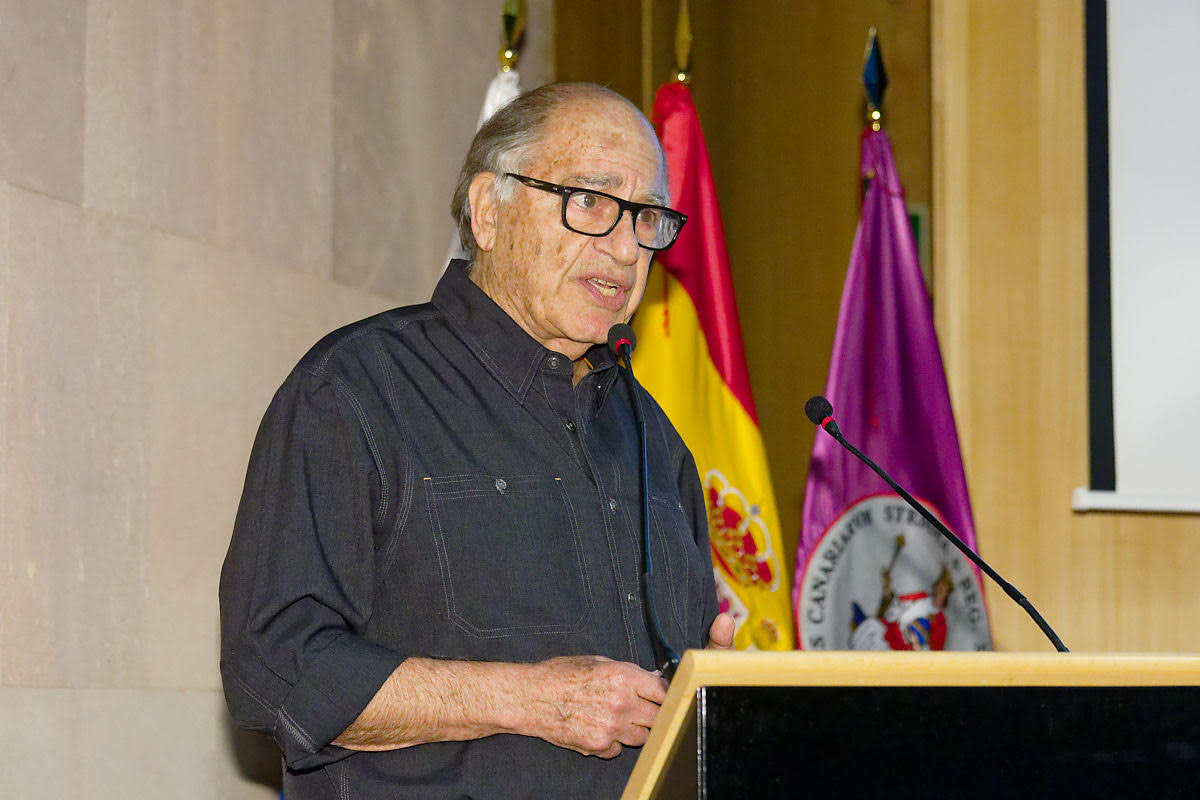 Michael Ben-Eli or the bet on balance
Following the opening ceremony, the session began with the speech of Michael Ben-Eli, The speaker, founder of the New York Sustainability Lab, has been an international consultant, applying systems thinking and cybernetics to management and organization in various sectors, including high technology, manufacturing, health, education, and multilateral organizations.
“We need to find new solutions to current challenges, and that’s why we’re experimenting in this lab. We want to advance sustainability through research, creating ecosystems and impacting them.” The architect also noted that in his lab he analyzes problems with a long-term focus, considering where we want to go. “We must distinguish between changes that don’t modify the system and changes that alter everything to achieve profound transformations,” he stated.
The laboratory's areas of activity encompass development projects, educational programs, the green economy, and technological innovations. In fact, it has carried out projects in various parts of the world, including Nicaragua, Costa Rica, Bhutan, and Turkey, transforming environments and exploring all options to achieve the most sustainable development paths.
The speaker described the laboratory as a global network, with activity in different parts of the world. He began by stating that the concept of sustainability is overused and has lost its rigor. Therefore, he understands that population and carrying capacity are elements that interact with each other, and the concept of sustainability depends on this interaction. Sustainability, in any case, has a dynamic, not static, component because it is not a snapshot in time, the expert pointed out.
There is no doubt that the planet is stressed and the collapse of resources is more than evident. Ben-Éli points out five elements, five domains that, given this scenario, must be in balance: the social, the economic, the biological, the material, and the spiritual, before reaffirming that to change things we focus only on the behaviors of individuals but not on the structures that produce them, on their true root.
The education system is influenced by culture, mental models, the economic model, and other factors, all of which are interconnected. Human issues need to be re-evaluated, which means focusing on how markets, industry, and the value system itself function, among other things. All these dimensions must be organized and connected, the expert argued.
An opportunity for the Canary Islands
Ben-Ali pointed out that the Canary Islands need to emphasize a different kind of tourism model, one that is less mass-market and more environmentally friendly, while also appropriately managing mass tourism. He added that the Canary Islands could create their own island sustainability model, which could be exported abroad. Ben-Ali noted that this is a unique opportunity in a territory with its own brand and a remarkable history. Therefore, this new growth model could be relevant for other archipelagos, because he also pointed out that the islands are not yet fully developed, meaning there is still room for improvement.

 Spanish
 English
 French