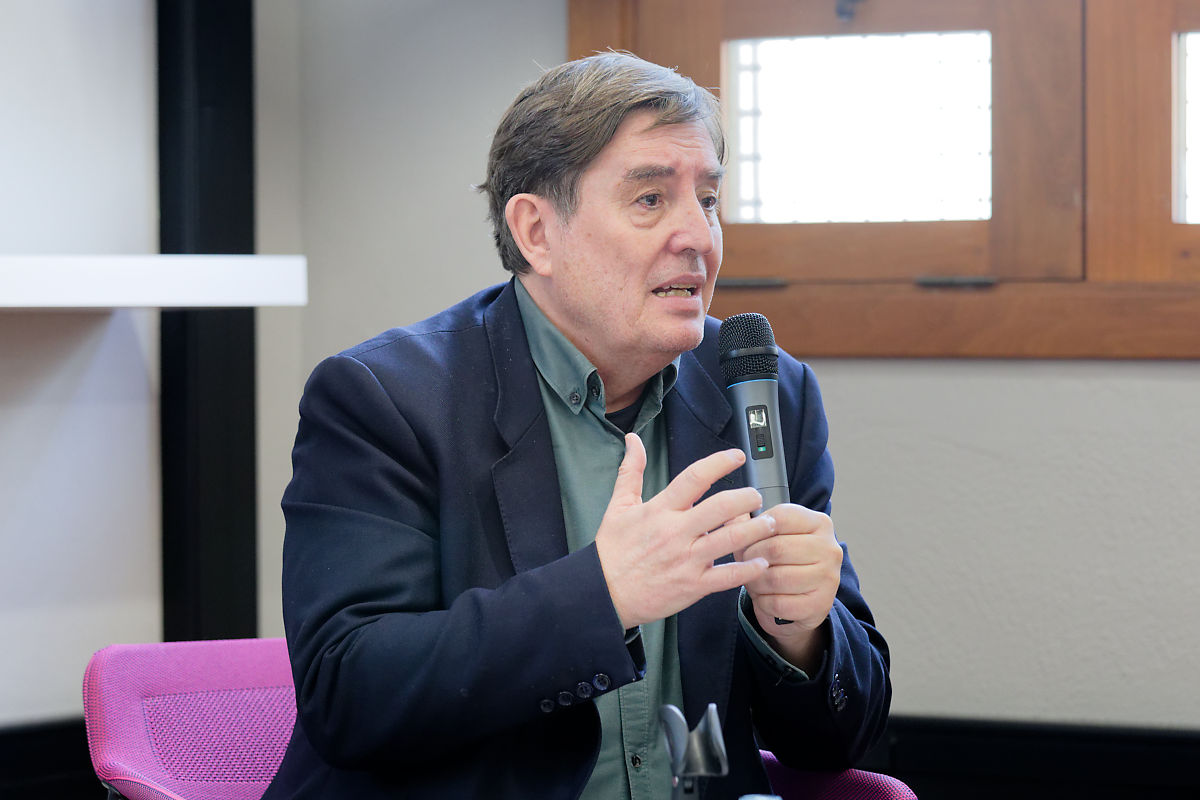
The poet, Professor of Literature at the University of Granada and Director of the Cervantes Institute, Luis García Montero, gave a lecture today, Friday, March 28th. conference In the Equality Space of the Faculty of Education Library, he gave a lecture entitled “A Defense of Humanism.” In it, he did not seek to oppose this concept to those of Science and Technology, but rather to link them together, establishing that all scientific and technological progress is necessary, provided it is always guided by the well-being of human beings. Therefore, he categorically declared that “anyone who meddles with Science, Technology, and the Humanities is a cretin.”.
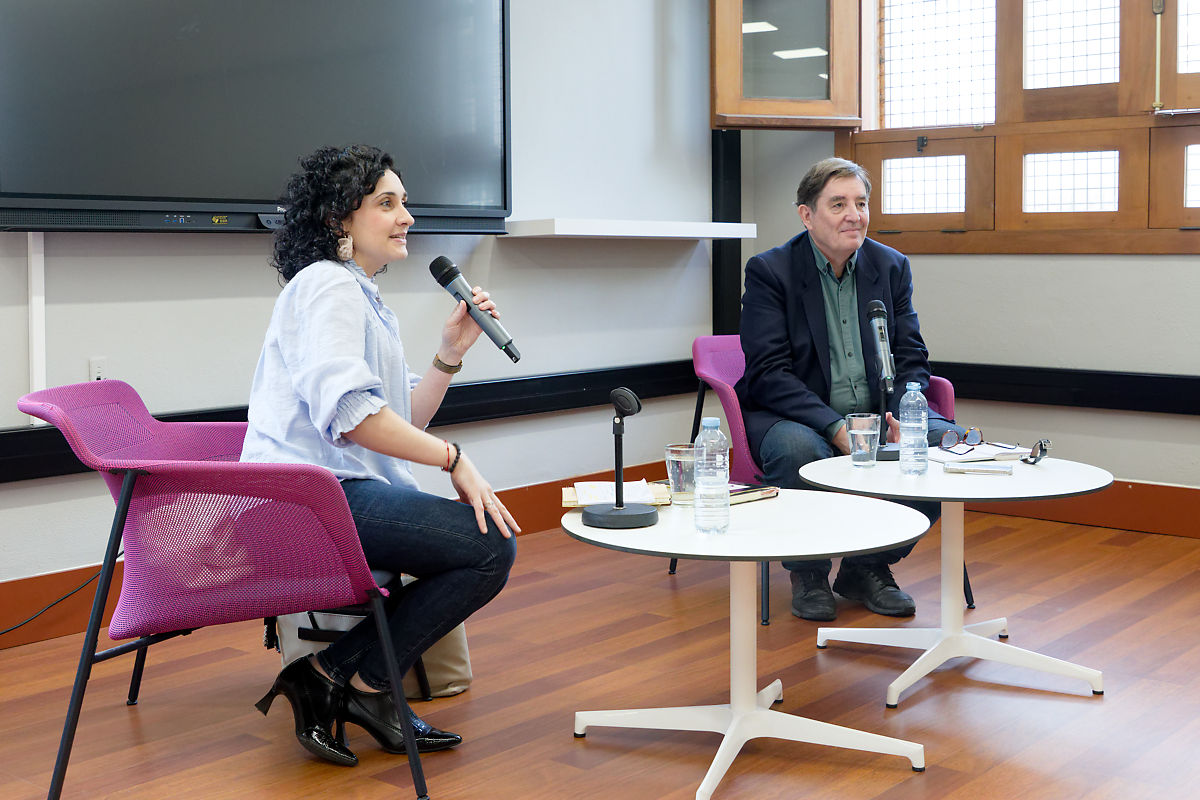
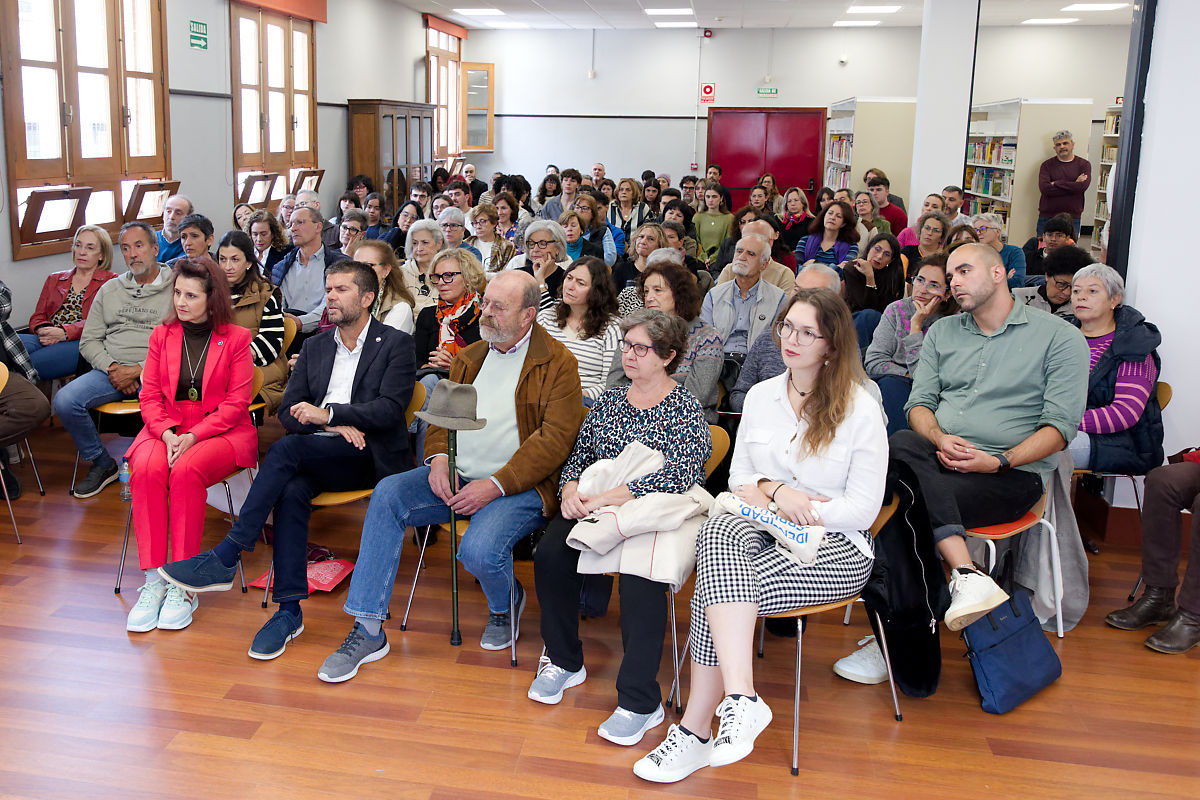
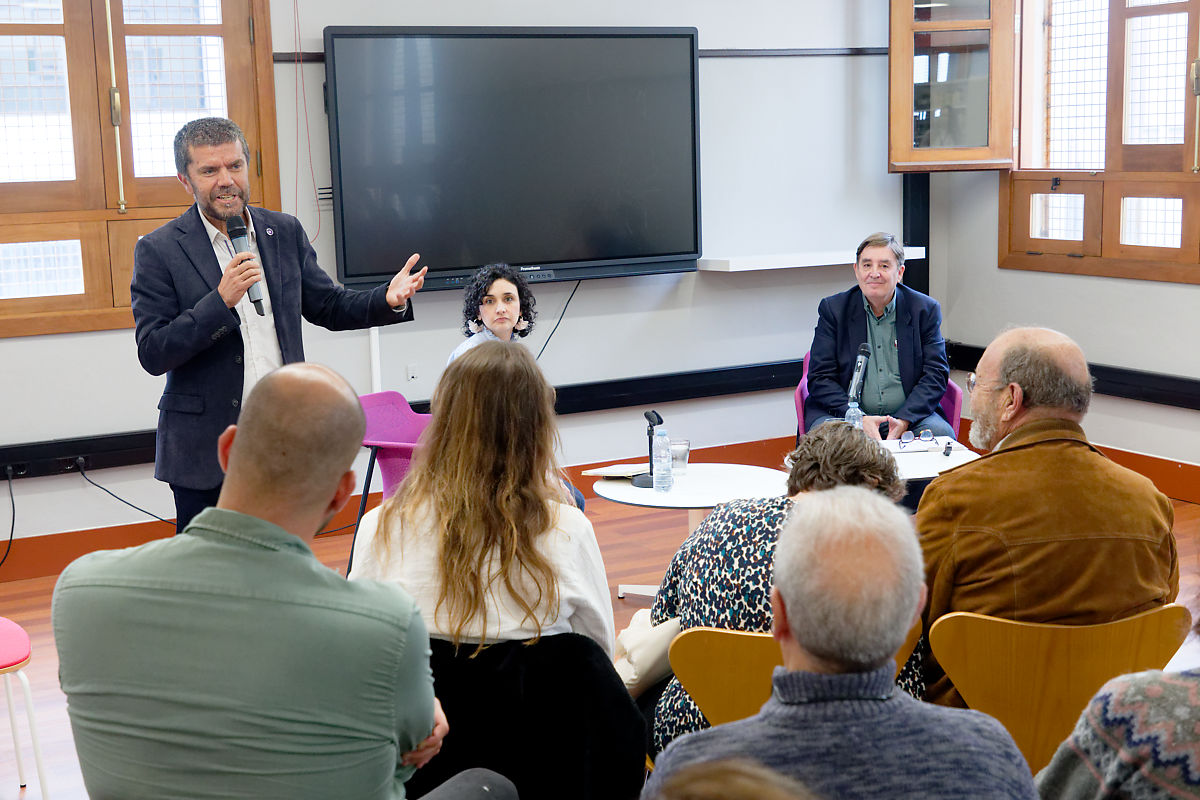 The speaker was received by the rector of the University of La Laguna, Francisco García, who had confirmed the signing just hours before. of the agreement between the academic institution and the Cervantes Institute for the Canary Islands center to host the meeting of directors of the Cervantes Institute network from around the world next July. The speaker was introduced by Noelia López Souto, Professor of the Department of Spanish Philology, who, before a room packed with people of different ages, celebrated that poetry had such a capacity to attract transgenerational audiences.
García Montero recalled that his literary vocation began with his discovery of Federico García Lorca's poetry in the early 1960s, and throughout his presentation, he used Lorca's work to frame his arguments. He pointed out that Lorca's work always reflected a deep commitment to marginalized groups and recalled Lorca's trip to New York during the Wall Street Crash of 1929, during which he realized that everything he had written in Spain about discrimination against the Roma community was mirrored in the racism suffered by the Black American population, compounded by sexist and homophobic prejudices.
Thus, the poem “Dawn” from his collection “Poet in New York” is replete with images and metaphors that allude precisely to how capitalist progress was destroying humanity, with “coins like furious swarms” that “drilled through children” to serve a “rootless science.” In other words, he criticized how an economy at the service of mere utilitarianism subjugated human beings, a process that García Montero believes persists today. “That is why we must reclaim the Humanities and remember that Science and Technology have meaning in dignifying human beings, not in profiting at their expense.”.
The director of the Cervantes Institute expressed his concern about how misinformation spread on social media can influence politics to the point of having led to the election of the current occupant of the White House or, years earlier, precipitating Brexit in the United Kingdom. For this reason, he pointed out that the Humanities must champion truth, but immediately added that they must also question the very concept of truth, as it should not be based ‘on dogmas, closed identities, and ideas that embrace authoritarianism,’ but rather should reflect “the diversity of the world.” Paraphrasing Juan de Mairena, created by Antonio Machado, he reminded us that “true freedom lies not only in being able to say what we think, but in weighing what we say,” and in a democracy, the former is not enough; the latter is also essential.
 He noted that in today's fast-paced world, time is a crucial factor, as everything moves at a frantic pace, is commodified, and fosters misinformation. He cited a study that indicated how, during his first term, Donald Trump told an average of thirty lies a day, and the media were unable to verify them given the sheer volume of information they handled daily. Thus, accountability for what was said the previous day vanished because the new day already contained a fresh batch of lies to replace them.
In this context, García Montero expressed concern about the growing gap between young and old, a gap that leads the former to believe they must create everything anew because nothing from the past is useful, while the latter look down on young people, believing they know nothing. Given this, it is essential to facilitate intergenerational dialogue to foster a collective experience of knowledge transfer, and the humanities are fundamental to this.
He pointed out that a fundamental basis of democracy should be respect for the 1948 Universal Declaration of Human Rights, “the most sensible lesson of the Second World War.” However, he also brought his theoretical postulates closer to reality. “It is true that all human beings have rights, but these will not be experienced in the same way if you are rich or poor; if you are male or female; if you are white or black; if you are homosexual or heterosexual. The declaration alone is not enough; it must be put into practice, and for that, culture is important.”.
 The risk of remaining with a general declaration that fails to address diverse identities is that a single version of rights could be imposed, leading to authoritarianism and the imposition of a single acceptable model of identity. On the other hand, there is the danger that different minorities, instead of uniting, will fragment among themselves. “We are seeing this now with the contempt for Hispanics that Trump is promoting in the United States and how, instead of unity, the Black community is also turning against them” because they feel displaced as the most prominent minority.
García Montero explained that, as a philologist, he likes to reflect on what he defined as "the meaning of words." Thus, "it's not the same to say '30 illegal immigrants drowned off the coast of Tenerife' as '30 shipwrecked people die off the coast of Tenerife.' And it's not the same to defend freedom believing it to be the law of the strongest, as it is to remember that in the Enlightenment, freedom meant living according to one's own conscience within a framework of coexistence based on a social contract in which equality existed alongside freedom. What is needed to live is fraternity, not hate speech. So let's think about how these words are used. That is what Humanism has done: sought to ensure that the economy, science, and technology are placed at the service of human beings.".

 Spanish
 English
 French