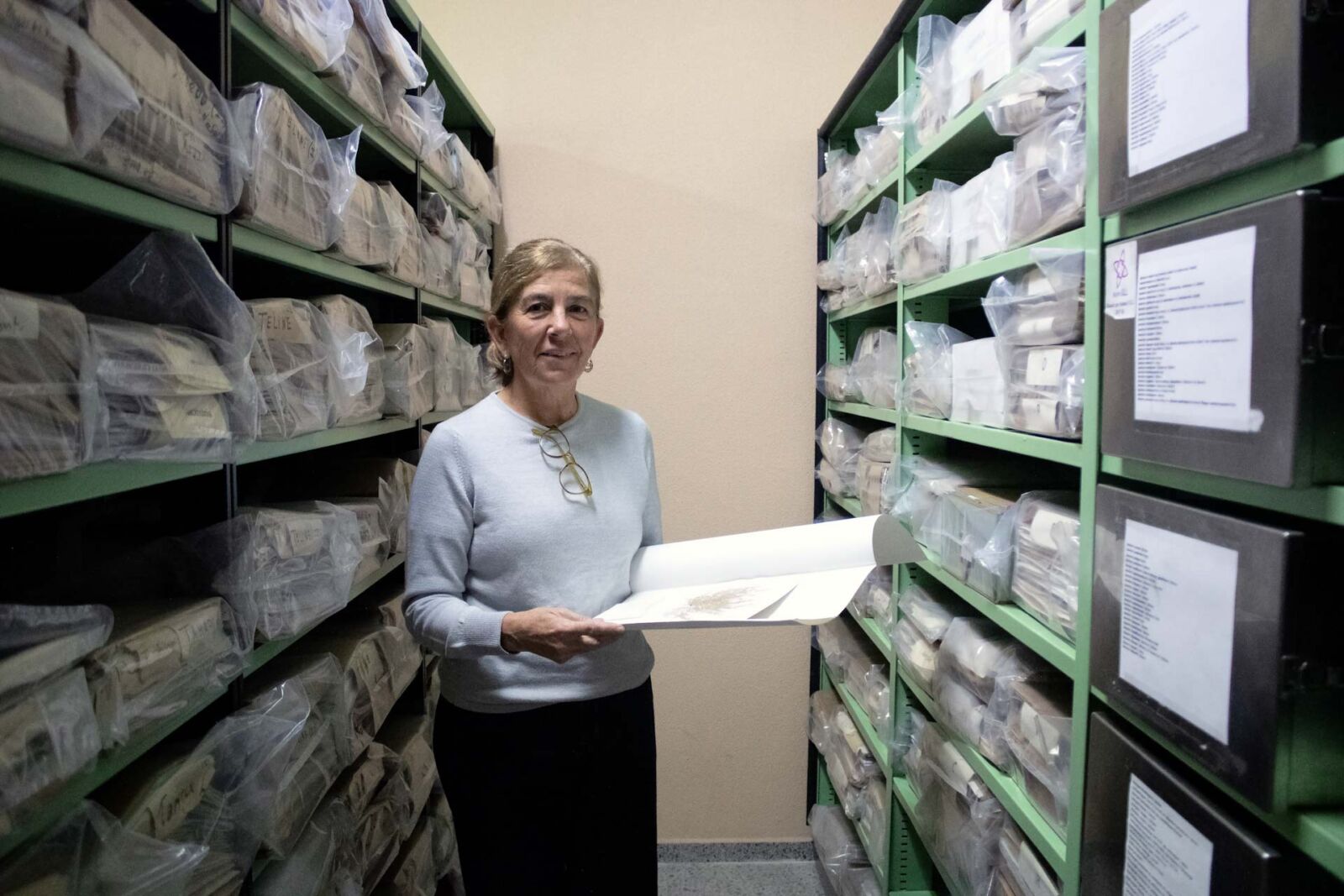
He General Research Support Service (SEGAI) The University of La Laguna provides scientific, instrumental and technical support to the institution and external entities, with more than 20 specialized services in areas such as biomedical technologies, characterization of materials and surfaces, electronics, mechanics, 3D manufacturing and elemental and molecular analysis.
These services include the TFC Herbarium, Located in the Faculty of Pharmacy, this collection houses a vast array of plants gathered in the Canary Islands, Macaronesia, and other parts of the world. It comprises over 130,000 specimens, divided into 53,000 vascular plants, 24,000 fungi, 22,000 bryophytes, 17,000 lichens, and 17,000 algae.
Its head, the professor Martha Samson, A researcher in the Botany Department at the University of La Laguna explains that this botanical treasure includes representatives from all plant groups, such as vascular plants, algae, fungi, lichens, and bryophytes. Each subcollection is managed by a researcher in the Botany Department, with the support of staff like Ana Isabel Gutiérrez, who is responsible for the conservation of the material and carries out tasks such as the periodic freezing of the specimens to prevent pests.
Applications
The collection of material in this green archive serves as a record for numerous research projects, ranging from botany to pharmacology, chemistry, and genetics. Each sheet, envelope, or box includes data such as the collection site, habitat, and plant morphology, allowing for verification of whether a specimen belongs to a specific species. The herbarium functions as a database, since, for example, in the context of climate change, the sheets allow for the analysis of ecosystem evolution.
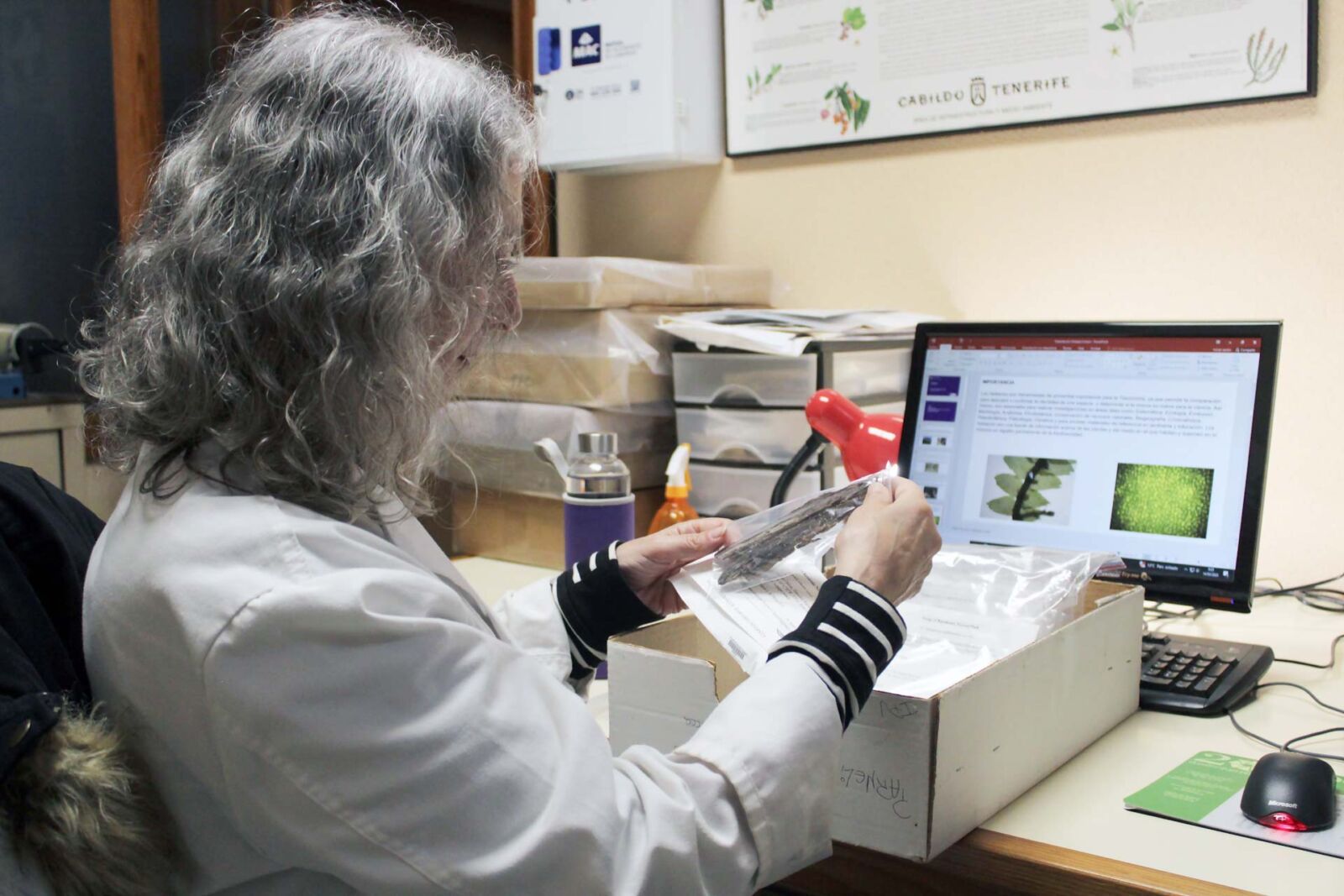
Ana Isabel Gutiérrez, technician responsible for the conservation of the material.
Founded in the 1960s by the botanist Wolfredo Wildpret at what was then the Faculty of Biology, the herbarium has been key to the study of the flora of the Canary Islands and houses very old material from other herbaria. Its international prestige stems from its inclusion in global databases, where it is registered with unique acronyms used in international publications, facilitating researchers' access to the type specimens used to describe species.
This research service has several specialized rooms: a decontamination room, a dehydration room, a room for preserving dried samples of algae, fungi, and vascular plants, another for dried samples of bryophytes and lichens, a room for preserving wet samples, and a microscopy room. It also has an integrated system for recording temperature and humidity.
On the other hand, Sansón explains that, due to the growth of the plant collection, the space became insufficient. Therefore, they managed to obtain funding from the Canary Islands Agency for Research, Innovation and the Information Society (ACIISI) to expand their facilities, creating a new room where the material is currently being organized before its relocation.
In addition to ACIISI's support in expanding the service with a new room, the herbarium is maintained through a budget allocation from the General Research Support Service. The application process for using this service is unified within SEGAI and is managed through a web platform.

 Spanish
 English
 French