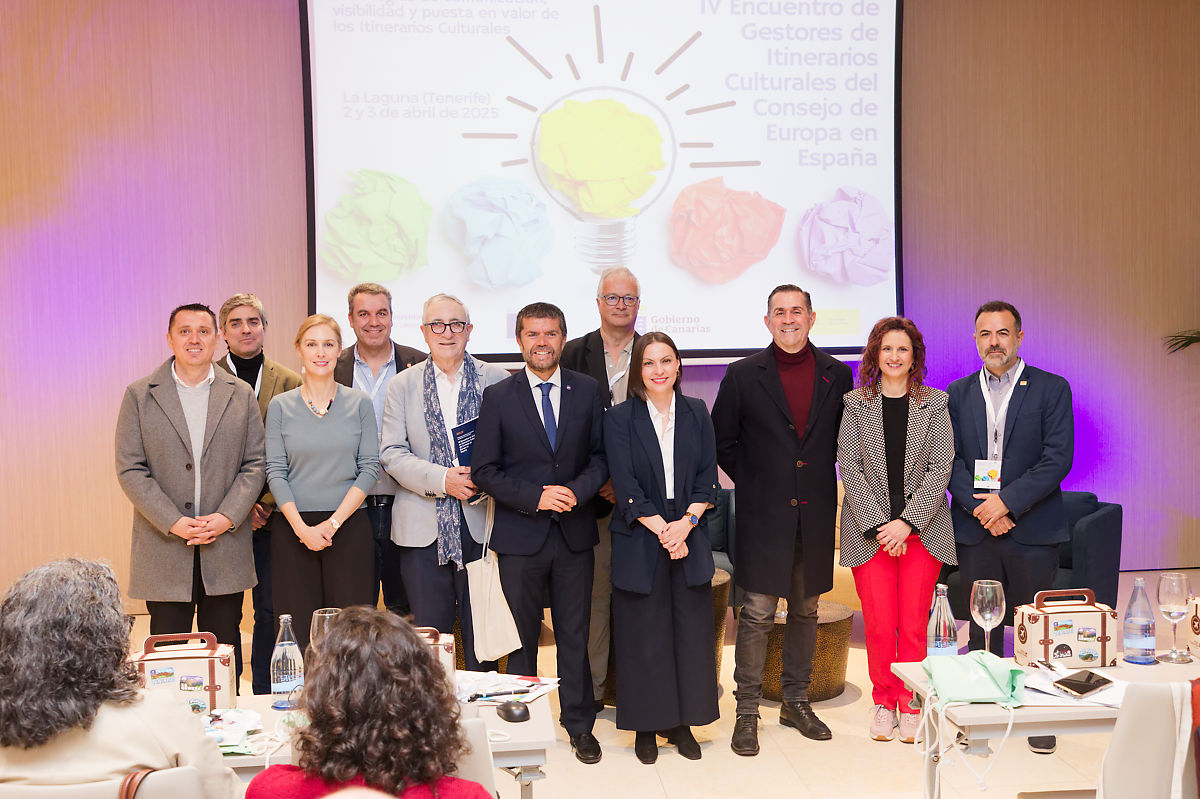
The city of La Laguna will host, starting today, April 2nd, the fourth Meeting of Managers of Cultural Routes of the Council of Europe in Spain, in two technical days focused on the communicative dimension, to improve the knowledge of the Program by the entire citizenry.
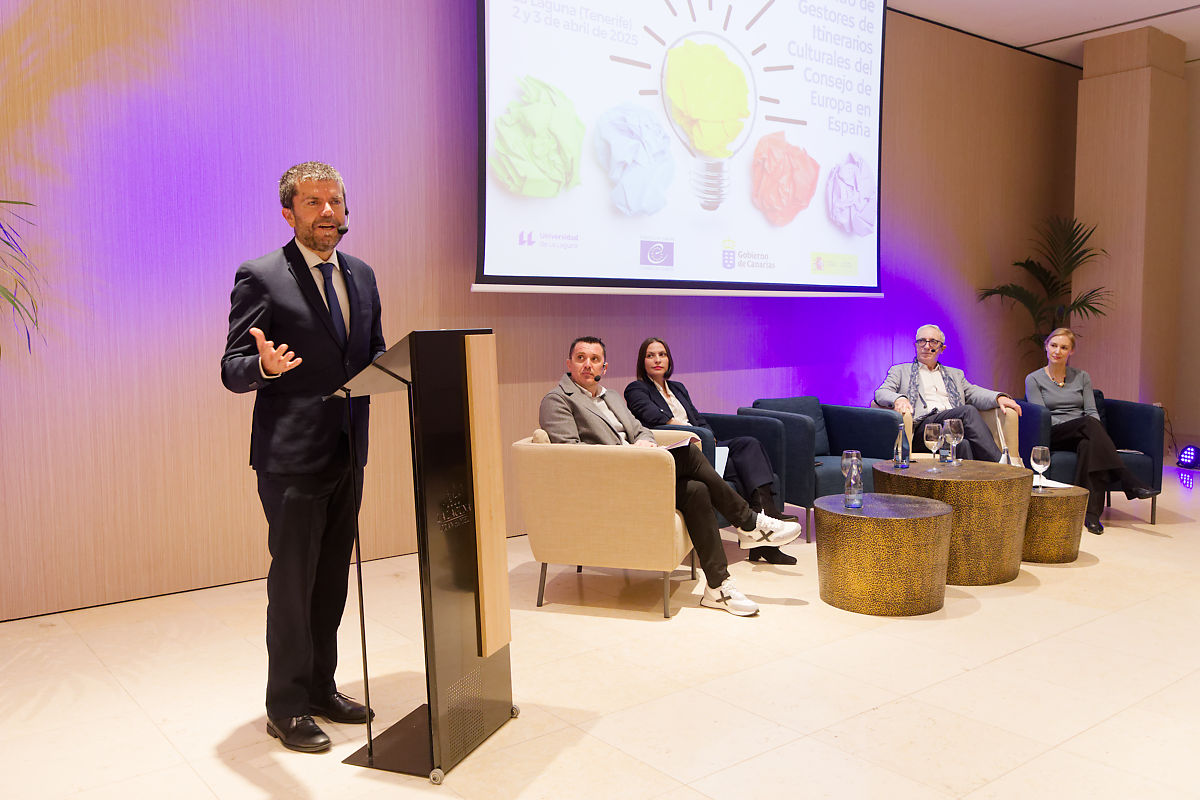
The opening was held at the Laguna Gran Hotel, presided over by Migdalia Machín, Councilor for Universities, Science and Innovation and Culture; Ángeles Albert, Director General of Cultural Heritage and Fine Arts of the Ministry of Culture; Francisco García, Rector of the University of La Laguna; Eladio Fernández, advisor to the Cultural Routes Program of the Council of Europe and the Councilor for Cultural Heritage of the City Council of La Laguna, Adolfo Cordobés.
 Spain has twenty-seven certified routes with partners from other countries, including the Canary Islands' shepherding and transhumance, led by researchers from the University of La Laguna, becoming part of the nearly fifty routes that contribute to the common cultural heritage of Europe.
The fourth call, organized by the Ministry of Culture, in collaboration with the Government of the Canary Islands, has the participation of forty technicians and managers of certified routes such as the Camino de Santiago, the European Route of Emperor Charles V, industrial heritage or historic gardens, among others.
Cultural routes showcase a vibrant and diverse cultural tapestry, reflecting the European continent and highlighting both tangible and intangible cultural heritage. Beyond their tourism-related purpose, these initiatives aim to foster social cohesion and environmental respect through the harmonious integration of cultural and natural heritage.
“The Transhumance Trails and Rural Roads», of which the Canary Islands are a part, was a route promoted by Spain, Italy and Sweden, as well as by other European and Latin American regions, which obtained certification by recognizing its high cultural and tourist value, at the Annual Advisory Forum held in Łódź - Poland - in September 2023 and received by the rector the following year, in a ceremony held at the Teatro Leal in La Laguna.
The General Directorate of Culture and Cultural Heritage worked for years in coordination with the University of La Laguna and the international association "Transhumance Trails and Rural Roads" (TT&RR), together with the member countries of this route to achieve its certification.
With this recognition, the Canary Islands' network of trails receives greater support for the conservation of the land and livestock practices, as well as for the restoration of livestock routes and all elements derived from grazing, such as cheesemaking, among other aspects. The rector himself emphasized at the event's presentation that "achieving this distinction is a milestone, but now comes the most complex part: managing these routes for public enjoyment in a respectful and sustainable manner, since conservation is one of the objectives of this certification.".
For this management to be possible, communication is key. “Disseminating the route nationally and internationally, highlighting what it entails and its ethnographic importance, is a challenge that must be addressed by specialists capable of finding the best strategies for disseminating such a specific and unique phenomenon as this route,” Francisco García pointed out.
Projects such as the La Laguna World Heritage Cultural Chair, linked to the European cultural route of the Transhumance Routes, "are an example of how the public university can and should be involved in regional development," he said.

 Spanish
 English
 French