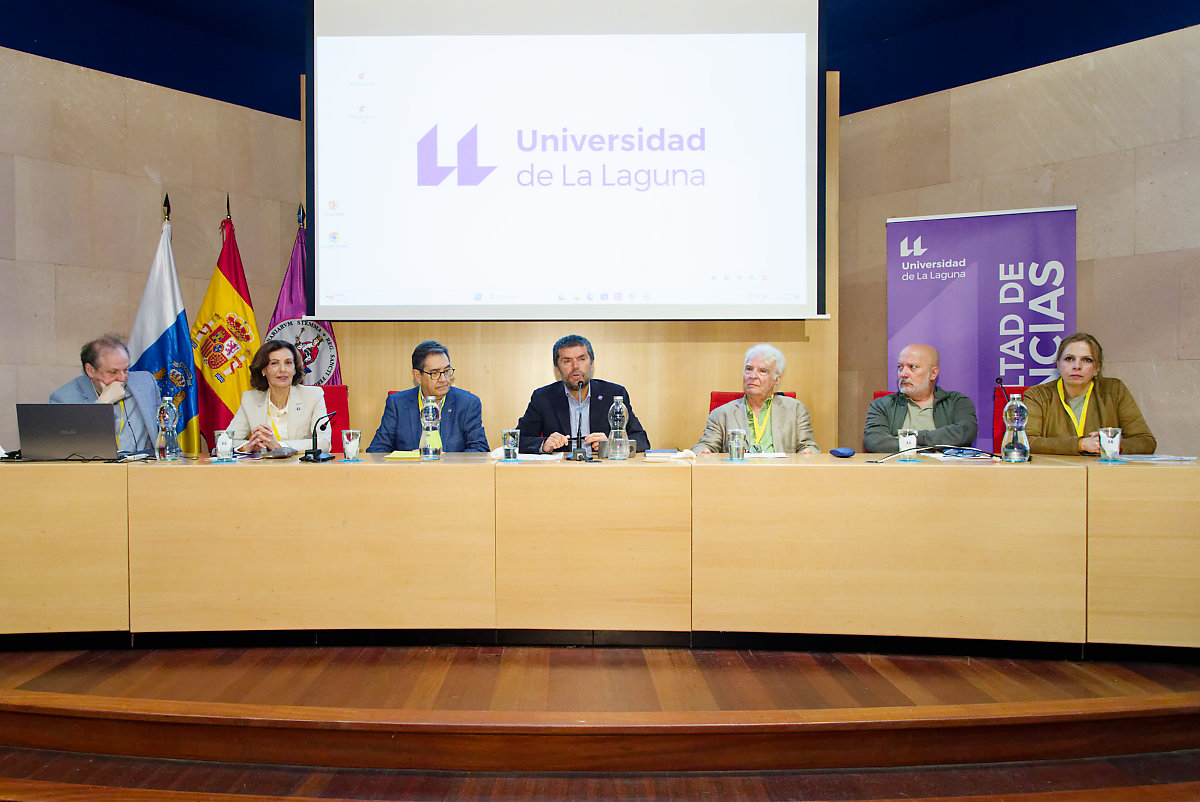
A group of 22 speakers from diverse areas of knowledge will participate in the congress “Science, History and Philosophy: Geometries of Thought. Homage to José Montesinos Sirera”The event, which runs from today, Monday, April 7, until next Wednesday, April 9, in the Blas Cabrera Auditorium of the Faculty of Sciences at the University of La Laguna, has attracted over 90 students from both Science and Humanities and Social Sciences programs at the University of La Laguna. This reflects the spirit of the event, which aims to blur the intellectual boundaries traditionally placed between the sciences and the humanities.
During the opening session, the rector of the academic institution, Francisco García, emphasized that this congress serves as a celebration of an essential value in such a complex era as the present: dialogue in its various facets—between academic disciplines, between different levels of study, between generations, and between institutions. “José Montesinos is a living example of all these dialogues, and his figure should serve as a reference point for how to move forward, because we need to engage in dialogue and understand one another.”.
García developed this idea of dialogue by arguing that the challenges facing humanity are “highly complex and multifaceted, and therefore require broad and transdisciplinary perspectives.” Furthermore, it is essential that people of different ages find common ground and learn about the past: “We need to know the history of those who fought in the past for rights that we took for granted today, but which we now see are threatened. The struggle continues.” And all of this involves trying to connect as many institutions as possible, as has happened with this congress, in which, in addition to the teaching and research center, the Alumni ULL association, the Luis Balbuena Castellano Canary Islands Society of Mathematics Teachers, and the Royal Canary Islands Academy of Sciences are collaborating.
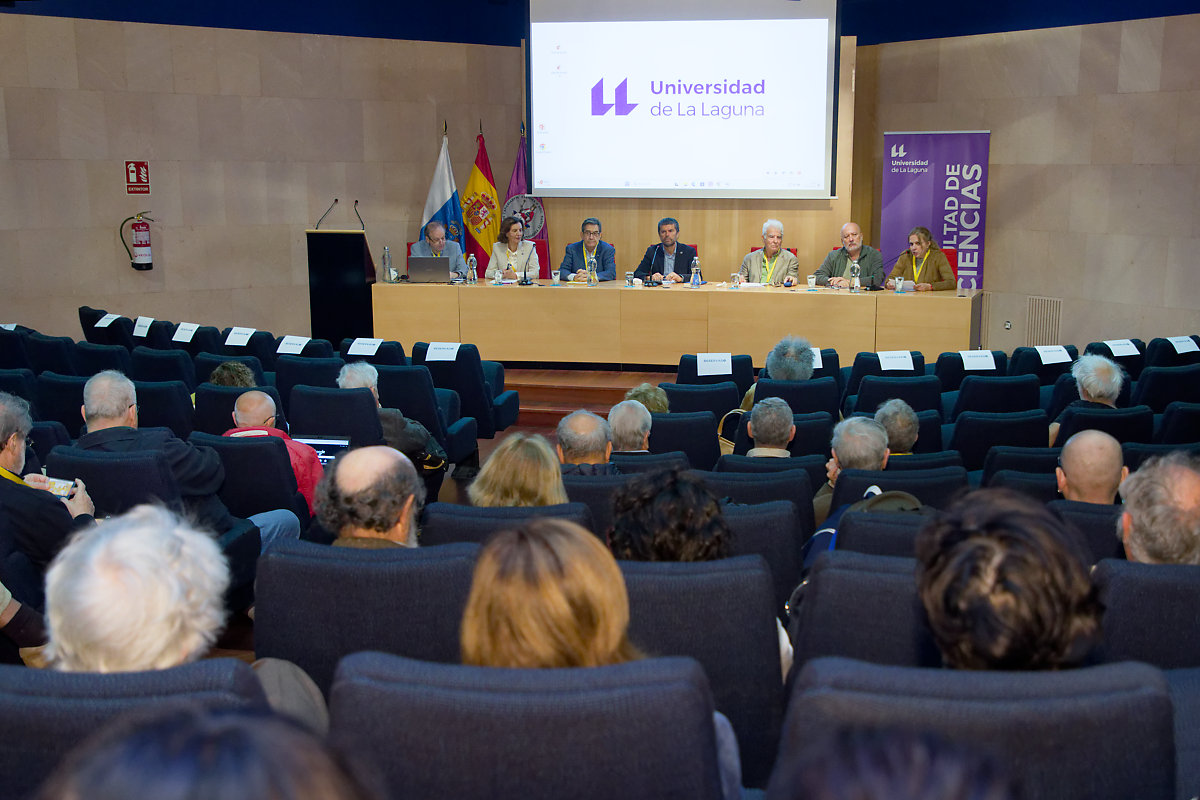 Former rector and co-organizer of the congress, Antonio Martinón, recalled the years of struggle in the 1970s alongside Montesinos, during which protests, disguised as labor demands, were actually political in nature. He praised the international spirit of the honored professor, which has led him to teach in Paris, Chicago, Rome, and several Spanish cities before settling in La Orotava.
Martinón recalled that, precisely in that municipality in the north of Tenerife, Montesinos, along with other secondary school teachers, created science outreach seminars that quickly gained a lot of traction and, with the support of the Government of the Canary Islands, the Tenerife Island Council, the La Orotava City Council and the University of La Laguna, ended up becoming the current Orotava Canary Foundation for the History of Science, "which has been a space for the relationship between different disciplines and built bridges between the Sciences and the Humanities.".
The honored professor, José Luis Montesinos, gave a brief overview of his own life, which he would later continue in his subsequent presentation. He recalled that a stay in Grenoble in 1968 allowed him not only to explore new mathematical approaches but also to engage in political activism, which was outlawed in Franco's Spain. This fighting spirit led him, upon his return to the University of La Laguna, to participate in protests for the rights of tenured professors alongside Jerónimo Saavedra.
He recalled that his family had wanted him to be an architect, but “the beauty and harmony of geometry” fascinated him, allowing him to approach infinity, a word that until then had been reserved only “for the Christian God.” In his address, he expressed his gratitude to those who made this congress possible: Antonio Martinón, María Jesús Rodríguez, Francisco La Roche, and Matías Camacho.
Both the Dean of the Faculty of Sciences, María del Mar Afonso, and the Dean of the Faculty of Humanities, Javier Medina, delivered speeches with the same underlying theme: the need for science and the humanities to come together and work closely together, something that is, in fact, already happening. Medina recalled that “digital humanities” are already a reality and that his own doctoral thesis, defended in 1992, introduced probabilistic analysis to determine the frequency of occurrence of a particular literary device. For his part, Afonso defended this complementarity of both fields, questioning whether it was possible to do science without posing philosophical questions or to reflect on humanity without considering scientific advances.
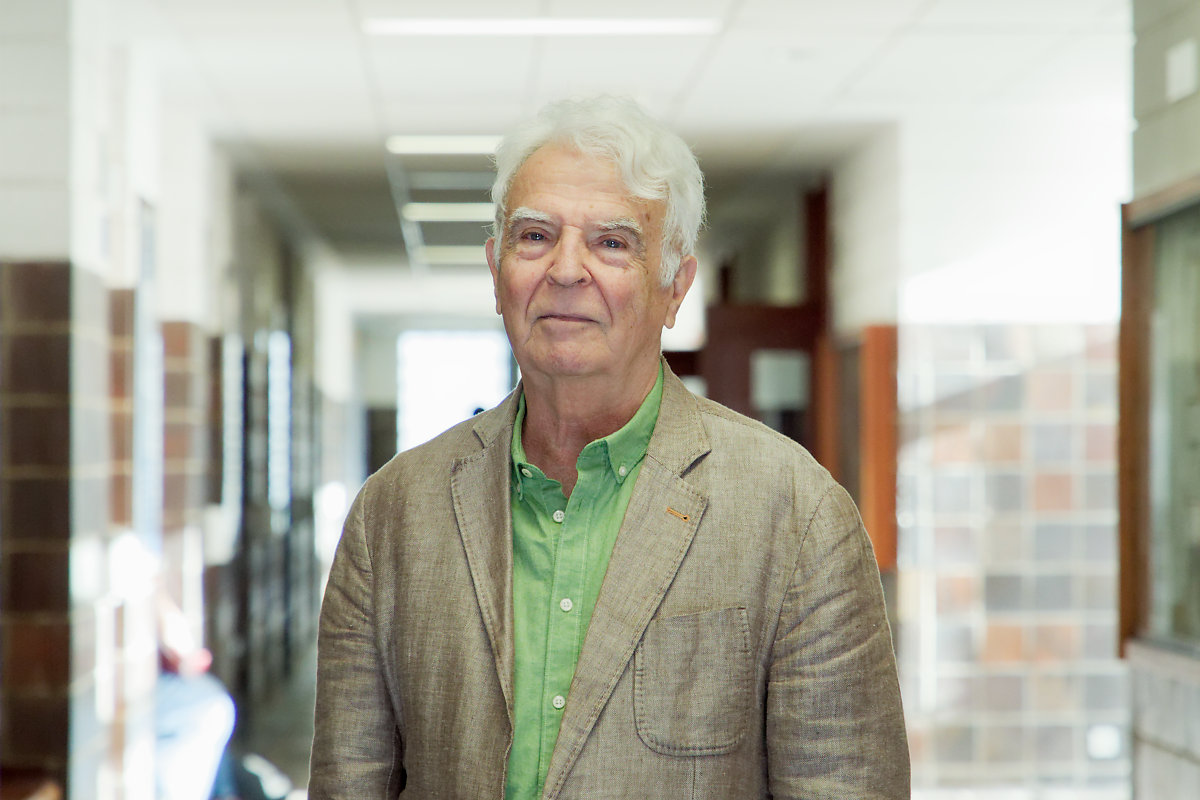
José Montesinos.
Jürgen Renn, from the Max Planck Institute in Berlin, recalled how his institution established a fruitful collaboration with the Orotava Canary Foundation for the History of Science since 2001, yielding results such as several science outreach symposia, an important conference on Einstein in 2005 and the Humboldt Project for the collection of materials on European travelers in the Canary Islands.
Finally, María Jesús Rodríguez, from the congress's organizing committee, emphasized that "the acceptance to participate in a tribute to Montesinos was immediate and unequivocal, and it was received as a well-deserved act of justice." She acknowledged the generosity of the 22 speakers, as the congress lacks funding and, therefore, each of them had to cover their own expenses for accommodation, travel, and meals, "and that is an example of the esteem in which Montesinos is held." She highlighted his approach to "studying and viewing the world without placing barriers between the sciences and the humanities, which translates into a reflection on the history of knowledge that brings together scientific achievements without neglecting their ongoing impact on the interests and questions of the human condition.".

 Spanish
 English
 French