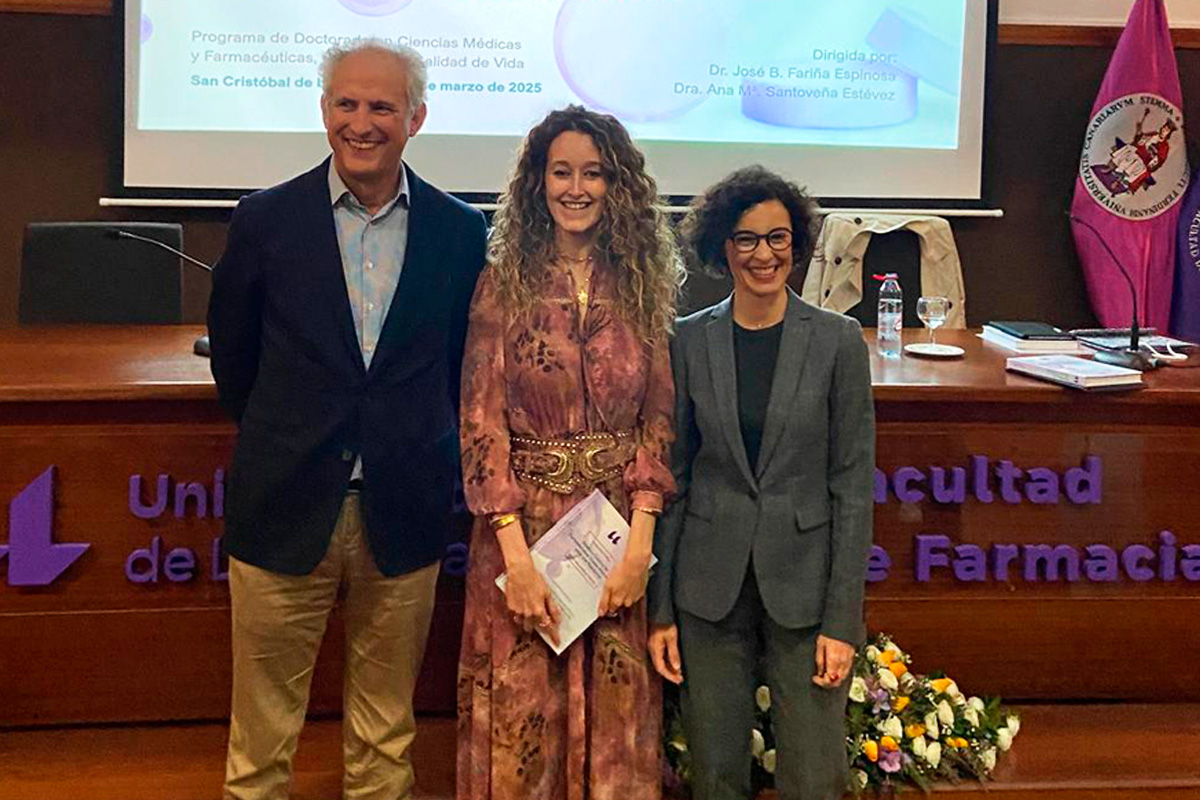
Just a few weeks ago, doctoral student María Magariños Triviño defended her doctoral thesis, entitled 'Design and control of alternative oral formulations for pediatric use,' at the Faculty of Pharmacy of the University of La Laguna. This work has developed a new 3D printing formulation for the treatment of Eosinophilic Esophagitis in children.
Eosinophilic esophagitis is a chronic inflammatory disease of the esophagus, which particularly affects children. It is characterized by the accumulation of eosinophils, a type of white blood cell, in the lining of the esophagus, causing difficulty swallowing, chest pain, and other bothersome symptoms.
Treatment options include the administration of budesonide, a corticosteroid that reduces inflammation. Achieving accurate dosing and effective administration of budesonide in pediatric patients has historically been challenging, underscoring the importance of this new formulation.
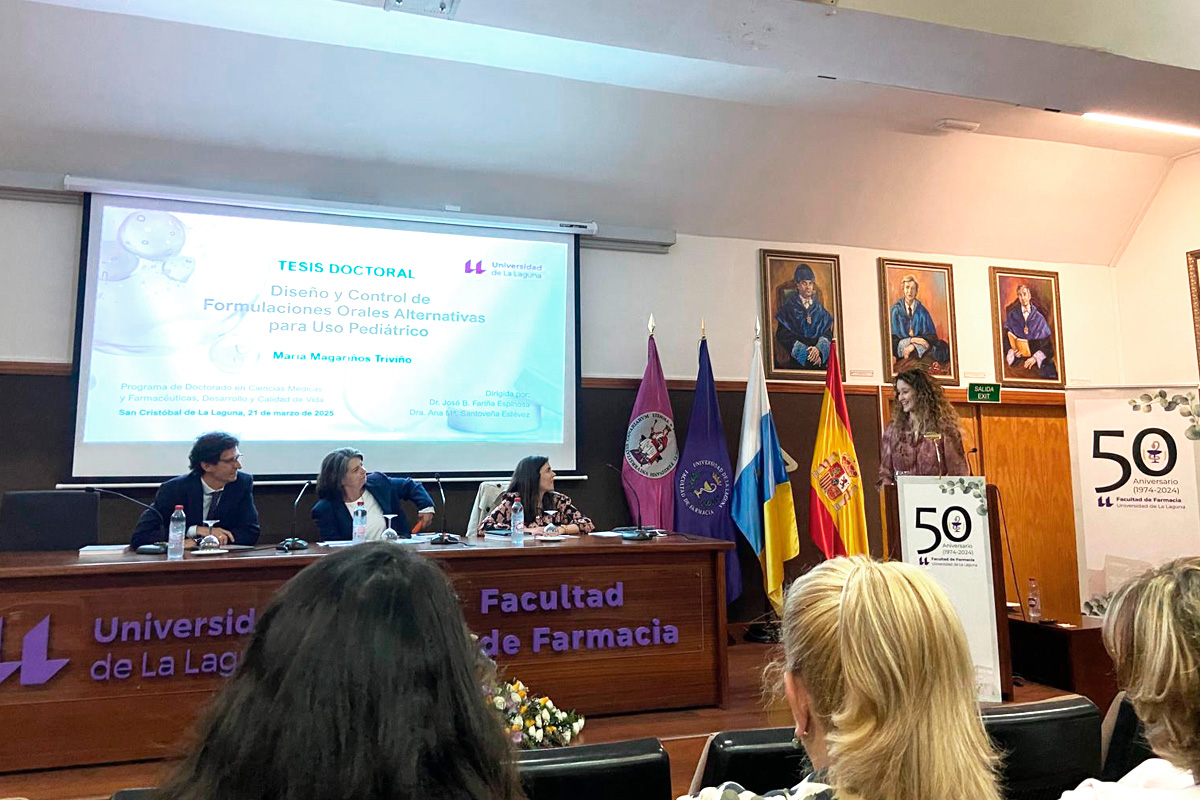
A moment from the doctoral thesis defense.
This is where the University of La Laguna's development of a new pediatric budesonide formulation comes into play, obtained using 3D printing technology with semi-solid extrusion. This technology allows for the production of individualized medications, offering numerous advantages, such as designing the most appropriate pharmaceutical form based on the patient's characteristics and selecting excipients suitable for pediatric use. In this case, 3D printing has enabled the design of printed formulations with a precise dose of 0.5 mg of budesonide, an amount difficult to achieve with conventional formulations.
In addition to precise dosing, the new formulation features bioadhesion in vitro Superior to other conventional formulations. This means the medication adheres better to the esophageal mucosa and, therefore, improves treatment efficacy. The incorporation of xanthan gum into the formulation has proven key to achieving this enhanced mucosal adhesion.
The doctoral thesis, directed by the doctors José B. Fariña y Ana María Santoveña, This research has yielded promising results that could significantly improve the quality of life for children with eosinophilic esophagitis. 3D printing technology opens up a range of possibilities for the development of personalized medications, as it allows treatments to be tailored to the specific needs of each patient.
After completing her doctorate, María Magariños Triviño does not rule out continuing her research career in the field of pharmaceutical technology, with a particular interest in the development of personalized medicines. Furthermore, during her doctoral studies, she has been involved in co-creation and collaborative training projects in the health sector between Africa and the Canary Islands, and she would like to continue exploring these initiatives. Her goal is to contribute to the advancement of personalized medicine and strengthen scientific and educational collaboration between regions.
You can find information on upcoming doctoral theses at the University of La Laguna in this link.

 Spanish
 English
 French