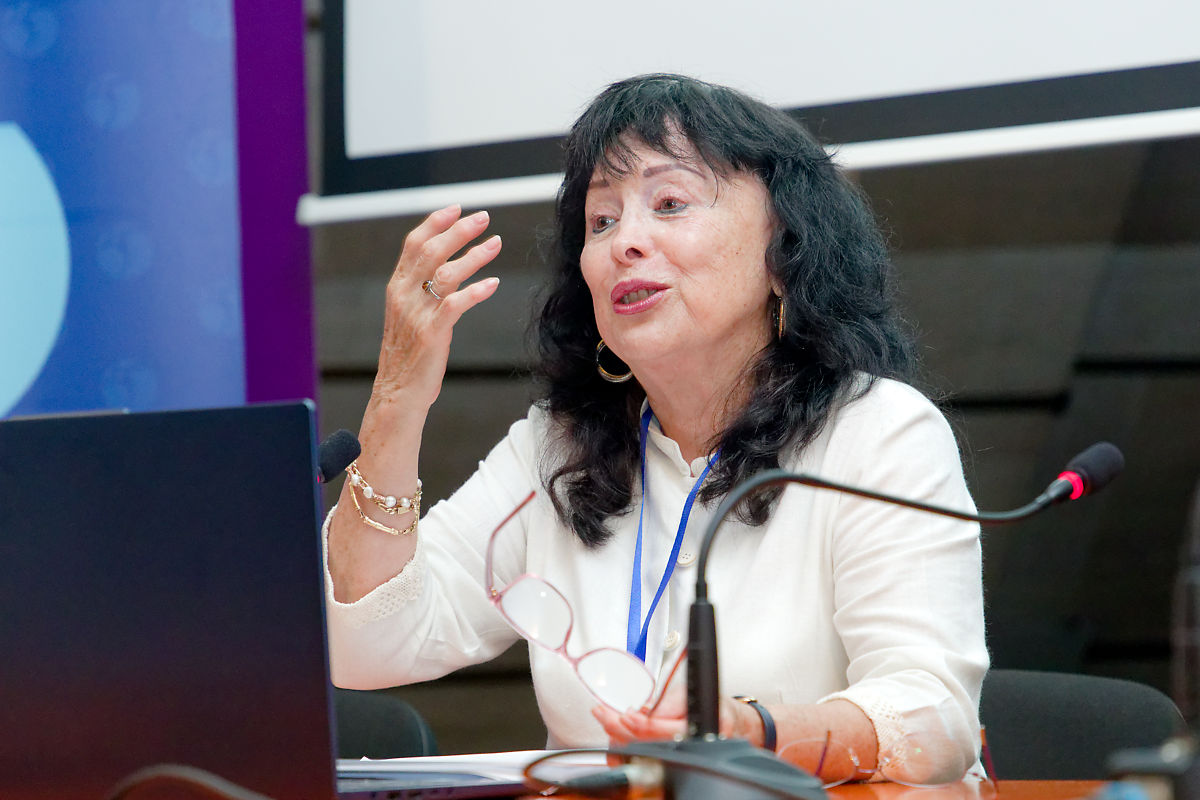
Genoveva Roldán, from the Institute of Economic Research at the National Autonomous University of Mexico, opened the [unclear] today International Congress on Human Rights and Globalization, which, under the slogan 'Immigration, Vulnerability and Human Rights on the EU's Southern Border', is being held at the University of La Laguna and organized jointly with the University of Seville.
The economist defended the human right not to migrate, arguing that countries of origin should create the conditions necessary for citizens to remain free. "Historically, migration has been intertwined with conflict," the expert noted, also focusing on the 150-year history of migration between Mexico and the United States, which has become the most densely populated migration process in the world.
“We live in a hegemony in crisis, which exacerbates secondary contradictions due to market struggles and the reestablishment of US hegemony.” In her opinion, it is a ferocious capitalism that amplifies its irrationality. The economist pointed out that there is a main contradiction, “expressed in profound social discontent, which has been capitalized on by conservatism” and in the face of the retreat of leftist organizations.
From his point of view, the agenda is marked by racial equality, feminism or ecological activism, which, being very important and inalienable rights, he specified, "in a way overlap the main contradiction, because there is still class struggle and there are still wage earners, today euphemistically called entrepreneurs.".
The researcher indicated that the so-called American Dream will soon return, thus reclaiming its rightful place as the largest and most respected nation. “We thought that with globalization, territorial expansion had ended, but I was wrong.”.
Over the past two decades, backlash against the globalized world of open borders and non-interventionist governments has been gaining momentum, even before Donald Trump came to power. “We’ve become defenders of multilateralism, but the truth is that United Nations resolutions have consistently fallen on deaf ears. Moreover, multilateralism has been in crisis since the creation of the International Monetary Fund,” the expert argued.
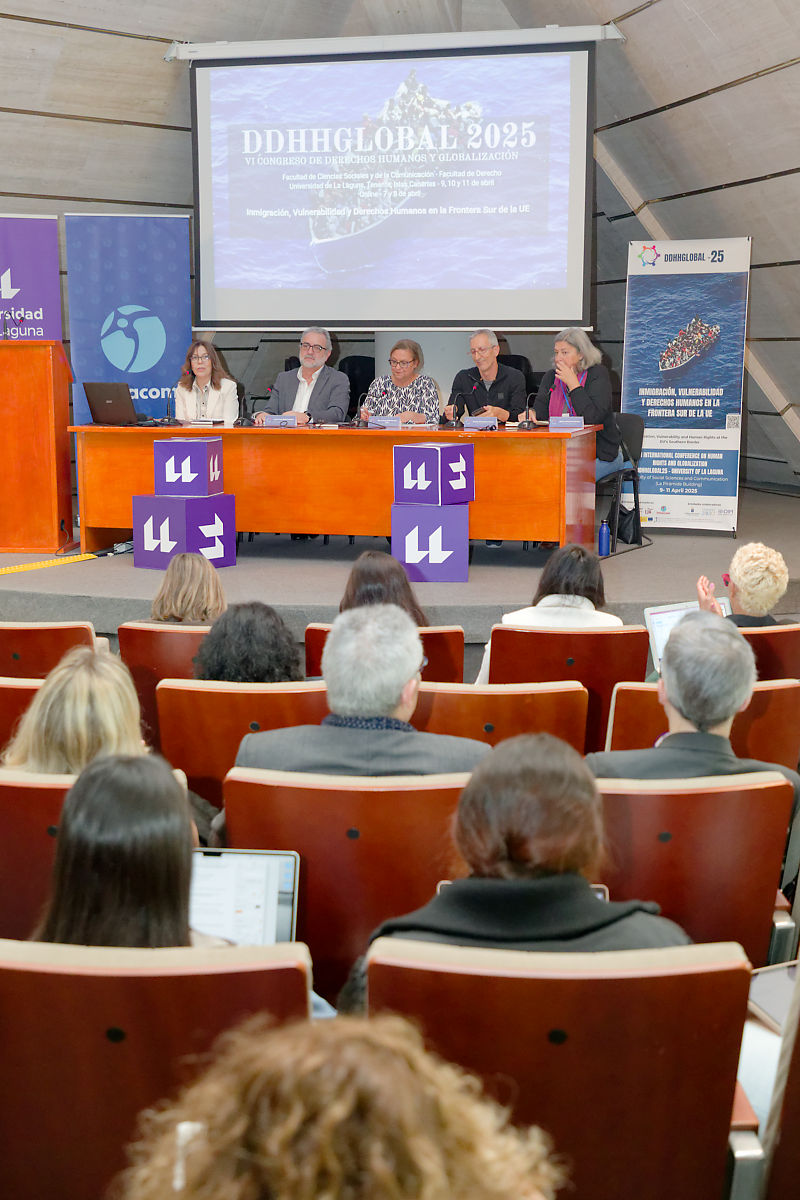
A moment from the inauguration.
Migration, a human right
Before the UNAM professor's presentation, the congress's opening ceremony was held, presided over by the Vice-Rector for Internationalization and Cooperation, Inmaculada González, who maintained that migration "is a human right, not a cause for death." She indicated that several legal frameworks have represented progress, in the form of agreements that have proven "very necessary but insufficient.".
“We are aware that universities must contribute to the creation of societies free from racism and xenophobia. Immigration offers us human enrichment, an intercultural perspective, and new contributions to the economy,” he added. This interdisciplinary congress has attracted the interest of speakers from around the world, with 170 participants, especially from South America and European countries.
This event also involves the active collaboration of researchers from the Ibero-American Intracom Transfer Portal, with the institutional support of the Presidency of the Government of the Canary Islands and the collaboration of the International Organization for Migration (IOM-UN Migration).
The dean of the host institution, the Faculty of Social Sciences and Communication, José Antonio Batista, pointed out that in the 21st century, the right of individuals to pursue their future and change their nationality continues to be questioned amidst growing opposition to freedom of movement. “It is critical that the university raise its voice and give visibility to any ethnic demands.”.
The congress will focus on the main destinations of migratory flows across the globe, with a particular emphasis on island territories such as the Canary Islands, Lampedusa, and Lesbos, where the human tragedy is most visible. This event aims to be an open forum for the analysis and discussion of the many facets of migration dynamics from a human rights perspective, as highlighted by Rodrigo Fidel Rodríguez, the event's coordinator along with the dean. In fact, it is accompanied by a photographic exhibition on the Canary Islands route, curated by Desirée Martín, coinciding with the thirtieth anniversary of the first cayuco (small boat) that reached the islands.
For her part, Professor María José Guerra Palmero, also a member of the organizing committee, pointed out that hoaxes, myths, and misinformation about immigration are rampant. “We don’t want a racist Canary Islands; it’s not in our nature, especially since we are a people of migration.”.

 Spanish
 English
 French