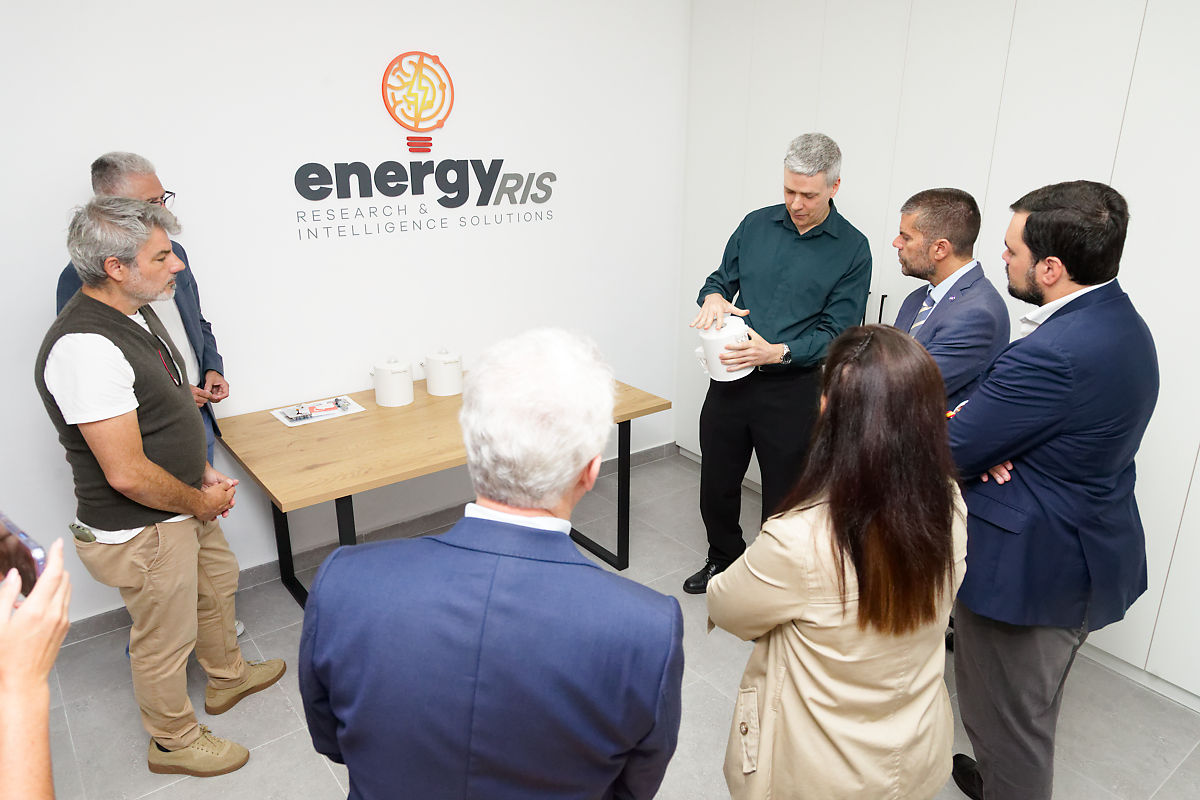
EnergyRIS It is one of five spin-off companies currently operating from research at the University of La Laguna, dedicated to innovation focused on renewable energy installations and energy communities for individuals and businesses. The Rector of the University of La Laguna, Francisco García, and the Mayor of Puerto de la Cruz, Leopoldo Alonso, visited the company's headquarters this week, located in the northern municipality, to learn firsthand about its potential after five years in operation. Representatives from some of the firm's client entities, such as the Tenerife Island Council, Endesa, and the Santa Cruz de Tenerife Port Authority, were also present at the reception.
The rector expressed his pride in being at one of the technology-based companies born within the institution, which he defined as one of the ways in which academia can fulfill its third mission: the transfer of knowledge to society. He added that it “demonstrates how the University of La Laguna can be useful for the development of the region.” Specifically regarding EnergyRIS, García highlighted its importance in supporting the current energy transition process, and also the fact that it is located in Puerto de la Cruz, a city with which the institution maintains excellent collaborative ties.
The mayor also referred to this alignment with the university and emphasized the importance of his municipality having an innovative company of this kind, focused on sectors as crucial as sustainability and clean energy in the Canary Islands, which he believes should be promoted by the public sector. Alonso noted that the commitment to this energy transition is strong, but it must be implemented gradually, and that it's important not to "jump into the pool before it's even open." In this regard, he highlighted his confidence in the university-affiliated company, citing its highly qualified staff.
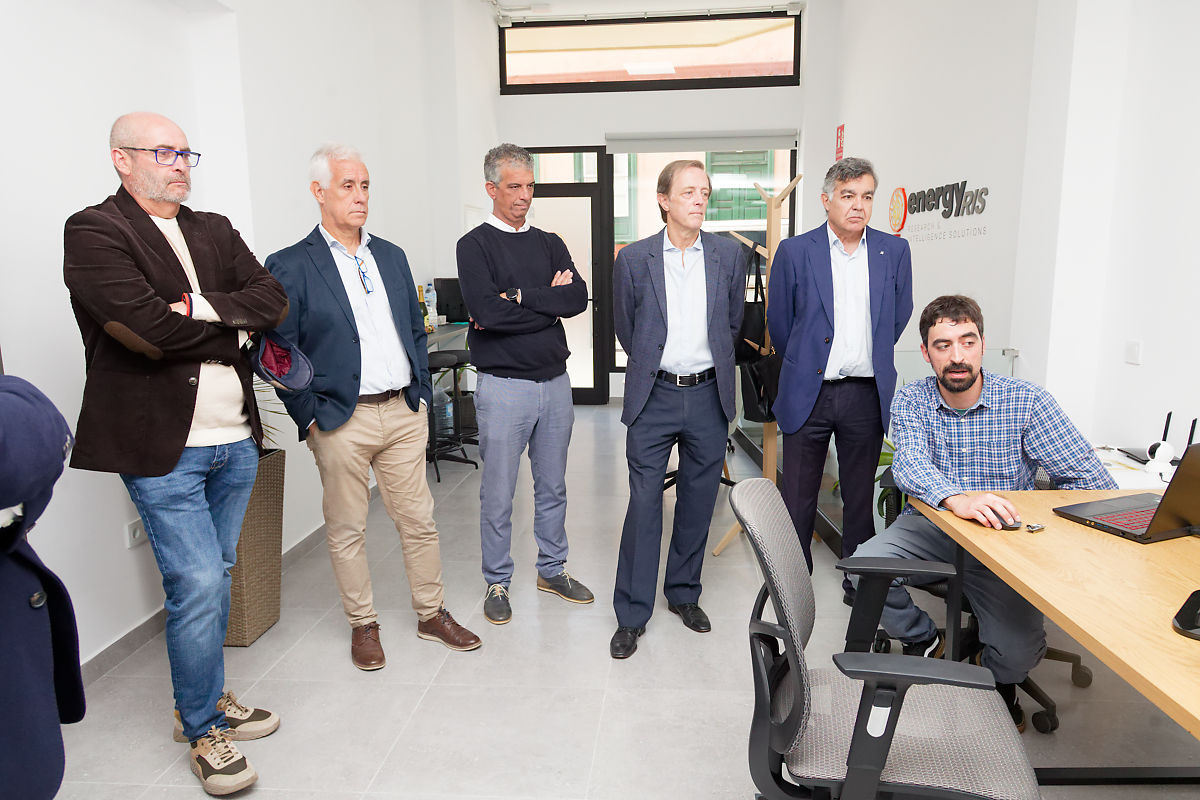
The Professor of Physics at the University of La Laguna Ricardo Guerrero, The director of EneryRIS also introduced the company's staff and summarized its first few years, during which it has built a client base large enough to demonstrate the company's stability. He explained the company's areas of expertise, which include advising on the creation of community energy projects, renewable energy installations, renewable and sustainable fuel production, and providing guidance on planning, tax, and regulatory matters related to the energy sector.
Together with David Cañadillas, the firm's technical director, he gave a guided tour of the facilities, which are divided between an upper part where administrative tasks and project design are carried out, and a lower part where the devices created by the company are designed and produced using 3D printing.
Guerrero explained the operation of some of these devices, such as those used for monitoring and controlling energy consumption, and cameras he described as “strategic” because their purpose is to determine and predict, in combination with specific software, the evolution of clouds and the shadows they generate. This allows for better management of optimal times for energy production and storage. These cameras are deployed in locations as diverse as the University of La Laguna itself, La Graciosa, Arico, and some points in Sweden and Ireland.
He also explained that the company operates using 100% renewable energy, thanks to the building's owners' association agreeing to the installation of photovoltaic energy systems. Furthermore, they are researching methods to recycle leftover polymer scraps from the 3D printing process used to produce the devices, with the aim of generating no waste and promoting a circular economy.
EnergyRIS, founded in 2020, is a spin-off company that currently does not distribute profits in order to reinvest in its research activities. It is certified by the Ministry of
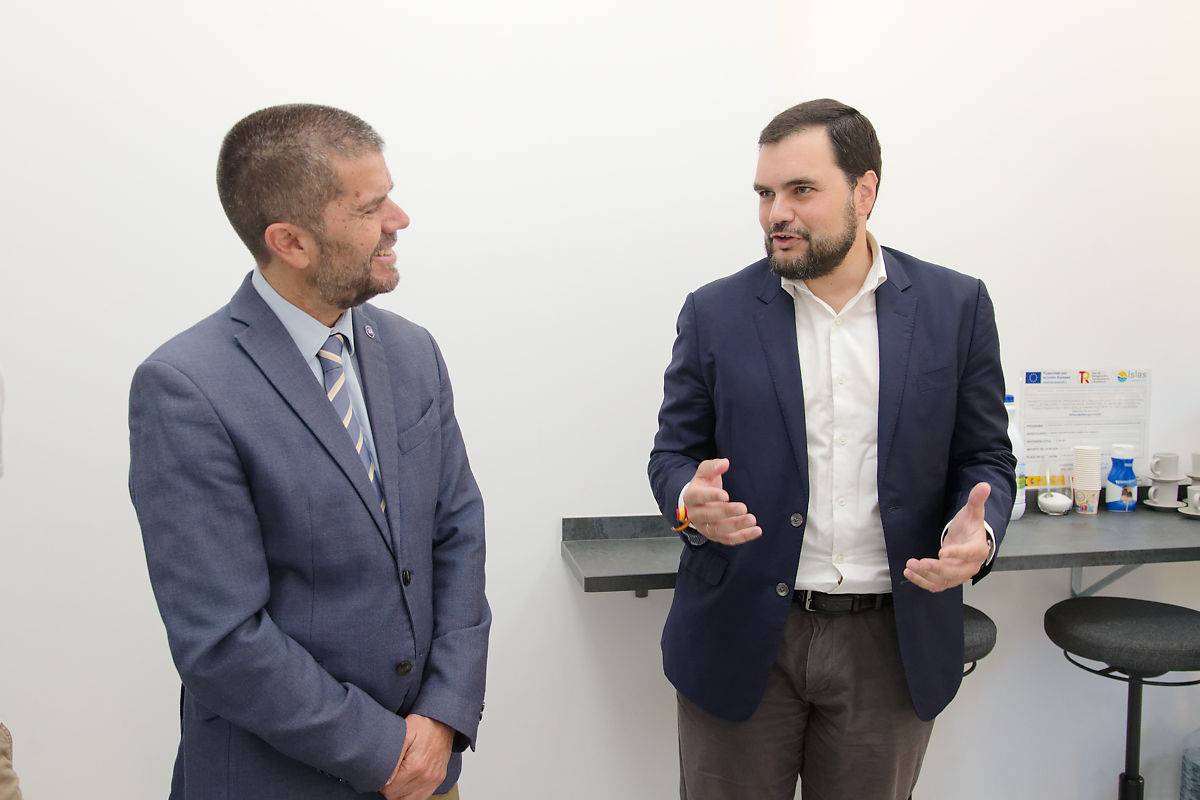
The rector and the mayor of Puerto de la Cruz, during the visit.
Industry-focused and with strong alliances within the industry and strategic relationships with global leaders. Specializing in citizen energy communities, island networks, solar and wind forecasting, renewable fuels, and energy planning, it participates in European projects under the H2020 call and in the National Plan within the Retos program.
It is also one of the five spin-offs that the University of La Laguna has; the other four are Wooptix, dedicated to light innovations, especially in the field of semiconductor metrology; Formaché, for the creation of moldable pastes created from microparticle waste; Kaizten Analytics, a consultancy that uses data science to improve business decision-making; and Mito, which develops innovative technologies to suppress corrosion.

 Spanish
 English
 French