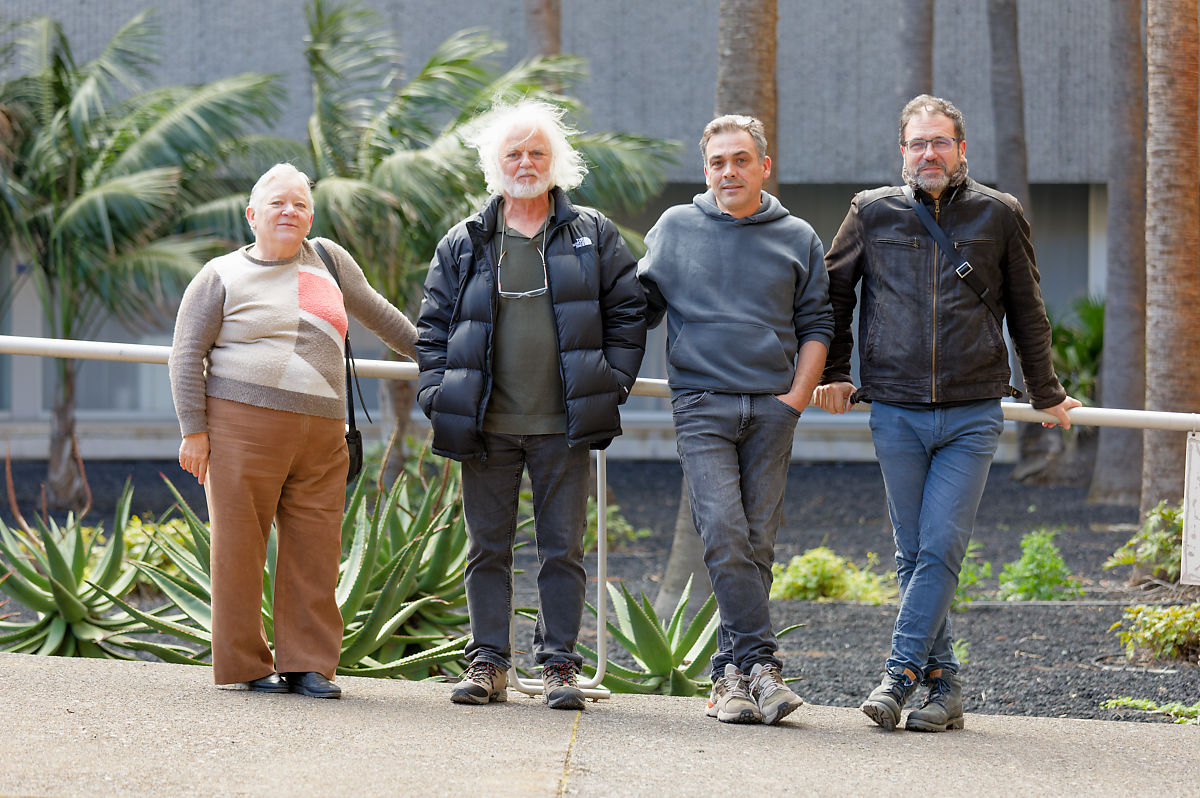
Talking about lime often conjures up the image of a troublesome material, a residue that accumulates in hydraulic infrastructure, causes numerous maintenance problems, and ends up being disposed of in landfills. In the Canary Islands alone, thousands of tons are dumped each year. Given this situation, the Art and Environment research group from the Department of Fine Arts at the University of La Laguna, led by Isabel Sánchez Bonilla, Professor of Sculpture, raises the possibility of considering this waste as a resource of high industrial, artistic and sustainable value.
This team, made up of Tomás Oropesa Hernández, Mauricio Pérez Jiménez, Francisco Javier Viña Rodríguez, Juan Antonio Álvarez Rodríguez Attenya Campos de Armas has worked for four years, with funding from the CajaCanarias Foundation, exploring the possibilities of lime obtained from sediments accumulated in the galleries of Tenerife in order to develop a project that crosses science, sustainability, history, art and territory.
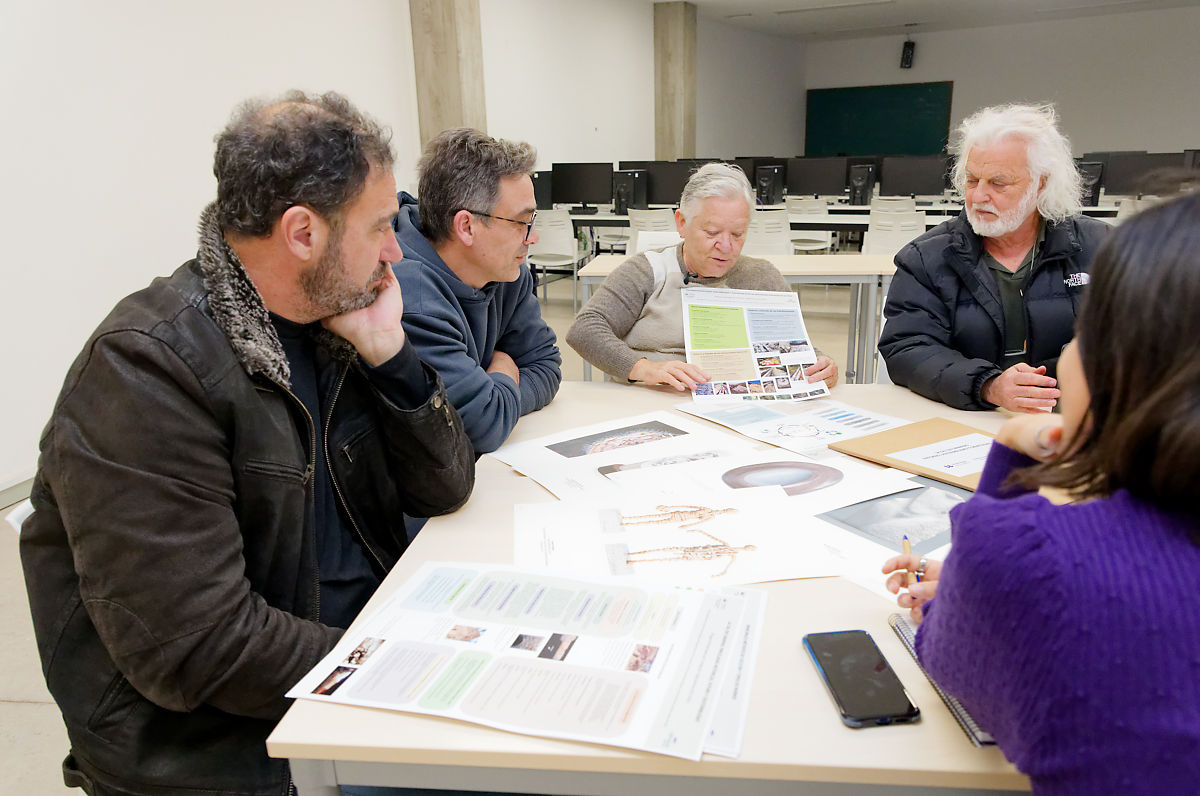
A moment from the interview.
To achieve this, it has been crucial to delve into the traditional architecture, the old lime kilns, and the traditional trades of the archipelago. Lime was fundamental for centuries and shaped the rhythm of life in many areas of the territory. “It’s about recovering the past for the future,” explains Sánchez. “We’re talking about something that is a problem today, but in reality, it’s a wonderful material.”.
The tangible result of this research is the traveling exhibition 'Lime in the Canary Islands: Environment, Sustainability, and Creativity,' which has already been shown in La Laguna and is currently in Fasnia. It will soon travel to other municipalities such as La Orotava, Guía de Isora, and others yet to be confirmed. This exhibition is designed as an educational tool, using sculptures and panels to invite visitors to discover this white material from new perspectives as part of the heritage, landscape, and future of the islands.
Lime is a natural resource that offers numerous advantages in terms of environmental sustainability due to its cyclical nature. Unlike other materials, such as cement or plastics, its transformation and use allow it to return to its original state through a reversible process, which greatly reduces its environmental impact. "It is an absolutely recyclable material," explains the professor.
The starting point for this research was not a quarry but the interior of Tenerife's water galleries where, for decades, calcareous sediments have accumulated, currently considered useless waste. Through a controlled process, these stones are transformed into a lime paste that can be used and stored without losing its properties, and is capable of hardening again, although the process varies depending on the type. Air-setting lime sets slowly upon contact with carbon dioxide, while hydraulic lime hardens through hydration and is more resistant, like cement.
The research team has primarily worked with air lime obtained from the passage of water through the island's volcanic subsoil, and it is this origin that makes them so special. In all cases, analysis has yielded a purity level exceeding 901%, which is extraordinary. "Air lime typically has a purity level above 851%, but ours reach 951%," Sánchez emphasizes. This exceptional purity has been certified in several samples sent to TESELA, a materials research, innovation, and heritage center in Granada.
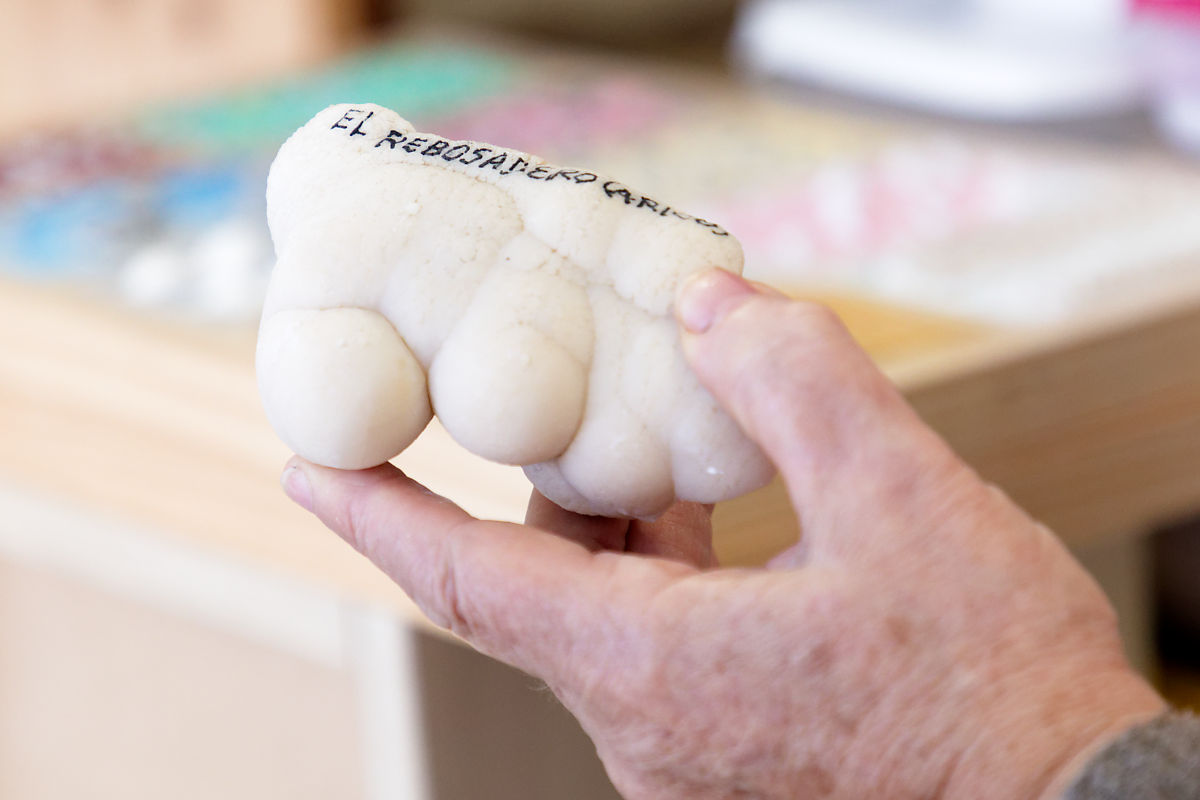
One of the pieces created with lime.
The lime extracted from places like Arico, Santiago del Teide, and Guía de Isora stands out not only for its quality but also for its rich color and texture, which varies depending on the geographical area, as if it bears the imprint of its landscape. Some retain the characteristic white associated with this compound, while others display warm, toasted, or grayish hues. The fact that it comes from a sediment that was previously discarded multiplies its value from a sustainability and circular economy perspective. "It is a material that arises spontaneously in our landscape" and has proven to be valuable, abundant, and unique to our region.
Building a future with lime
An important part of the project was the creation of mortars made from lime paste and local volcanic aggregates, such as red and black volcanic rock (picón) or jable. These lime mortars are ideal for reliefs, sgraffito, and decorative finishes, and can be seen in the sculptures included in the traveling exhibition.
Sánchez Bonilla explains how lime offers a natural alternative to many plastic paints and industrial coatings thanks to the mixtures obtained with different types of aggregates. This combination allows for the creation of useful chromatic finishes capable of adapting to the aesthetics of any environment. Unlike synthetic coatings, these lime-based surfaces breathe, regulate humidity, and reflect light. The material's properties of absorbing carbon dioxide from the air and recalcifying allow for the natural repair of small fissures or cracks. The potential for the restoration and conservation of architectural elements is undeniable.
Beyond its artistic merit, its unique characteristics open up significant opportunities in industrial sectors such as construction and sustainable architecture by offering a local, efficient resource with low environmental impact. Sánchez also emphasizes the tourism potential linked to the islands' natural and geological heritage. In just a few years, groundwater like that of the Canary Islands could form iconic mineral landscapes like Pamukkale in Turkey. A visible example of this natural transformation can already be found at Lomo Morrín, in Los Silos.
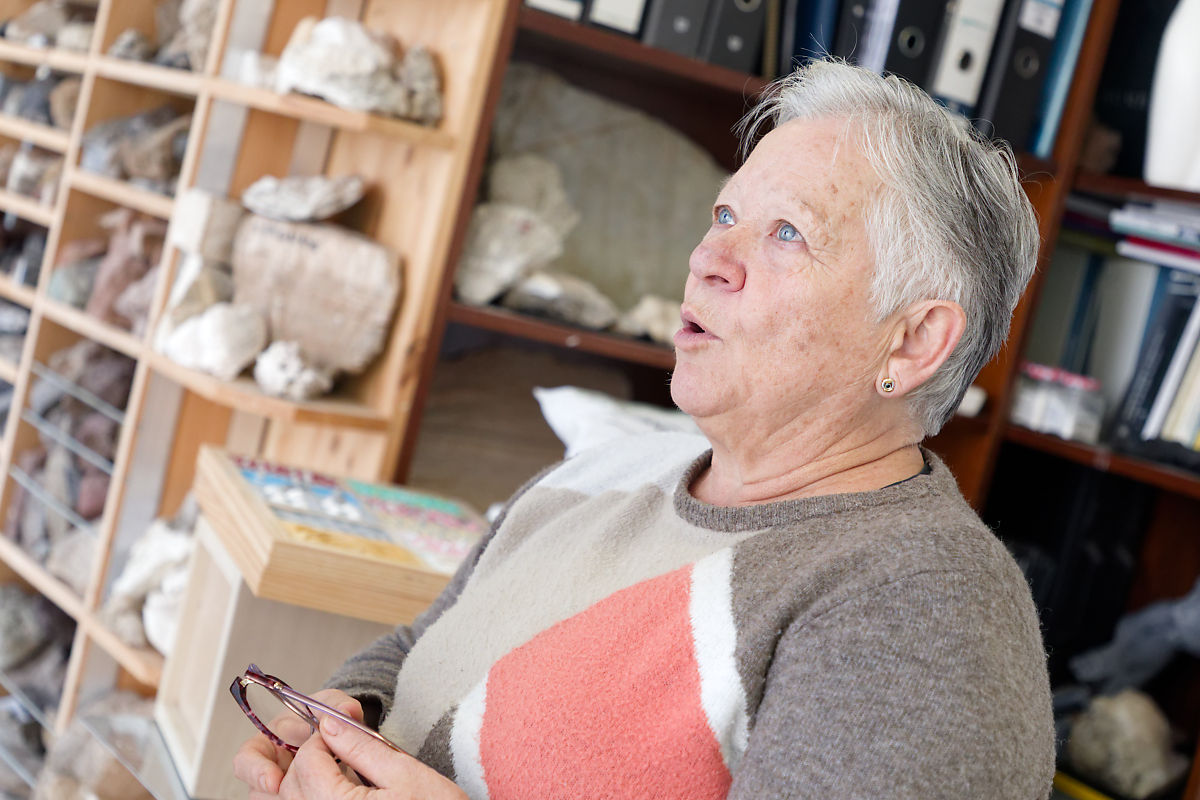
Isabel Sánchez, principal investigator of the group.
In all these cases, lime is seen as a vehicle that can activate new forms of local development, but despite its exceptional properties, quality production is almost nonexistent in Spain. The only notable example is Morón de la Frontera, in Seville, where artisanal limes are still produced, renowned for their purity and durability, and even declared Intangible Cultural Heritage of Humanity by UNESCO.
Faced with this reality, the work of the Art and Environment research group demonstrates that it is possible to recover very high-quality lime from local sediments, opening the door to local production with unique ecological, cultural, and economic value. As Sánchez emphasizes, “a material of the future, which shouldn't be of the past.”.

 Spanish
 English
 French