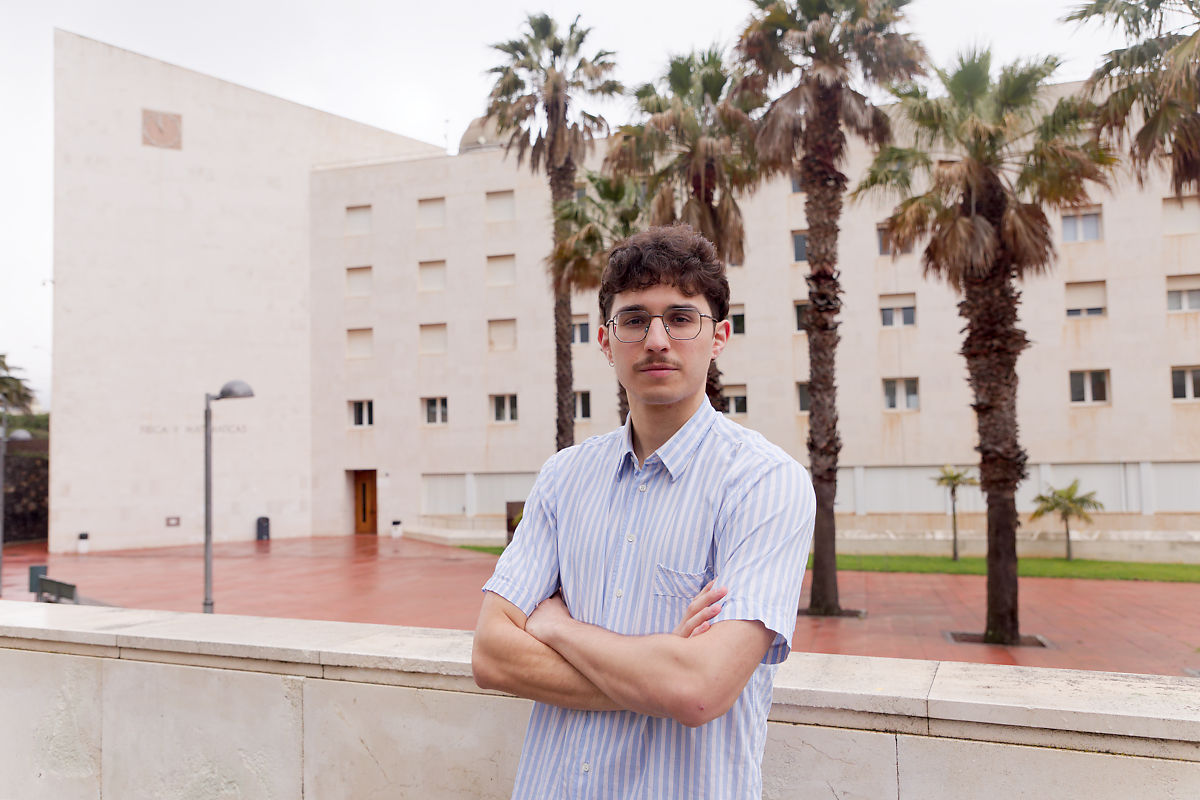
The University of La Laguna was founded on March 11, 1792, thanks to the signing of the royal decree that authorized its creation. As it does every year, the university held a gala, organized by the institution itself and the Alumni ULL association, to present its institutional awards, including the one for the student with the best academic record.
This year, the award went to Nelson Rivas Chacón, a Physics student, who completed his studies in the 2023/24 academic year with a 9.6 average grade. This individual achievement is further enhanced by the recognition of the institution itself, which ranks between 201 and 300 in the prestigious rankings. Shanghai ranking in the area of Physics, which further demonstrates Rivas' merit throughout his training.
From his entry into university in the midst of the Covid-19 pandemic to his current stage in the Master's Degree in Nanophysics and Advanced Materials at the Complutense University of Madrid, his academic career is marked by perseverance, an interest in knowledge and a study methodology based on attending classes and a deep understanding of the concepts.
Beyond following a specific study method or technique, Rivas says he always tries to pay close attention in class: “If you manage to do that, you’ve already done more than half the work.” He also believes that class attendance is often underestimated. “After three months of listening to the same person, you can get a sense of the type of exam the professor will give,” he says.
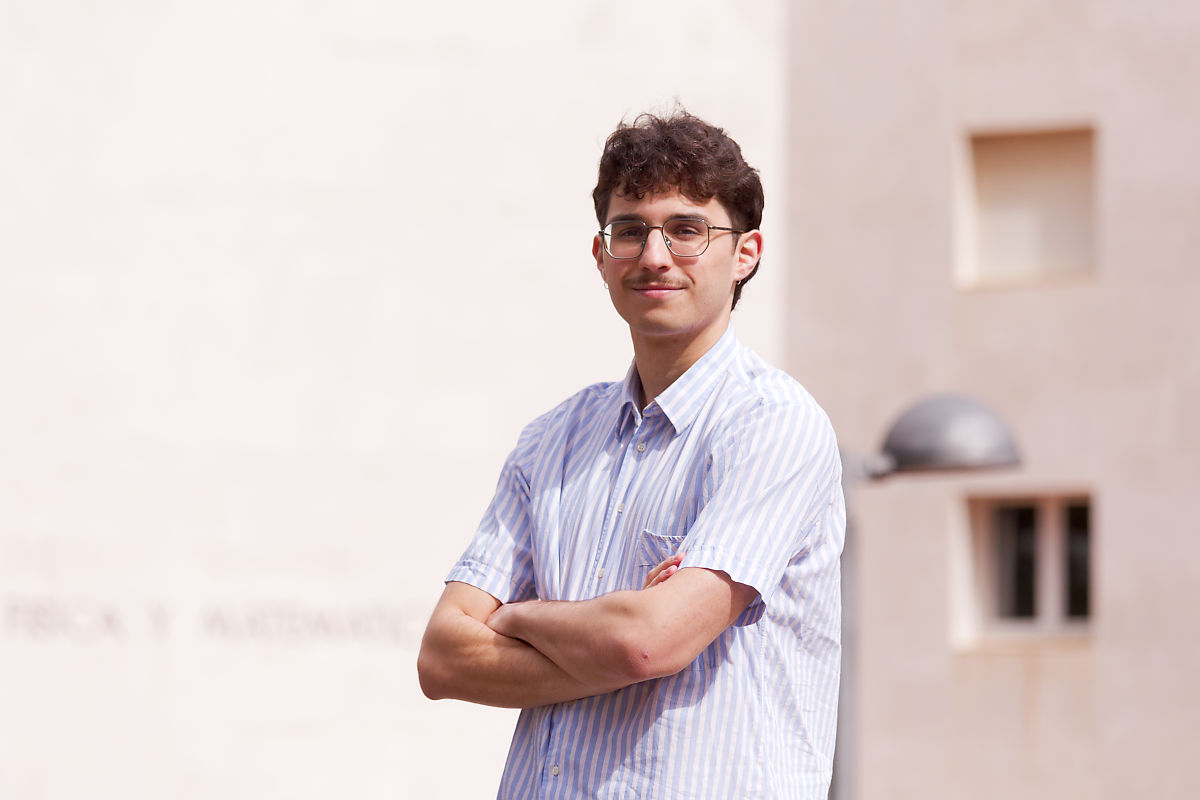 Organization has also been a fundamental pillar of her routine. Although she doesn't use a planner, her mental planning allows her to know what to study each day. For demanding exams, such as those in quantum physics, she begins preparing two weeks in advance, dedicating that time to solving problems, reviewing past exams, and clarifying doubts. "Following this strategy, I almost always have the last two days before the exam free, which I use for a more relaxed review," she says.
Rivas also advises against rote memorization of exercises, especially in subjects like physics. “Understand them. If you can’t do them, seek help,” he says. While some calculations, such as derivatives and integrals, can be done mechanically, this approach doesn’t work with problems in this discipline.
When asked about the aversion many people feel toward mathematics and physics, his answer is crystal clear: “I’d like to know that too.” He believes this disaffection arises in the early stages of education, as those who develop it usually do so before secondary school.
However, Nelson highlights the fact that more and more people are interested in studying STEM-related fields (science, technology, engineering, and mathematics), which may indicate that something is changing in the teaching of these disciplines. “Nor do we all need to be passionate about mathematics and physics, since culture shouldn't be reduced to harmonic oscillators and Fourier series,” he clarifies.
University life, between the pandemic and football
Nelson Rivas acknowledges that it is very difficult to highlight specific aspects of such a pivotal period as university studies. His time at the University of La Laguna was marked by the pandemic, which limited his university experience during his first and second years.
However, from his third year onwards, he was able to fully enjoy life at the university and, together with two friends, created the Physics degree football team, “Operador Gol,” which continues to compete in the university's semester tournaments. Our protagonist recounts that this initiative revived interest in football within the faculty: “Many classmates and professors came to the matches, where there was always a great atmosphere.”.
On a personal level, the most valuable thing he takes away from these years are the friendships he has formed. Some of those friends have accompanied him to Madrid, where he is pursuing a master's degree in Nanophysics and Advanced Materials at the Complutense University of Madrid and hopes they will remain a part of his life. “In reality, the relationships built during these years surpass any other noteworthy aspect of the university,” he says.
“From the moment I started my degree, I always knew that my calling was theoretical physics,” he says. His first contact with condensed matter came in the Solid State Physics course, taught by a researcher in the Applied Physics area at the University of La Laguna., Fernando Delgado. This subject, which combines many concepts from quantum physics and statistics, fascinated him not only because of the curriculum, but also because it allowed him to discover the foundation of technologies that had always captivated him. “I discovered, for example, that the PlayStation 3, which I played so much on as a child, exists thanks to these studies,” he says.
Following this experience, she decided to specialize in this field, taking related elective courses and completing her final degree project with researcher Fernando Delgado on nanomagnetism. Her work, entitled “Properties of Nanomagnets Around Diabolic Points,” focused on theoretically modeling chains of magnetic adatoms (adsorbed atoms) on crystalline surfaces, with the aim of studying the relaxation times of these structures around their diabolic points. These points correspond to specific magnetic field values at which the energy spectrum of these systems exhibits doubly degenerate energy levels.
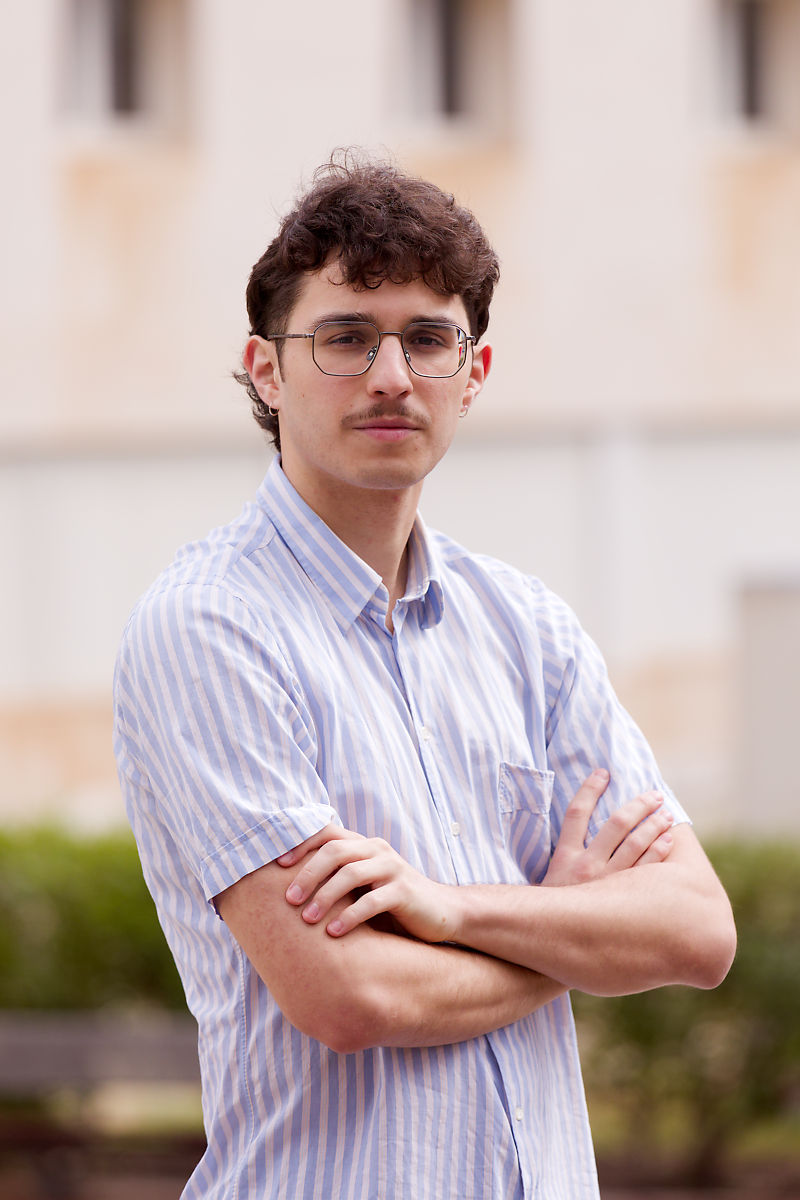
In the work, he demonstrated that relaxation times showed well-defined peaks for specific magnetic field values, coinciding with the diabolic points. In these cases, relaxation times increased by several orders of magnitude due to a change in the symmetry of the lower energy states, leading to a gradual suppression of quantum tunneling due to the loss of hybridization between these low-energy states.
Furthermore, he analyzed how the shape of these peaks varied depending on the type of adatom probed and the potential difference applied between the tip and the substrate. He also attempted to predict the diabolic spots of a spin chain based on its size.
Finally, his final degree project allowed him to delve into the study of open quantum systems, a completely new topic for him that proved fundamental to the development of the research. “This part of the research took up a lot of my time,” he says.
A future focused on research
Currently, she is pursuing a Master's degree in Nanophysics and Advanced Materials, an experience she describes as bittersweet. While the level of rigor is lower than that of her undergraduate degree, the focus on experimental and applied physics has presented a challenge. However, courses such as Advanced Topics in Condensed Matter Physics and her Master's thesis on quantum collisional thermostats and heat transport in one-dimensional quantum systems have allowed her to continue her path in theoretical physics.
Outside of academia, life in Madrid has been a huge change. “The pace of this city is almost maddening, and the sheer number of things to do is overwhelming,” he says. Despite the intensity of the capital, Nelson highlights aspects like the wide range of cultural offerings and the frequency of public transport: “Most cinemas show films in their original language with Spanish subtitles, there are many bookstores, and buses run every four minutes.” And he jokes: “I’ll end up being a total city dweller.”.
With just a few months left to complete her master's degree, her future is already defined. She will begin a doctoral program in the 2025/26 academic year. Institute of Materials Science of Madrid (ICMM), within the group Nanotrib from the Spanish National Research Council (CSIC), under the direction of physics researcher Guilherme Vilhena. This is a doctoral thesis project that will focus on the study of heat transport at the nanoscale from a theoretical point of view and through numerical simulations, with the aim that its results can be verified and supported by experimental groups.
“The industrial sector has never appealed to me, especially since there aren't many opportunities related to theoretical physics,” he says. And he confesses: “I'm more interested in the fundamental aspects of physics, although I'd be lying if I didn't say I'm excited by the thought that technology 30 years from now might be based on my research.” His path is quite clear: “I've known for a long time that pursuing a PhD in theoretical physics would be the most logical step in my career to become an established researcher,” he explains.
The young physicist Nelson Rivas represents the academic talent and curiosity for knowledge that characterize the academic community of the University of La Laguna.
Communications Office

 Spanish
 English
 French