
To mark the recent celebration of World Intellectual Property Day, we reflect on the current state of this debate, heavily influenced by the emergence of new technologies and their impact on the development of the arts, innovation, and human creativity. This commemoration, established in 2000 by the World Intellectual Property Organization (WIPO), aims to promote a deeper understanding of intellectual property and the need for a balanced system of recognition and rights that acknowledges and rewards inventors and creators for their work, while simultaneously fostering the advancement of the arts and technological innovation.
The invention of the printing press in the 15th century sparked the first debate on copyright and intellectual property, recognizing the intangible nature of works and the need to regulate their economic exploitation. Throughout the centuries, technological advances have continued to fuel these debates, both in the legal and moral spheres. In recent years, the expansion of broadband, which exponentially increased access to information and content, and, more recently, the emergence of generative content applications, have intensified discussions about the limits and challenges in this area.
In 2020, the European Parliament addressed this issue in its Report on Intellectual Property Rights for the Development of Technologies Relating to Artificial Intelligence (AI). This document raised questions about ownership, the legal status of inventors, and fair compensation for creators whose work fuels the development of these technologies. It also highlighted the need for a flexible regulatory framework that addresses both current and future challenges.
Back in 2024, the European Parliament adopted the Regulation (EU) 2024/1689, which establishes uniform rules regarding artificial intelligence. This regulation obliges AI providers to guarantee the transparency of the data used in training their models and to implement policies that allow rights holders to exercise their right to opt out. Furthermore, in August 2025, the EU Artificial Intelligence Act, the first comprehensive regulation of AI at the international level, which marks an important step in the search for mechanisms to adapt the current regulatory framework to new technological realities
New challenges for generative content applications
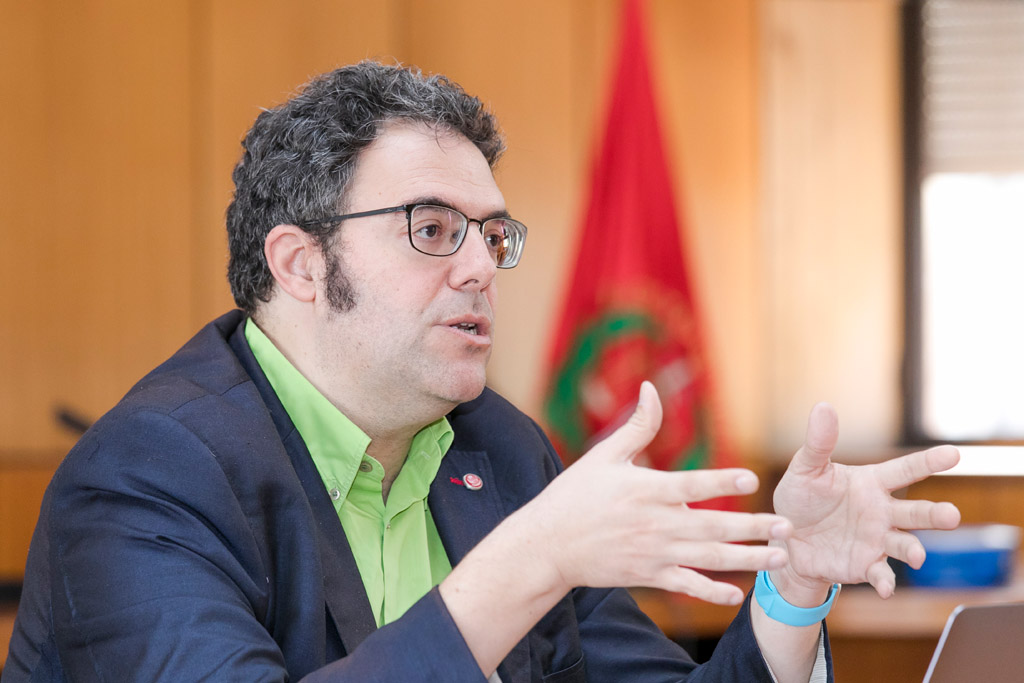
Professor Luis Javier Capote.
According to Luis Javier Capote Pérez, Professor [Name], from the Department of Basic Legal Disciplines at the University of La Laguna, states that “the main problem arises when trying to identify the uses made of works to generate other works and the measures that should be adopted in those cases.» He points out that one of the main challenges in the legal treatment of intellectual property lies in staying up-to-date regarding the operation and ownership of the results generated by these types of applications. He acknowledges that this issue generates profound controversies and doubts, but it is crucial to start from the premise that regulation will always lag behind the changes that occur daily and, therefore, it is necessary to consider the variables in depth and explore mechanisms and options that allow the regulations to be adapted to these new uses.
Capote also emphasizes that generative content applications have introduced a new chapter to an old debate. "Technological evolution has allowed for the incorporation of new forms of content creation into regulations, something that has happened with every new technological advance. He highlights the controversies surrounding image editing programs, after whose emergence there was also debate about whether works created with these tools could be considered original art and, therefore, protected.".
Capote believes that the main challenge facing law today is the use of original works as data to feed content generation systems in their creation process. He points out that, while different ways of compensating authors have already been proposed, he admits that these proposals do not always offer an equitable solution, even if they are legally compliant. Furthermore, he highlights an aspect of intellectual property rights that is often overlooked in debates focused on exploitation rights: moral rights, which grant the author the power to establish limitations or specify the uses that can be made of their work.
Regarding the negotiation of exploitation rights in some creative industries, it is important to note that these rights are not managed individually by the author, but by collective entities such as CEDRO or SGAE. The European Parliament's regulation on Artificial Intelligence requires transparency regarding the data used by content-generating applications, which would allow these entities to specifically claim for misuse, in addition to establishing a levy that these platforms would have to pay to creators.
However, according to Capote, these processes generate reluctance, as many artists believe that the transfer of rights through these agreements, in exchange for a fee, could significantly reduce their earnings and, in some cases, compromise their moral rights over their work. "Although the agreement formally complies with the law, it doesn't offer a definitive solution from the author's perspective, who might see the adoption of these regulations as a betrayal," Capote points out.
Ownership and rights of works generated by AI
Furthermore, another aspect of this problem relates to the attribution of ownership of works generated by applications using artificial intelligence, as well as the determination of the rights that protect them. Capote advocates exploring various options, which do not necessarily imply granting the same rights as an original work of art. According to him, there is a key element that distinguishes human creation from machine creation: "Creating implies a volitional act, a decision to act, and from a legal point of view, we can consider that the machine does not have this capacity, since it simply follows orders," he explains. Consequently, the premise for the protection of creation would not be applicable. This does not mean that the resulting products cannot be recognized, but it might be necessary to consider other alternatives. "There are rights related to exploitation that are not equivalent to those of a creation, as is the case with databases," he mentions, suggesting a possible avenue to explore.
GPT Chat stock image.
In this regard, it is important to emphasize that negotiations on intellectual property regulation demonstrate that rules are never neutral, but rather the result of the influence of various pressure groups at the national, European, and international levels. This can lead to situations where differences between regulations cause disparities in the evaluation of the same case in different territories. Capote points out that this is already observed in the field of software. In some US states, courts have ruled that source code can be patented, while in the European Union, regulations stipulate that, although it is entitled to protection, it is not patentable, resulting in diametrically opposed judicial rulings on the same case.
In this regard, Capote points out that another aspect to consider regarding the application of intellectual property protection regulations is that many of the issues raised are extra-legal in nature, involving concepts such as creativity, originality, and brand identity. In these cases, he notes, it is always essential to have industry professionals involved in the process who can offer expert assessments of these aspects that the regulations do not cover.
Training for future professionals
The professor at the University of La Laguna believes there is a clear challenge in raising awareness, providing training, and disseminating information regarding the infringement of intellectual property rights in everyday activities. Many people are unaware of the terms of service they agree to when using tools that generate humorous images or videos with voice modifications. Often, the resulting products violate regulations that extend beyond intellectual property, even affecting individuals' image and personality rights. Therefore, he emphasizes the importance of training future professionals on these issues.
In this context, the professor from the Department of Basic Legal Disciplines highlights the seminars organized by the Tomás y Valiente Chair and the Pedro García Cabrera Chair Regarding photography and the use of images, one of the issues that generates the most problems in the field of intellectual property. Furthermore, it mentions that in the introductory courses to scientific dissemination, organized by the Science Outreach Classroom, Modules on intellectual and industrial property are included, based on the premise that research staff must be aware of the need to register their results before disclosing them in order to guarantee their protection.
Regarding the challenges of intellectual property in academia, Capote points out two key issues: the debates surrounding intellectual property management in university research and the need for specific training at all levels of the institution. He considers it essential to consolidate training in this area, since the uses of certain resources in higher education and research vary depending on the discipline. In his opinion, there is still a lack of training, especially in the initial stages, regarding intellectual property rights and uses.
Advising the university community
Within the University of La Laguna, various services and procedures have been established to inform and advise the university community on intellectual property matters and to resolve the main doubts that these regulations generate in the academic field.
The Knowledge Transfer Office (KTO), The Office of Intellectual Property, belonging to the Vice-Rectorate for Research and Transfer, acts as the body responsible for managing Intellectual and Industrial Property within the institution. To this end, an advisory service has been established to provide information on the various ways to protect the results of research conducted at the university. The services it offers include registering intellectual property, applying for and managing trademarks, processing patents and utility models, and negotiating licensing agreements.
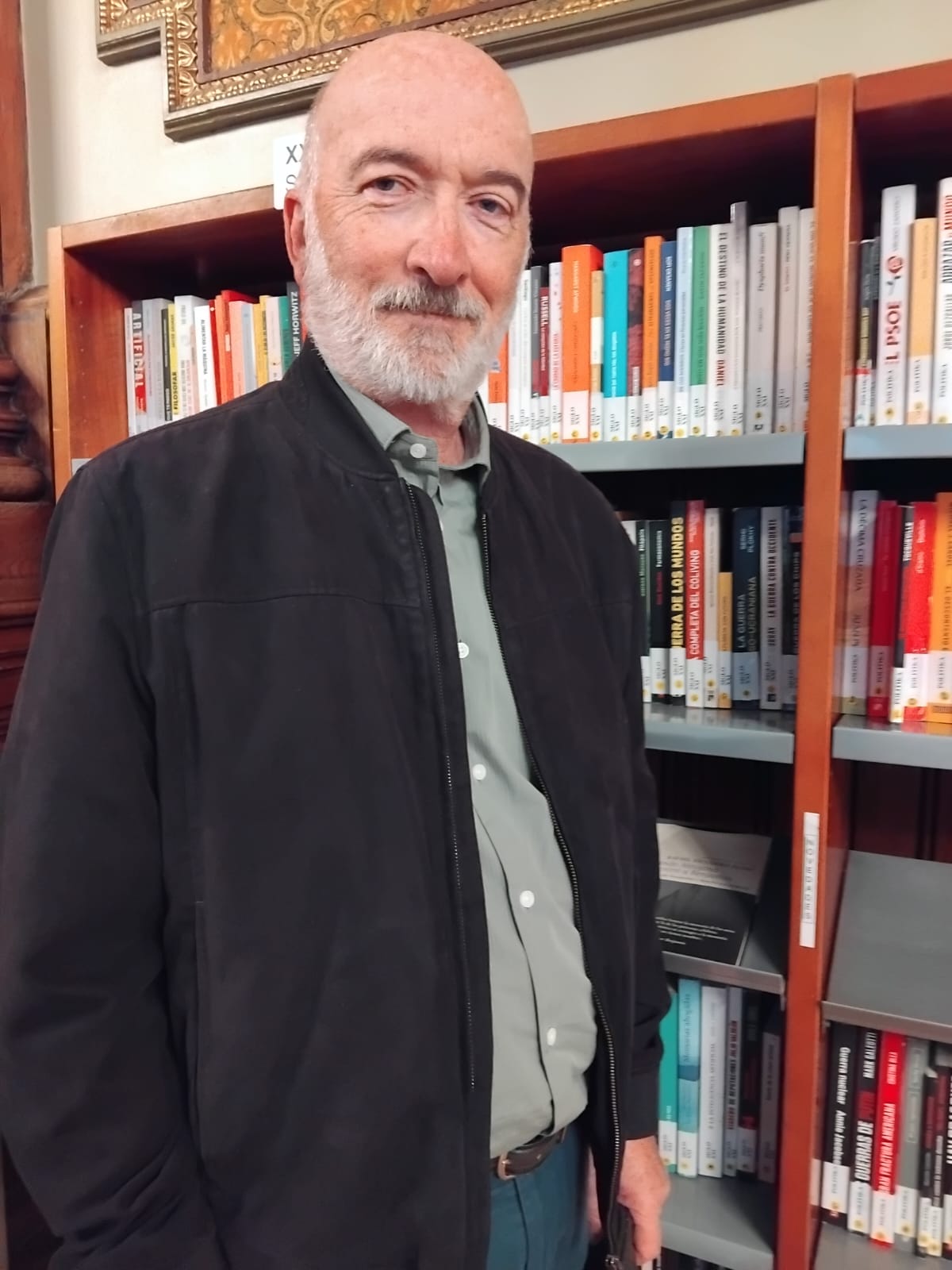
José Manuel Erbez, head of the Coordination Section of the Library of the ULL.
Researchers interested in assistance in this area can complete a form available online, which can also be used to request the registration of artistic works, methodologies and work tools, educational games, or software, among other things. This process also covers situations such as joint ownership of a work or collaboration in its creation with different academic or research institutions. Furthermore, the OTC staff handles inquiries to resolve discrepancies regarding specific intellectual and industrial property cases, referring them, if necessary, to specialized law firms with which they have collaboration agreements for this purpose.
On the other hand, the University of La Laguna Library has had for several years a Intellectual Property Advisory Service, With the aim of providing support to the university community regarding copyright, the uses they can make of the information gathered in their research, and other intellectual property issues, this service, accessible through a web form, It is coordinated by library staff, but has the support of a multidisciplinary team that includes faculty members, to whom issues requiring more in-depth assessment are referred. The University of La Laguna Library has also made available a section on their website with basic information on this matter.
José Manuel Erbez, head of the Library's Coordination Section, points out that one of the main concerns regarding the use of copyrighted materials at the university centers on virtual classrooms and content published in open access journals. Therefore, and in order to promote greater accessibility to knowledge, awareness campaigns among faculty and the university community regarding the use of Creative Commons licenses have intensified in recent years. These free licenses allow the use of copyrighted works without explicit permission, provided certain conditions are met, such as acknowledging the original authors.
In addition to recommending the use of these materials on platforms such as the virtual classroom, the Library encourages the licensing of research-derived publications, whenever possible, under Creative Commons licenses. This is all part of an effort to promote open science, adequately protecting copyright while simultaneously improving access to knowledge and scientific advances for society. Erbez emphasizes that this approach not only benefits the dissemination of science but also increases the impact of publications. In this regard, the University of La Laguna, as a member of the CRUE (Conference of Rectors of Spanish Universities), participates in the Transformative Agreements, which allow the publication of open access research articles at no additional cost to researchers, thus promoting Open Science.
This report is an initiative framed within the InvestigaULL Commemorations Calendar, a scientific dissemination project promoted by the University of La Laguna.
Scientific Culture and Innovation Unit (Cienci@ULL)

 Spanish
 English
 French